

A bathroom linen closet holds towels, sheets, and toiletries in a room that's more humid than almost any other space in the house. Bathroom linen closet cleaning isn't quite the same as cleaning a hallway or bedroom closet, since steam from showers and general bathroom moisture can settle into shelves and fabric faster than most people expect, especially in a closet with a door that stays shut most of the day.
This guide covers the best way to clean a bathroom linen closet, which products are safe to use around stored towels and linens, how often the job needs doing, and the mistakes that lead to musty smells or shelves that never seem to stay dust-free. This article is Part of Bathroom Storage & Cabinet Cleaning Guide, which covers care for every type of bathroom storage.
What Is the Best Way to Clean a Bathroom Linen Closet
- Take everything out of the closet and sort it into piles, separating items to keep, wash, or donate before anything goes back onto a clean shelf.
- Vacuum the empty shelves and floor with a brush attachment, removing dust, lint, and any debris that's built up in corners over time.
- Wipe down each shelf with a cloth dampened in warm water and a small amount of mild dish soap, working from the top shelf down so any dust or drips land on surfaces still waiting to be cleaned.
- If a musty smell is present, wipe the affected shelf with a diluted vinegar solution (one part vinegar to one part water), letting it sit for a few minutes before wiping clean, since vinegar's mild acidity helps address light mildew odor without introducing a harsher chemical into an enclosed space.
- Dry every shelf completely with a clean towel before returning anything, since a bathroom closet already deals with more ambient humidity than a linen closet elsewhere in the house.
- Wash and fully dry any linens before putting them back, since damp or even slightly humid fabric stored in a closed space is one of the most common causes of a musty smell returning quickly.
- Group similar items together as you restock, keeping heavier items like towels on lower shelves and lighter items higher up, which makes the next cleaning faster and reduces the chance of anything toppling over.
If the closet has a specific interior finish, such as painted wood, laminate, or wire shelving, checking that material's general care needs is worth doing before using any stronger cleaning product on the shelves themselves.
Tools Needed for Linen Closet Cleaning
- A vacuum with a brush attachment, for lifting dust and lint from shelves and corners
- A soft cloth, for wiping down all shelving surfaces
- Mild dish soap and warm water, for general shelf cleaning
- White vinegar, diluted, for light musty odor or mildew spots
- A dry towel, for drying shelves fully before restocking
- Storage bins or baskets, useful for grouping smaller items and keeping shelves organized going forward
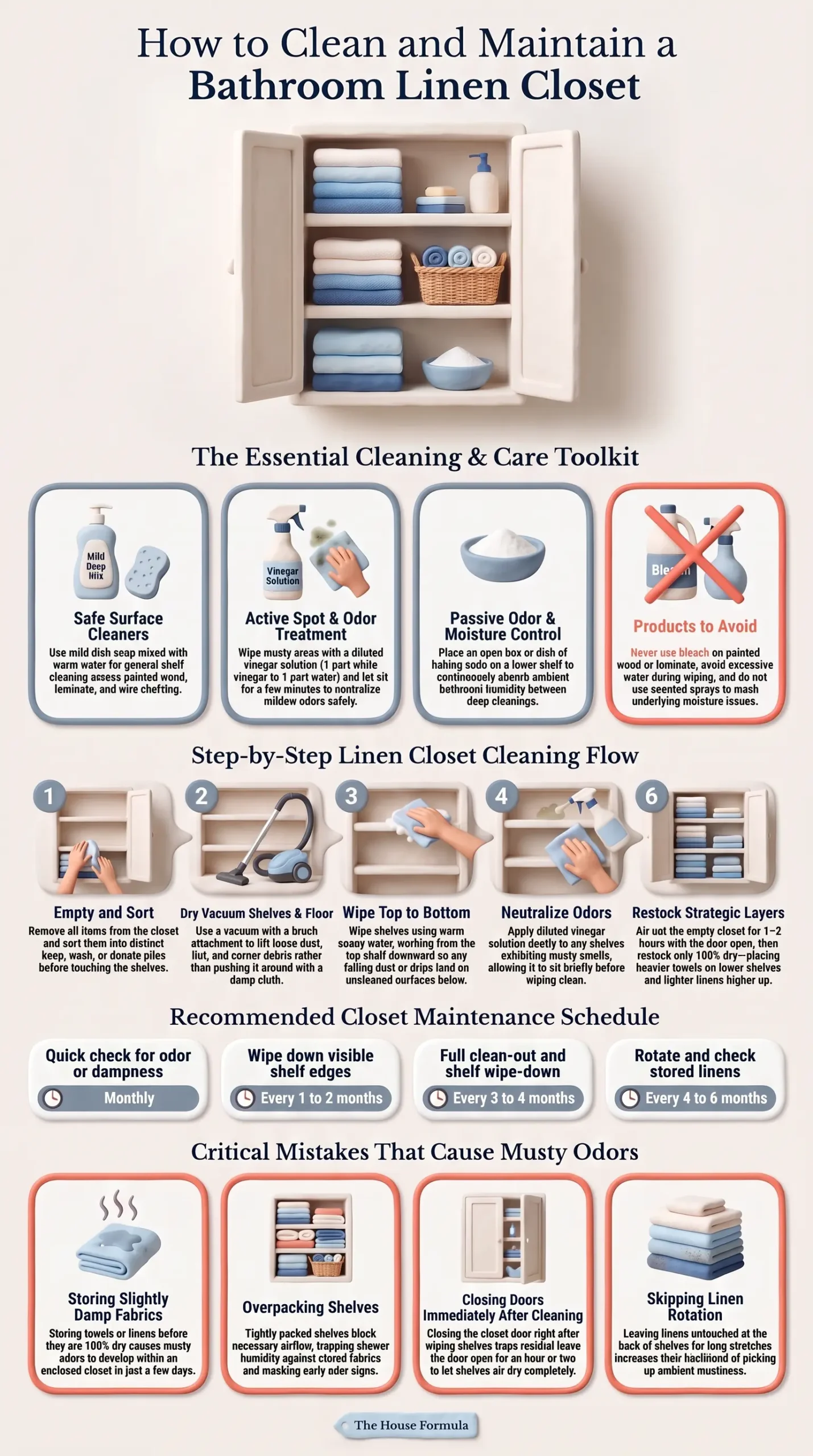
Photo Credit: Hobby Guidebook Editorial
How Often Should You Clean a Bathroom Linen Closet
|
Task |
Suggested Frequency |
|
Quick check for odor or dampness |
Monthly |
|
Wipe down visible shelf edges |
Every 1 to 2 months |
|
Full clean-out and shelf wipe-down |
Every 3 to 4 months |
|
Rotate and check stored linens |
Every 4 to 6 months |
A bathroom with poor ventilation or no exhaust fan tends to push more humidity into a nearby linen closet, which makes more frequent checks worthwhile. A closet holding linens that aren't used often also benefits from periodic rotation, since fabric that sits untouched for months can pick up a musty smell even without any obvious leak or spill.
Common Mistakes When Cleaning a Bathroom Linen Closet
- Putting linens away before they're fully dry. Even slightly damp fabric can develop a musty smell in an enclosed closet within a matter of days.
- Skipping the vacuum step and going straight to wiping. This just pushes loose dust and lint around rather than actually removing it from the shelf.
- Overpacking the closet. A tightly packed shelf traps humidity against stored items and makes it harder to notice an early musty smell before it spreads.
- Ignoring a musty smell instead of tracing its source. A recurring odor sometimes points to a ventilation issue in the bathroom itself, not just something that needs a quick wipe-down.
- Using a strong scented spray to mask odor instead of addressing the cause. This covers the smell temporarily without solving the moisture problem behind it.
A nearby drawer organizer in the same bathroom often collects a similar mix of dust and light residue, though the shallower layout calls for a slightly different approach. That process is covered in Cleaning Bathroom Drawer Organizers for anyone maintaining several storage areas as part of the same routine.
What Cleaning Products Are Safe for a Bathroom Linen Closet
Generally safe:
- Mild dish soap and warm water, effective for most shelf materials, including painted wood and laminate
- A diluted vinegar solution, useful for light musty odor and mild mildew spots
- A dry microfiber cloth, handy for a quick wipe-down between deeper cleanings
Use with caution:
- A commercial mold and mildew spray for more established growth, which can work well but should only be used with the door open and good airflow in the room, since fumes build up quickly in a small, enclosed closet
Avoid:
- Bleach on painted wood or laminate shelving, since it can discolor or damage certain finishes unevenly rather than restoring them
- Scented closet sprays as a substitute for actual cleaning, since they mask odor rather than remove its source
- Excess water during shelf cleaning, since the goal is a dry, well-ventilated closet, not one with added moisture
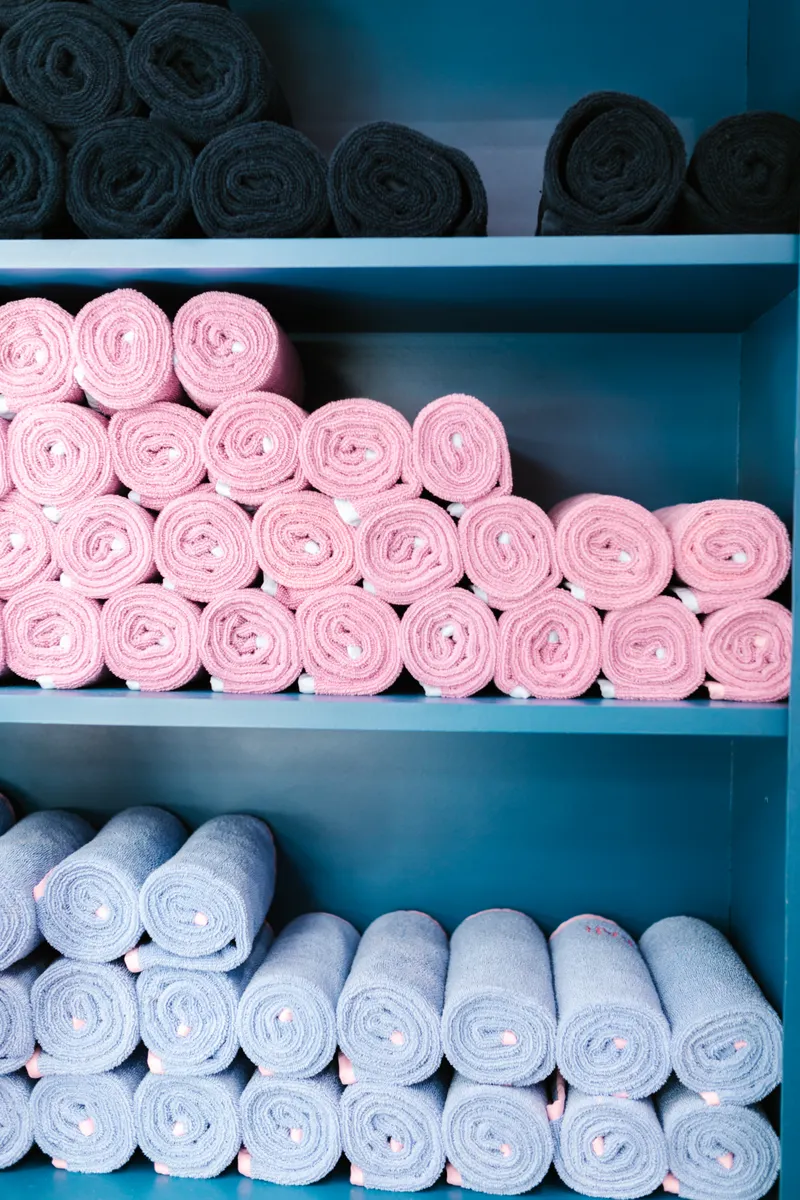
Photo Credit: RDNE Stock project
Vinegar and Baking Soda for a Bathroom Linen Closet
Diluted vinegar works well as a light odor treatment directly on a shelf, but baking soda serves a different, ongoing purpose in this space. An open box or a small dish of baking soda placed on a lower shelf can help absorb ambient moisture and odor between full cleanings, similar to how it's used in a refrigerator. It won't remove an active mildew spot the way a vinegar wipe-down or a stronger commercial product can, but it helps maintain a fresher-smelling closet in between deeper cleanings.
These two products are rarely needed together for the same task, so there's no need to mix them. Using vinegar for active spot treatment and baking soda for passive odor control between cleanings covers most of what a bathroom linen closet needs without relying on stronger chemical products.
What Should You Avoid When Cleaning a Bathroom Linen Closet
- Storing damp towels, even briefly, on a shelf with other linens. This can transfer moisture to nearby fabric and encourage a musty smell to spread.
- Using a strong bleach-based cleaner near stored linens. Fumes can settle into fabric stored nearby, and bleach isn't necessary for routine shelf cleaning.
- Closing the closet door immediately after cleaning. Leaving it open for an hour or two afterward gives the shelves time to fully dry before anything goes back inside.
- Skipping linen rotation. Items left untouched at the back of a shelf for long stretches are more likely to develop a musty smell than linens used and laundered regularly.
How Can You Clean a Bathroom Linen Closet Without Damaging It
Moisture is the main risk in this closet, more so than in a linen closet located elsewhere in the house, so drying shelves thoroughly after cleaning matters more here than the cleaning product used. A soft cloth and mild soap handle most shelf materials safely, while a diluted vinegar solution offers a gentler option than a stronger commercial spray for everyday odor concerns.
Keeping the closet a bit less packed than feels natural also helps protect both the shelving and the linens stored inside, since better airflow between items reduces the chance of trapped moisture leading to a musty smell or mildew spot. For ideas on arranging shelves and bins in a way that supports both airflow and easier future cleaning, see Linen Closet Organization Guide for practical setup options suited to a bathroom's higher humidity.
Photo Credit: Jonathan Borba
A wood-finished linen closet or vanity nearby sometimes needs slightly different shelf care than painted or laminate surfaces, particularly around moisture sensitivity. That approach is covered in Wood Bathroom Cabinet Cleaning for anyone maintaining wood storage alongside a linen closet in the same bathroom.
Professional Cost to Clean a Bathroom Linen Closet
Routine cleaning, including sorting, wiping shelves, and treating light odor, is a task most homeowners can manage without help. A closet dealing with more serious mold growth, water damage from a nearby leak, or a persistent odor that doesn't respond to basic cleaning may call for a professional mold remediation service, and pricing in that situation depends on the extent of the growth and whether any shelving or wall material needs replacement. Getting a local quote is the most reliable way to understand cost for a specific case, since the scope of the problem varies significantly from one closet to the next.
Frequently Asked Questions
What is the best way to clean a bathroom linen closet? Empty the shelves, vacuum, wipe down with mild soap and water, treat any musty smell with diluted vinegar, and dry completely before restocking with fully dry linens.
How often should you clean a bathroom linen closet? Check for odor or dampness monthly, wipe visible shelf edges every one to two months, and do a full clean-out every three to four months.
What cleaning products are safe for a bathroom linen closet? Mild dish soap and water for general cleaning, diluted vinegar for light musty odor, and a commercial mold spray only with good ventilation for tougher spots.
What should you avoid when cleaning a bathroom linen closet? Avoid storing damp towels, using bleach near stored linens, closing the door right after cleaning, and skipping regular linen rotation.
How can you clean a bathroom linen closet without damaging it? Dry shelves thoroughly after cleaning, avoid overpacking the space, and choose gentler products like diluted vinegar over stronger sprays for routine odor control.
Explore the complete bathroom cleaning guide for how linen closet care fits into full bathroom maintenance.
A Quick Safety Note
Cleaning a bathroom linen closet is a low-risk task overall, but a few precautions still apply. Never mix bleach with vinegar or ammonia-based products, and always ventilate the space when using a stronger mold or mildew spray. Test any new cleaning product on a small, hidden section of the shelf first, since finishes vary between closets. A closet with extensive mold growth, a persistent odor that won't lift, or signs of an active leak nearby is a situation better handled by a qualified professional than repeated home cleaning.

Leave a Reply