

A bathroom drawer organizer holds the small stuff: hair ties, nail clippers, makeup, floss, and half-used products that tend to leak more than anyone expects. Bathroom drawer organizer cleaning comes with its own set of challenges, since these trays sit in a shallow, enclosed space where spilled liquid, powder residue, and dust settle into compartments that are harder to reach than an open shelf.
This guide covers the best way to clean a bathroom drawer organizer, which products are safe on the different materials these trays are made from, how often the job needs doing, and the mistakes that lead to a sticky compartment or a scratched-up tray that never looks quite clean again. This article is Part of Bathroom Storage & Cabinet Cleaning Guide, which covers care for every type of bathroom storage.
What Is the Best Way to Clean Bathroom Drawer Organizers
- Remove the organizer tray from the drawer completely, along with everything stored inside it, so you can see every compartment clearly before cleaning.
- Empty and check each item for expiration or damage, discarding anything no longer needed, since this is the easiest time to sort through small items that pile up unnoticed.
- Shake out or vacuum loose debris from the compartments, particularly powder residue, hair, or crumbs that collect in the corners of narrower sections.
- Wipe down the tray with a cloth dampened in warm water and a small amount of mild dish soap, working into every compartment corner, since these tight spaces trap residue more than an open drawer surface does.
- For a sticky spot from a leaked product, let a damp cloth sit on the area for a few minutes before wiping, rather than scrubbing immediately, since this softens the residue and makes it easier to lift without pressure.
- Dry the tray completely before returning items, since a plastic or bamboo organizer left even slightly damp inside a closed drawer gives odor or mildew a head start.
- Wipe out the drawer itself before placing the tray back inside, since dust and residue often settle underneath and around the organizer, not just inside its compartments.
If the organizer is made from a specific material, such as bamboo, acrylic, or a soft-touch coated plastic, checking any manufacturer care guidance helps avoid a cleaning method that could dull or damage that particular finish.
Tools Needed for Bathroom Drawer Organizer Cleaning
- A soft cloth, for wiping down trays and compartments
- A small brush or old toothbrush, useful for narrow corners a cloth can't reach easily
- Mild dish soap and warm water, for general cleaning
- A vacuum with a narrow attachment, for loose debris in tight compartments
- A dry towel, for drying the tray fully before restocking
- Cotton swabs, handy for cleaning the tightest corners of smaller compartments
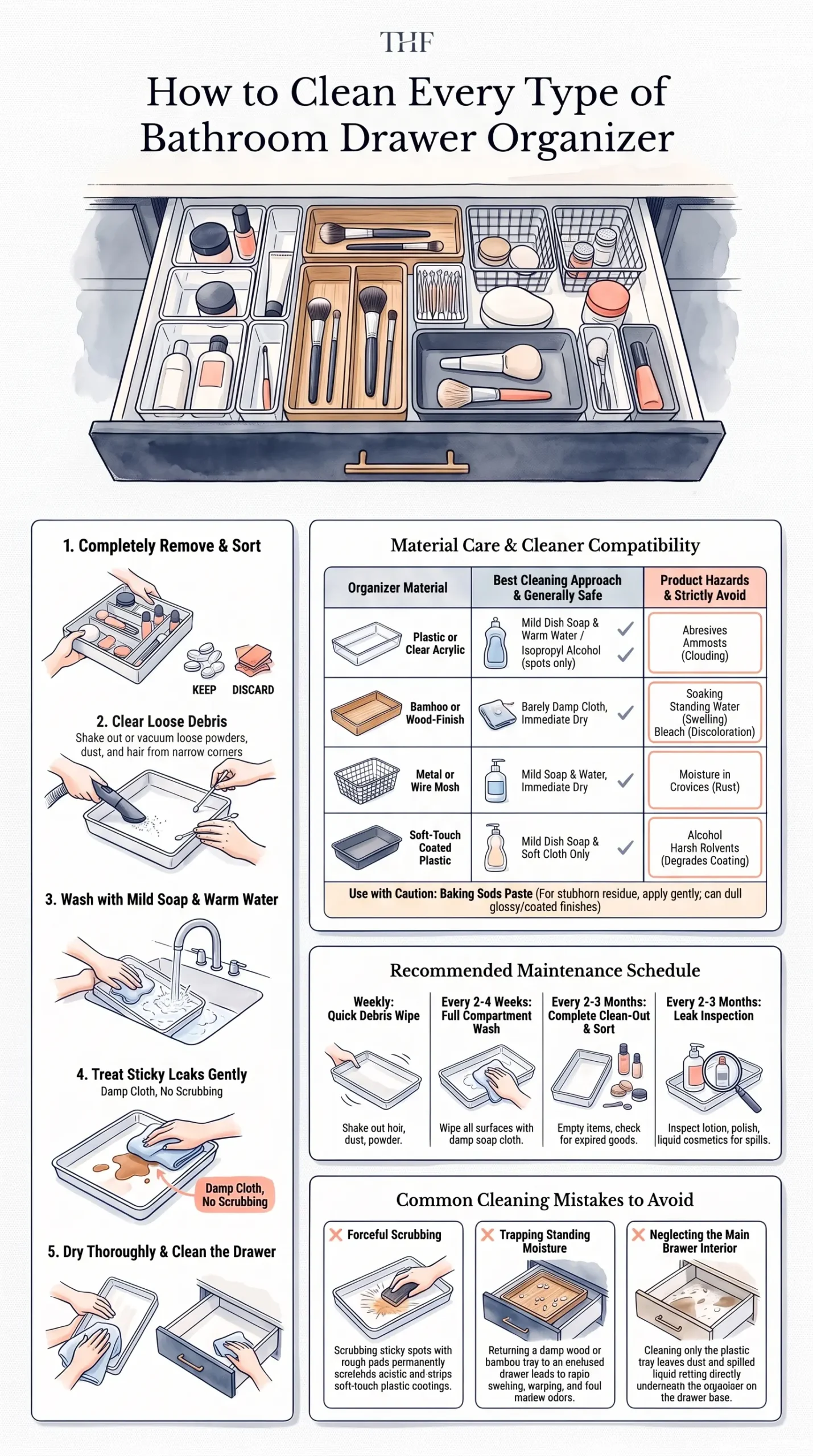
Photo Credit: Hobby Guidebook Editorial
How Often Should You Clean Bathroom Drawer Organizers
|
Task |
Suggested Frequency |
|
Quick shake-out or wipe of visible debris |
Weekly |
|
Full wipe-down of all compartments |
Every 2 to 4 weeks |
|
Complete clean-out and item sort |
Every 2 to 3 months |
|
Check for leaked or expired products |
Every 2 to 3 months |
A drawer holding liquid products, like lotion or nail polish, benefits from more frequent checks, since a small leak can spread across several compartments before it's noticed. A drawer used by multiple people in the household also tends to collect debris faster, making a slightly more frequent wipe-down worth the extra few minutes.
Bathroom Drawer Organizers Without Scratching the Surface
Acrylic and clear plastic organizers show scratches more visibly than other materials, so an abrasive sponge or scouring pad should be avoided entirely on these trays. A soft cloth handles most cleaning needs, and for a stuck-on spot, letting a damp cloth sit on the area for a few minutes softens residue enough to wipe away without needing to scrub.
Bamboo or wood-finish organizers need a slightly different approach, since too much standing water can cause the material to swell or the finish to dull over time. A barely damp cloth, followed immediately by a dry one, keeps a wood-based tray from absorbing more moisture than it should. Metal trays or wire inserts hold up well to mild soap and water but should be dried thoroughly to prevent rust spots, especially if the drawer environment tends to stay a bit humid from nearby bathroom use.
What Cleaning Products Are Safe for Bathroom Drawer Organizers
Generally safe:
- Mild dish soap and warm water, effective across plastic, acrylic, bamboo, and metal organizers
- A barely damp microfiber cloth, useful for quick wipe-downs on any material
- Isopropyl alcohol on a cotton swab, helpful for a small sticky spot on plastic or acrylic, though it should be tested on a hidden area first
Use with caution:
- Baking soda paste, which can help lift a stubborn residue spot but should be applied gently, since even a mild abrasive can dull certain finishes, particularly on acrylic or coated plastic trays
Avoid:
- Bleach on bamboo or wood-finish organizers, since it can discolor the material unevenly
- Ammonia-based cleaners on acrylic, which can cause clouding or a hazy finish over repeated use
- Excess water on bamboo or wood trays, since standing moisture leads to swelling, warping, or a dulled finish over time
Photo Credit: https://kaboompics.com/
Best Product for Bathroom Drawer Organizer Cleaning
The right product depends heavily on what the organizer is made from, since plastic, acrylic, bamboo, and metal all respond differently to the same cleaner.
|
Organizer Material |
Best Cleaning Approach |
|
Plastic or acrylic |
Mild soap and water, isopropyl alcohol for sticky spots |
|
Bamboo or wood-finish |
Barely damp cloth, dried immediately, no soaking |
|
Metal or wire |
Mild soap and water, dried thoroughly to prevent rust |
|
Soft-touch coated plastic |
Mild soap only, avoiding alcohol which can affect the coating |
A wood-finish organizer often sits inside a drawer built from a similar material, and both benefit from a comparable level of moisture caution. That broader approach to wood care is covered in Wood Bathroom Cabinet Cleaning for anyone maintaining a wood vanity or cabinet alongside a wood drawer organizer.
What Should You Avoid When Cleaning Bathroom Drawer Organizers
- Scrubbing a sticky spot with force. This can scratch acrylic or dull a soft-touch coating rather than lifting the residue cleanly.
- Leaving a bamboo or wood tray wet. Standing moisture leads to swelling and a dulled finish faster than most people expect from a small organizer.
- Skipping the drawer itself during cleaning. Residue and dust that settle underneath the tray get missed if only the organizer is wiped down.
- Using a strong all-purpose cleaner without checking material compatibility. Some formulas are too harsh for acrylic or coated plastic and can leave a cloudy or dull finish behind.
- Ignoring a leaked product until it's fully dried and hardened. Fresh residue lifts far more easily than something left to harden over days or weeks.
Photo Credit: Tara Winstead
For general ideas on setting up compartments that make future cleaning faster, see Bathroom Drawer Organization Guide for practical layout tips suited to a bathroom's shallow drawer space.
How Can You Clean Bathroom Drawer Organizers Without Damaging It
Matching the cleaning method to the tray's actual material is the biggest factor in avoiding damage here, since a method that's perfectly safe on plastic can dull or warp bamboo. Testing any new product on a small, hidden section of the tray first is a simple habit that prevents a bigger mistake, especially with organizers that have a soft-touch or specialty coating.
A drawer organizer that's developed a stain, discoloration, or swelling from a spill that went unnoticed for a while may need more than routine cleaning to fully address. That kind of deeper damage, and how to approach treating it depending on the material involved, is covered in Removing Water Damage from Bathroom Cabinets for anyone dealing with a stain or warp that's gone beyond a simple wipe-down.
Frequently Asked Questions
What is the best way to clean bathroom drawer organizers? Remove the tray, empty and sort items, wipe every compartment with mild soap and water, and dry completely before restocking.
How often should you clean bathroom drawer organizers? Do a quick shake-out weekly, a full wipe-down every two to four weeks, and a complete clean-out every two to three months.
What cleaning products are safe for bathroom drawer organizers? Mild dish soap and water for most materials, isopropyl alcohol on a cotton swab for sticky plastic or acrylic spots, and a light baking soda paste for stubborn residue.
What should you avoid when cleaning bathroom drawer organizers? Avoid bleach on bamboo, ammonia on acrylic, scrubbing with force, and leaving wood-finish trays wet after cleaning.
How can you clean bathroom drawer organizers without damaging it? Match the cleaning method to the tray's material, test new products on a hidden spot first, and dry bamboo or wood trays immediately rather than letting them air dry.
View the full bathroom cleaning guide for how drawer organizer care fits into full bathroom maintenance.
A Quick Safety Note
Cleaning a bathroom drawer organizer is a low-risk task for most households, but a few precautions still help. Never combine cleaning products, particularly bleach with ammonia or vinegar, and always test a new cleaner on a small hidden area before using it across the whole tray. If a compartment has been holding a leaked chemical product, such as nail polish remover, ventilate the area while cleaning and check the material's compatibility before using alcohol or other solvents nearby.


Leave a Reply