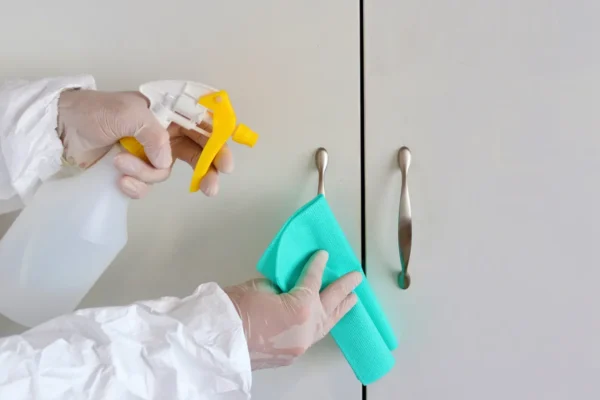
A medicine cabinet holds some of the most-used items in the bathroom, from daily medications to first-aid supplies, and it sits directly above a sink where steam and splash reach it constantly. Medicine cabinet cleaning matters for more than tidiness, since a damp shelf or a sticky spill left inside can affect the products stored there and make it harder to find what you actually need in a hurry.
This guide covers the best way to clean a medicine cabinet inside and out, which products are safe near stored medications and toiletries, how often the job needs doing, and the mistakes that lead to a foggy mirror front or shelves that stay grimy no matter how often you wipe them. This article is Part of Bathroom Storage & Cabinet Cleaning Guide, which covers care for every type of bathroom storage.
What Is the Best Way to Clean a Medicine Cabinet
- Remove everything from the cabinet first, setting items on a towel nearby so you can see what's actually inside before deciding what stays.
- Check expiration dates on medications and toiletries while everything is out, since this is the easiest time to spot anything that should be discarded rather than put back.
- Vacuum or dust the empty shelves and corners with a soft brush, removing loose debris, hair, or dust before any liquid touches the surface.
- Wipe down the interior shelves with a cloth dampened in warm water and a small amount of mild dish soap, working into corners where spilled liquid or residue tends to collect.
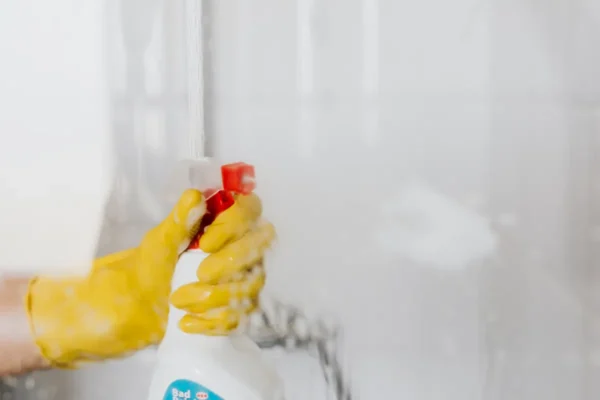
- Clean the mirror front with a glass cleaner applied to a cloth rather than sprayed directly on the mirror, since spray that runs down the edge can seep behind the mirror and cause clouding over time.
- Dry all interior surfaces thoroughly with a clean towel before returning items, since a damp shelf gives new grime and mildew a head start faster than most people expect in a humid bathroom.
- Return only what's needed, discarding expired items and grouping similar things together so the cabinet stays easier to keep clean going forward.
If the cabinet has a specific interior finish, such as a coated wire shelf or a laminate surface, checking any manufacturer care guidance is worthwhile, since some coatings react differently to moisture than plain painted metal or glass.
Tools Needed for Medicine Cabinet Cleaning
- A soft cloth, for both the interior shelves and the mirror front
- A vacuum with a brush attachment, useful for lifting dust from corners and shelf edges
- Mild dish soap and warm water, for the interior surfaces
- A glass cleaner, applied to a cloth for the mirror
- A dry towel, for drying the interior completely before restocking
- A small trash bag, for expired medications or products found during the clean-out
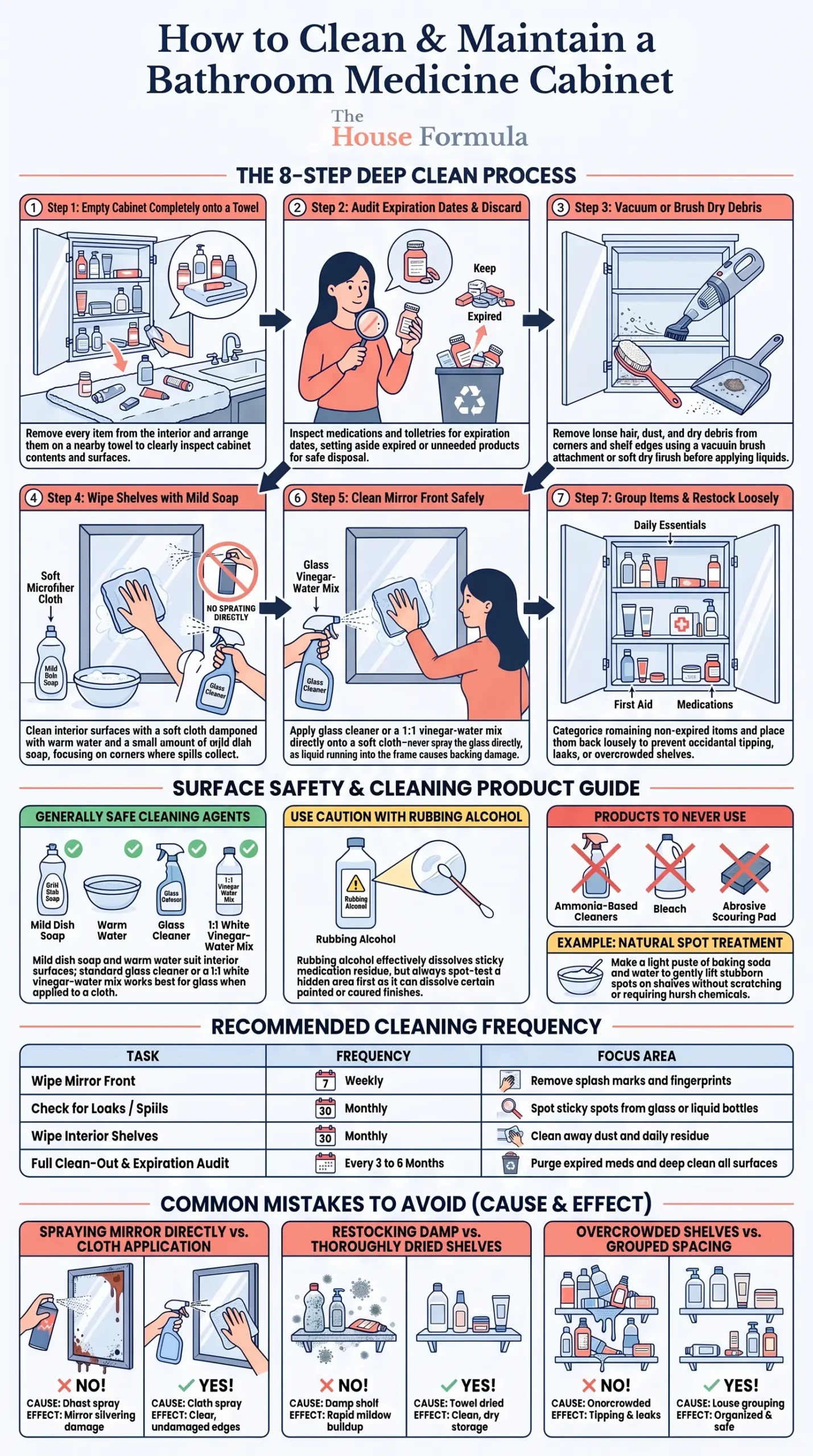
Photo Credit: Hobby Guidebook Editorial
How Often Should You Clean a Medicine Cabinet
|
Task |
Suggested Frequency |
|
Wipe down mirror front |
Weekly |
|
Wipe interior shelves |
Monthly |
|
Full clean-out and expiration check |
Every 3 to 6 months |
|
Check for spilled liquid or sticky residue |
Monthly |
A cabinet used daily by multiple people tends to accumulate splash marks on the mirror and residue on the shelves faster, so more frequent wiping helps keep it from building up. A cabinet storing liquid medications or products in glass containers benefits from more frequent shelf checks, since a small leak can go unnoticed until it's dried into a sticky spot.
What Cleaning Products Are Safe for a Medicine Cabinet
Generally safe:
- Mild dish soap and warm water, gentle enough for painted metal, plastic, or laminate shelving
- A standard glass cleaner, effective for the mirror front when applied to a cloth first
- A barely damp microfiber cloth, useful for a quick wipe between deeper cleanings
Use with caution:
- Rubbing alcohol, sometimes used to clean up a sticky residue from a spilled liquid medication, but it should be tested on a hidden spot first since it can affect certain painted or coated finishes
Avoid:
- Ammonia-based cleaners near the cabinet's mirror backing, since prolonged exposure can contribute to the mirror's silvering wearing away at the edges over time
- Bleach, which isn't necessary for routine cabinet cleaning and can discolor certain interior finishes
- Excess water on any wire or metal shelving that isn't fully rust-resistant, since standing moisture can lead to rust spots over time
Medicine Cabinet Without Scratching the Surface
The mirror front is the part most at risk of visible damage from cleaning, since any grit on a cloth can leave fine scratches across the glass. Always use a clean, soft cloth for the mirror, and apply glass cleaner to the cloth rather than spraying it directly onto the glass, since overspray can run down into the frame edge and cause streaking or, over time, cloudiness near the mirror's backing.
Metal or wire shelving inside the cabinet can also show scratches from an abrasive scrub pad, so a soft cloth or a soft-bristle brush works better for stuck-on residue than anything textured enough to scour. If a spot doesn't lift with soap and water, letting a damp cloth sit on it for a few minutes before wiping again is safer than pressing harder or switching to a rougher tool.
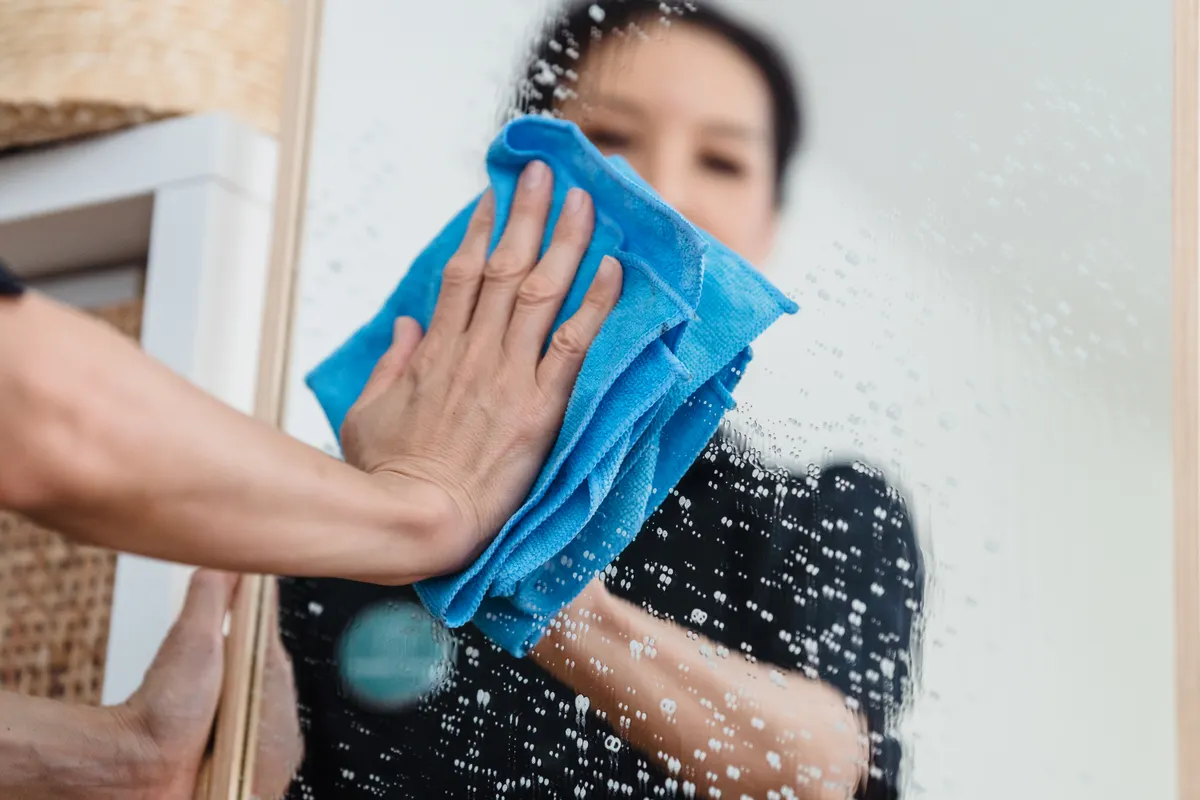
Photo Credit: Liliana Drew
Eco-Friendly Way to Clean a Medicine Cabinet
Mild dish soap and warm water already handle most routine medicine cabinet cleaning without needing anything stronger, making it a naturally low-impact choice for this task. For the mirror, a mix of one part white vinegar to one part water applied to a cloth works as a natural alternative to commercial glass cleaner and generally leaves a streak-free finish.
Baking soda mixed into a light paste with water can help lift a stuck-on residue spot on a shelf without needing a harsher chemical cleaner, though it should be applied gently rather than scrubbed hard, since even a mild abrasive can dull certain finishes if used with too much pressure over time. These simpler ingredients cover nearly everything a medicine cabinet needs, and a stronger commercial product is rarely necessary for routine care in this specific space.
Best Product for Medicine Cabinet Cleaning
There isn't one single product that's best for every part of the cabinet, since the mirror, the shelves, and the frame all call for slightly different treatment.
|
Cabinet Area |
Best Product Type |
|
Mirror front |
Standard glass cleaner or diluted vinegar, applied to a cloth |
|
Interior shelves |
Mild dish soap and warm water |
|
Metal or wire shelving |
Mild soap, dried thoroughly to avoid rust |
|
Sticky residue spots |
Rubbing alcohol on a cloth, tested first, or a baking soda paste |
A cabinet that stores items below the sink as well, such as extra first-aid supplies or cleaning products, often shares similar moisture challenges with that separate storage area. That space has its own specific care needs, covered in Under-Sink Storage Cleaning for anyone managing both storage spots in the same bathroom.
Common Mistakes When Cleaning a Medicine Cabinet
- Spraying glass cleaner directly onto the mirror instead of a cloth. Overspray running behind the mirror frame can eventually cause clouding at the edges.
- Skipping the expiration date check. Medications and certain toiletries lose effectiveness over time, and a routine cleaning is the easiest moment to catch this.
- Leaving shelves damp before restocking. This invites new grime and, in a humid bathroom, gives mildew an easier start than a fully dry shelf would.
- Using an abrasive pad on wire or metal shelving. This scratches the surface and can wear through any rust-resistant coating faster than intended.
- Storing items too tightly packed after cleaning. This makes the next cleaning harder and increases the chance of a bottle tipping over and leaking unnoticed.
Photo Credit: Karolina K
How Can You Clean a Medicine Cabinet Without Damaging It
The mirror is the most delicate part of the cabinet, so a soft cloth and cloth-applied cleaner protect it far better than a direct spray or a rough towel. Interior shelving, particularly if it's a lighter-weight metal or wire design, holds up best with gentle soap and thorough drying rather than heavy scrubbing or standing moisture.
Keeping the cabinet organized after cleaning also reduces the chance of future damage, since a crowded shelf makes spills more likely and makes it harder to notice a small leak before it dries into a stubborn spot. For practical tips on arranging the cabinet in a way that makes the next cleaning faster, see Medicine Cabinet Organization Guide for ideas that pair well with a regular cleaning routine.
A linen closet elsewhere in the bathroom often faces a similar mix of moisture and clutter, though the materials and layout differ enough to call for their own approach. That process is covered in Bathroom Linen Closet Cleaning for anyone maintaining multiple storage areas in the same room.
Frequently Asked Questions
What is the best way to clean a medicine cabinet? Empty it out, check expiration dates, wipe shelves with mild soap and water, clean the mirror with a cloth-applied glass cleaner, and dry everything before restocking.
How often should you clean a medicine cabinet? Wipe the mirror weekly, clean the shelves monthly, and do a full clean-out with an expiration check every three to six months.
What cleaning products are safe for a medicine cabinet? Mild dish soap and water for the shelves, standard glass cleaner or diluted vinegar for the mirror, and rubbing alcohol, tested first, for sticky residue.
What should you avoid when cleaning a medicine cabinet? Avoid ammonia-based cleaners near the mirror backing, bleach on interior finishes, and leaving shelves damp before restocking items.
How can you clean a medicine cabinet without damaging it? Use a soft cloth on the mirror, apply cleaner to the cloth rather than spraying directly, and dry all shelving fully before putting items back.
Back to the complete bathroom cleaning guide for how medicine cabinet care fits into full bathroom maintenance.
A Quick Safety Note
Cleaning a medicine cabinet is a low-risk task, but a few precautions matter given what's stored inside. Never combine cleaning products, particularly bleach with ammonia or vinegar, and always dispose of expired medications according to local guidelines rather than simply tossing them in household trash. If rubbing alcohol is used on a stubborn spot, make sure the area is dry before storing medications or toiletries back on that shelf.


Leave a Reply