

If you've ever wondered whether you really need to clean your kitchen every single day, the short answer is yes, but not in the way most people imagine. You don't need to scrub every surface daily. You do need a short daily routine that keeps food residue, grease, and moisture from building up between deeper cleaning sessions. This article is part of the Kitchen Cleaning Questions & Troubleshooting series, and it breaks down exactly what daily cleaning should cover, what can wait, and how to tell when a kitchen problem needs more than a wipe-down.
What Daily Kitchen Cleaning Actually Means
Daily kitchen cleaning is not a full deep clean. It's a short set of habits that stop grime from settling in. On a normal day, that means:
- Wiping down counters after cooking or prepping food
- Washing dishes or loading the dishwasher instead of leaving them to sit
- Wiping the stovetop after each use, especially after spills or splatters
- Taking out the trash if it's full or has strong-smelling waste inside
- Giving the sink a quick rinse and wipe at the end of the day
These five habits take only a few minutes total, but they make a real difference. Skipping them doesn't cause a disaster overnight, but the effects add up fast, especially with grease and food residue, which get harder to remove the longer they sit.
The Daily Tasks That Actually Matter Most
Not every part of the kitchen needs daily attention. The tasks that matter most are the ones tied to food safety and buildup that gets tougher over time. Grease from cooking, for example, turns from a light film into a sticky, baked-on layer within just a few days if it's never wiped while it's still fresh. The same goes for spills on the stovetop, where sugar or starch residue can bond to the surface once it's been heated a few extra times.
You don't need special tools for this daily routine. A microfiber cloth, warm water, and a mild dish soap handle most of it. Keep a small squeeze bottle of diluted dish soap near the sink so wiping counters and the stovetop takes seconds rather than a full setup each time. For the sink itself, a soft sponge and the same dish soap usually work fine, since daily maintenance doesn't call for anything stronger.
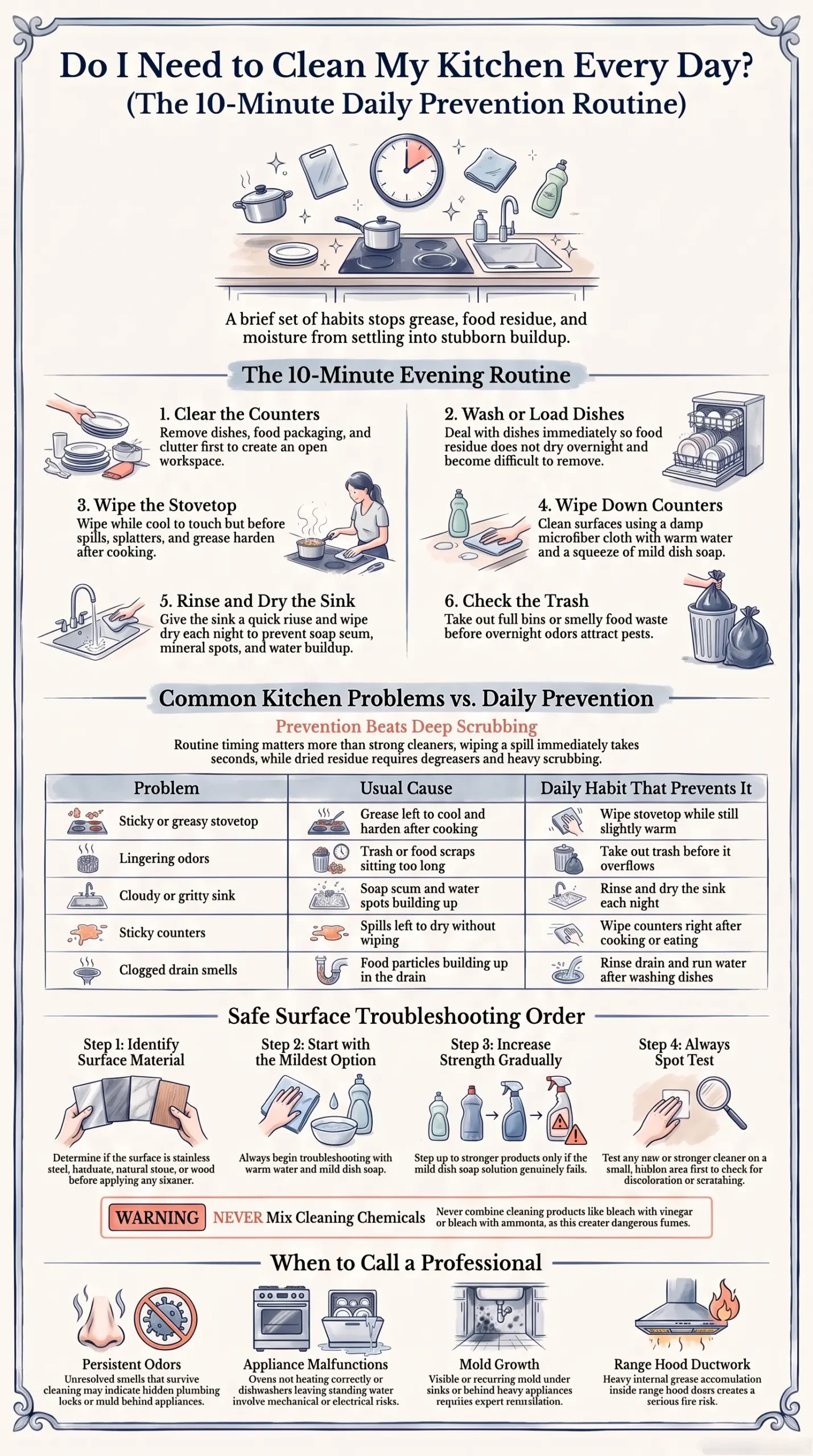
Photo Credit: Hobby Guidebook Editorial
What Happens If You Skip a Day or Two
Missing a day here and there won't ruin your kitchen. Most surfaces can handle a short gap without lasting damage. The problem shows up when skipped days turn into a pattern. A stovetop that goes uncleaned for a week often needs a stronger degreaser and more scrubbing time than one wiped daily. A sink left damp and unwiped for several days is more likely to develop a dull, gritty film from mineral buildup or leftover soap residue.
Trash is one of the fastest problem areas. Food waste left in a warm kitchen for a day or two starts to smell and can attract pests, especially in warmer months. If you're already noticing a lingering smell that a normal wipe-down hasn't fixed, that's often a sign the problem has moved past daily maintenance and into deeper cleaning territory.
Common Kitchen Problems When Daily Cleaning Gets Skipped
A few issues show up again and again in kitchens that miss their daily routine for more than a few days at a time:
|
Problem |
Usual Cause |
Daily Habit That Prevents It |
|
Sticky or greasy stovetop |
Grease left to cool and harden after cooking |
Wiping the stovetop while it's still slightly warm |
|
Lingering odors |
Trash or food scraps sitting too long |
Taking out trash before it's overflowing |
|
Cloudy or gritty sink |
Soap scum and water spots building up |
Rinsing and drying the sink each night |
|
Sticky counters |
Spills left to dry without wiping |
Wiping counters right after cooking or eating |
|
Clogged drain smells |
Food particles building up in the drain |
Rinsing the drain and running water after washing dishes |
These problems are common, but they're also usually easy to prevent once you know which daily habit stops them.
Why the Same Kitchen Problems Keep Coming Back
If you find yourself dealing with the same sticky counter or smelly trash can week after week, the issue is often not the cleaning product you're using. It's the timing. Cleaning a spill an hour after it happens is much easier than cleaning it the next day, once it's dried and possibly attracted dust or crumbs. A kitchen that keeps causing the same problem usually has one weak link in the routine, whether that's forgetting the trash, letting dishes pile up, or skipping the stovetop wipe-down on busier nights.
It also helps to look at whether the products being used match the job. A mild all-purpose cleaner works fine for daily wiping, but it won't cut through grease that's had days to bake onto a stovetop. In that case, no amount of daily wiping fixes the problem until a proper deep clean resets the surface. Once that reset happens, daily habits are usually enough to keep it from building up again.
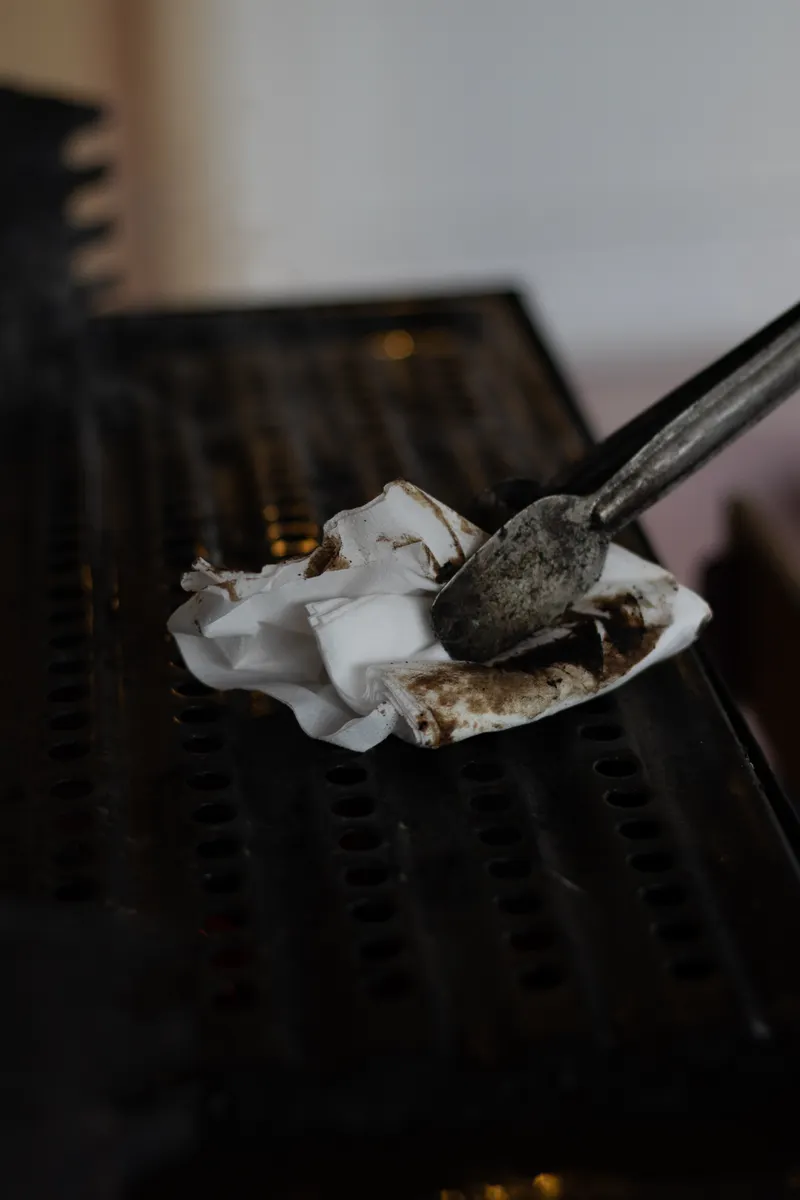
Photo Credit: Mehmet Ali Turan
Building a Simple Daily Kitchen Routine
A workable daily routine doesn't need to be complicated. Here's a realistic order that fits into most evenings:
- Clear the counters of dishes, food packaging, and clutter first.
- Wash or load dishes so nothing sits overnight, since dried-on food is harder to clean later.
- Wipe the stovetop while it's cool but before grease has fully hardened.
- Wipe counters with a damp cloth and a small amount of mild dish soap or all-purpose cleaner.
- Rinse and dry the sink to prevent water spots and soap buildup.
- Check the trash and take it out if it's full or has anything that could start to smell overnight.
This entire routine usually takes under ten minutes once it becomes a habit. It's not meant to replace deeper cleaning tasks like scrubbing the oven or wiping down cabinet fronts, which don't need daily attention.
How Often to Deep Clean vs Clean Daily
Daily cleaning and deep cleaning serve different purposes, and mixing them up is a common source of frustration. Daily cleaning keeps things from building up. Deep cleaning resets surfaces and appliances that collect residue over time, like the inside of the oven, the refrigerator shelves, or the grout along the backsplash. For a full breakdown of how often each part of the kitchen needs a deeper clean, How Often Should I Deep Clean My Kitchen? covers specific timelines for appliances, cabinets, and floors.
The Safest Way to Troubleshoot a Kitchen Cleaning Problem
When something in the kitchen keeps causing trouble, whether it's a smell, a sticky surface, or a recurring stain, the safest approach is to identify the material and the actual cause before reaching for a stronger product. Using a harsher cleaner or a random combination of products to solve a problem faster often creates a bigger issue, especially on surfaces like stainless steel, laminate, or natural stone that can scratch or discolor with the wrong approach.
A safer troubleshooting order looks like this:
- Identify what the surface or appliance is made of.
- Start with the mildest option that could reasonably work, like warm water and dish soap.
- Increase strength only if the mild option genuinely isn't enough.
- Always test a stronger product on a small, hidden spot first.
- Never combine cleaning products unless you know for certain the combination is safe, since some common combinations, like bleach and vinegar or bleach and ammonia, can create dangerous fumes.
If you're unsure whether a specific product or combination is safe for a particular surface or appliance, Can I Clean X With Y? Kitchen Edition FAQ walks through many of the most common kitchen cleaning combinations and whether they're safe to use together.
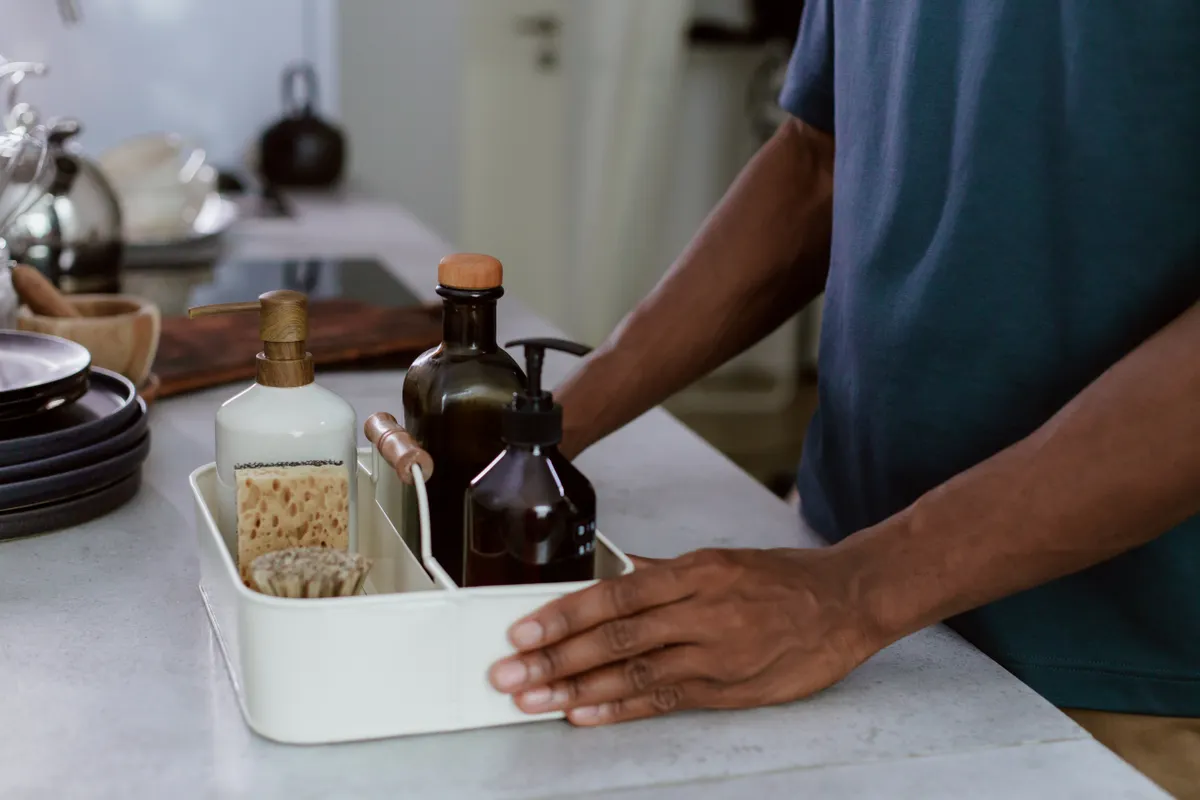
Photo Credit: Ron Lach
When to Stop DIY Cleaning and Call a Professional
Most day-to-day kitchen cleaning is safe and manageable without outside help. A few situations, though, call for a professional instead of continued DIY attempts:
- Persistent odors that don't respond to cleaning, which can sometimes point to a plumbing issue, a hidden leak, or mold behind an appliance.
- Appliance malfunctions, like an oven that isn't heating correctly or a dishwasher that leaves standing water, since these often involve electrical or mechanical parts.
- Visible mold growth in areas like under the sink or behind appliances, especially if it covers a large area or keeps returning.
- Grease buildup inside range hood ductwork, which can become a fire risk if it's heavy and hasn't been professionally cleaned in a long time.
If a problem keeps returning no matter how consistently you clean, that's usually a sign the root cause is something beyond routine cleaning, and a professional can identify what's actually going on.
A Quick Note on the Bathroom Comparison
Kitchens and bathrooms both benefit from short daily habits, but the specific tasks differ because of what each room deals with. If you're setting up a similar routine for the rest of the house, Do I Need to Clean My Bathroom Every Day? covers the daily habits that matter most in that space.
Frequently Asked Questions
Do I need to clean my kitchen every day? Yes, a short daily routine covering counters, dishes, the stovetop, the sink, and the trash prevents buildup that becomes much harder to clean later. You don't need to deep clean daily, just maintain the basics.
What are the most common problems with the kitchen? Sticky stovetops, lingering odors from trash or food waste, cloudy sinks from soap scum, and sticky counters from unwiped spills are among the most common issues in kitchens without a consistent daily routine.
Why does the kitchen keep causing the same problem? Usually because one part of the daily routine is being skipped consistently, or because the surface needs a one-time deep clean before daily maintenance can keep it under control.
What is the safest way to troubleshoot the kitchen? Start with the mildest cleaning method that could reasonably work, test stronger products on a small hidden area first, and avoid combining cleaning chemicals unless the combination is confirmed safe.
When should you stop DIY work on the kitchen and call a professional? Call a professional for persistent odors that don't clear up, appliance malfunctions, visible mold in hard-to-reach areas, or heavy grease buildup inside range hood ductwork.
Explore the complete kitchen cleaning guide for more room-by-room routines and troubleshooting help.





Leave a Reply