

Cleaning tools wear out faster than most people realize, and using them past their useful life can actually spread bacteria and grime instead of removing it. A kitchen cleaning tool lifespan chart gives you a clear idea of how long common tools last, what signs mean it's time to replace them, and which habits shorten their life the fastest. This guide is part of the Kitchen Cleaning Reference & Charts collection, and it's meant to be a practical checklist you can return to whenever you're unsure if a tool is still doing its job.
Quick Answer: How Long Kitchen Cleaning Tools Last
If you only need the general timeline, here's a realistic starting point for most households:
- Sponges: 1 to 2 weeks
- Dish brushes: 3 to 4 weeks
- Microfiber cloths: 6 to 12 months, if washed correctly
- Dish towels and tea towels: 3 to 6 months, or sooner if fraying
- Rubber cleaning gloves: 3 to 6 months
- Mop heads: 3 to 6 months
- Scrub brushes (plastic bristle): 1 to 2 months
- Steel wool and scouring pads: Single use to a few uses, then discard
- Spray bottle nozzles: Check yearly, replace if clogging or leaking
- Squeegees: 6 to 12 months
These ranges depend heavily on how often the tool is used and how it's cared for between uses. A sponge used daily in a busy household won't last as long as one used a few times a week.
What Affects How Long a Kitchen Cleaning Tool Lasts
Lifespan isn't just about time passing. It's about what the tool is exposed to and how it's treated after each use. Moisture is one of the biggest factors, since damp tools left in a closed space or without airflow become a place for bacteria to grow much faster than expected. Food residue is another factor, especially for sponges and brushes that touch raw meat, eggs, or dairy, since organic material breaks down the tool's fibers over time and gives bacteria something to feed on.
The material itself also matters. A natural cellulose sponge breaks down faster than a synthetic scrub pad. A cotton dish towel wears out differently than a microfiber cloth, which is made of tightly woven synthetic fibers designed to trap dust and grease without needing much cleaning product. Frequency of use plays a role too, and so does whether the tool is machine washed, hand rinsed, or simply left to air dry after each use.
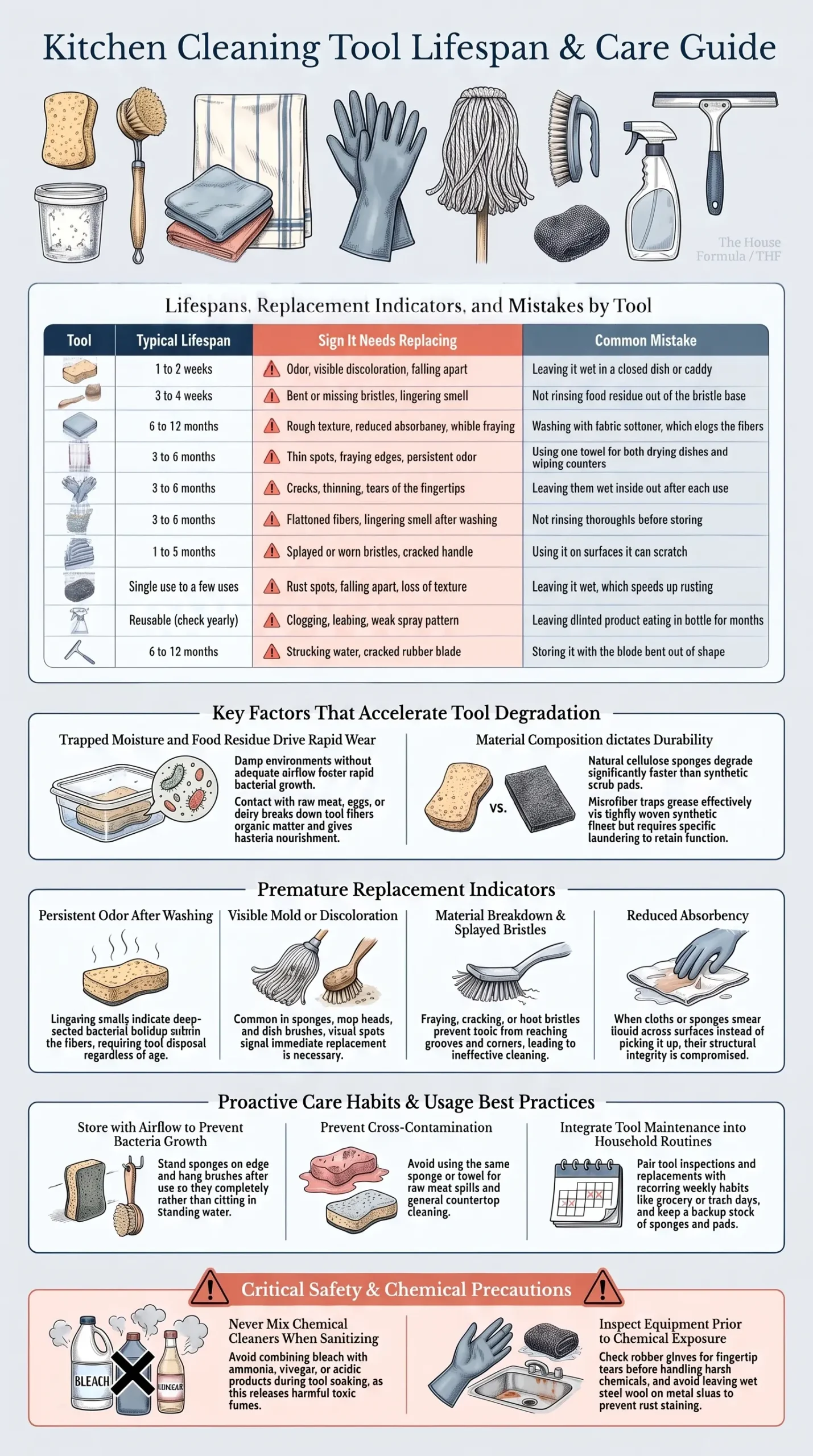
Photo Credit: Hobby Guidebook Editorial
Kitchen Cleaning Tool Lifespan Chart
This chart breaks down common kitchen cleaning tools by expected lifespan, the main sign it needs replacing, and the most common mistake that shortens its life.
|
Tool |
Typical Lifespan |
Sign It Needs Replacing |
Common Mistake |
|
Sponge |
1 to 2 weeks |
Odor, visible discoloration, falling apart |
Leaving it wet in a closed dish or caddy |
|
Dish brush |
3 to 4 weeks |
Bent or missing bristles, lingering smell |
Not rinsing food residue out of the bristle base |
|
Microfiber cloth |
6 to 12 months |
Rough texture, reduced absorbency, visible fraying |
Washing with fabric softener, which clogs the fibers |
|
Dish towel |
3 to 6 months |
Thin spots, fraying edges, persistent odor |
Using one towel for both drying dishes and wiping counters |
|
Rubber cleaning gloves |
3 to 6 months |
Cracks, thinning, tears at the fingertips |
Leaving them wet inside out after each use |
|
Mop head |
3 to 6 months |
Flattened fibers, lingering smell after washing |
Not rinsing thoroughly before storing |
|
Plastic scrub brush |
1 to 2 months |
Splayed or worn bristles, cracked handle |
Using it on surfaces it can scratch, wearing down bristles unevenly |
|
Steel wool or scouring pad |
Single use to a few uses |
Rust spots, falling apart, loss of texture |
Leaving it wet, which speeds up rusting |
|
Spray bottle |
Reusable, check nozzle yearly |
Clogging, leaking, weak spray pattern |
Leaving diluted product sitting in the bottle for months |
|
Squeegee |
6 to 12 months |
Streaking instead of clearing water, cracked rubber blade |
Storing it with the blade bent out of shape |
Manufacturer guidance can vary by brand, especially for microfiber cloths and mop heads, so check the care label if one is included, since some materials shouldn't go in the dryer or shouldn't be washed with bleach.
Signs a Tool Needs to Be Replaced Sooner
Some tools need replacing earlier than the general timeline if certain signs show up. Watch for these across most kitchen cleaning tools:
- Persistent odor even after washing, which usually means bacteria has built up inside the material
- Visible mold or discoloration, especially in sponges, dish brushes, and mop heads
- Fraying, cracking, or splitting, which reduces how well the tool actually cleans
- Reduced absorbency or spreading instead of picking up liquid or debris
- Bent or damaged bristles that no longer reach into corners or grooves
If a tool shows any of these signs well before its expected lifespan, it's better to replace it early rather than keep using something that's no longer doing its job well.
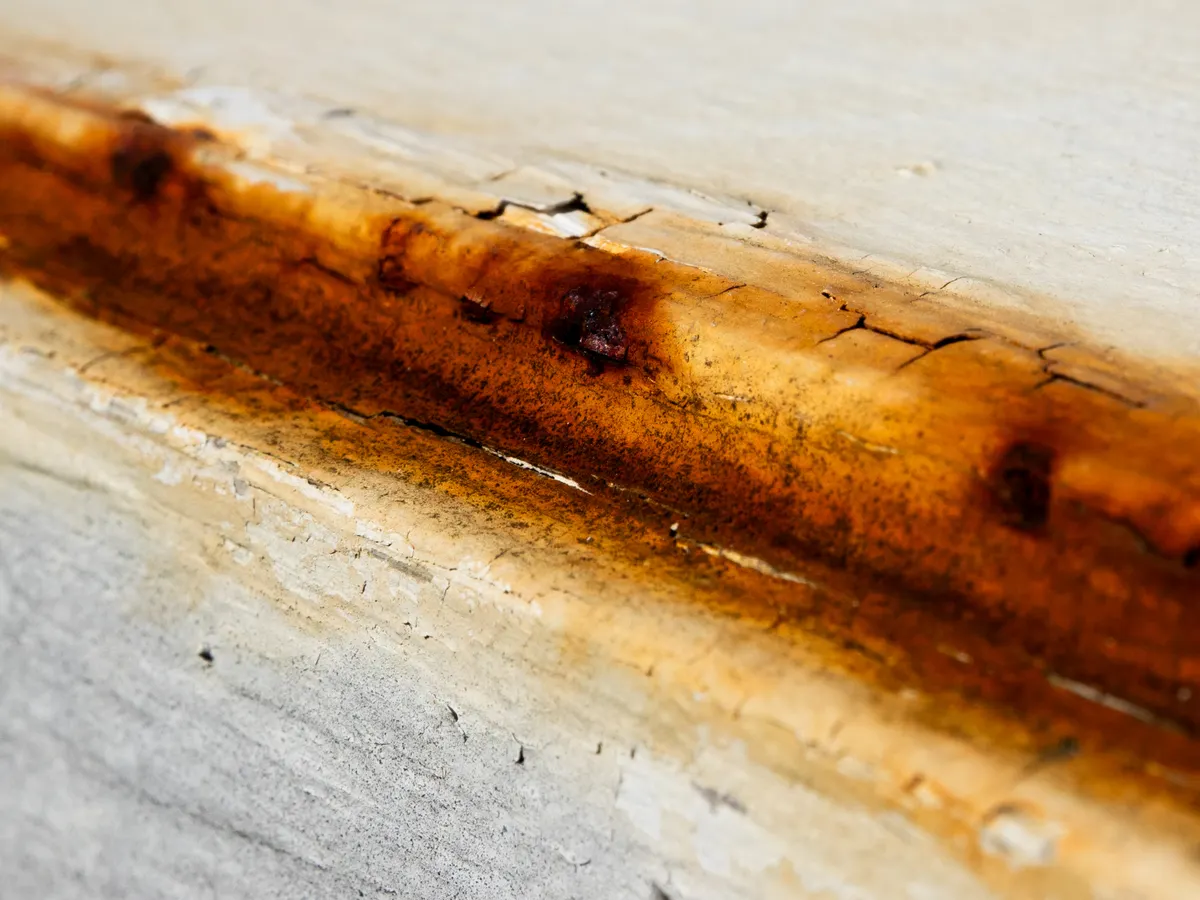
Photo Credit: Lara Burley
Common Mistakes When Using and Storing Kitchen Cleaning Tools
A few habits shorten the life of kitchen cleaning tools faster than normal wear and tear:
- Storing tools wet. Damp sponges, brushes, and gloves left in enclosed spaces trap moisture and encourage bacterial growth.
- Using one tool for everything. A sponge or cloth used on raw meat spills and then countertops spreads bacteria and wears out faster from repeated exposure.
- Skipping regular sanitizing. Sponges and brushes benefit from a weekly sanitizing routine, such as running a damp sponge through a dishwasher cycle with heated dry, though this depends on the sponge material and isn't suitable for every type.
- Using the wrong tool on a delicate surface. Scrub brushes or steel wool on surfaces like nonstick pans, glass cooktops, or polished stone can scratch the finish, which shortens both the tool's usefulness and the surface's lifespan. The Kitchen Surface Material Cleaning Compatibility Chart covers which tools and products are safe for specific kitchen materials.
- Ignoring manufacturer care instructions for reusable items like microfiber cloths, which often have specific washing requirements to keep their fibers effective.
Which Measurements or Categories Matter Most
When tracking kitchen cleaning tool lifespan, a few categories matter more than exact days or weeks:
- Contact with raw food, since tools used on raw meat, poultry, or eggs need more frequent replacement or sanitizing than tools used only on dry surfaces.
- Moisture exposure, since tools that stay wet or are stored without airflow degrade faster and pose a higher bacteria risk.
- Material type, since natural fiber tools generally break down faster than synthetic ones, but synthetic tools can still lose effectiveness once the fibers flatten or clog.
- Visible wear versus hidden wear, since some tools look fine on the outside but have already lost their cleaning effectiveness inside, like a sponge that's compacted or a brush with bent bristles.
Focusing on these categories gives a more accurate picture than simply counting weeks on a calendar.
How Should This Chart Be Used
The most useful way to apply this chart is to build it into an existing routine rather than treating it as a separate task. A few practical ways to do that:
- Pair replacement with a recurring day, like trash day or grocery day, so it's easy to remember.
- Keep a small stock of replacements on hand for fast-wearing items like sponges and scouring pads, since running out often leads to using a worn-out tool longer than intended.
- Rinse and air dry tools after every use, standing sponges on edge and hanging brushes so they aren't sitting in standing water.
- Match the tool to the job, choosing a softer sponge or cloth for delicate surfaces and reserving scrub brushes for cookware and grout that can handle more friction.
- Check tools during regular kitchen cleaning, since this is a natural moment to notice fraying, odor, or bent bristles before they become a bigger problem.
Some tools also depend on the cleaning products used with them. A sponge or cloth used with a properly diluted cleaner tends to last longer than one exposed to full-strength product repeatedly, since some concentrated cleaners can break down synthetic fibers faster over time. For guidance on mixing cleaning products correctly, the Kitchen Cleaning Product Dilution Ratio Chart covers safe ratios for common kitchen cleaners.
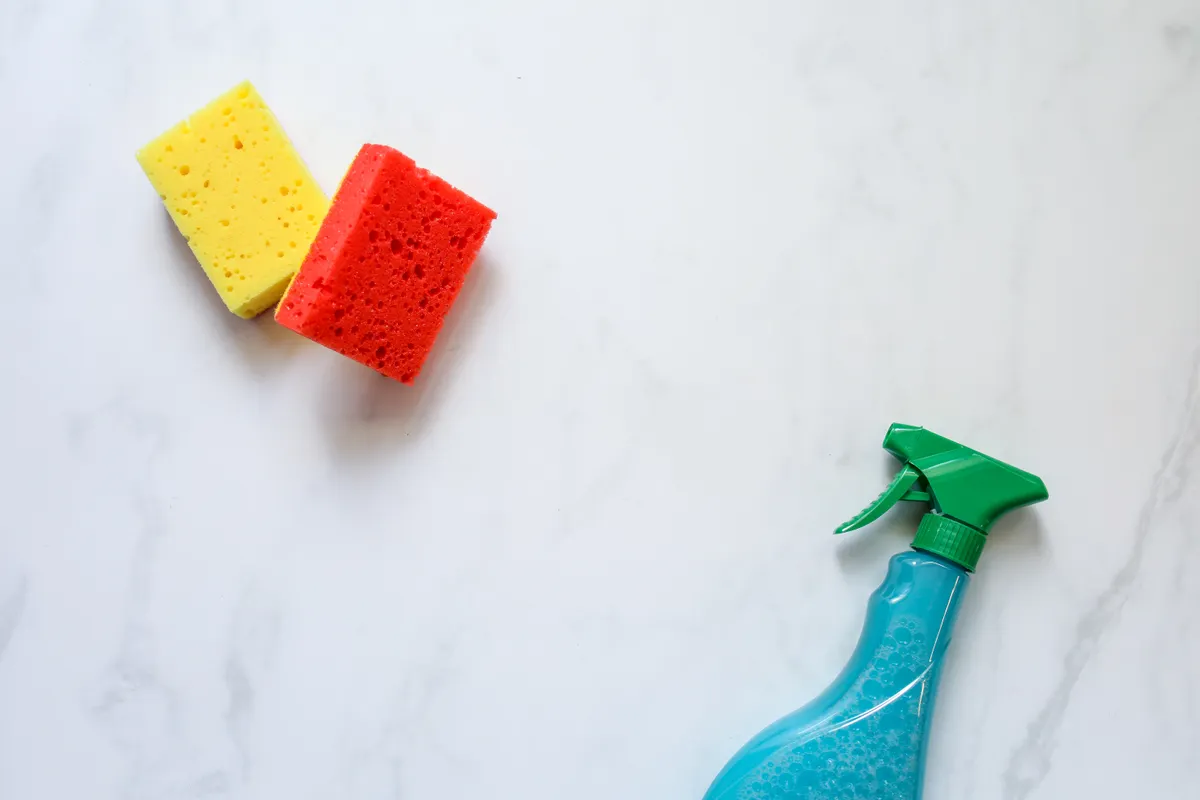
Photo Credit: Polina Tankilevitch
How Often Should This Reference Be Updated
This chart is based on general household use, so it's worth revisiting if your situation changes. Update your own version of this reference when:
- Your household size changes, since more people in the kitchen usually means faster tool turnover
- You switch to a new tool material, like moving from cotton dish towels to microfiber
- You notice tools wearing out faster or slower than the ranges listed here
- It's been over a year since you last reviewed your own replacement habits
A quick review every six months to a year is a reasonable habit for most kitchens, and it pairs well with checking other kitchen cleaning references at the same time.
A Note on Bathroom Cleaning Tools
Bathroom cleaning tools face different conditions than kitchen tools, including more consistent moisture and different types of buildup like soap scum and mineral deposits. If you're setting up a similar replacement schedule for that part of the house, the Bathroom Cleaning Tool Lifespan Chart covers those specific timelines.
Safety Notes for Kitchen Cleaning Tools
A few precautions are worth keeping in mind when using and storing kitchen cleaning tools. Rubber gloves should be checked for tears before use with stronger cleaning products, since a cracked glove no longer protects skin from irritation. Steel wool and metal scouring pads should never be left wet in a metal sink or on a metal surface for long periods, since this can cause rust staining. When sanitizing tools like sponges in the dishwasher or by soaking, always check that the method matches the material, since some sponges contain materials that shouldn't be microwaved or boiled. Never mix cleaning chemicals when soaking or sanitizing tools unless the combination is specifically confirmed safe, and avoid combining bleach with vinegar, ammonia, or other acidic products, since this can release harmful fumes. If a tool or storage area develops persistent mold that cleaning doesn't resolve, replacing the tool and improving airflow in the storage spot is safer than continued use.
Frequently Asked Questions
What should a useful reference for the kitchen include? It should include the specific tool or task, a realistic lifespan or frequency range, clear signs that replacement is needed sooner, and common mistakes that shorten the tool's life.
What information should a useful kitchen reference include? Beyond lifespan, it helps to note material type, how the tool should be stored between uses, and any care instructions that affect how long it lasts.
Which measurements or categories matter most for the kitchen? Contact with raw food, moisture exposure, material type, and hidden wear matter more than exact time counts, since these factors affect both hygiene and how well the tool actually cleans.
How should a kitchen reference or chart be used? Pair tool checks and replacements with an existing routine, keep backup supplies of fast-wearing items, and match each tool to the surface or job it's meant for.
How often should a kitchen reference be updated? Review it every six months to a year, or sooner if household size, tool materials, or wear patterns change noticeably.
Back to the complete kitchen cleaning guide for more reference charts and task-specific cleaning instructions.




Leave a Reply