
Crusted rice stuck to the inner pot, a slightly musty smell inside the lid, or a thin white film building up around the steam vent are all common signs that a rice cooker needs more attention than a quick rinse. Since rice cookers combine a removable pot with a fixed heating element and a lid that traps condensation, they collect starch residue and moisture in ways that need a slightly different routine than a typical pot or pan. Rice cooker cleaning is straightforward once you know which parts come apart and how to handle the areas that shouldn't get wet. This guide is part of the Small Kitchen Appliance Cleaning Guide, and it covers the full process, what products are safe to use, and how to keep the non-stick coating on the inner pot from getting scratched.
The Best Way to Clean a Rice Cooker
Unplug the rice cooker and let it cool completely before starting. Remove the inner pot and wash it with warm, soapy water and a soft sponge, soaking it first if rice has hardened on the bottom or sides. Wipe the lid, including the steam vent and any condensation collector, with a damp cloth, and remove these parts for washing if your model allows it. Wipe the exterior housing and the heating plate inside the base with a barely damp cloth, since this part should never be soaked or submerged. Dry all parts fully before reassembling and storing.
The sections below walk through each part of this process in more detail, including how to handle stuck-on rice, what to do about lingering odors, and which products are safe for the non-stick coating most inner pots have.
Step-by-Step Cleaning Process
- Unplug the rice cooker and let it cool completely, since cleaning it while warm risks burns and can affect how well the cleaning works.
- Remove the inner pot and check for stuck-on rice or a hardened layer at the bottom.
- Soak the inner pot in warm, soapy water for 15 to 20 minutes if rice has hardened, which makes it much easier to lift without scrubbing hard.
- Wash with a soft sponge, working in circular motions rather than pressing hard against any one spot.
- Rinse thoroughly and check for soap residue, since leftover soap can affect the taste of the next batch of rice.
- Remove the lid's condensation collector and steam vent cap, if your model has removable parts here, and wash them separately in warm, soapy water.
- Wipe the underside of the lid with a damp cloth, paying attention to any grooves where condensation tends to collect.
- Wipe the heating plate inside the base with a barely damp cloth, never submerging or spraying liquid directly onto this part.
- Wipe the exterior housing with a damp cloth, avoiding excess moisture near the control panel or power cord.
- Dry all removable parts completely before placing them back together, since trapped moisture can lead to a musty smell before the next use.
This full process takes about 25 to 30 minutes, including soak time, and is worth doing after each significant use, particularly whenever rice has stuck to the pot.
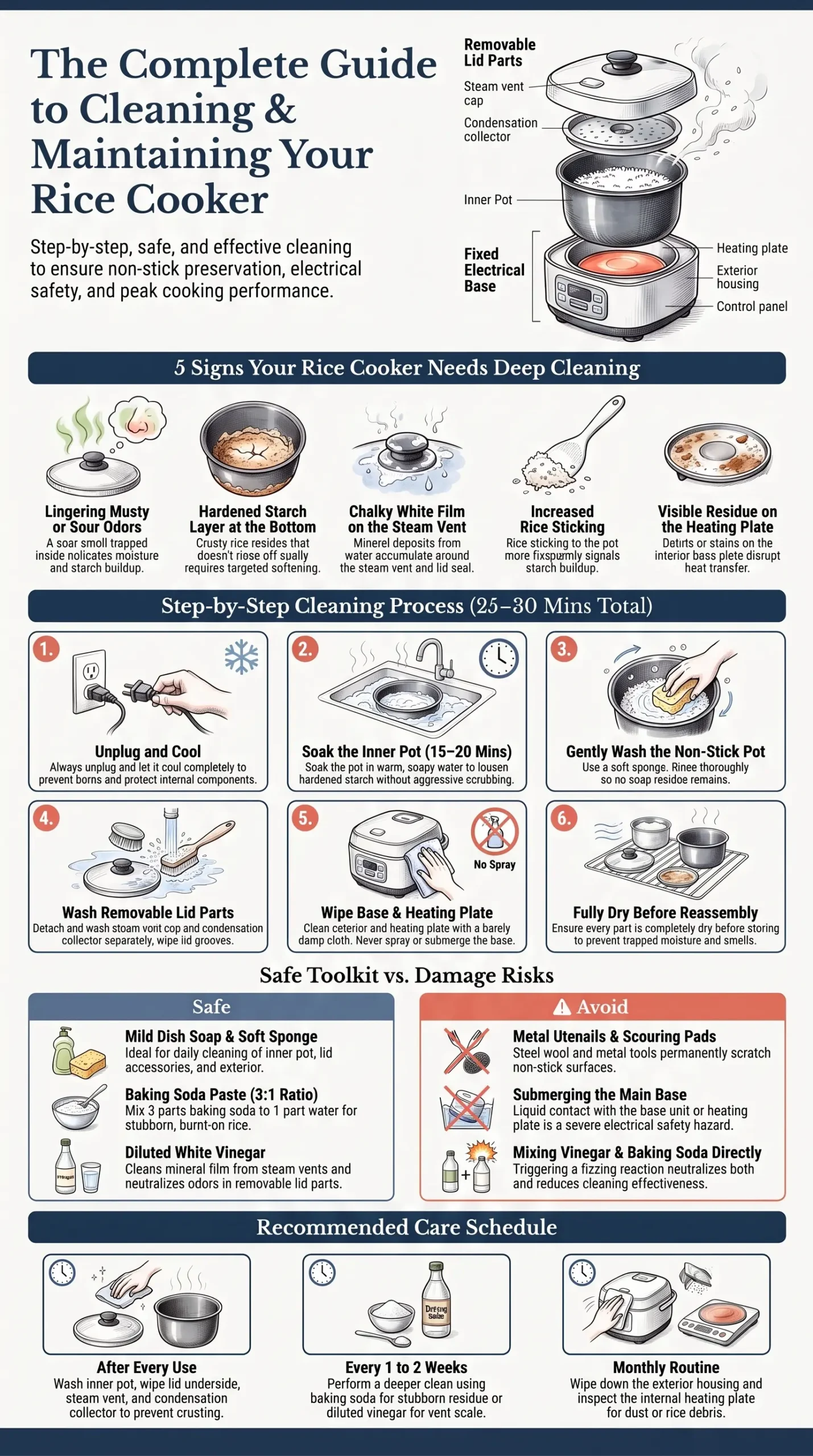
Photo Credit: Hobby Guidebook Editorial
How to Tell If Your Rice Cooker Needs Cleaning
A few signs point to buildup that's worth addressing.
- A musty or slightly sour smell inside the lid or pot, even when nothing is visibly dirty
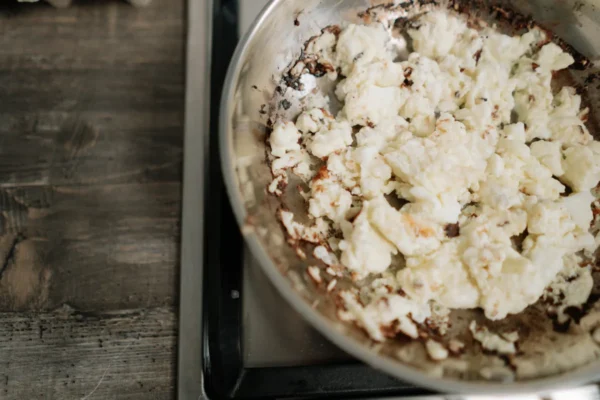
- A hardened, crusty layer at the bottom of the inner pot that doesn't come off with a quick rinse
- A chalky white film around the steam vent or lid seal, often from mineral deposits in the water used for cooking
- Rice sticking more than it used to, even with the same amount of water and the same non-stick pot
- Visible residue on the heating plate inside the base, noticeable when the inner pot is removed
If you're noticing several of these at once, it's a reasonably clear sign that a deeper clean, beyond the usual quick rinse, is overdue.
What Cleaning Products Are Safe for a Rice Cooker?
A short list covers what most rice cooker cleaning actually needs.
- Warm water and mild dish soap: effective for the inner pot, lid parts, and exterior, and safe for most non-stick coatings when used with a soft sponge
- A soft sponge or cloth: for washing the pot and wiping the lid without scratching
- Baking soda paste: helpful for stubborn, hardened rice stuck to the bottom of the pot
- White vinegar diluted with water: useful for mineral deposits around the steam vent or lid seal
Avoid abrasive scouring pads or steel wool on the inner pot, since these scratch non-stick coatings and shorten how long the coating lasts. Never submerge the base unit or spray liquid directly onto the heating plate, since this is an electrical component and water contact here is a genuine safety hazard. Avoid using metal utensils to scrape stuck rice from the pot, since this also risks scratching the coating; a soft spatula or a soak works better.
Is a Rice Cooker Similar to a Slow Cooker for Cleaning?
Rice cookers and slow cookers share some similarities, since both have a removable inner pot or crock and a base unit that shouldn't get wet. The washing process for the removable insert is fairly similar between the two, using warm soapy water and a soft sponge for daily cleaning. Where they differ is in how food residue behaves: rice tends to harden into a firm, starchy crust, while slow cooker use often leaves a greasier or saucier residue that responds a bit differently to soaking and sometimes needs a longer soak time to loosen fully. The Slow Cooker Cleaning guide covers that process in detail, including how to handle a crockpot's ceramic insert and its own specific cleaning needs.
Vinegar and Baking Soda for a Rice Cooker
Both ingredients have a place here, though they suit different problems. A baking soda paste, made from roughly three parts baking soda to one part water, works well on hardened rice stuck to the bottom of the inner pot, since its mild abrasiveness helps lift residue without scratching the coating. White vinegar diluted with water is useful for mineral deposits around the steam vent or lid seal, and it can also help with a lingering musty smell when used as a soak for the removable lid parts. Keep vinegar and baking soda as separate treatments rather than mixing them together, since combining them triggers a fizzing reaction that reduces how well either one works on its own. Avoid using vinegar anywhere near the heating plate or base unit, since these parts should only be wiped with a barely damp cloth rather than treated with any liquid soak.

Photo Credit: Internet
Rice Cooker Cleaning Without Scratching the Surface
Most inner pots have a non-stick coating, and this is the part most likely to get damaged by the wrong cleaning tool. A soft sponge handles daily washing well, and it's worth reserving anything more abrasive only for spots that genuinely resist a normal wash after soaking. Letting the pot soak for 15 to 20 minutes before scrubbing softens hardened rice enough that scraping usually isn't necessary, which is where most scratches happen. If a spot still won't budge after soaking, a baking soda paste applied gently with a soft cloth is a better next step than switching to a scouring pad or metal utensil. Testing a new cleaning product on a small, less visible spot inside the pot first is a reasonable precaution if you're using something beyond dish soap for the first time.
How Often Should You Clean a Rice Cooker?
Wash the inner pot after every use, since starch and rice residue harden quickly once they cool and become more difficult to remove the longer they sit. Wipe the lid, steam vent, and condensation collector after each use as well, since these areas trap moisture that can lead to odor if left unaddressed. A deeper clean, including a baking soda paste for stuck rice or a vinegar wipe for the steam vent, works well every one to two weeks, or sooner if you notice a musty smell or visible mineral film. Wiping the exterior and checking the heating plate for residue is worth doing monthly, or whenever the inner pot is removed for its regular wash.
Mineral Buildup: Rice Cookers and Other Daily Appliances
The chalky film that sometimes shows up around a rice cooker's steam vent comes from the same source as mineral buildup in other water-heating kitchen appliances, and hard water areas tend to see this more often and more quickly. This isn't unique to rice cookers, and it's worth knowing the same general principle applies anywhere water gets heated repeatedly inside a small appliance. The Coffee Maker Cleaning & Descaling guide covers how vinegar handles this kind of mineral deposit in more depth, using a similar logic to the steam vent cleaning described here, just applied to a different appliance with its own specific descaling steps.
Photo Credit: Jahra Tasfia Reza
What to Avoid When Cleaning a Rice Cooker
A few habits tend to cause more problems than they solve.
- Submerging the base unit or spraying liquid onto the heating plate: this is an electrical hazard and should never be done
- Using metal utensils or abrasive pads on the inner pot: this scratches non-stick coatings and shortens their lifespan
- Skipping the lid and steam vent during regular cleaning: these areas trap moisture and residue that can lead to odor over time
- Reassembling the cooker before all parts are fully dry: trapped moisture encourages a musty smell before the next use
- Mixing vinegar and baking soda together directly: this reduces the cleaning effect of both, so use them as separate treatments depending on the task
Frequently Asked Questions
What is the best way to clean a rice cooker? Unplug and cool the unit, wash the inner pot in warm soapy water, wipe the lid and steam vent, and wipe the base and heating plate with a barely damp cloth. Dry everything fully before reassembling.
How often should you clean a rice cooker? Wash the inner pot and wipe the lid after every use, do a deeper clean with baking soda or vinegar every one to two weeks, and check the exterior and heating plate monthly.
What cleaning products are safe for a rice cooker? Warm water and mild dish soap for the pot and lid parts, baking soda paste for stuck rice, and diluted vinegar for mineral deposits around the steam vent. Avoid abrasive pads and never submerge the base unit.
What should you avoid when cleaning a rice cooker? Avoid submerging the base unit, using metal utensils or abrasive pads on the inner pot, and reassembling before all parts are fully dry.
How can you clean a rice cooker without damaging it? Use a soft sponge and let stuck rice soak before scrubbing, avoid abrasive tools on the non-stick pot, and keep water away from the base unit and heating plate.
A Quick Note on Safety
Always unplug the rice cooker and let it cool completely before cleaning any part of it. Never submerge the base unit or spray liquid directly onto the heating plate, since this is an electrical hazard. Never mix vinegar with bleach or ammonia-based products, since this produces hazardous fumes. If a musty smell or reduced cooking performance continues even after a thorough cleaning, that may point to a mechanical issue worth checking with the manufacturer or a qualified appliance technician.
For more on keeping the rest of your kitchen clean, head back to the complete kitchen cleaning guide.



Leave a Reply