

Renting a kitchen comes with a specific set of concerns that homeowners don't usually think about, like protecting a security deposit, avoiding damage to appliances and surfaces you don't own, and keeping things in a condition that satisfies a landlord's move-out inspection. A kitchen cleaning checklist for renters needs to cover the same daily and weekly basics as any other kitchen, but with extra attention to the surfaces and finishes that are easy to damage without realizing it.
This guide walks through a practical routine built specifically around renting: what to clean, how often, which methods are safest for surfaces you're responsible for but didn't choose, and what to do differently when move-out day is approaching. It's part of the Kitchen Cleaning Routines & Schedules Guide, which covers how daily, weekly, and monthly kitchen tasks fit together for any household, renters included.
How Should You Build a Practical Routine for a Rented Kitchen?
A practical routine for a rented kitchen starts with identifying what you're actually responsible for maintaining versus what falls to the landlord, since lease terms vary on things like appliance repairs or deep cleaning between tenants. Beyond that distinction, the routine itself works the same way it would in any kitchen: small daily tasks prevent buildup, weekly tasks catch what daily cleaning misses, and occasional deeper attention keeps appliances and surfaces from accumulating damage over time.
The main difference for renters is caution. Many rental kitchens have laminate countertops, older appliances, or finishes that aren't always clearly labeled, so testing a new product on a small, hidden spot before using it more broadly is worth the extra minute, especially since you may not know exactly what the countertop or cabinet finish is made of.
Daily, Weekly, and Monthly Tasks for a Rented Kitchen
|
Frequency |
Key Tasks |
Why It Matters for Renters |
|
Daily |
Wipe counters, wash dishes, wipe stovetop, clean sink, take out trash |
Prevents grease and grime from setting into surfaces you'll need to return in good condition |
|
Weekly |
Wipe cabinet fronts, clean microwave interior, mop floor, wipe fridge shelves |
Keeps buildup from reaching a point where it's hard to remove without stronger products |
|
Monthly |
Clean oven interior, wipe range hood filter, check behind appliances if accessible, wipe light fixtures |
Addresses less visible spots that inspections sometimes catch |
Daily tasks are the foundation, and our Daily Kitchen Cleaning Checklist breaks down exactly what belongs in that quick routine, step by step, if you want more detail than the summary here. Weekly tasks build on that foundation, and our Weekly Kitchen Cleaning Checklist covers the specifics of what to add once a week without turning it into a major project.
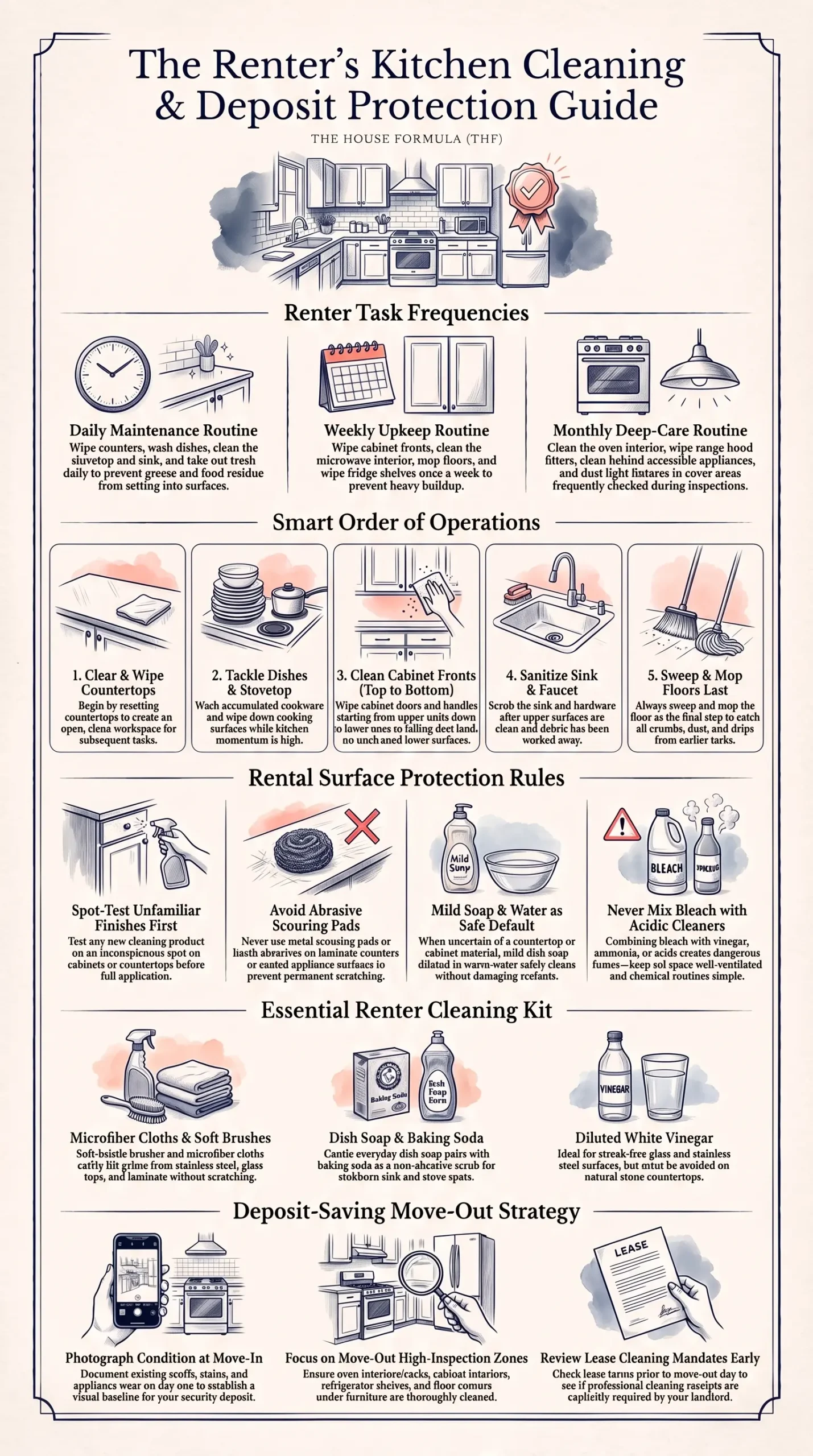
Photo Credit: Hobby Guidebook Editorial
What Order Should the Tasks Follow?
Working top to bottom and from the inside of appliances outward generally makes the most sense, since dust and residue that falls during cleaning gets caught in a later step rather than requiring you to redo work. A reasonable order looks like this:
- Clear and wipe countertops first, since most other tasks depend on having clean surfaces to work from.
- Handle dishes and any stovetop cleaning while things are still fresh.
- Wipe down cabinet fronts and handles, working from upper cabinets down to lower ones.
- Clean the sink and faucet.
- Sweep or mop the floor last, once everything else is done and any dust or crumbs have had a chance to fall.
This order applies daily and scales up naturally for weekly and monthly tasks too, since starting with surfaces and appliances before finishing with the floor avoids undoing your own work partway through.
Cleaning Without Damaging Surfaces You Don't Own
Rental kitchens often include countertops, cabinets, and appliances that are older or of unknown material, which makes caution more important than it might be in a home you own and know well. A few practical guidelines help avoid accidental damage:
- Test new products on a small, hidden spot first, particularly on countertops and cabinet fronts, since you may not know the exact finish or sealant used.
- Avoid abrasive scouring pads on laminate countertops and coated appliance surfaces, since these can leave fine scratches that are hard to reverse and may affect your deposit return.
- Check the oven and stove manufacturer's manual if available, or ask the landlord for appliance documentation, before using a strong oven cleaner, since some interiors have specialty coatings that certain products can damage.
- Avoid mixing cleaning chemicals, particularly bleach with vinegar or ammonia, since this applies in every kitchen but matters just as much in a rental where ventilation setups may be less familiar to you.
- Ask before making any changes, like removing shelf liners or using a strong degreaser inside an older oven, if you're unsure whether the landlord would consider it acceptable.
When in doubt about a specific surface, using a mild dish soap and water solution is a safe default that works across most common kitchen materials without risking damage, even if it doesn't cut through heavier grease as fast as a stronger product.
Tools Needed for a Renter's Kitchen Cleaning Checklist
You don't need a large supply closet to keep a rented kitchen in good shape. A basic, practical kit covers nearly everything on this checklist:
- Microfiber cloths, reusable and gentle enough for most surfaces including glass stovetops and stainless steel.
- A soft-bristle scrub brush or non-scratch sponge, for sinks and stovetops without risking scratches.
- Mild dish soap, a reliable everyday cleaner for counters, sinks, and stovetops.
- Baking soda, useful as a gentle abrasive for sinks and stubborn stovetop spots.
- White vinegar, diluted with water, for glass and stainless steel surfaces, avoided on natural stone countertops if your kitchen has them.
- An all-purpose cleaner suited to your specific countertop material, checked against the label before first use.
- A mop and broom, matched to your flooring type, since tile, vinyl, and laminate floors sometimes call for different cleaners.
This kit works whether you're in a studio apartment or a full house rental, and most of these items last for months, keeping the ongoing cost of maintaining a rented kitchen fairly low.
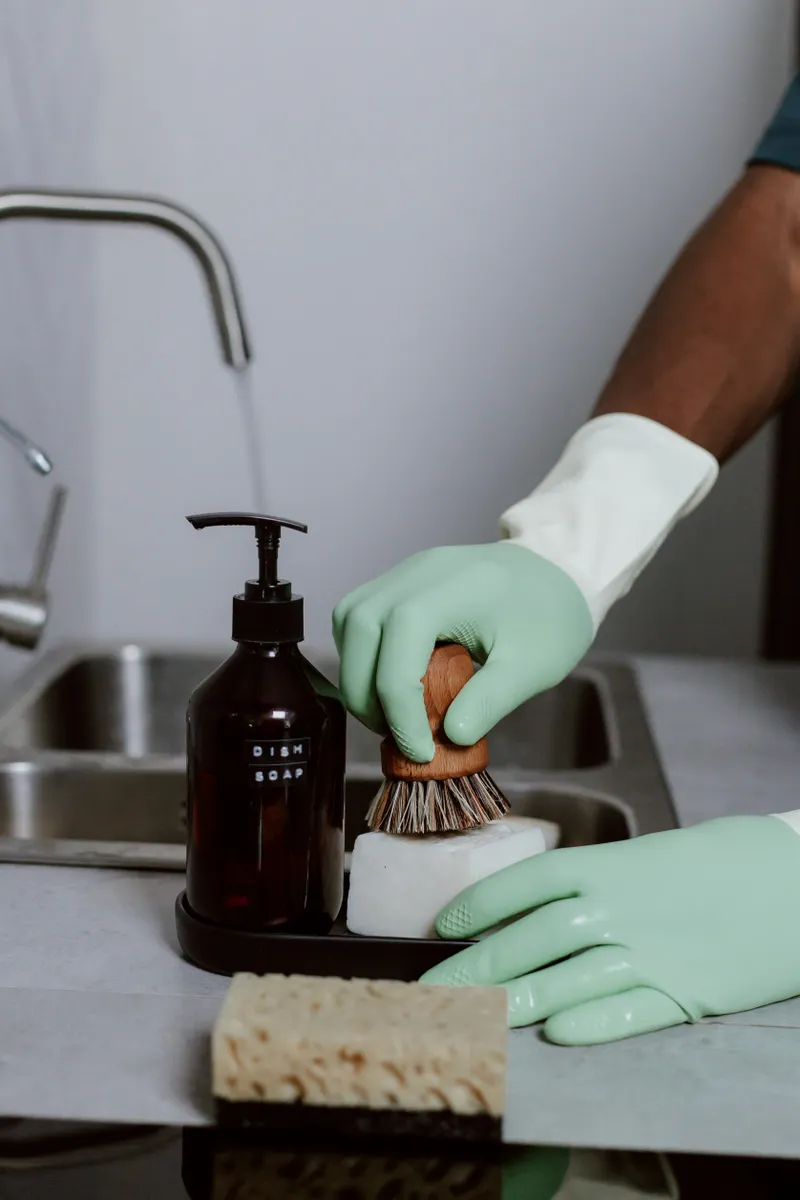
Photo Credit: Ron Lach
How Often Should You Clean a Rented Kitchen?
Daily tasks belong in every kitchen regardless of ownership, since food residue and grease build up at the same rate whether you rent or own. Weekly tasks generally hold to a once-a-week schedule for most rental kitchens, though a kitchen used heavily for cooking may need cabinet fronts and the microwave attended to slightly more often.
Monthly deep-cleaning tasks, like the oven interior or behind accessible appliances, matter more for renters than they might in a home you plan to stay in indefinitely, since move-out inspections often focus on exactly these spots. Sticking to a monthly rhythm rather than waiting until move-out day makes the eventual move-out cleaning far less overwhelming, since you're maintaining rather than restoring.
Move-Out Cleaning Considerations
Move-out cleaning deserves its own mention, since it typically calls for a more thorough pass than routine weekly or monthly maintenance. Most leases expect the kitchen returned in a condition similar to move-in, accounting for normal wear, which generally means:
- A fully clean oven interior, including racks
- Wiped-down cabinet interiors and exteriors, not just fronts
- A cleaned refrigerator interior with all food removed
- A sink and countertop free of buildup or staining
- Floors thoroughly cleaned, including corners and under any removable furniture
Reviewing your specific lease terms before move-out day matters more than following a generic checklist alone, since requirements vary by landlord and property management company. If a lease specifically requires professional cleaning or a receipt as proof, that requirement should take priority over doing it yourself, since it directly affects deposit return.
Professional Cost to Clean a Rental Kitchen
Hiring a professional cleaning service for a move-out kitchen clean is common enough that many general cleaning companies offer it as part of a broader move-out cleaning package rather than a standalone kitchen service. Pricing varies significantly based on location, kitchen size, and how much detail work is included, such as inside the oven or behind appliances, so getting a specific quote from a local provider is the most reliable way to know actual costs in your area. For renters doing the cleaning themselves, the ongoing cost stays low, since the basic tools and ingredients listed earlier cover most tasks without needing anything specialized.
Some renters find it worthwhile to hire a professional specifically for the final move-out clean, even if they've handled daily and weekly cleaning themselves throughout the lease, simply because a professional service can offer a level of consistency that satisfies a landlord's inspection checklist. This is a matter of personal budget and time rather than a strict requirement in most cases, unless your specific lease states otherwise.
How Do You Make These Routines Easier to Maintain?
A rental kitchen routine holds up better long-term with a few practical adjustments:
- Keep a physical or digital checklist specific to your unit, noting anything unusual about your particular appliances or surfaces.
- Store cleaning supplies somewhere convenient, like under the sink, so starting a task doesn't require digging through storage first.
- Photograph the kitchen's condition at move-in, particularly any existing scuffs, stains, or appliance issues, so you have a clear reference point if a dispute ever comes up at move-out.
- Set a recurring reminder for monthly tasks, since these are the ones most likely to get skipped without a specific prompt.
- Communicate with roommates early, if applicable, about who handles which recurring tasks, since shared kitchens fall behind fastest when responsibility isn't clearly divided.
Building these habits early in a lease, rather than scrambling before an inspection, keeps the kitchen in steady shape and reduces the chance of last-minute surprises. If you're renting with roommates or a busy schedule, a shared, realistic routine matters more than an ambitious one nobody actually follows.
Photo Credit: Lisa Anna
A Quick Note on Safety
Most of the products recommended here, dish soap, baking soda, and diluted vinegar, are low-risk for everyday use across common kitchen surfaces. If your rental kitchen includes a stronger commercial degreaser or oven cleaner, follow the product label's instructions for ventilation and contact time. Never combine bleach with vinegar, ammonia, or other acidic products, since this can produce hazardous fumes. If you're unsure what a specific countertop, cabinet finish, or appliance interior is made of, ask your landlord or property manager before using a stronger chemical cleaner, and default to mild dish soap and water when in doubt.
FAQ
How should you build a practical routine for a rented kitchen? Identify what you're responsible for under your lease, then follow a simple daily, weekly, and monthly structure, using cautious, surface-tested methods since rental finishes aren't always clearly known.
How often should you clean a rented kitchen? Daily tasks happen every day, weekly tasks about once a week, and monthly deep-cleaning tasks like the oven interior once a month, with move-out cleaning as a separate, more thorough pass.
What should be done daily, weekly, and monthly in a rented kitchen? Daily covers counters, dishes, the stovetop, and sink. Weekly adds cabinet fronts, the microwave, and floors. Monthly covers the oven interior, range hood filter, and any accessible spots behind appliances.
What order should the tasks follow? Work top to bottom and from the inside of appliances outward, finishing with the floor so dust and crumbs from earlier steps get cleaned up last rather than requiring a repeat pass.
How do you make kitchen routines easier to maintain as a renter? Keep a specific checklist for your unit, store supplies where they're easy to reach, document the kitchen's condition at move-in, and set reminders for monthly tasks that are easy to forget.
For a complete look at building out daily, weekly, and monthly kitchen routines, view the full kitchen cleaning guide for additional checklists and schedules.




Leave a Reply