

A kitchen that gets a few minutes of attention every day almost never needs a dramatic deep clean, since small messes get handled before they turn into stuck-on grime or lingering odors. A daily kitchen cleaning checklist keeps the essentials covered, countertops, sink, stovetop, floors, and a quick fridge check, without turning into an hour-long chore every evening.
This guide walks through exactly what belongs on a daily kitchen cleaning checklist, what order to tackle it in, and which tasks people tend to skip without realizing it. It's part of the Kitchen Cleaning Routines & Schedules Guide, which lays out how daily, weekly, and monthly kitchen tasks fit together into a manageable overall routine.
What Should Be Done First on a Daily Kitchen Cleaning Checklist?
The most practical starting point is clearing and wiping the countertops before anything else, since nearly every other task in the kitchen depends on having clean, open surfaces to work from. Dishes go in the sink or dishwasher first, loose crumbs and clutter get cleared, and then the actual wiping begins. Starting here also means grease and food residue get addressed while they're still fresh, rather than sitting through the rest of the evening and becoming harder to remove later.
From there, the sink, stovetop, and floors follow in whatever order makes sense for your kitchen, though tackling the stovetop while it's still warm (not hot) often lifts fresh splatters more easily than waiting until it's fully cooled and set.
The Daily Kitchen Cleaning Checklist
- Clear and wipe countertops. Remove crumbs and clutter, then wipe with a mild dish soap solution or an all-purpose cleaner suited to your countertop material. Granite and marble need a cleaner labeled safe for natural stone, since acidic products like vinegar can etch these surfaces over time.
- Wash or load dishes. Handle dishes right after meals rather than letting them pile up overnight, since dried-on food is considerably harder to remove the next day.
- Wipe down the stovetop. Let it cool to warm rather than hot, then wipe with dish soap and water or a degreaser suited to the surface, whether that's glass, ceramic, or stainless steel.
- Clean the sink. Rinse away food debris, wipe down the basin, and dry the faucet to prevent water spotting, particularly on stainless steel or chrome finishes.
- Spot-check the refrigerator. Wipe up any spills immediately and do a quick scan for anything expired or leaking, without doing a full fridge clean-out every day.
- Sweep or spot-clean the floor. A quick sweep around the stove and sink catches crumbs and spills before they get tracked through the house or ground into the floor finish.
- Take out the trash if it's full. A full bin left overnight, especially with food waste, is one of the more common sources of kitchen odor.
- Wipe down high-touch spots. Cabinet handles, the refrigerator door, and light switches near food prep areas pick up grease and grime from hands throughout the day.
Vinegar and Baking Soda for Daily Kitchen Cleaning
Vinegar and baking soda are both reasonable options for a daily kitchen cleaning checklist, though they work best used separately rather than combined. White vinegar, diluted with water, cuts through grease film on sealed countertops, glass stovetops, and stainless steel, though it should be avoided on natural stone like granite or marble, where the acid can dull or etch the surface over time.
Baking soda works well as a gentle scrub for the sink basin or stubborn spots on the stovetop, since its mild abrasive texture lifts residue without scratching most surfaces. Mixing vinegar and baking soda together in the same step isn't particularly useful, since the fizzing reaction neutralizes both ingredients fairly quickly. Using each one on its own, for its own specific task, gets better results than combining them.
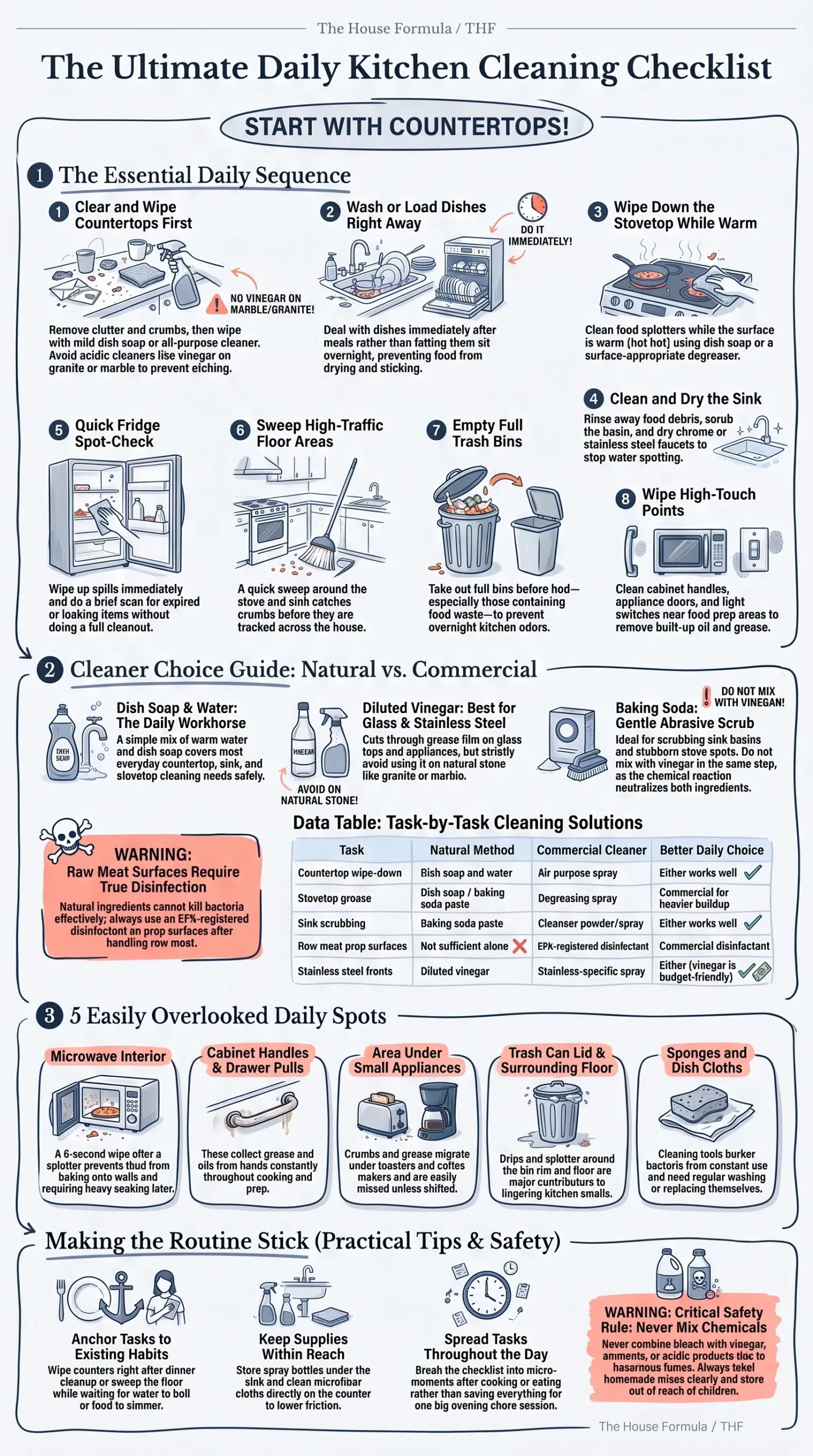
Photo Credit: Hobby Guidebook Editorial
Eco-Friendly Ways to Handle Daily Kitchen Cleaning
For households that prefer to limit commercial products, a simple dish soap and warm water solution covers most everyday countertop, sink, and stovetop cleaning without needing anything stronger. Reusable microfiber cloths, washed regularly, cut down on paper towel waste while still lifting grease effectively. Diluted white vinegar works as a natural glass cleaner for stainless steel appliance fronts and glass stovetops, applied in small amounts and buffed dry to avoid streaking.
A baking soda paste, mixed with a small amount of water, handles daily sink scrubbing without the harsher chemicals found in some scouring powders. None of these substitutions require giving up effectiveness, though heavier grease buildup or situations calling for actual disinfection, such as after handling raw meat, still benefit more from a product specifically suited to that task.
Commercial Cleaner vs Natural Method: What Actually Makes Sense Daily
Neither approach is universally better for every task on a daily kitchen cleaning checklist, and the right choice usually comes down to what you're cleaning and how much time you have.
|
Task |
Natural Method |
Commercial Cleaner |
Better Daily Choice |
|
Countertop wipe-down |
Dish soap and water |
All-purpose spray |
Either works well |
|
Stovetop grease |
Dish soap, baking soda paste |
Degreasing spray |
Commercial for heavier buildup |
|
Sink scrubbing |
Baking soda paste |
Bathroom-style cleanser |
Either works well |
|
Raw meat prep surfaces |
Not sufficient alone |
EPA-registered disinfectant |
Commercial disinfectant |
|
Stainless steel fronts |
Diluted vinegar |
Stainless-specific spray |
Either, vinegar is budget-friendly |
Natural ingredients handle routine grease and food residue well, but they aren't a substitute for a proper disinfectant when the task calls for actually killing bacteria, such as cleaning a cutting board or countertop after raw meat or poultry prep. In those specific situations, an EPA-registered disinfecting product suited to the surface is the more appropriate daily choice, used according to its label's contact time.
Which Tasks Are Easy to Overlook on a Daily Kitchen Cleaning Checklist?
- The inside of the microwave. A quick wipe after any splatter prevents buildup that later requires soaking and scrubbing.
- Cabinet handles and drawer pulls. These pick up grease from hands constantly but rarely get included in a daily wipe-down unless it's specifically on the list.
- Under small appliances. Crumbs and grease collect under a toaster or coffee maker and get missed since the appliance itself isn't moved daily.
- The trash can lid and surrounding floor area. Splatter and drips here are easy to miss but contribute noticeably to kitchen odor over time.
- Dish sponge or cloth itself. These tools pick up bacteria from constant use and need their own regular cleaning or replacement, not just the surfaces they're used on.

Photo Credit: RDNE Stock project
How Can You Make a Daily Kitchen Cleaning Checklist Practical to Follow?
A checklist only works if it fits into how your household actually operates, so a few adjustments make it easier to stick with long-term:
- Keep cleaning supplies within reach of where they're used. A spray bottle under the sink and a cloth on the counter reduce the friction of starting the task in the first place.
- Attach cleaning to an existing habit, such as wiping the counter right after dinner cleanup or sweeping while something simmers on the stove.
- Break the checklist into smaller moments rather than one big session. Wiping the stovetop right after cooking and handling dishes right after eating spreads the work out naturally through the evening.
- Adjust the list based on how the kitchen actually gets used. A household that cooks with a lot of oil will need more frequent stovetop attention than one that mostly reheats meals.
- Involve everyone in the household, even briefly, since a checklist followed by one person alone tends to fall apart faster than one that's shared.
How Often Should You Use or Update a Daily Kitchen Cleaning Checklist?
The checklist itself should run every day, but it's worth revisiting the list every month or so to check whether it still matches your household's actual routine. A change in cooking habits, a new appliance, or even a shift in who's usually home during the day can all affect which tasks matter most. If certain items on the list consistently get skipped, it's worth asking whether they genuinely need to happen daily or whether they fit better into a weekly routine instead.
For tasks that don't need daily attention but still come up regularly, our Weekly Kitchen Cleaning Checklist covers the next layer of cleaning, things like wiping down cabinet fronts or cleaning the microwave more thoroughly, that keep the kitchen in good shape without adding to the daily list.
When Daily Cleaning Isn't Enough
A solid daily routine handles surface-level mess, but it doesn't replace occasional deeper cleaning for spots that don't get touched every day, like the inside of the oven, behind appliances, or grout lines that slowly darken with grease over weeks. Trying to fold every one of these tasks into a daily checklist usually makes the list too long to actually follow, which is part of why splitting cleaning into daily, weekly, and monthly layers tends to work better than one all-in-one list. Our Monthly Kitchen Deep Cleaning Checklist covers these less frequent but still important tasks in more detail.
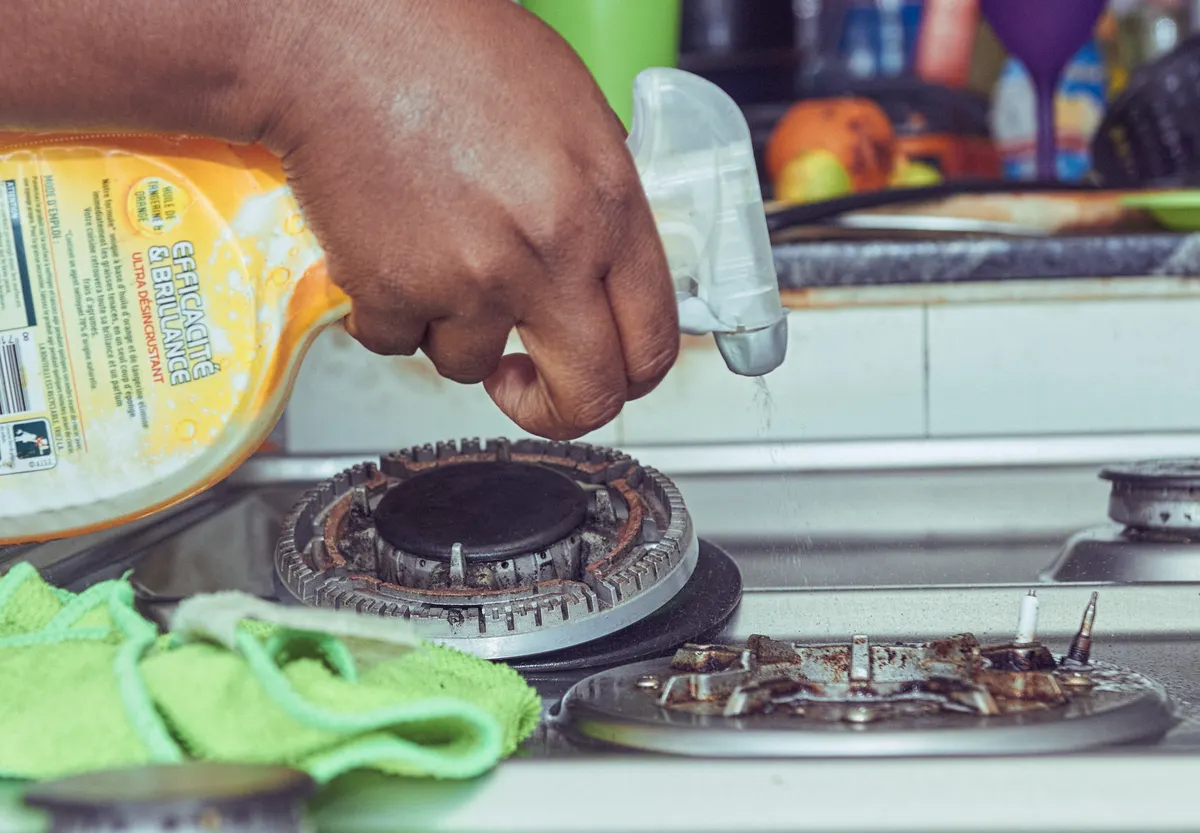
Photo Credit: Stephane Fabrice Bassangue
A Quick Note on Safety
Most daily kitchen cleaning tasks involve mild products like dish soap, diluted vinegar, or baking soda, which are low-risk for most households when used as directed. If you're using a stronger commercial degreaser or a disinfecting product, particularly after handling raw meat, follow the label's instructions for contact time and any rinse requirements before food contact. Never combine bleach with vinegar, ammonia, or other acidic products, since this can produce hazardous fumes. Keep any diluted homemade cleaning solutions labeled clearly, and store all cleaning products out of reach of children and pets.
FAQ
What should you include in a daily kitchen cleaning checklist? Countertop wipe-downs, dishes, a stovetop wipe, sink cleaning, a quick fridge spot-check, floor sweeping, trash removal when full, and a wipe of high-touch spots like cabinet handles.
How often should you use or update a daily kitchen cleaning checklist? The checklist runs every day, but it's worth reviewing every month or so to make sure it still matches your household's actual cooking habits and routine.
Which tasks are easy to overlook on a daily kitchen cleaning checklist? The inside of the microwave, cabinet handles, the area under small appliances, the trash can lid, and the dish sponge or cloth itself are commonly missed.
How can you make a daily kitchen cleaning checklist practical to follow? Keep supplies within reach, attach tasks to existing habits like after-dinner cleanup, break the list into smaller moments throughout the evening, and involve the whole household.
What should be done first on a daily kitchen cleaning checklist? Clearing and wiping the countertops first makes the most sense, since it frees up space for the rest of the routine and addresses fresh mess before it has time to set.
For more on building out a complete kitchen routine, check out the full kitchen cleaning guide for additional schedules and task breakdowns.





Leave a Reply