

Between work, school runs, and everything in between, kitchen cleaning is one of the first things to slide when a household gets busy. A kitchen cleaning schedule built for busy families works because it breaks the workload into small, realistic pieces instead of expecting one big cleaning session to fix everything. This guide is part of the Kitchen Cleaning Routines & Schedules Guide, and it lays out a practical daily, weekly, and monthly rhythm that fits around a full schedule rather than fighting against it.
How to Build a Practical Routine for the Kitchen
The most workable kitchen routine splits tasks by how often they truly need attention, not by how often you feel like doing them. A practical structure looks like this:
- Daily: quick wipe-downs, dishes, and trash management
- Weekly: deeper cleaning of surfaces, sink, stovetop, and floors
- Monthly: appliance interiors, cabinet fronts, and spots that don't get dirty fast
Splitting tasks this way keeps any single cleaning session short. A busy family doesn't need to deep clean the whole kitchen every week; they need a system where small daily habits prevent big weekend cleanups from becoming necessary in the first place.
What Should Be Done Daily, Weekly, and Monthly
Here's a direct breakdown of what actually belongs in each timeframe, so nothing feels arbitrary.
Daily tasks:
- Wipe down countertops after meal prep
- Load and run the dishwasher, or hand-wash dishes before bed
- Wipe the stovetop after cooking
- Take out full trash bags
- Quick wipe of the sink basin
Weekly tasks:
- Clean the microwave interior
- Scrub the sink and faucet more thoroughly
- Sweep and mop the floor
- Wipe down appliance exteriors and cabinet handles
- Clean the backsplash
Monthly tasks:
- Clean inside the refrigerator and check expired items
- Run a dishwasher cleaning cycle or wipe the interior and filter
- Wipe down cabinet fronts fully
- Clean behind or under appliances where accessible
- Check and clean the range hood filter
Families with less time can lean harder on the daily habits, since a kitchen that gets small daily attention rarely needs a dramatic weekly or monthly catch-up.
What Order Should the Tasks Follow
Order matters more than most people expect, mainly because doing things out of sequence often means redoing a step. A sensible order looks like this:
- Clear counters and put dishes away first, so nothing is in the way.
- Wipe down higher surfaces, like cabinet fronts and appliance tops, before lower ones.
- Clean counters and backsplash next, since dust and crumbs from above tend to land here.
- Scrub the sink, which usually collects the most grime by the end of the day or week.
- Wipe the stovetop, especially if grease has had time to drip toward the floor.
- Sweep, then mop, so the floor is the last surface touched.
- Take out trash last, so nothing gets tracked back in while cleaning.
Following this order, even loosely, keeps a rushed cleaning session from creating extra work. If your household is renting rather than owning, a few of these tasks carry a bit more weight, since certain surfaces and appliances may need gentler care to avoid damage that affects a security deposit. The Kitchen Cleaning Checklist for Renters covers those specific considerations in more detail.
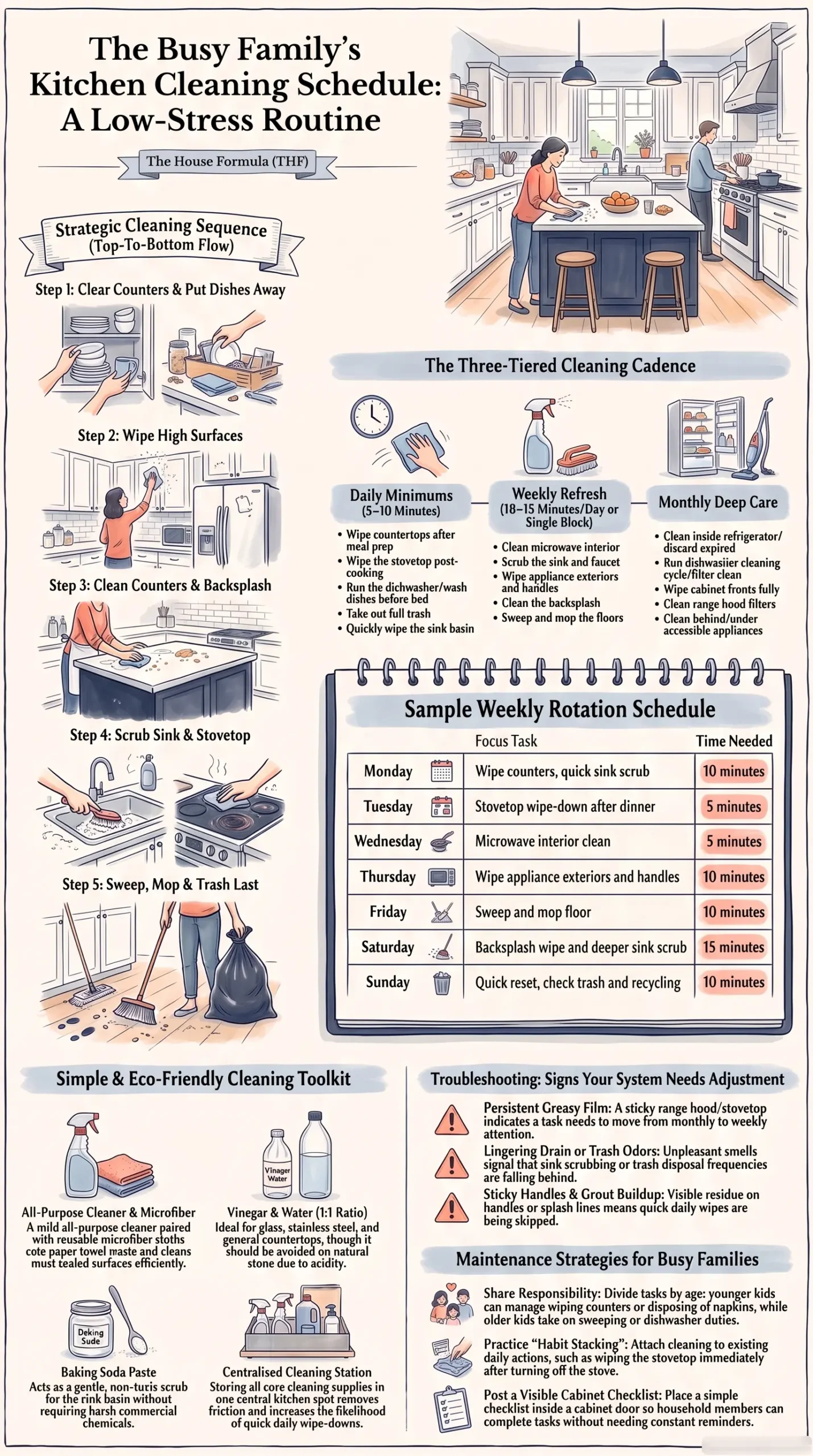
Photo Credit: Hobby Guidebook Editorial
Daily Habits That Make the Biggest Difference
For a busy household, the daily habits matter more than any single deep clean, since they're what keep grease, spills, and clutter from building up in the first place. Wiping the stovetop right after cooking takes less than a minute, but it prevents grease from hardening into something that needs scrubbing later. The same goes for counters: a quick wipe after dinner prep keeps crumbs and sauce splatters from drying into a sticky film overnight. Getting into the habit of running the dishwasher before bed, rather than letting dishes pile up in the sink, also makes a noticeable difference in how the kitchen looks and smells each morning. None of these habits take more than a few minutes, but skipping them for even a few days is usually what leads to a kitchen that suddenly feels overwhelming to clean.
Best Products for a Busy Family Kitchen Routine
The right products for a family kitchen routine are usually the simplest ones, since complicated multi-step cleaning is hard to sustain on a tight schedule. A mild all-purpose cleaner works for most sealed countertops, appliance exteriors, and general wiping. Dish soap and warm water handle the sink basin and most daily spills without needing anything stronger. For the stovetop, a cleaner suited to the specific surface matters: glass and ceramic cooktops need a gentle, non-abrasive product, while metal grates on a gas range can generally tolerate a slightly stronger degreaser.
It helps to keep supplies in one central spot near the kitchen rather than scattered around the house, since a busy family is far more likely to wipe something down quickly if the cleaner and cloth are already within reach. Avoid stocking more products than you'll actually use regularly. A cluttered cabinet of half-used bottles doesn't make cleaning faster, and it increases the risk of accidentally grabbing the wrong product for a surface, or worse, mixing two products that were never meant to be combined.
Eco-Friendly Ways to Clean on a Busy Schedule
An eco-friendly approach doesn't have to mean more time or more steps, which matters for a family already stretched thin. Reusable microfiber cloths cut down on paper towel waste and work well for daily wiping on most surfaces. A simple vinegar and water solution, mixed at roughly equal parts, handles glass, stainless steel, and general counter wiping, though it should be avoided on natural stone counters since the acidity can dull the surface over time. Baking soda works as a gentle, non-toxic scrub for the sink basin without needing a harsher commercial cleaner.
These lower-impact options are genuinely practical for a family routine, not just a nice idea, since they tend to be cheaper per use and require fewer separate products cluttering the cabinet. That said, some jobs, like sanitizing after handling raw meat, may still call for a disinfecting product with proven effectiveness against bacteria, so it's reasonable to mix an eco-friendly daily routine with a stronger product used specifically where sanitizing matters most. If bathroom upkeep in your house could use a similar low-effort structure, the Bathroom Cleaning Schedule for Busy Families applies the same daily, weekly, and monthly approach to that space.

Photo Credit: Polina Tankilevitch
How to Tell the Kitchen Needs Cleaning
A busy schedule can make it easy to lose track of what's actually clean versus what just looks tidy. A few signs indicate the kitchen needs more attention than the current routine is giving it:
- A greasy film on the stovetop or range hood that doesn't wipe away easily
- A lingering smell near the sink drain, trash bin, or dishwasher
- Sticky residue on counters or cabinet handles that requires extra scrubbing
- Visible buildup in floor corners or grout lines along the backsplash
- A full trash bin that's been sitting more than a day, which tends to attract pests in warmer months
If these signs show up regularly, it's usually a sign that a task needs to move from monthly to weekly, or from weekly to a quick daily habit, rather than a sign that the whole system has failed.
How to Make the Routine Easier to Maintain
A schedule only works if the family actually follows it, and a few adjustments make that far more realistic:
- Split tasks among household members based on age and ability, so cleaning doesn't fall on one person every time.
- Keep sessions short. A 10 to 15 minute daily routine and a 30 to 45 minute weekly session are far more sustainable than long, occasional deep cleans.
- Attach tasks to existing habits, like wiping the stovetop right after cooking, rather than treating cleaning as a separate event to schedule later.
- Post a simple checklist somewhere visible, like the inside of a cabinet door, so kids or partners can follow along without needing a reminder every time.
- Adjust for the season or schedule. A busier week (holidays, travel, school events) might mean leaning on the minimum daily habits and pushing weekly deep tasks by a few days rather than skipping them entirely.
Younger kids can usually manage simple tasks like wiping counters or loading napkins into the trash, while older kids can take on loading the dishwasher or sweeping. Distributing tasks this way keeps any one person from feeling like the routine depends entirely on them. For families whose kids are old enough to help but young enough to need very simple tasks, a Daily Kitchen Cleaning Checklist can offer a more stripped-down version to hand off as their own responsibility, separate from the fuller family schedule below.
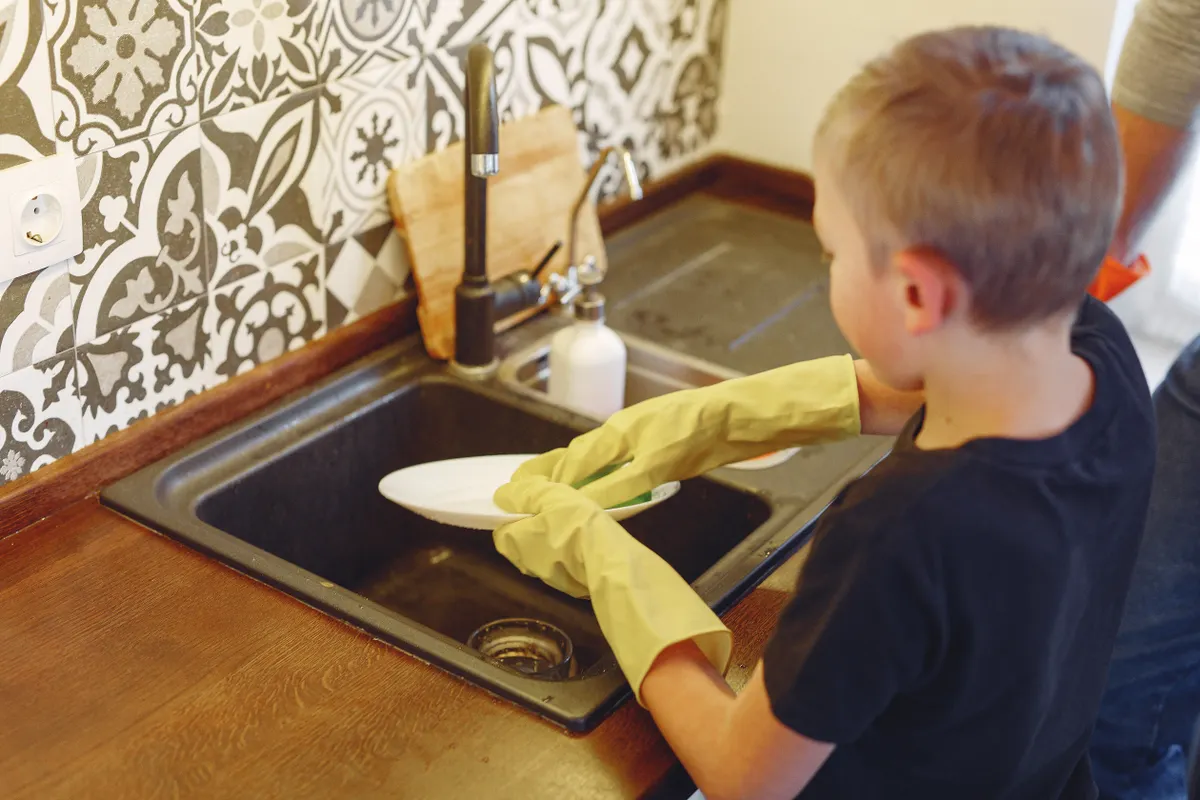
Photo Credit: Gustavo Fring
A Sample Weekly Schedule
A visual breakdown can make the routine easier to follow at a glance:
|
Day |
Focus Task |
Time Needed |
|
Monday |
Wipe counters, quick sink scrub |
10 minutes |
|
Tuesday |
Stovetop wipe-down after dinner |
5 minutes |
|
Wednesday |
Microwave interior clean |
10 minutes |
|
Thursday |
Wipe appliance exteriors and handles |
10 minutes |
|
Friday |
Sweep and mop floor |
15 minutes |
|
Saturday |
Backsplash wipe and deeper sink scrub |
15 minutes |
|
Sunday |
Quick reset, check trash and recycling |
10 minutes |
This isn't a rigid rule, and swapping days around based on your family's actual schedule is completely fine. The goal is spreading small tasks across the week so no single day carries too much.
Frequently Asked Questions
How should you build a practical routine for the kitchen? Split tasks into daily, weekly, and monthly categories based on how quickly each area gets dirty, and keep each cleaning session short enough to actually finish.
How often should you do or reset the kitchen? Daily habits like wiping counters and running the dishwasher, weekly deeper cleaning of the sink and floors, and monthly attention to appliance interiors and cabinet fronts.
What should be done daily, weekly, and monthly for the kitchen? Daily: counters, stovetop, dishes, trash. Weekly: microwave, sink scrub, floors, backsplash. Monthly: fridge interior, dishwasher filter, cabinet fronts, range hood filter.
What order should the tasks follow for the kitchen? Clear clutter first, then move top to bottom (cabinets, then counters, then sink and stovetop), finishing with floors and trash removal.
How do you make the kitchen routines easier to maintain? Split tasks among household members, keep sessions short, attach cleaning to existing habits like post-cooking wipe-downs, and post a visible checklist.
Explore the complete kitchen cleaning guide for more routines built around real household schedules.




Leave a Reply