
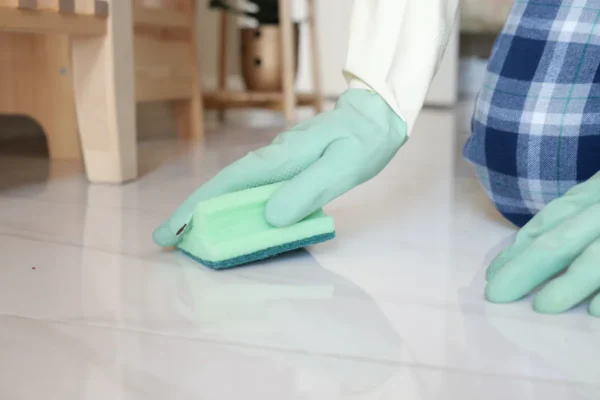
That faint tug you feel underfoot near the stove or trash can is one of the most common complaints about kitchen floors, and it usually means a thin layer of grease, spilled juice, or cleaning product residue has built up on the surface. Sticky kitchen floor residue doesn't always come from an obvious spill. Sometimes it's the slow accumulation of cooking grease in the air, or a cleaner that wasn't rinsed well enough the last time the floor was mopped.
This guide covers what actually causes sticky spots, how to remove them safely depending on your floor material, and how to stop the problem from coming back. It's part of the Kitchen Floor Cleaning Guide, which covers material-specific care across every common kitchen floor type.
How to Remove Sticky Residue from Kitchen Floors (Quick Answer)
For most kitchen floors, this approach works well:
- Sweep or vacuum the area first to clear loose crumbs and grit.
- Apply a small amount of warm water mixed with a mild dish soap or a floor-specific cleaner directly to the sticky spot.
- Let it sit for a few minutes to loosen the residue rather than scrubbing right away.
- Wipe with a soft cloth or sponge, using gentle circular motions.
- Rinse the area with a clean, barely damp cloth to remove any leftover soap film, then dry.
The exact cleaner and amount of water will depend on your specific flooring material, but this basic sequence, loosen, then wipe, then rinse, applies across most kitchen floor types.
What Causes Sticky Residue in the First Place
Sticky spots on a kitchen floor usually trace back to one of a few common sources:
- Cooking grease. Oil splatter from the stove doesn't always land where you'd expect, and airborne grease can settle onto the floor over time, especially near the stove and counters.
- Spilled food and drinks. Sugary spills like juice, soda, or syrup leave a sticky film once they dry, even if the spill itself seemed minor at the time.
- Cleaning product buildup. Using more cleaner than needed, or not rinsing thoroughly after mopping, can leave a soapy or waxy film that actually attracts more dirt and feels sticky underfoot.
- Wax-based products on the wrong floor. Some all-purpose floor polishes leave a residue that builds up with repeated use, particularly on floors that weren't designed for that kind of product.
Knowing which of these applies to your floor helps you pick the right fix instead of guessing. A recent spill responds well to a quick wipe, while a soapy film that's built up over weeks usually needs a more thorough rinse to fully clear.
How to Tell If Your Floor Actually Needs Cleaning
Not every sticky feeling means the whole floor needs a deep clean. A few signs help narrow down what's actually going on:
- A single sticky spot near the stove, trash can, or table usually points to a localized spill or grease splatter rather than a floor-wide issue.
- A general tackiness across the whole floor, especially right after mopping, often means cleaning product residue was left behind and the floor wasn't rinsed enough.
- A dull, slightly hazy look along with the sticky feel can indicate a wax or polish buildup that's been accumulating over several cleanings.
- Residue that reappears quickly after cleaning in the same spot is often a sign the area needs more thorough rinsing, not necessarily more cleaner.
If the stickiness returns within a day or two of a full mop, it's worth checking whether too much cleaning product is being used per session, since more soap doesn't always mean a cleaner floor.
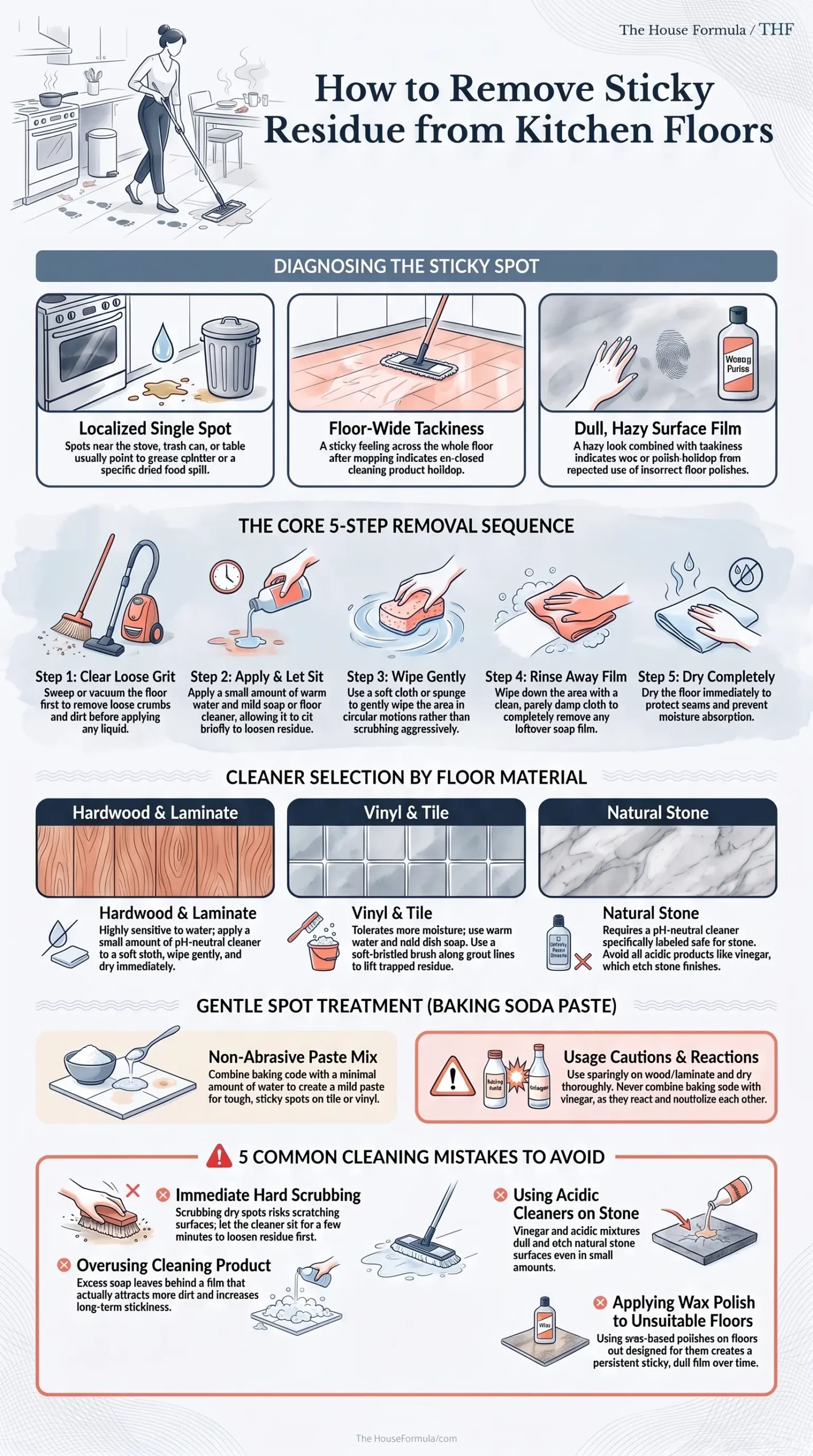
Photo Credit: Hobby Guidebook Editorial
Cleaning Sticky Residue by Floor Material
Different kitchen floor materials respond differently to cleaning products, and using the wrong one can leave a surface duller or more damaged than it started.
Hardwood and Laminate
Both of these materials are sensitive to standing water, so any cleaning method needs to stay light on moisture. Apply a small amount of a pH-neutral, wood or laminate-safe cleaner to a soft cloth rather than pouring liquid directly onto the floor. Work the cloth over the sticky spot in gentle circles, then follow immediately with a dry cloth to remove any dampness. Avoid soaking the area or letting cleaner sit for long stretches, since moisture that seeps into the seams can cause swelling over time.
Vinyl and Tile
These materials tolerate more moisture and can generally handle a slightly wetter approach. A warm water and mild dish soap mixture, or a floor-specific cleaner, can be applied and left to sit for a few minutes before wiping. Grout lines on tile floors can trap residue more stubbornly than the tile itself, so a soft-bristled brush worked gently along the grout lines helps lift buildup without scratching the surrounding tile. Our guide on Tile Kitchen Floor Cleaning goes into more depth on grout care and which products are safe for both glazed and unglazed tile.
Natural Stone
Stone floors need a pH-neutral cleaner specifically labeled safe for stone, since acidic products like vinegar can etch or dull the surface over time. Test any new cleaner on a small, inconspicuous area first, since finishes and sealants vary between stone types and even between batches of the same stone.
Using Baking Soda as a Gentle Option
For sticky spots that don't lift easily with soap and water alone, a baking soda paste can help without introducing anything abrasive. Mix a small amount of baking soda with just enough water to form a paste, apply it to the sticky area with a soft cloth, and let it sit for a few minutes before wiping clean. This works as a mild, natural option for tougher residue, particularly on tile and vinyl. It should be used more cautiously on hardwood and laminate, and always followed by a thorough dry wipe to prevent any moisture from lingering in seams. Baking soda should not be combined with vinegar in the same cleaning step, since the two react and neutralize each other before doing much actual cleaning work.
What to Avoid When Cleaning Sticky Spots
- Scrubbing hard right away. Give the cleaner a few minutes to loosen the residue first. Aggressive scrubbing on a dry, stuck spot risks scratching the surface, especially on hardwood or laminate.
- Using too much cleaning product. More soap often means more residue left behind if the floor isn't rinsed thoroughly, which can actually make stickiness worse over time.
- Skipping the rinse step. A soapy film left on the floor attracts more dirt and can feel just as sticky as the original spot.
- Using an acidic cleaner on natural stone. Vinegar and similar acidic products can etch stone surfaces, even in small amounts.
- Using wax-based polish on floors not designed for it. This is one of the most common causes of a general sticky, dull film across an entire kitchen floor.
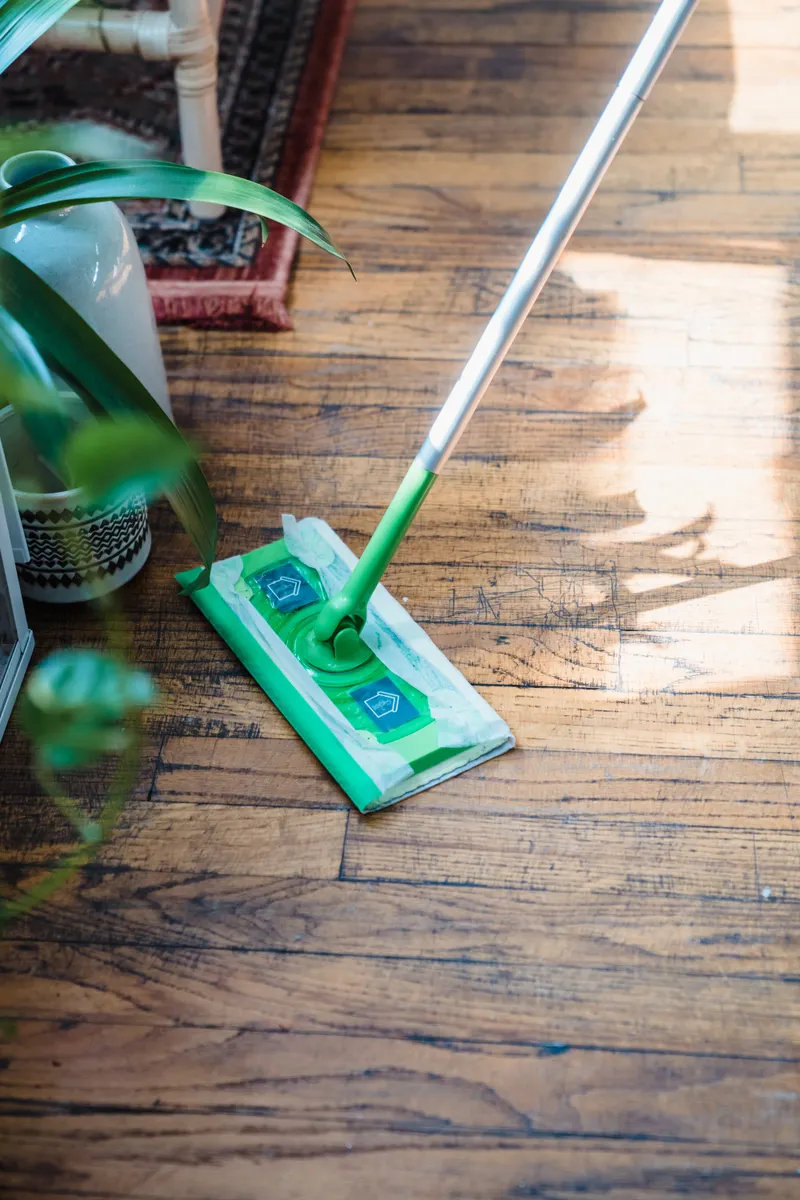
Photo Credit: Liliana Drew
Preventing Sticky Residue from Building Up
A little prevention goes a long way toward keeping sticky spots from becoming a recurring problem.
- Wipe spills as soon as they happen, rather than letting sugary drinks or sauces dry onto the floor.
- Use the manufacturer-recommended amount of cleaner when mopping, since more product isn't the same as a cleaner result.
- Rinse the mop and the floor with clean water after using soap-based cleaners, particularly on vinyl and tile where soap residue tends to linger.
- Check kitchen mats and rugs regularly, since grease and food particles collect underneath them just as easily as on the exposed floor, and a dirty mat can reintroduce residue with every step. Our guide on Kitchen Floor Mats & Rugs Cleaning covers how often to wash different mat materials and what to use for each.
- Address grease near the stove promptly, since airborne splatter accumulates faster in that specific area than anywhere else in the kitchen.
How Often Should You Address Sticky Residue
- Spot-clean sticky areas as soon as you notice them, rather than waiting for a full mopping session.
- Do a full floor mop once or twice a week, adjusting based on how much cooking and foot traffic the kitchen sees.
- Check high-grease zones, like near the stove, more frequently than the rest of the floor, since these spots build up residue faster.
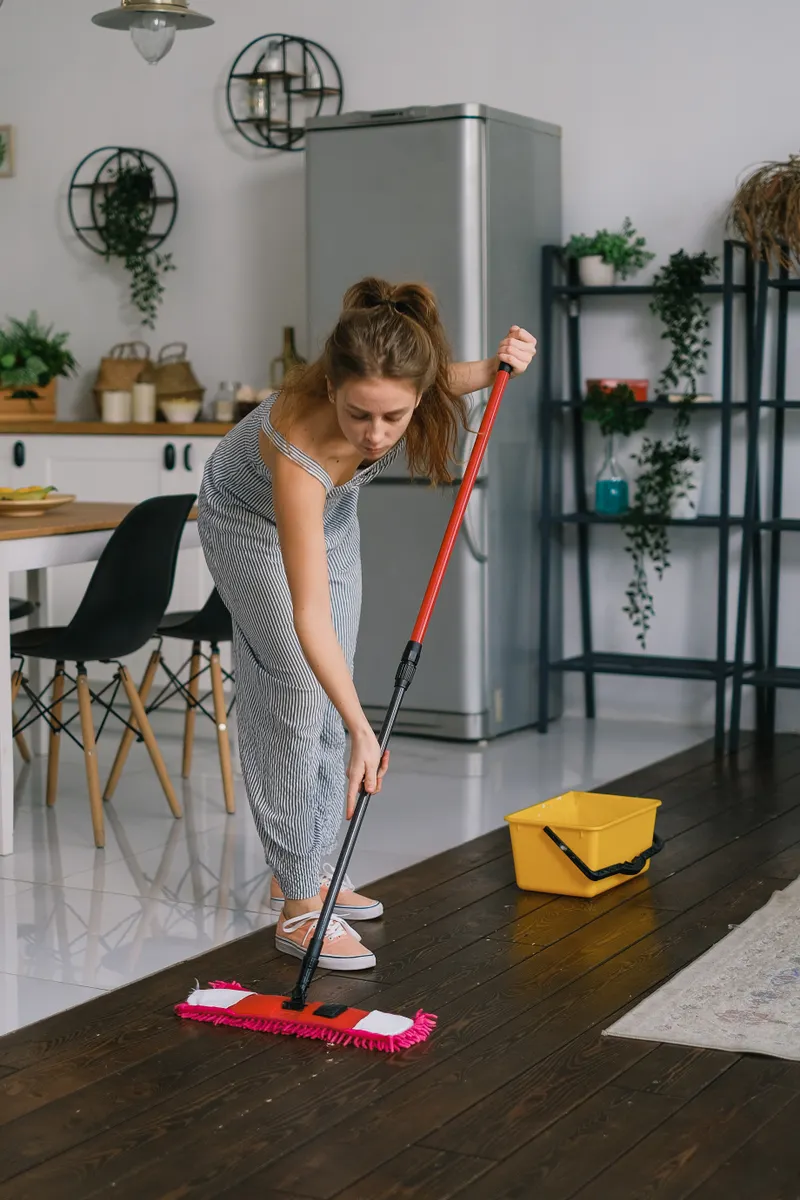
Photo Credit: SHVETS production
Eco-Friendly Options for Sticky Residue
For households that prefer to limit commercial cleaning products, a warm water and mild dish soap mixture handles most everyday sticky spots effectively on vinyl and tile. A baking soda paste offers a gentle, non-toxic option for tougher residue on these same materials. For hardwood and laminate, sticking with a manufacturer-approved, pH-neutral cleaner in small amounts is generally the safer choice over improvised natural mixes, since these floors are more sensitive to both moisture and acidity.
FAQ
How do you remove sticky residue from kitchen floors? Sweep first, apply a small amount of a floor-appropriate cleaner, let it sit briefly to loosen the residue, then wipe and rinse thoroughly.
How often should you clean sticky residue from kitchen floors? Address sticky spots as soon as they're noticed, and mop the full floor once or twice a week depending on kitchen use.
What cleaning products are safe for sticky residue from kitchen floors? Mild dish soap and warm water work well on tile and vinyl. Hardwood and laminate need a pH-neutral, material-specific cleaner used sparingly, and natural stone requires a cleaner labeled safe for stone.
What should you avoid when cleaning sticky residue from kitchen floors? Avoid scrubbing hard right away, using too much cleaning product, skipping the rinse step, and using vinegar on natural stone floors.
How can you clean sticky residue from kitchen floors without damaging it? Let the cleaner sit briefly before wiping, use a soft cloth rather than an abrasive scrubber, and keep water use minimal on moisture-sensitive materials like hardwood and laminate.
For more flooring and appliance care throughout the kitchen, go back to the complete kitchen cleaning guide for additional routines and schedules.



Leave a Reply