

A plastic shower curtain takes on a lot of moisture and soap exposure in a short amount of time, which is exactly why it tends to develop soap scum, mildew spots, and a cloudy film faster than most other bathroom surfaces. Plastic shower curtain cleaning is straightforward once you know what the material can and can't handle, since plastic reacts differently to heat, scrubbing, and certain cleaners than fabric does.
This guide covers the best way to clean a plastic shower curtain, which products are safe, how often the job needs doing, and where an eco-friendly approach works just as well as a commercial cleaner. This article is Part of Shower Door & Curtain Cleaning Guide, which covers the full range of shower door and curtain care.
The Best Way to Clean a Plastic Shower Curtain
- Take the curtain down before cleaning, since it's much easier to treat both sides evenly when it isn't hanging and bunching against itself.
- Wipe off loose soap scum and hair with a damp cloth first, which keeps the deeper clean from just pushing loose grime around.
- Fill a tub or large basin with warm water, adding a small amount of mild dish soap, which handles most everyday buildup on plastic without being harsh on the material.
- Soak the curtain for 10 to 15 minutes, giving the soap solution time to loosen soap scum and light mildew before any scrubbing starts.
- Scrub problem areas with a soft-bristled brush or sponge, focusing on the bottom few inches where mildew and soap scum usually concentrate most, since that's the part that stays wet the longest after each shower.
- Rinse thoroughly with clean water, making sure no soap residue is left in the folds, since dried soap film can leave the plastic feeling sticky or looking hazy.
- Hang the curtain back up while still damp, spreading it out fully rather than bunching it, which allows it to air dry evenly and cuts down on the moisture that mildew needs to grow.
For a curtain with more established mildew, a machine wash on the gentle cycle with warm water and a small amount of detergent, followed by air drying, is often more effective than hand washing alone. Most plastic curtains should not go in the dryer, since heat can warp or melt the material, so check the curtain's care tag if one is still attached before trying this method.
How to Tell a Plastic Shower Curtain Needs Cleaning
A few clear signs make it easy to know when a plastic curtain has moved past a quick wipe-down and needs a full clean.
- Visible dark or pink spots, which usually indicate mold or mildew starting to take hold, especially along the bottom edge
- A sticky or slightly tacky feel when touched, often a sign of built-up soap scum
- A musty smell even when the bathroom itself doesn't smell off, which points to moisture trapped in the curtain's folds
- A cloudy or dulled appearance compared to how clear or bright the curtain looked when new
Catching these signs early keeps mildew from spreading further into the plastic's texture, since mildew that's been established for weeks is harder to fully remove than a spot caught within the first few days.
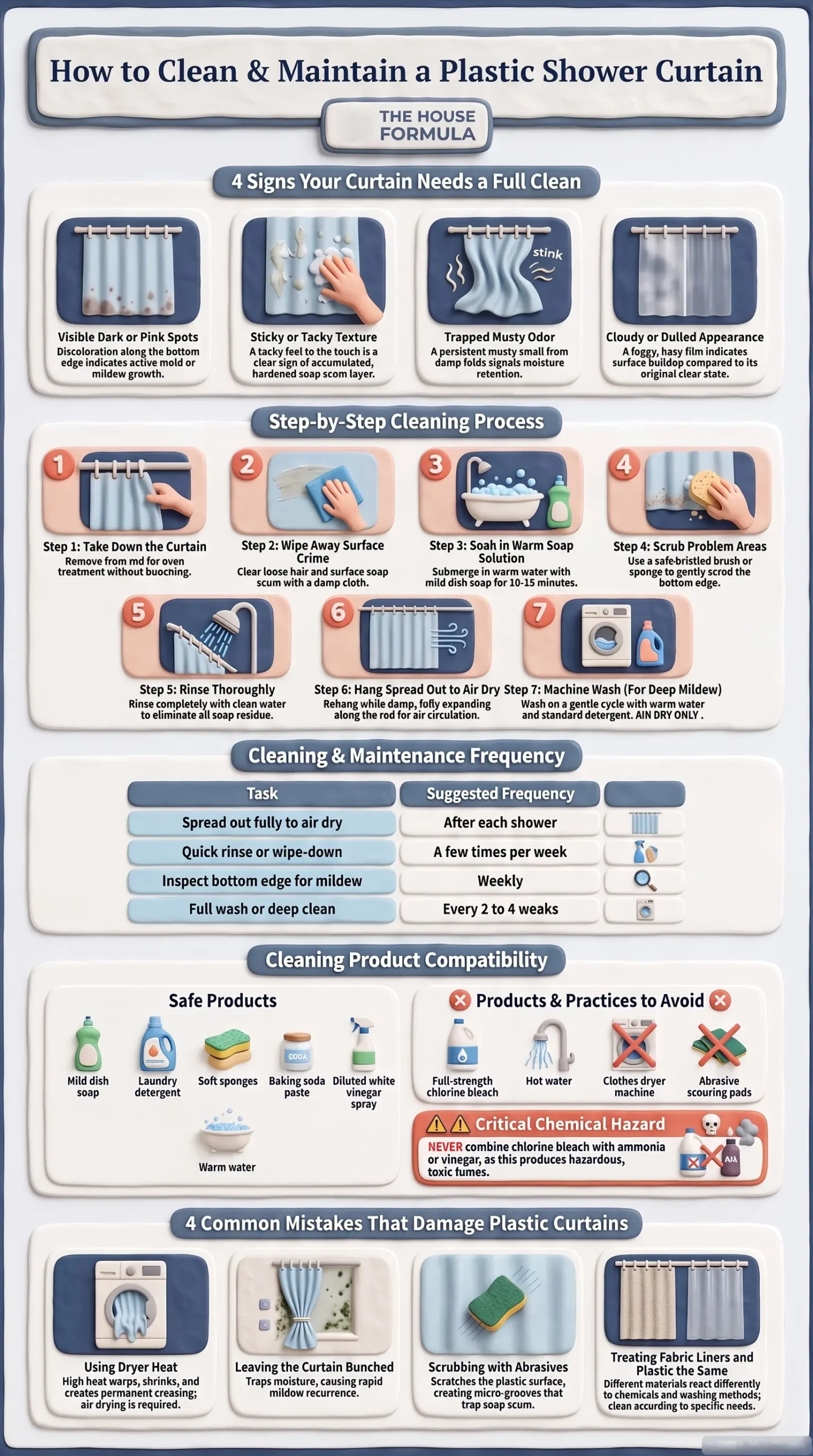
Photo Credit: Hobby Guidebook Editorial
How Often Should You Clean a Plastic Shower Curtain
|
Task |
Suggested Frequency |
|
Quick rinse or wipe after showering |
A few times per week |
|
Spread out to air dry fully |
After each shower |
|
Full wash or deep clean |
Every 2 to 4 weeks |
|
Check bottom edge for mildew |
Weekly |
Spreading the curtain out after each shower, rather than leaving it bunched against the wall, does more to prevent mildew than almost any cleaning product, since mildew needs sustained moisture to grow and a spread-out curtain dries far faster than a folded one. Bathrooms with poor ventilation or heavy daily use typically need the full wash on the more frequent end of this range.
What Cleaning Products Are Safe for a Plastic Shower Curtain
Generally safe:
- Mild dish soap diluted in warm water for hand washing
- A small amount of regular laundry detergent for a gentle machine wash cycle
- A soft-bristled brush or sponge for scrubbing mildew or soap scum spots
Use with caution:
- Diluted white vinegar, which can help with light soap scum and mild mildew but should be tested first, since some plastic curtains have a printed design or coating that vinegar can affect over repeated use
- Baking soda paste, generally gentle but should be rinsed thoroughly to avoid a chalky residue in the folds
Avoid:
- Chlorine bleach used at full strength directly on plastic, since it can weaken or discolor some curtain materials over time, and it should never be combined with ammonia or vinegar due to the risk of hazardous fumes
- Hot water or the dryer's heat cycle, since plastic can warp, shrink, or develop a permanent wrinkle pattern under high heat
- Abrasive scouring pads, which can scratch the plastic surface and create tiny grooves that trap even more soap scum going forward
If the curtain has any metal grommets, checking that a chosen cleaner won't affect the metal is also worth a moment of attention, since some cleaners suited to plastic aren't necessarily gentle on metal hardware.

Photo Credit: cottonbro studio
Best Product for Plastic Shower Curtain Cleaning
Plain dish soap and warm water genuinely does most of the heavy lifting for standard soap scum and light buildup, and it's gentle enough to use weekly without any concern about wearing down the plastic over time. For curtains with a fabric liner used in combination with a plastic outer curtain, treating each piece separately with the method suited to its material gives better results than trying to clean both the same way.
For established mildew that a basic soap wash doesn't fully clear, a product formulated specifically for mold and mildew removal on bathroom surfaces tends to work faster than repeated dish soap washes, though it should always be used according to the label directions and rinsed thoroughly afterward. Persistent mold that returns despite regular washing sometimes needs a more targeted approach, which is covered in Removing Mold from a Shower Curtain for curtains dealing with mold beyond typical surface mildew.
Eco-Friendly Way to Clean a Plastic Shower Curtain
Warm water and mild dish soap remain the simplest eco-friendly option for routine plastic curtain cleaning, requiring no specialty products and handling the majority of everyday buildup on their own. Diluted white vinegar is a reasonable natural addition for soap scum specifically, sprayed on and left for a few minutes before wiping, though it's worth testing on a small section first if the curtain has any printed pattern or special coating.
Baking soda paste offers a gentle, natural option for spot-scrubbing mildew marks without needing a harsher commercial product, though thorough rinsing afterward matters to avoid leaving a residue. For a fully natural routine, alternating a weekly vinegar wipe-down with an occasional soap and water soak covers most plastic curtains without needing anything beyond basic pantry ingredients.
What to Avoid When Cleaning a Plastic Shower Curtain
- Using the dryer's heat setting. Plastic curtains can warp or develop permanent creases under high heat, so air drying is the safer default.
- Leaving the curtain bunched against the wall. This traps moisture and is one of the most common reasons mildew keeps coming back even after a thorough clean.
- Mixing bleach with vinegar or ammonia. This combination can produce hazardous fumes and should never be attempted regardless of how stubborn the mildew looks.
- Scrubbing with anything abrasive. Rough pads can scratch the plastic surface, creating grooves that hold onto soap scum more easily than a smooth surface would.
- Ignoring the liner if there is one. A separate fabric liner behind a plastic curtain collects its own buildup and needs its own cleaning routine, since fabric and plastic respond differently to the same products, a distinction covered in Fabric Shower Curtain Cleaning for households using both together.
How Can You Clean a Plastic Shower Curtain Without Damaging It
Testing any new cleaner, including diluted vinegar, on a small hidden section of the curtain is a reasonable precaution before treating the whole thing, particularly if the curtain has a printed design, texture, or coating that could react differently than plain clear plastic. Using cool or lukewarm water rather than hot water throughout the cleaning process protects the plastic from warping, since heat is one of the more common ways a plastic curtain gets permanently misshapen.

Photo Credit: Ata Ebem
Handling the curtain gently while wet also matters, since plastic can tear more easily when saturated with water than when dry, particularly around grommet holes that have already seen some wear. Hanging the curtain fully spread out to dry, rather than folding it while damp, protects both its shape and its ability to resist mildew going forward, since a fully dried curtain gives mildew far less opportunity to take hold before the next shower.
Frequently Asked Questions
What is the best way to clean plastic shower curtain? Soak the curtain in warm water with mild dish soap, scrub problem areas with a soft brush, rinse thoroughly, and hang it fully spread out to dry.
How often should you clean plastic shower curtain? A quick wipe or rinse a few times a week, spreading it out to dry after each shower, and a full wash every two to four weeks keeps most plastic curtains in good shape.
What cleaning products are safe for plastic shower curtain? Mild dish soap and warm water are safe for regular use. Diluted vinegar and baking soda work well for spot cleaning, but avoid full-strength bleach and abrasive pads.
What should you avoid when cleaning plastic shower curtain? Avoid the dryer's heat setting, mixing bleach with vinegar or ammonia, abrasive scrubbing, and leaving the curtain bunched up while wet.
How can you clean plastic shower curtain without damaging it? Use cool or lukewarm water, test new cleaners on a small area first, handle the wet curtain gently, and hang it fully spread out to dry rather than folding it.
Explore the complete bathroom cleaning guide for how curtain care fits into full bathroom maintenance.
A Quick Safety Note
Cleaning a plastic shower curtain is generally low risk, but a few precautions are worth keeping in mind. Never mix bleach with ammonia or vinegar, since this combination can release hazardous fumes in an enclosed bathroom space. Test any new cleaner on a small, hidden section first, especially on curtains with printed designs or special coatings, and avoid high heat from the dryer or very hot water, since plastic can warp permanently. If mold keeps returning despite regular washing, consider a more targeted mold treatment or replacing a curtain that's become too porous or damaged to clean effectively.




Leave a Reply