
A non-slip bath mat does a job most people don't think about until it's not working anymore, keeping feet steady on wet tile or the bottom of a tub. But that same suction-cup or rubber-backed design that grips the floor also traps water, soap residue, and skin cells underneath it, which makes it one of the more likely spots in a bathroom for mold and mildew to develop out of sight. Non-slip bath mat cleaning matters as much for hygiene as it does for keeping the mat's grip working the way it's supposed to.
This guide covers the best way to clean a non-slip bath mat depending on the material, which products are safe for both fabric and rubber-backed mats, how often the mat realistically needs washing, and the signs that point to a mat overdue for a deep clean or possibly a replacement. This article is Part of Bathroom Floor Cleaning Guide, which covers care for the floor and everything that sits on top of it.
What Is the Best Way to Clean a Non-Slip Bath Mat
The right method depends on the mat's material, since a fabric mat with a rubber backing needs different handling than a solid rubber or vinyl mat with suction cups.
Fabric Bath Mats with Rubber Backing
- Shake out loose hair and debris outdoors or over a trash can, clearing away what a wash cycle alone won't fully remove.
- Check the care label before washing, since some rubber-backed mats can go in a washing machine while others need hand washing to keep the backing from cracking.
- Wash in cold or warm water, never hot, using a mild detergent, since hot water can cause the rubber backing to soften, crack, or separate from the fabric over time.
- Skip the dryer entirely for rubber-backed mats, air drying instead by hanging the mat flat or over a rod, since heat from a dryer has the same softening effect on rubber backing that hot water does.
- Let the mat dry completely before placing it back on the floor, checking both sides, since a mat returned to the bathroom while still damp underneath just restarts the moisture problem the wash was meant to solve.
Rubber or Vinyl Suction Mats
- Remove the mat from the tub or floor and rinse it under running water, clearing away loose soap scum and debris from both the top surface and the suction cups underneath.
- Scrub with a soft brush and a mild soap and water solution, paying close attention to the suction cups, where soap film and mildew tend to build up in the small ridges.
- Soak in a mild solution for stubborn buildup, letting the mat sit for ten to fifteen minutes in warm water with a small amount of dish soap before scrubbing again.
- Rinse thoroughly and hang to dry, allowing full air circulation on both sides before reattaching the mat to the tub, since suction cups don't grip well or dry fully if they're pressed flat against a surface while still wet.
For a mat with visible mildew spots rather than just general soap scum, a longer soak of twenty to thirty minutes in a mild solution before scrubbing usually loosens the buildup enough to lift with a brush, without needing anything stronger.
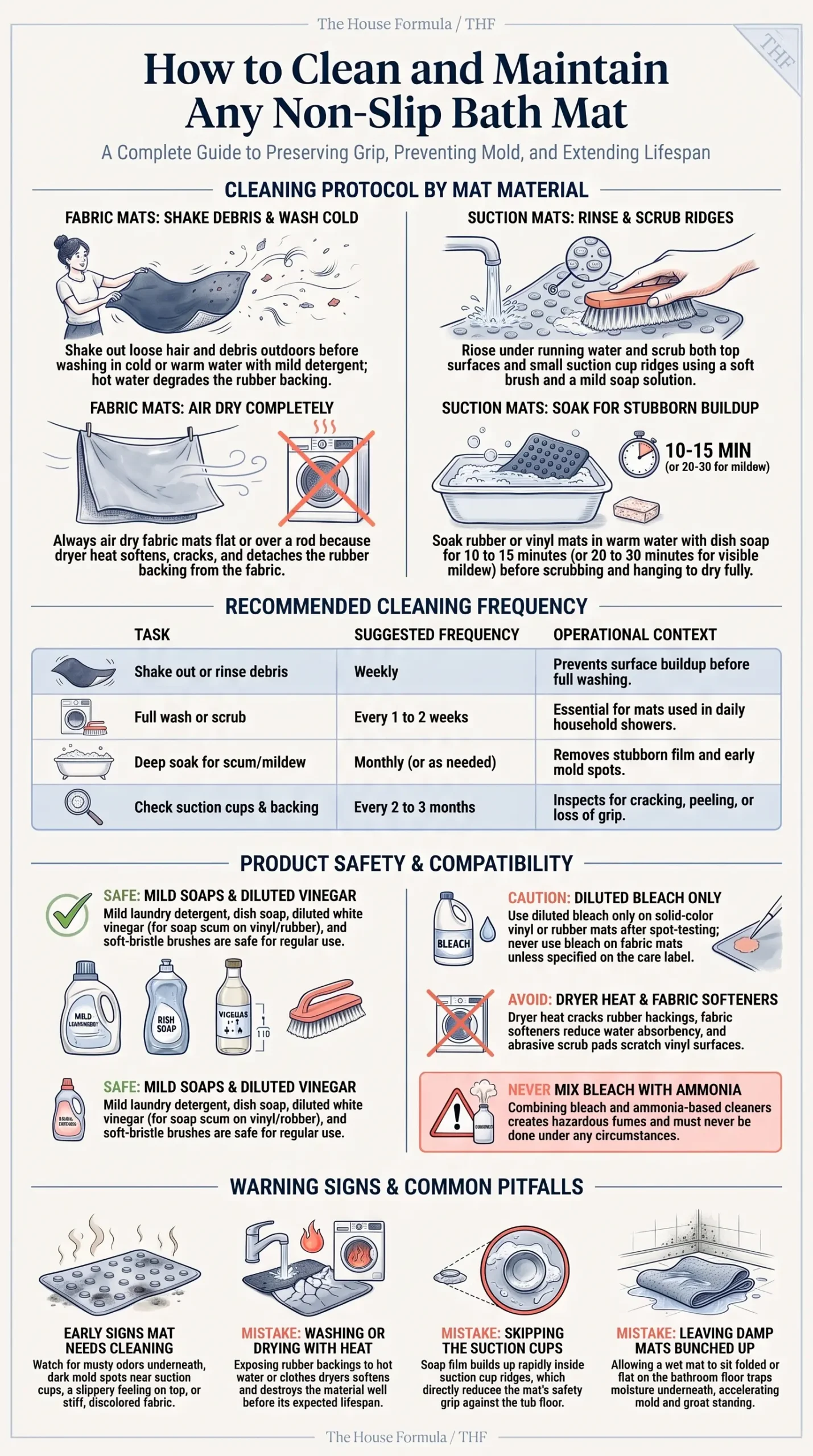
Photo Credit: Hobby Guidebook Editorial
How Often Should You Clean a Non-Slip Bath Mat
|
Task |
Suggested Frequency |
|
Shake out or rinse debris |
Weekly |
|
Full wash or scrub |
Every 1 to 2 weeks |
|
Deep soak for mildew or soap scum |
Monthly, or as needed |
|
Check suction cups and backing condition |
Every 2 to 3 months |
A mat used daily in a household shower needs the more frequent end of this schedule, since constant moisture exposure speeds up mildew growth and soap scum buildup. A mat in a guest bathroom used only occasionally can typically be cleaned less often, though it still benefits from a full dry-out between uses rather than sitting damp in a room that isn't ventilated well.
What Cleaning Products Are Safe for a Non-Slip Bath Mat
Generally safe:
- Mild dish soap or laundry detergent, effective for regular washing on both fabric and rubber mats
- White vinegar diluted with water, useful for cutting through soap scum and mild mildew on rubber or vinyl mats specifically
- A soft-bristle brush, gentle enough to clean suction cups and ridges without damaging the material
Use with caution:
- Bleach, which can be used on some solid-color vinyl or rubber mats for mildew but should be diluted well, tested on a small area first, and never used on a mat with any fabric component unless the care label confirms it's safe
- Hot water, which should generally be avoided on rubber-backed mats since heat softens rubber and can shorten the backing's lifespan over repeated washes
Avoid:
- Ammonia-based cleaners combined with bleach, a combination that must never be mixed regardless of the mat material, since it releases hazardous fumes
- Fabric softener on fabric bath mats, which can reduce the mat's water absorbency over time and isn't necessary for a bathroom item
- Abrasive scrub pads on vinyl or rubber suction mats, which can scratch the surface and make it feel rougher without actually improving grip
How to Tell a Non-Slip Bath Mat Needs Cleaning
A few signs point to a mat that's overdue.
- A musty or mildew smell, especially noticeable when the mat is picked up or flipped over, often the clearest early sign of trapped moisture underneath
- Dark spots on the underside or around the suction cups, which usually indicate mold or mildew starting to establish in a damp, low-airflow spot
- A slippery or slick feel on a suction mat, ironic given the mat's purpose, but a buildup of soap film can actually reduce the grip the mat is meant to provide
- A stiff or discolored feel on the fabric surface, pointing to soap and mineral residue that's built up past what a quick rinse will resolve
Catching mildew early on a bath mat matters, since a spot caught within a week or two usually lifts with a normal wash or soak, while mildew left for a month or more sometimes calls for a longer treatment or, in more established cases, replacing the mat rather than continuing to clean it.
Photo Credit: Max Vakhtbovych
Professional Cost to Clean a Non-Slip Bath Mat
A bath mat is one of the few bathroom items that almost never needs professional cleaning, since the materials involved (fabric, rubber, and vinyl) are all suited to a regular home wash or scrub routine. The only situation where professional help genuinely applies is a heavily soiled or extensively moldy mat in a household managing a broader mold issue in the bathroom, where a specialist addressing the room's ventilation and moisture problem might also advise on textile items in the space. For nearly every other case, a normal wash cycle or a soak-and-scrub routine at home resolves the issue.
How Can You Clean a Non-Slip Bath Mat Without Damaging It
The backing is the part most likely to get damaged during cleaning, whether that's the rubber backing on a fabric mat or the suction cups on a vinyl mat. Heat is the main culprit: hot water and dryer heat both soften rubber over time, which eventually leads to cracking, peeling, or suction cups that no longer hold their grip. Sticking to cold or warm water and air drying keeps that risk low.
For suction-style mats specifically, scrubbing too aggressively with a stiff brush can wear down the texture of the suction cups themselves, which reduces how well they hold to a tub surface. A soft brush and a gentler amount of pressure gets the same soap scum off without shortening the mat's usable life.
Bath mats sit directly on the bathroom floor, so the surface underneath them matters just as much as the mat's own care. A mat left on a tile floor without airing out regularly can contribute to grout staining or trapped moisture at the floor level, a concern covered in more depth in Tile Bathroom Floor Cleaning for anyone dealing with both the mat and the floor beneath it.
Common Mistakes When Cleaning a Non-Slip Bath Mat
- Washing a rubber-backed mat in hot water. This is one of the most common causes of a backing that cracks or peels away from the fabric well before the mat would otherwise wear out.
- Drying a rubber-backed mat in the dryer. Heat has the same softening effect here as hot water does, and air drying is the safer standard for any mat with a rubber component.
- Leaving a damp mat folded or bunched on the floor. This traps moisture against the backing and is one of the fastest ways to encourage mildew growth between washes.
- Skipping the suction cups during cleaning. Soap scum and mildew build up in the small ridges of a suction cup just as easily as anywhere else, and skipping them reduces both cleanliness and grip.
- Mixing bleach with an ammonia-based cleaner while trying to tackle mildew. This combination should never be used together on any surface, since it releases hazardous fumes.
Vinyl floors under a bath mat come with their own moisture considerations, particularly around standing water at the mat's edges, a topic covered fully in Vinyl Bathroom Floor Cleaning for anyone maintaining both surfaces together.
Photo Credit: Kader D. Kahraman
Frequently Asked Questions
What is the best way to clean a non-slip bath mat? For fabric mats with a rubber backing, wash in cold or warm water and air dry. For rubber or vinyl suction mats, scrub with mild soap and a soft brush, paying attention to the suction cups, then rinse and hang to dry.
How often should you clean a non-slip bath mat? Shake out or rinse debris weekly, do a full wash or scrub every one to two weeks, and check the suction cups or backing condition every two to three months.
What cleaning products are safe for a non-slip bath mat? Mild dish soap or laundry detergent and diluted white vinegar are safe for most mats. Use bleach with caution and only on solid vinyl or rubber, and avoid hot water on rubber-backed mats.
What should you avoid when cleaning a non-slip bath mat? Avoid hot water and dryer heat on rubber-backed mats, fabric softener on fabric mats, abrasive pads on suction mats, and mixing bleach with ammonia-based cleaners.
How can you clean a non-slip bath mat without damaging it? Stick to cold or warm water, air dry instead of using a dryer, use a soft brush rather than an abrasive pad, and let the mat dry fully on both sides before placing it back in the bathroom.
View the full bathroom cleaning guide for how bath mat care fits into full bathroom maintenance.
A Quick Safety Note
Cleaning a non-slip bath mat is generally low risk, but a few points are worth keeping in mind. Never mix bleach with an ammonia-based cleaner, since this releases hazardous fumes. If using bleach on a solid vinyl or rubber mat, dilute it well and test on a small area first, and always check the care label before applying it to a mat with any fabric component. A mat with extensive, established mold that doesn't lift after a proper soak and scrub is generally safer to replace than to keep treating repeatedly.

Leave a Reply