

A fabric shower curtain adds a nicer look to a bathroom than a plain plastic one, but it also absorbs moisture, soap residue, and odor in a way plastic never does. Fabric shower curtain cleaning takes a bit more care than wiping down plastic, since the material can shrink, fade, or hold onto mildew deep in the weave if it's washed the wrong way.
This guide covers the best way to clean a fabric shower curtain, the tools worth having on hand, how often the job needs doing, and where vinegar and baking soda genuinely help versus where they fall short. This article is Part of Shower Door & Curtain Cleaning Guide, which covers the full range of shower door and curtain care.
The Best Way to Clean a Fabric Shower Curtain
- Check the care label first, since fabric curtains vary widely in material, from cotton and polyester blends to heavier canvas, and the label will note whether machine washing is safe and at what water temperature.
- Remove the curtain from the rings or rod, taking care with any grommets or fabric loops that could tear if pulled roughly.
- Shake out loose debris outdoors if possible, which removes hair and loose soap flakes before the curtain goes anywhere near water.
- Pretreat visible mildew spots with a mixture of equal parts white vinegar and water, applied directly to the spot and left to sit for a few minutes before washing.
- Machine wash on a gentle cycle with warm water, using a small amount of regular laundry detergent, and adding a couple of bath towels to the load, since the towels help scrub the curtain gently as they tumble together.
- Add a cup of white vinegar to the rinse cycle if the machine allows it, which helps cut through soap residue and leftover detergent film without needing a separate rinse step.
- Skip the dryer for most fabric curtains, since heat can shrink or warp the fabric depending on the material, and instead hang the curtain back on the rod while still damp so it air dries in its natural shape.
Curtains labeled dry clean only should follow that instruction rather than being machine washed, since some fabric treatments and linings don't hold up to water and standard detergent the way plain cotton or polyester does.
Tools Needed for Fabric Shower Curtain Cleaning
A fabric curtain doesn't require anything unusual, but having a few things ready makes the process smoother and reduces the chance of damaging the fabric.
- A washing machine with a gentle cycle setting, which is gentler on stitching and grommets than a standard or heavy-duty cycle
- White vinegar, useful both as a rinse additive and as a spot treatment for mildew before washing
- Mild laundry detergent, since heavily scented or harsh detergents can sometimes irritate skin through fabric that stays damp against a shower area
- A couple of old bath towels, added to the wash load to help scrub the curtain gently without needing extra agitation settings
- A soft-bristled brush, handy for working a spot treatment into stubborn mildew before the curtain goes into the machine
Keeping these on hand means a fabric curtain wash doesn't turn into an extra trip to the store mid-task, especially since vinegar and mild detergent cover most of what the fabric actually needs.
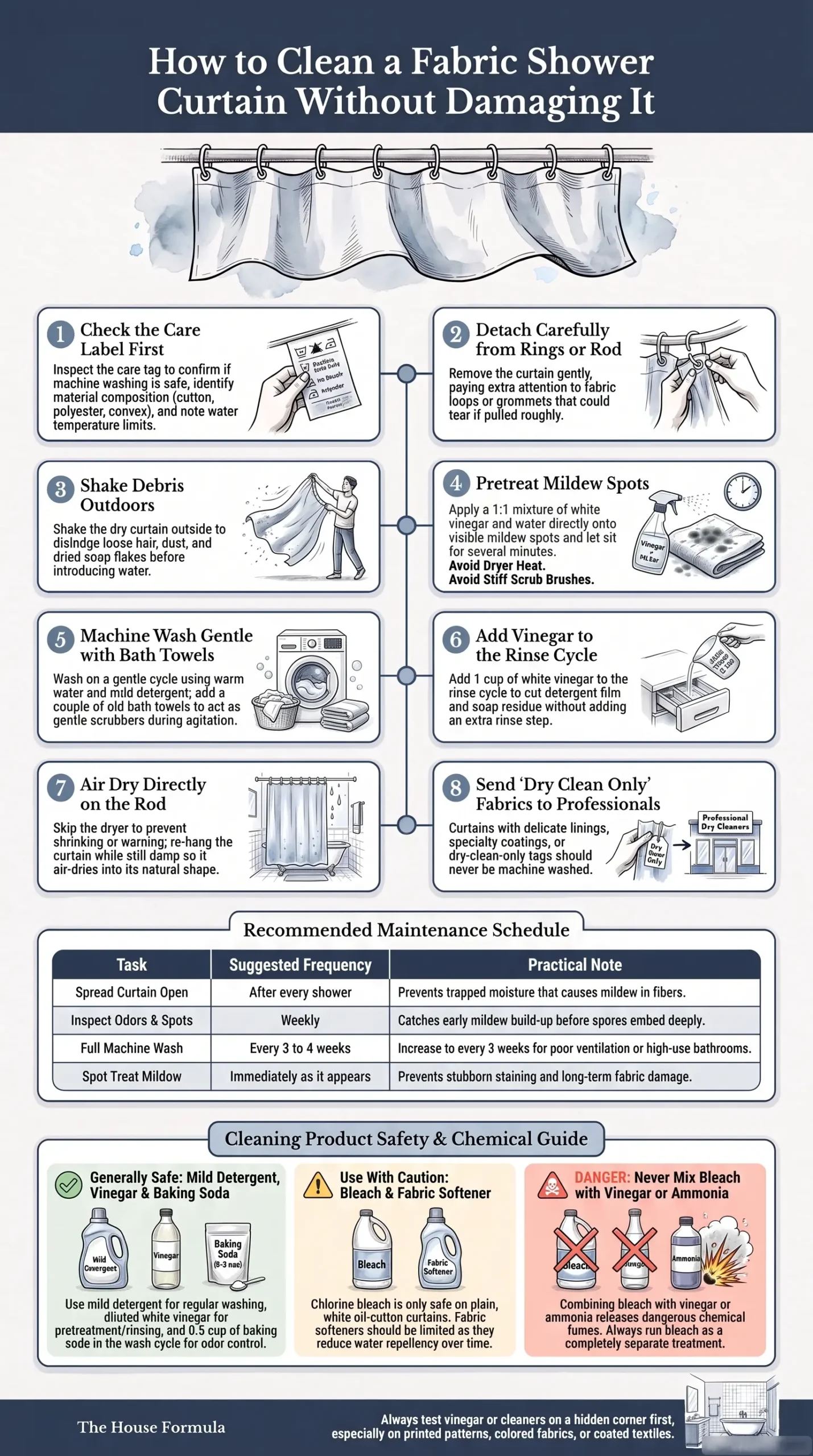
Photo Credit: Hobby Guidebook Editorial
How Often to Clean a Fabric Shower Curtain
|
Task |
Suggested Frequency |
|
Spread out fully after each shower |
After each shower |
|
Check for mildew spots or odor |
Weekly |
|
Full machine wash |
Every 3 to 4 weeks |
|
Spot treat visible mildew |
As soon as it appears |
Spreading the curtain out after each shower rather than leaving it bunched matters just as much for fabric as it does for plastic, since trapped moisture is what allows mildew to take hold in fabric fibers in the first place. Bathrooms with poor ventilation or frequent use typically need the full wash closer to every three weeks rather than four, since fabric holds onto moisture and odor longer than a smooth plastic surface does.
Vinegar and Baking Soda for Fabric Shower Curtain
Vinegar and baking soda both have a place in fabric curtain care, though they work best in slightly different ways than they do on a hard surface like a shower door track.
White vinegar works well as a pretreatment for mildew spots and as a rinse cycle additive to help remove detergent buildup and soap residue. It's generally safe for most washable fabric curtains, though checking the care label first is worth doing, since some fabric treatments or specialty coatings can be affected by repeated acid exposure over time.
Baking soda can be added directly to the wash cycle, typically about half a cup along with the regular detergent, and it helps with odor more than with visible stains. It's a gentle addition that most washable fabrics tolerate well, but it isn't a substitute for the vinegar and detergent combination when the goal is actually removing mildew rather than just neutralizing smell.
Neither ingredient should be combined with chlorine bleach in the same wash, since mixing bleach with vinegar can release hazardous fumes. If a curtain needs bleach for a stubborn white fabric stain, run it as a completely separate treatment following the bleach product's label instructions, never alongside vinegar or ammonia-based products.
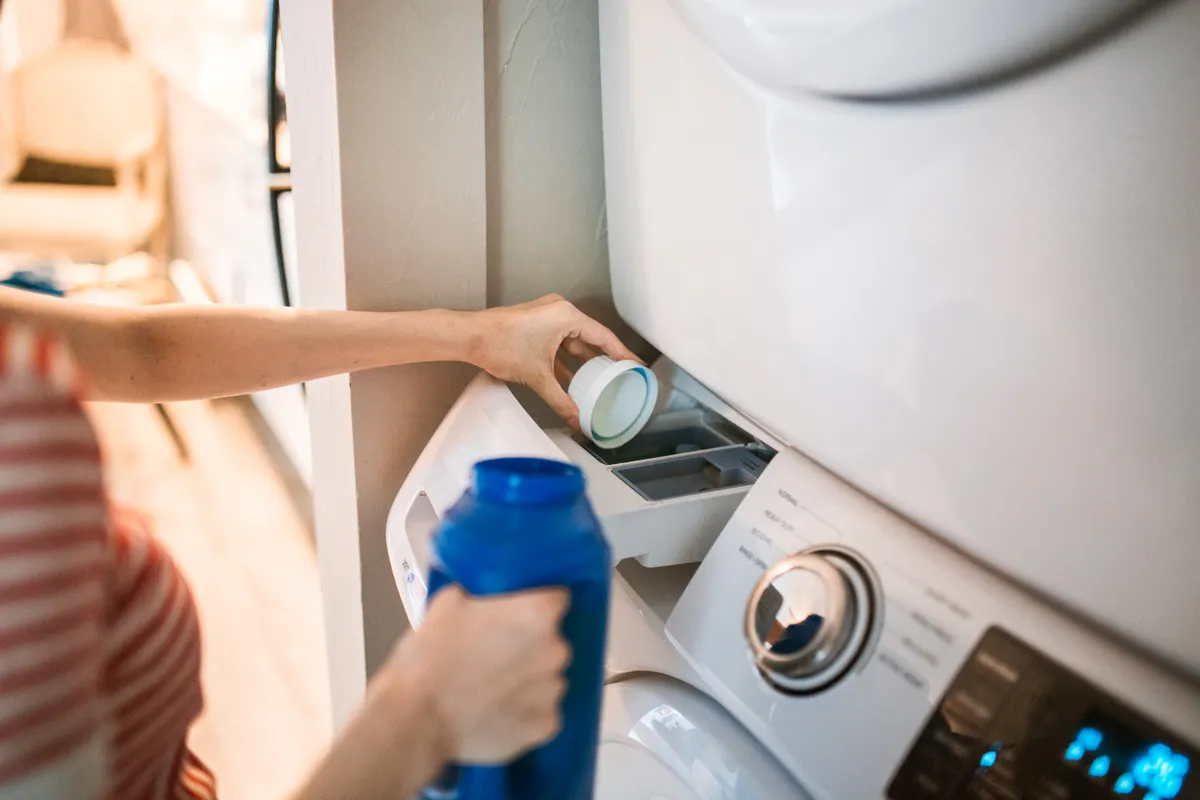
Photo Credit: RDNE Stock project
What Cleaning Products Are Safe for a Fabric Shower Curtain
Generally safe:
- Mild laundry detergent for regular machine washing
- Diluted white vinegar for pretreating mildew and as a rinse additive
- Baking soda added to the wash cycle for odor control
Use with caution:
- Chlorine bleach, safe only on white, all-cotton curtains without special coatings, and only when used alone rather than combined with other cleaners
- Fabric softener, which can reduce the fabric's ability to repel water over time on some curtain materials
Avoid:
- Mixing bleach with vinegar or ammonia in the same wash, which can produce hazardous fumes
- Hot water on fabrics not labeled colorfast or preshrunk, since this can cause shrinking or fading
- Harsh scrubbing with stiff brushes on delicate or textured fabric, which can pull threads or damage decorative stitching
Checking the fabric type before choosing a cleaning approach matters here more than with plastic, since a cotton curtain, a polyester blend, and a specialty textured fabric can all respond differently to the same detergent or spot treatment.
What to Avoid When Cleaning a Fabric Shower Curtain
- Skipping the care label. Fabric composition varies enough between curtains that assuming one method works for all of them can lead to shrinking, fading, or a damaged finish.
- Using the dryer's heat cycle. Most fabric curtains do better air drying, since dryer heat can shrink certain fabric blends or warp fabric loops and grommets.
- Letting mildew sit untreated. Fabric holds onto mildew spores more stubbornly than plastic once they set in, so treating spots as soon as they appear saves a lot of scrubbing later.
- Mixing bleach with vinegar or ammonia. This combination should never be attempted, regardless of how stubborn a stain looks.
- Ignoring a persistent musty smell. A curtain that smells musty even after washing may have mold established deeper in the fibers than a standard wash can reach, a situation covered in more detail in Removing Mold from a Shower Curtain for curtains where regular washing isn't fully solving the problem.
How Can You Clean Fabric Shower Curtain Without Damaging It
Testing any spot treatment, including vinegar, on a small hidden section of the fabric is a reasonable precaution before applying it more broadly, particularly on curtains with a printed pattern, decorative trim, or specialty coating that may react differently than plain fabric. Washing on a gentle cycle rather than a standard or heavy-duty setting protects stitching and any attached grommets or loops from unnecessary strain during the wash.
Photo Credit: Sarah Chai
Many fabric curtains are used together with a separate plastic or vinyl liner, and it's worth treating each piece according to its own material rather than assuming the same wash routine works for both. The liner typically takes on more direct water and soap exposure than the outer fabric curtain, and it usually needs a different cleaning approach and a different replacement schedule, a distinction covered in Shower Curtain Liner Cleaning for households running both together.
Frequently Asked Questions
What is the best way to clean fabric shower curtain? Check the care label, pretreat mildew spots with diluted vinegar, machine wash on a gentle cycle with mild detergent, and air dry rather than using the dryer's heat setting.
How often should you clean fabric shower curtain? Spreading it out to dry after each shower, checking weekly for mildew, and a full machine wash every three to four weeks keeps most fabric curtains fresh.
What cleaning products are safe for fabric shower curtain? Mild detergent, diluted vinegar, and baking soda are safe for most washable fabrics. Bleach should only be used alone on white cotton curtains, never combined with vinegar or ammonia.
What should you avoid when cleaning fabric shower curtain? Avoid skipping the care label, using high heat in the dryer, mixing bleach with vinegar or ammonia, and letting mildew spots sit untreated.
How can you clean fabric shower curtain without damaging it? Test spot treatments on a small hidden area first, wash on a gentle cycle, avoid high heat, and treat any attached liner separately from the fabric curtain itself.
View the full bathroom cleaning guide for how curtain care fits into complete bathroom maintenance.
A Quick Safety Note
Cleaning a fabric shower curtain is generally low risk, but a few precautions matter. Never mix bleach with vinegar or ammonia, since this combination can release hazardous fumes. Check the care label before washing, since fabric type affects which detergents and water temperatures are safe, and test any spot treatment on a small hidden area first if the curtain has a special coating or decorative trim. If a musty smell or mildew keeps returning despite regular washing, consider a more targeted mold treatment or replacing a curtain that's become too worn to clean effectively.



Leave a Reply