

Daily wiping and weekly cleaning keep a kitchen looking presentable, but some tasks only need attention once a month, things like the inside of the oven, behind the refrigerator, or grease that's built up along the top of the cabinets. A monthly kitchen deep clean checklist covers these less frequent jobs so nothing gets forgotten until it turns into a bigger project.
This guide lays out exactly what belongs on a monthly kitchen deep clean checklist, the order that makes the most sense, and which methods work without damaging the surfaces involved. It's part of the Kitchen Cleaning Routines & Schedules Guide, which covers how daily, weekly, and monthly tasks fit together into one manageable system.
What Should Be Done First on a Monthly Kitchen Deep Clean Checklist?
Start with the appliances that need the longest soak or standing time, typically the oven and the refrigerator, since these tasks often involve letting a cleaning solution sit for a while before wiping. Getting these started first means the waiting time overlaps with other tasks rather than adding extra time to the whole session.
From there, work from top to bottom and from inside appliances outward, tackling cabinet tops and upper surfaces before floors, so any dust or debris that falls during cleaning gets picked up in the final floor pass rather than requiring a repeat.
The Monthly Kitchen Deep Clean Checklist
- Deep clean the oven interior. Remove racks and soak them separately in warm, soapy water. For the oven itself, use a store-bought oven cleaner following the label's instructions, or a paste of baking soda and water left to sit for several hours or overnight before wiping. Avoid oven cleaner on continuous-clean or some specialty coated oven interiors, since these finishes are sometimes damaged by harsh chemical cleaners; check the manufacturer's manual first.
- Clean out and wipe down the refrigerator. Remove all food, check expiration dates, and wipe down shelves and drawers with warm soapy water. Dry thoroughly before replacing food to prevent moisture buildup.
- Wipe down cabinet fronts and the tops of cabinets. Grease tends to settle here even without visible spills, so a degreasing spray or a warm water and dish soap solution usually handles it. Test any new product on a small, hidden spot first if you're unsure how it will react with the cabinet finish.
- Clean the dishwasher interior. Run an empty cycle with a dishwasher cleaner or a cup of white vinegar placed on the top rack to cut through mineral buildup and lingering odor. Check the manufacturer's manual first, since some models advise against vinegar due to seal or gasket compatibility.
- Deep clean the microwave. Heat a bowl of water with a splash of lemon juice or vinegar for a few minutes to loosen splattered food, then wipe the interior clean once it's cooled slightly.
- Scrub the sink and faucet thoroughly. Beyond the daily wipe-down, use baking soda or a sink-specific cleaner to address mineral deposits around the faucet base and any dulling on the basin.
- Clean the range hood filter. Grease builds up here steadily, and many filters can be soaked in hot, soapy water or run through the dishwasher if the manufacturer confirms it's dishwasher-safe.
- Mop the floor thoroughly, including corners and under any small furniture like a kitchen cart, using a cleaner suited to the specific flooring material.
- Wipe down light fixtures and vents. Dust and grease settle here gradually and are easy to forget during routine cleaning.
- Check and clean behind the refrigerator and stove, if accessible. This area collects dust and occasionally food debris that a broom alone won't reach.
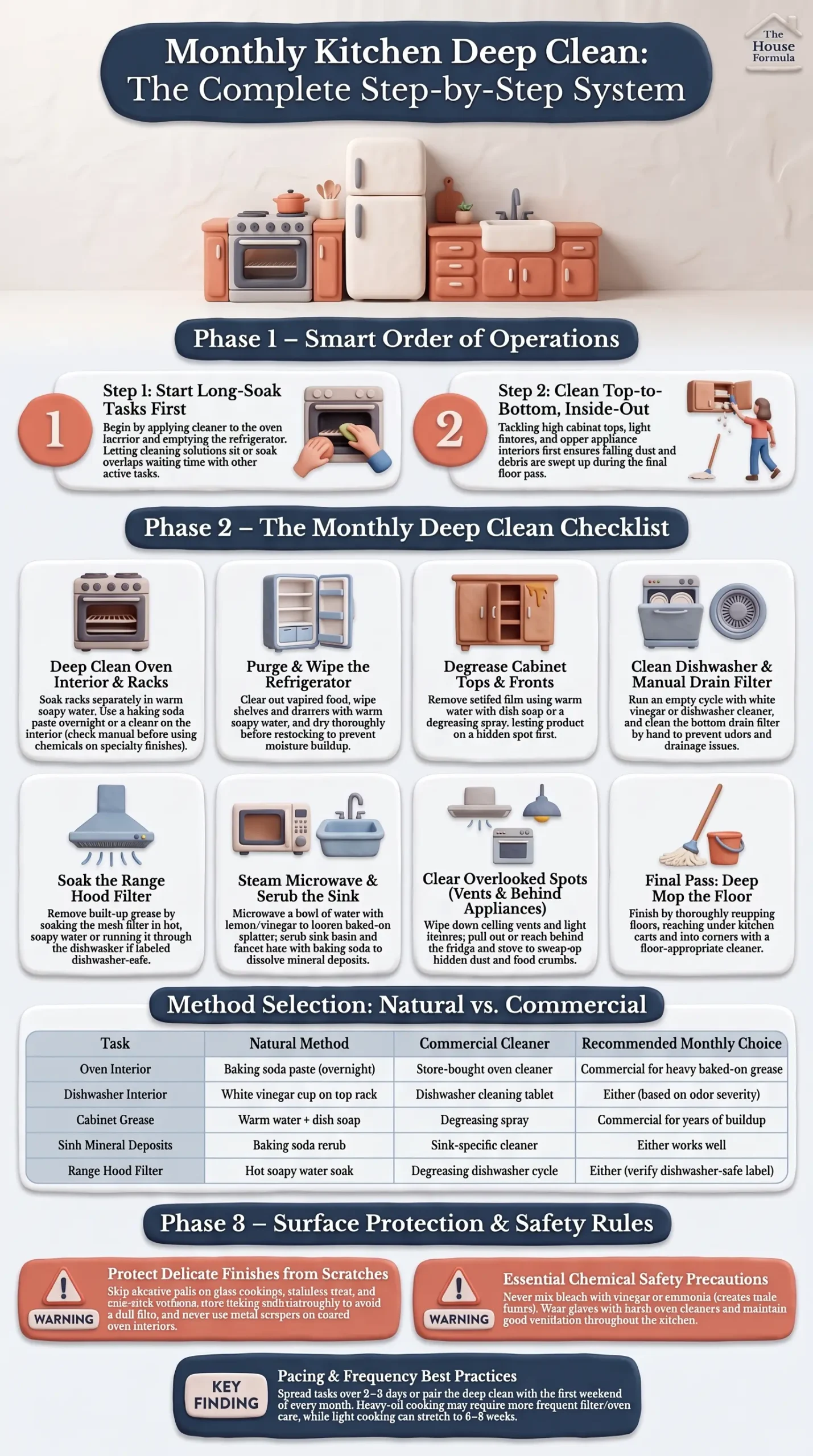
Photo Credit: Hobby Guidebook Editorial
Commercial Cleaner vs Natural Method for Monthly Deep Cleaning
Both approaches have a place in a monthly deep clean, and the right choice often depends on how stubborn the buildup is and how much time you have.
|
Task |
Natural Method |
Commercial Cleaner |
Better Monthly Choice |
|
Oven interior |
Baking soda paste, overnight soak |
Store-bought oven cleaner |
Commercial for heavy baked-on grease |
|
Dishwasher interior |
White vinegar cycle (check manual first) |
Dishwasher cleaning tablet |
Either, depending on odor severity |
|
Cabinet grease |
Dish soap and warm water |
Degreasing spray |
Commercial for years of buildup |
|
Sink mineral deposits |
Baking soda scrub |
Sink-specific cleaner |
Either works well |
|
Range hood filter |
Hot soapy water soak |
Degreasing dishwasher cycle |
Either, check dishwasher-safe label |
Natural ingredients tend to work well for routine monthly maintenance, especially when buildup hasn't had time to harden. Commercial products generally have an edge for oven interiors and years-old grease, where a natural method might require several repeated applications to get the same result. Neither approach is inherently "better," and matching the method to how much buildup you're actually dealing with saves time either way.
Doing This Without Scratching the Surface
A monthly deep clean often involves more scrubbing than a quick daily wipe, which raises the risk of scratching a surface if the wrong tool or product gets used. A few precautions help avoid this:
- Skip abrasive scouring pads on glass stovetops, stainless steel, and coated non-stick surfaces. A soft cloth or non-scratch sponge, paired with a longer soak time, usually lifts stuck-on residue without the risk.
- Test any new cleaner on a small, hidden area first, particularly on natural stone countertops, painted cabinets, or specialty finishes, since reactions can vary by manufacturer and sealant.
- Avoid using metal scrapers on oven interiors with a specialty coating, since these coatings can be damaged by scraping tools not specifically approved for that finish.
- Rinse baking soda residue thoroughly after scrubbing, since leftover powder can look like a dull film if not fully wiped away.
If you're ever unsure whether a surface can handle a specific method, checking the manufacturer's care instructions is more reliable than guessing based on how a similar-looking surface behaves elsewhere in the kitchen.
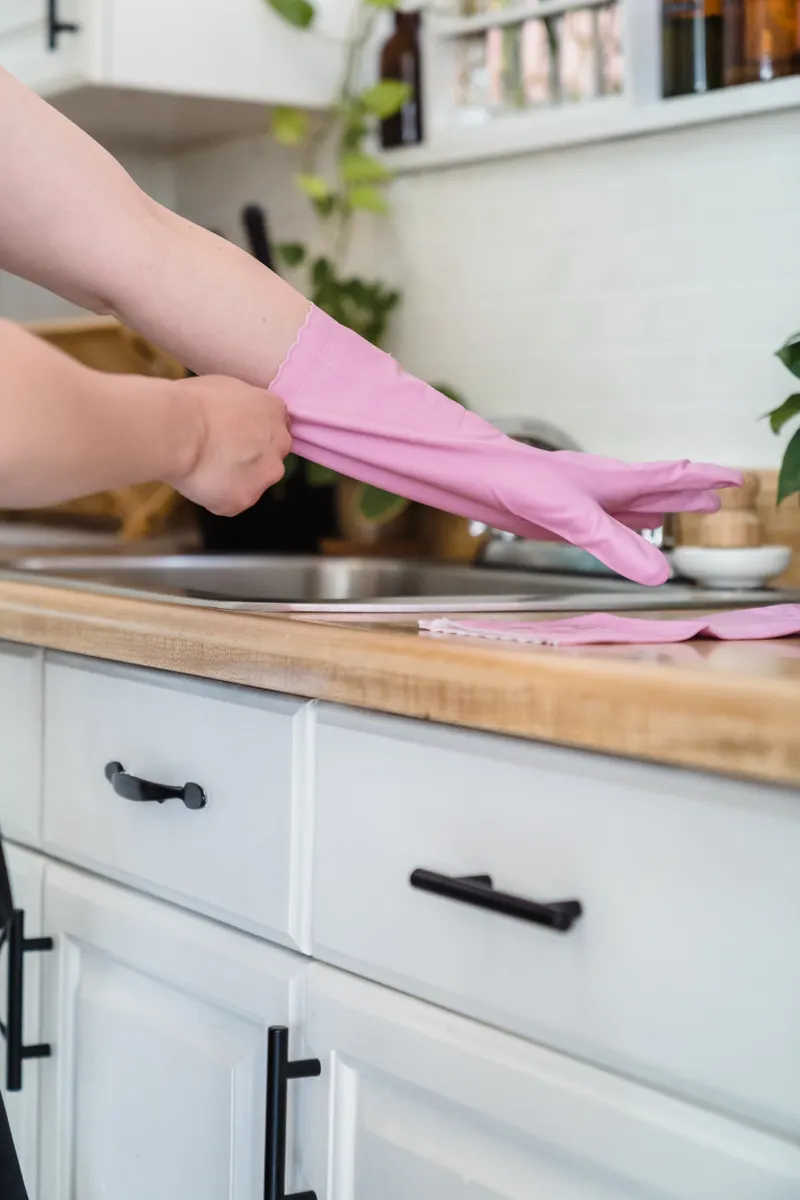
Photo Credit: Liliana Drew
Which Tasks Are Easy to Overlook on a Monthly Deep Clean?
- Behind and underneath the refrigerator and stove. These spots collect dust and debris that daily and weekly cleaning simply doesn't reach.
- The range hood filter. It's often out of sight, so grease builds up there for months before anyone notices the reduced airflow or lingering cooking odors.
- Cabinet interiors, not just fronts. Crumbs and spills inside cabinets, particularly near the stove, get missed since the doors stay closed most of the time.
- The dishwasher filter and drain area. Beyond a rinse cycle, the physical filter at the bottom of the dishwasher needs periodic manual cleaning to prevent odor and drainage issues.
- Light fixtures and ceiling vents. Grease and dust settle here just as much as on countertops, but they're easy to forget since they're not at eye level during routine cleaning.
How Can You Make a Monthly Deep Clean Practical to Follow?
A monthly deep clean tends to fall apart when it's treated as one massive task, so breaking it into manageable pieces makes it easier to actually complete:
- Spread tasks across a few days rather than trying to finish everything in one long session, particularly for households with limited free time.
- Start with the oven or dishwasher first, since these tasks involve waiting time that can run in the background while you handle other cleaning.
- Keep a simple written or digital list so nothing gets skipped from month to month, especially less visible tasks like behind the fridge or the range hood filter.
- Pair the deep clean with a specific date, like the first weekend of the month, so it becomes a predictable habit rather than something that only happens when the kitchen starts to look neglected.
This kind of monthly deep clean also makes a big difference before hosting, since it addresses the less visible buildup that a quick tidy-up beforehand won't catch. Our guide on Deep Cleaning the Kitchen Before Guests covers a faster version of this process specifically for that situation.
How Often Should You Use or Update This Checklist?
Once a month generally covers the tasks listed here for an average household kitchen, though usage patterns can shift that timeline. Kitchens that see heavy daily cooking, particularly with a lot of oil or frying, may need the oven, range hood filter, and cabinet fronts addressed more often than once a month. Kitchens used mainly for reheating or simple meals may stretch some tasks, like the oven interior, to every six to eight weeks without much difference in results.
It's worth revisiting the checklist itself every few months to confirm it still matches the kitchen's actual use. A new appliance, a change in cooking habits, or a household member moving in or out can all shift which tasks matter most and how often they need attention.

Photo Credit: Andrea Piacquadio
Professional Cost to Clean a Kitchen Monthly
Hiring a professional cleaning service for a monthly kitchen deep clean is an option worth considering for households short on time, though cost varies significantly based on location, kitchen size, and how much detail work is included, such as inside the oven or behind appliances. Many general house cleaning services price kitchen deep cleaning as part of a broader visit rather than a standalone service, so getting a specific quote from a local provider is the most reliable way to know actual pricing in your area. For households doing the work themselves, the ongoing cost is mostly limited to basic supplies like dish soap, baking soda, vinegar, and an occasional commercial oven cleaner or dishwasher cleaner, all of which are relatively inexpensive compared to a recurring professional service.
Staying consistent with post-cooking cleanup between deep cleans also reduces how much buildup accumulates by the time the next monthly session arrives. Our Post-Cooking Kitchen Cleanup Routine covers the habits that make the biggest difference here, particularly around the stove and countertops where grease accumulates fastest.
A Quick Note on Safety
Some tasks on a monthly deep clean involve stronger products than daily cleaning, particularly oven cleaners and dishwasher cleaning tablets, so following the label's instructions for ventilation, contact time, and any required rinsing matters more here than with milder daily products. Never combine bleach with vinegar, ammonia, or other acidic cleaners, since this can produce hazardous fumes. Wear gloves when handling stronger oven cleaners, keep the kitchen ventilated during use, and always check the appliance manufacturer's manual before using vinegar or a specific chemical cleaner inside a dishwasher or oven, since some finishes and gaskets have specific compatibility limits.
FAQ
What should you include in a monthly kitchen deep clean checklist? The oven interior, refrigerator interior, cabinet fronts and tops, dishwasher, microwave, sink and faucet, range hood filter, floors, light fixtures, and behind major appliances if accessible.
How often should you use or update a monthly kitchen deep clean checklist? Once a month works for most households, though heavy daily cooking may call for more frequent attention to the oven and range hood filter, while lighter-use kitchens can sometimes stretch to every six to eight weeks.
Which tasks are easy to overlook on a monthly kitchen deep clean checklist? Behind and under major appliances, the range hood filter, cabinet interiors, the dishwasher filter, and light fixtures or ceiling vents are commonly missed.
How can you make a monthly kitchen deep clean checklist practical to follow? Spread tasks across a few days, start with jobs that involve soaking or waiting time, keep a written list, and pair the routine with a specific recurring date.
What should be done first on a monthly kitchen deep clean checklist? Start the oven and refrigerator cleaning first, since these often involve soaking or standing time that can run alongside other tasks.
For more on building a complete kitchen cleaning routine, read the full kitchen cleaning guide for additional schedules and task breakdowns.





Leave a Reply