

Guests notice the kitchen more than almost any other room, even when the plan is to eat somewhere else entirely. A quick wipe-down can hide the small stuff, but a real deep clean kitchen before guests approach means tackling the spots that build up over weeks: the inside of the microwave, the grease film on the range hood, the sticky residue on cabinet handles. This guide is part of the Kitchen Cleaning Routines & Schedules Guide, and it walks through a practical order of tasks, realistic timing, and which methods work best without risking damage to countertops, appliances, or finishes.
The Fastest Way to Deep Clean a Kitchen Before Guests
If time is short, focus on the areas guests actually see and touch first:
- Clear and wipe every countertop
- Clean the sink and faucet
- Wipe down appliance exteriors (fridge, oven, dishwasher door)
- Clean the microwave inside and out
- Wipe cabinet fronts and handles
- Sweep and mop the floor
- Empty and wipe the trash bin, then take it out
This order covers the surfaces most likely to get noticed or touched during a visit, even if you don't have time for a full deep clean of every appliance and cabinet interior.
How to Build a Practical Routine for the Kitchen Before Guests Arrive
The trick to deep cleaning before guests without running out of time is working backward from when they're actually arriving, not just diving in randomly. A practical routine breaks the work into stages based on how far out you're starting:
A day or two before:
- Deep clean the oven interior if it needs it, since this often requires a self-clean cycle or a soak that takes a few hours
- Clean the inside of the refrigerator, tossing anything expired and wiping down shelves
- Wash any cloth napkins, kitchen towels, or tablecloths you plan to use
- Clean the dishwasher interior with a rinse cycle if it has a lingering smell
The morning of or a few hours before:
- Clear counters completely and wipe them down
- Clean the sink, faucet, and any visible drain area
- Wipe appliance exteriors and handles
- Clean the microwave inside and out
- Sweep and mop the floor last, so foot traffic doesn't undo the work
Right before guests arrive:
- Take out the trash and put in a fresh bag
- Do a final wipe of counters if any prep happened in between
- Light a fan or crack a window briefly if any strong cleaning smells lingered
Spacing tasks out this way keeps the day of the event from turning into a rushed scramble, and it prevents a freshly mopped floor from getting walked on before guests even show up.
What Order Should the Tasks Follow?
Within the actual cleaning session, order matters more than people expect. Working top to bottom and dry to wet keeps you from redoing steps.
- Clear clutter first. Put away dishes, mail, and anything sitting on counters so every surface is fully accessible.
- Wipe cabinet fronts and appliance exteriors before anything below them gets wet, since dust and crumbs from above will otherwise fall onto a surface you already cleaned.
- Clean countertops and backsplash next.
- Move to the sink and faucet, which usually needs the most scrubbing.
- Clean the microwave and any visible appliance exterior grime.
- Sweep the floor, then mop.
- Handle the trash last, so nothing gets tracked back in during the rest of the cleaning.
This sequence is the same logic behind a solid Post-Cooking Kitchen Cleanup Routine, just scaled up to cover more ground since guests are the focus rather than a single meal's mess.
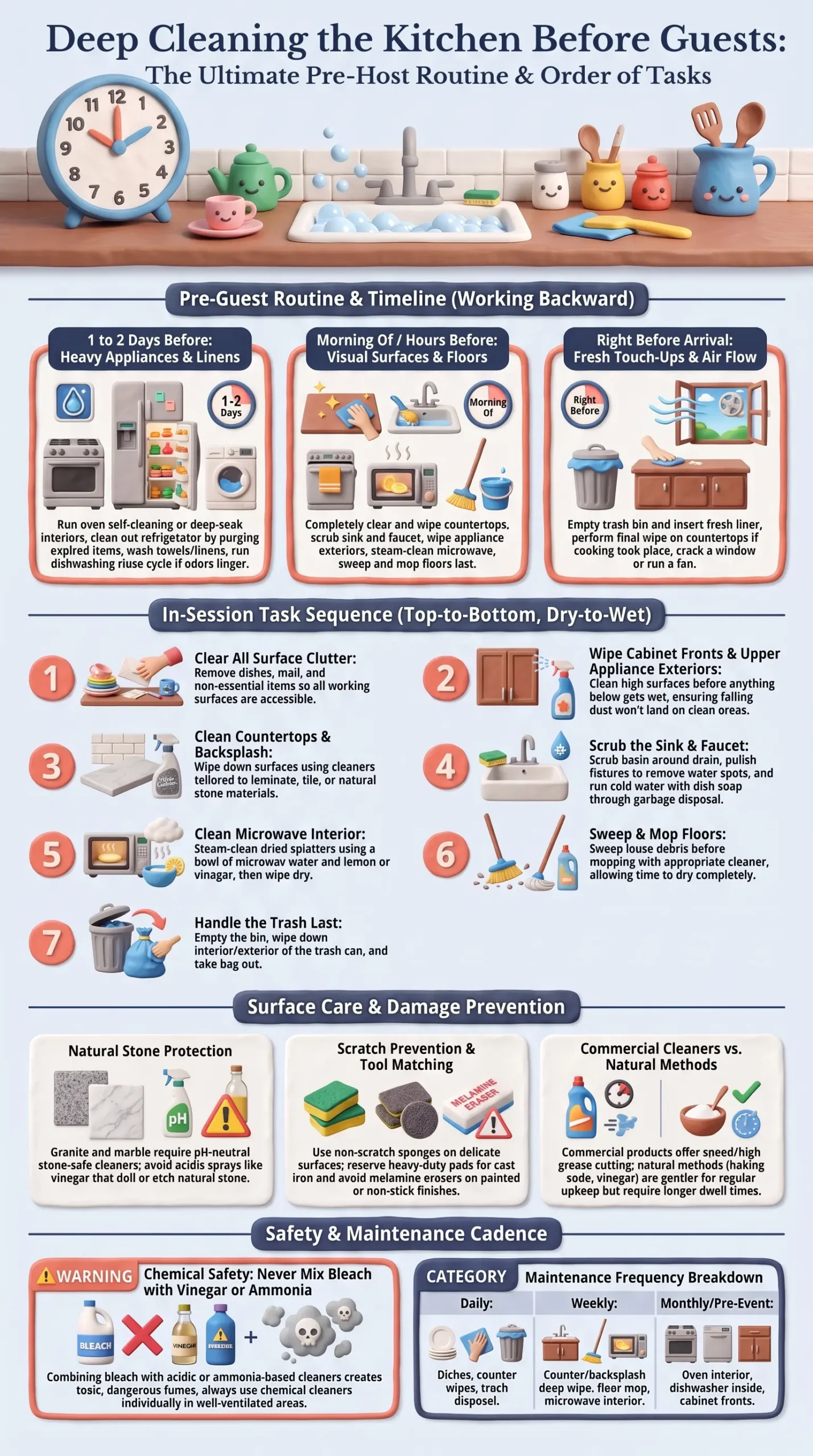
Photo Credit: Hobby Guidebook Editorial
Countertops and Backsplash
Countertops are the first thing most guests glance at, so this is worth doing carefully rather than rushing. Clear everything off the counter, including small appliances that don't need to be out, and wipe the surface down with a cleaner matched to the material. Laminate and sealed tile tolerate most everyday cleaners, but natural stone counters like granite or marble do better with a cleaner labeled safe for stone, since acidic sprays can dull the surface over repeated use. Backsplash tile usually just needs a damp wipe, though grout lines can hold onto grease and may need a slightly firmer scrub with a soft brush. If there's a stain that doesn't lift with normal wiping, it's better to check a dedicated stain-removal resource for that specific material rather than reaching for something stronger that might not be safe for the finish.
Sink and Faucet
A dirty sink is one of the more noticeable things in a kitchen, even to guests who aren't looking for it. Scrub the basin with a non-scratch sponge and a mild cleaner, paying attention to the area around the drain. Wipe down the faucet and handle thoroughly, since water spots and mineral buildup show up quickly on stainless steel and chrome finishes. If the sink has a garbage disposal, running it briefly with cold water and a small amount of dish soap helps with any lingering odor. A shined-up sink, even a small one, makes the whole kitchen look more cared for than almost any other single task.
Appliance Exteriors and Microwave
Appliance exteriors collect fingerprints and smudges fast, especially on stainless steel and glass-front models. Wipe down the refrigerator, oven, and dishwasher exteriors with a cleaner suited to the finish, using a microfiber cloth for a streak-free result on steel and glass. The microwave interior deserves specific attention, since splatter on the ceiling and walls is one of the most common things people forget until a guest opens it to reheat something. A bowl of water with a splash of lemon juice or vinegar, microwaved for a few minutes to create steam, loosens dried splatter so it wipes away without much scrubbing. Let it cool slightly before opening, then wipe the interior clean with a damp cloth.
Cabinets and Floors
Cabinet fronts, especially the ones near the stove and sink, tend to collect a light film of grease and fingerprints that's easy to miss until you look closely. A damp microfiber cloth with a small amount of dish soap usually handles this without needing anything stronger. Floors should be swept first to remove loose debris, then mopped with a cleaner matched to the flooring type, since tile, vinyl, laminate, and hardwood all tolerate moisture differently. Mop last in the cleaning sequence so foot traffic from earlier tasks doesn't undo the work, and give the floor enough time to dry fully before guests start walking through, both for appearance and to avoid a slip risk on a wet floor.

Photo Credit: SHVETS production
Commercial Cleaner vs Natural Method for This Kind of Deep Clean
Both approaches work, and the right choice often depends on how much time you have and what surfaces are involved.
Commercial cleaners tend to work faster on tougher grease and grime, which matters when you're working against a deadline. Look for a product labeled for the specific surface (stainless steel, stone, glass) rather than a generic all-purpose spray, especially on natural stone or anything with a delicate finish.
Natural methods, like a vinegar and water spray for glass and stainless steel, or a baking soda paste for scrubbing the sink, work well for routine grime and are gentler on some finishes over time. They take a bit more effort and sometimes a longer contact time to loosen tougher buildup, which matters if guests are arriving soon.
Neither approach is universally better. A rushed pre-guest clean might lean more on commercial products for speed, while a day-before deep clean with more time to spare can lean on natural methods without losing much effectiveness. Whichever you choose, never combine bleach with vinegar or ammonia-based products, since that combination can produce hazardous fumes.
Deep Cleaning Without Scratching the Surface
Scratching is one of the more common accidental mistakes during a rushed deep clean, especially when someone reaches for a scouring pad to save time on a stubborn spot. A few precautions help avoid this:
- Match the abrasiveness of the tool to the surface. A non-scratch sponge is safe for most countertops and appliance exteriors, but a heavy-duty scouring pad should be reserved for cookware like cast iron, not glass cooktops or polished stainless steel.
- Test any new cleaner on a small, hidden area first, particularly on natural stone, glass cooktops, or anything with a special coating you haven't cleaned before.
- Rinse cloths and sponges between surfaces, since grit picked up from one area (like a gritty countertop) can scratch a softer one (like glass or steel) if the same cloth is used without rinsing.
- Avoid melamine erasers on non-stick or painted finishes, since their mild abrasiveness can dull these coatings over repeated use.
If you're short on time and tempted to scrub harder rather than let a cleaner sit longer, it's usually safer to add a minute of dwell time than to add more pressure or a rougher tool.
How Often to Deep Clean the Kitchen Before Guests
How often this kind of deep clean is needed depends heavily on how often the kitchen gets used and how often guests come by. A kitchen that hosts often might benefit from a lighter version of this routine every couple of weeks, so a full deep clean before an event only requires touching up rather than starting from scratch. A kitchen that rarely sees guests can likely get away with doing this kind of clean only when an event is actually planned, though it's worth checking a few key spots (the microwave interior, the fridge, under the sink) periodically anyway, since these areas build up grime whether or not anyone's coming over. If your household hosts on a regular basis, the Kitchen Cleaning Schedule for Busy Families guide covers how to build a routine that keeps the kitchen closer to guest-ready most of the time, rather than requiring a big push every time.

Photo Credit: Max Vakhtbovych
What Should Be Done Daily, Weekly, and Monthly?
Understanding this breakdown helps explain why a pre-guest deep clean sometimes takes longer than expected.
Daily: wiping counters after cooking, washing dishes, taking out full trash, quick sink rinse.
Weekly: full countertop and backsplash wipe-down, stovetop cleaning, microwave interior, floor mopping, trash bin wipe-out.
Monthly (or before a bigger event): oven interior, behind and under the fridge, inside the dishwasher, cabinet interiors, range hood filter.
A kitchen that keeps up with daily and weekly tasks consistently needs far less last-minute work before guests arrive, since most of the deep-clean list above ends up already handled.
How to Make This Routine Easier to Maintain
A few habits make the difference between a stressful last-minute scramble and a manageable routine:
- Keep a running list of what's overdue, so a deep clean before guests isn't the first time you notice the oven needs attention.
- Do a lighter version regularly rather than saving everything for one big push, since smaller, more frequent sessions take less total effort over time.
- Store cleaning supplies within reach of where they're used, so there's no delay grabbing what's needed mid-task.
- Declutter before cleaning, not during, since clearing counters and surfaces first makes every task after that faster. If clutter is a recurring issue, Decluttering Your Kitchen Before Organizing covers how to clear that backlog before it slows down a cleaning session.
- Assign a buffer day if possible, so the deep clean happens a day before guests arrive rather than the same morning, leaving room for anything that takes longer than expected.
Frequently Asked Questions
How should you build a practical routine for the kitchen before guests? Break tasks into stages based on timing: bigger jobs like the oven and fridge a day or two ahead, and quicker surface tasks the morning of or a few hours before arrival.
How often should you do or reset the kitchen before guests? It depends on how often you host. Frequent hosts benefit from a lighter version every couple of weeks, while occasional hosts can focus a full deep clean around the actual event.
What should be done daily, weekly, and monthly for the kitchen? Daily tasks cover quick wipe-downs and dishes, weekly covers counters, floors, and the microwave, and monthly covers deeper jobs like the oven interior and behind the fridge.
What order should the tasks follow for the kitchen? Work top to bottom and dry to wet: cabinets and appliance exteriors first, then counters, then the sink, then floors, with trash handled last.
How do you make kitchen routines easier to maintain? Keep a running list of overdue tasks, do lighter cleaning sessions regularly, store supplies where they're used, and declutter before cleaning rather than during.
A Quick Note on Safety
Most tasks in a pre-guest deep clean are low-risk, but a few precautions matter. Avoid using acidic cleaners like vinegar on natural stone counters, since repeated use can dull or etch the surface. Never combine bleach with vinegar or ammonia-based products, as this can create hazardous fumes; if a task calls for bleach, use it alone in a well-ventilated space and follow the label's instructions. Let mopped floors dry fully before guests arrive to avoid a slip hazard, and when unsure which cleaner suits a specific countertop, appliance finish, or flooring material, check the manufacturer's care instructions rather than guessing.
Back to the complete kitchen cleaning guide for more routines and task-specific cleaning guidance.


Leave a Reply