
The ten minutes right after a meal decide whether a kitchen stays manageable or slowly turns into a weekend project. A solid post cooking kitchen cleanup routine handles grease, dishes, and spills while everything is still fresh, which is almost always easier than tackling the same mess after it's had hours to dry and set into a stovetop, countertop, or cutting board.
This guide walks through exactly what a post-cooking cleanup should include, the order that actually makes sense, and which products handle the job without risking a scratched or dulled surface. It's part of the Kitchen Cleaning Routines & Schedules Guide, which covers how this kind of after-meal routine fits alongside daily, weekly, and monthly kitchen tasks.
The Post-Cooking Kitchen Cleanup Checklist
- Turn off and let the stovetop cool to warm, not hot. Wiping a hot burner or glass cooktop can warp a cloth or, in some cases, cause a cleaner to smoke or streak. Warm is the sweet spot, since fresh splatter lifts more easily than fully cooled, hardened residue.
- Clear the countertops of ingredients, packaging, and tools. Put spices, oils, and utensils away first, since a cluttered counter makes every next step slower and messier.
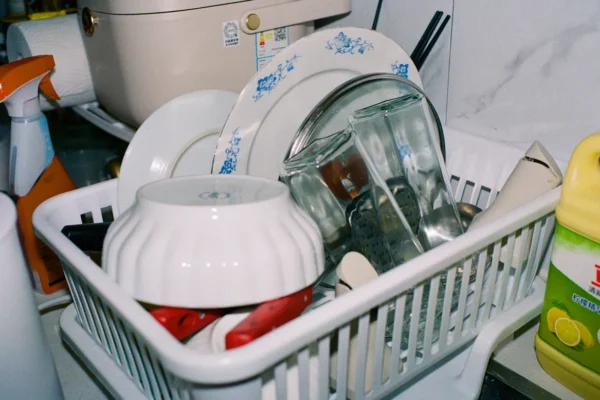
- Load or hand-wash dishes right away. Sauce, egg, and starchy residues harden fast, and a five-minute soak while you handle other tasks saves real scrubbing time later.
- Wipe the stovetop and any splatter on nearby walls or the backsplash. Use a cleaner suited to the surface, since glass, ceramic, stainless steel, and tile all respond differently to certain products.
- Wipe down countertops with a mild soap solution or an all-purpose cleaner appropriate for the material, paying particular attention to spots where raw meat, poultry, or eggs made contact.
- Clean the cutting board. A board used for raw protein needs a proper wash with hot soapy water at minimum, and in some households a disinfecting step afterward, separate from the everyday wipe-down used for produce-only boards.
- Rinse and wipe the sink once dishes are washed or loaded, since food debris left sitting in a wet sink overnight is one of the more common sources of kitchen odor.
- Sweep or spot-clean the floor around the stove and any prep area, especially if anything was dropped or splattered during cooking.
- Take a final look at the stovetop knobs, handles, and any grease that landed on cabinet fronts. These smaller spots are easy to skip but accumulate grime quickly if left after every meal.
Following this order matters more than it might seem. Starting with the stovetop while it's still warm, moving to dishes before they dry, and finishing with the floor means nothing sits longer than it needs to, and nothing gets re-contaminated by a task done out of sequence, like sweeping before wiping down countertops that could still drop crumbs.
Best Product for Post-Cooking Kitchen Cleanup
There isn't one single best product for every task here, since countertops, stovetops, and cutting boards don't all respond to the same cleaner. A few reliable options cover most situations:
- Warm water and dish soap handles the majority of everyday grease and food residue on sealed countertops, sinks, and dishes without any risk of surface damage.
- A degreasing spray works well for stovetop splatter and grease that's built up slightly heavier than a single meal's worth, particularly around burners and control knobs.
- An EPA-registered disinfectant or sanitizer is the right call for any surface that touched raw meat, poultry, or eggs, applied and left for the label's stated contact time rather than wiped off immediately.
- A stone-safe cleaner is necessary for granite, marble, or other natural stone countertops, since standard all-purpose sprays and acidic ingredients like vinegar can dull or etch these surfaces over time.
Choosing the right product for the surface matters more than choosing the strongest one available. A disinfectant used on every countertop after every meal isn't necessarily more effective than a sanitizer or plain soap and water for surfaces that never touched raw protein, and it adds unnecessary chemical exposure and cost over time.
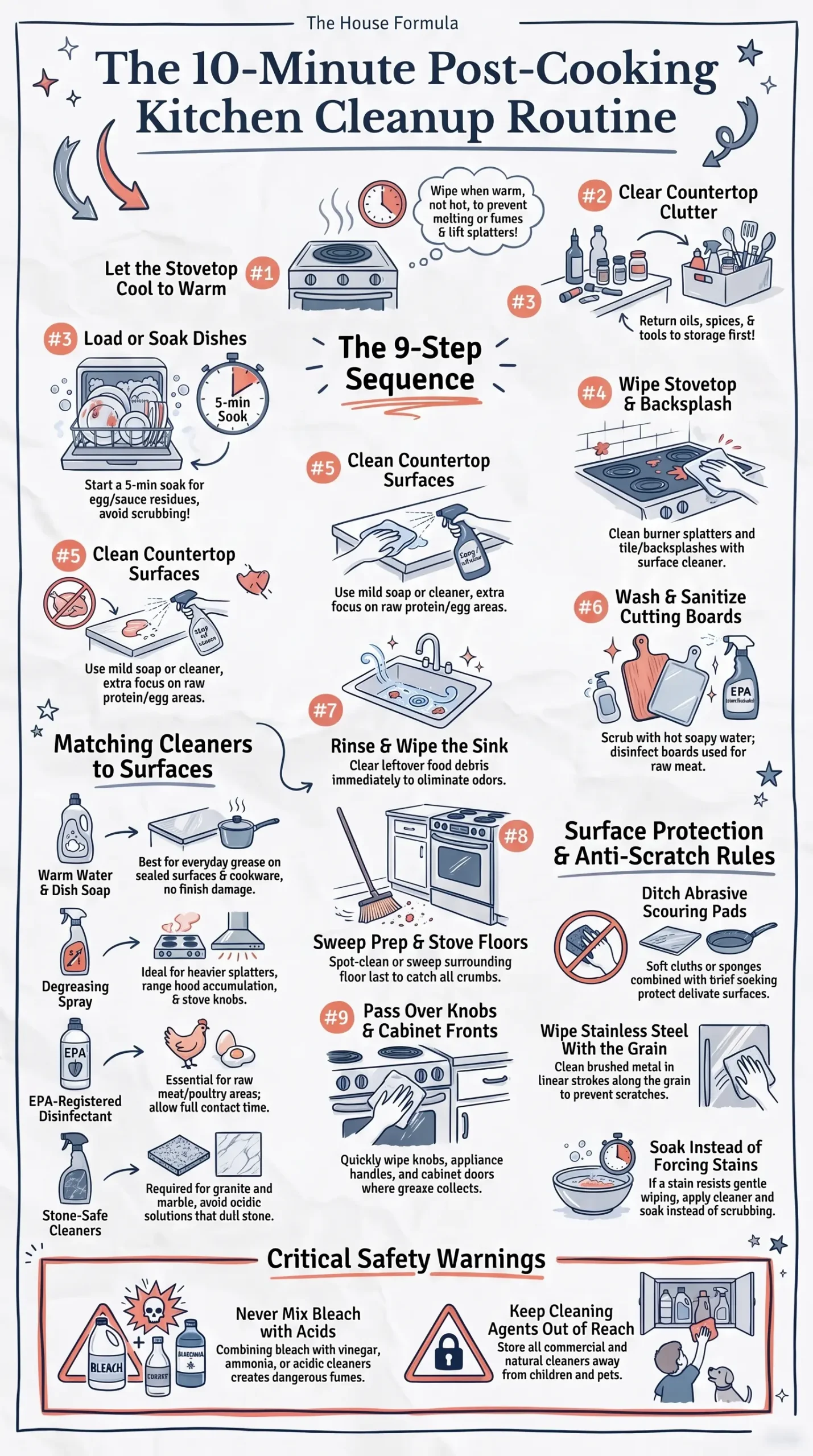
Photo Credit: Hobby Guidebook Editorial
Commercial Cleaner vs Natural Method for Post-Cooking Cleanup
Both natural ingredients and commercial products have a place in a post-cooking routine, and the better choice usually depends on what actually needs to happen on that surface.
|
Task |
Natural Method |
Commercial Cleaner |
Better Choice Right After Cooking |
|
Countertop wipe-down (no raw meat) |
Dish soap and water |
All-purpose spray |
Either works well |
|
Stovetop grease |
Dish soap, baking soda paste for stuck spots |
Degreasing spray |
Commercial for heavier splatter |
|
Cutting board after raw meat |
Hot soapy water only |
EPA-registered disinfectant |
Commercial disinfectant |
|
Sink after dishes |
Baking soda scrub |
Sink-specific cleaner |
Either works well |
|
Natural stone countertop |
Not recommended (avoid vinegar/acids) |
Stone-safe cleaner |
Commercial, stone-specific |
Natural ingredients like dish soap, baking soda, and diluted vinegar handle routine grease and food residue reasonably well on sealed, non-porous surfaces. They fall short, though, when actual disinfection is the goal, such as after handling raw meat, or when the surface itself, like natural stone, can't tolerate an acidic ingredient regardless of how mild it seems. In those specific cases, a commercial product built for the job is the more appropriate post-cooking choice.
Doing This Without Scratching the Surface
Post-cooking cleanup often involves scrubbing something that's already started to dry a little, which raises the temptation to reach for a stronger scouring pad. A few habits keep this from turning into surface damage:
- Avoid abrasive scouring pads on glass stovetops, non-stick pans, and stainless steel. A soft cloth or sponge, combined with a short soak, usually loosens stuck food without scratching.
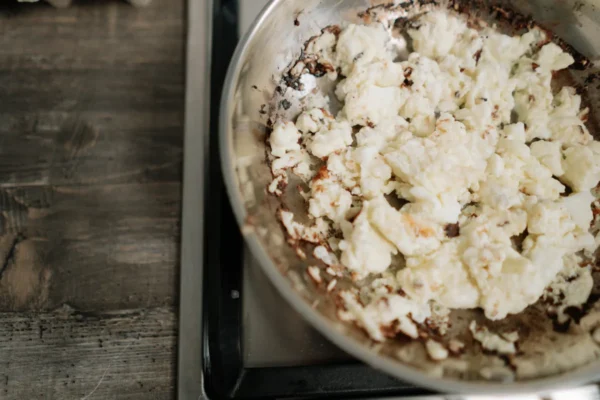
- Let stuck-on food soak for a few minutes rather than scrubbing immediately. This is especially useful on stovetops and pans, where a dry scrub is far more likely to leave marks than a slightly soaked one.
- Check whether a countertop is sealed stone, laminate, or another material before using an acidic cleaner. Vinegar and lemon juice are fine on many sealed surfaces but can dull or etch natural stone.
- Wipe in the direction of any brushed metal finish, such as on some stainless steel appliances, rather than scrubbing in circles, which can create visible fine scratches over time.
If a stubborn spot doesn't lift after a reasonable soak and gentle wipe, it's worth stopping and switching to a slightly stronger, surface-appropriate cleaner rather than pushing harder with the same tool, which is usually what leads to scratching.
How Should You Build a Practical Routine for the Kitchen?
A post-cooking routine works best when it's built around how meals actually happen in your household, rather than a fixed list that assumes every day looks the same. A few practical starting points:
- Attach the routine to the meal itself, treating cleanup as the final step of cooking rather than a separate chore that happens later.
- Keep supplies within arm's reach of the stove and sink, since needing to search for a cloth or spray bottle is one of the easiest ways for a quick cleanup to get skipped.
- Split tasks by person if more than one household member cooks or eats, so cleanup doesn't fall entirely on whoever happened to cook that day.
- Adjust for the type of meal. A quick reheated lunch needs far less than a meal involving raw meat, multiple pans, and a hot oven, and the routine should flex accordingly rather than treating every meal identically.
Households juggling limited time benefit from building this into a broader weekly rhythm rather than reinventing it every day. Our Kitchen Cleaning Schedule for Busy Families covers how a post-cooking routine like this one fits into a realistic schedule for households with limited spare time between meals, work, and other responsibilities.

Photo Credit: Gustavo Fring
What Should Be Done Daily, Weekly, and Monthly Around This Routine?
A post-cooking cleanup handles the immediate mess after each meal, but it isn't meant to cover everything a kitchen needs over time. Understanding how it fits alongside broader cleaning helps avoid both over-cleaning and neglecting less frequent tasks.
|
Frequency |
What It Covers |
Examples |
|
After each meal |
Immediate mess from that specific cooking session |
Stovetop, countertops, dishes, cutting board, sink |
|
Daily |
General upkeep beyond just cooking messes |
Trash check, quick fridge spot-check, floor sweep |
|
Weekly |
Buildup that accumulates over several days |
Cabinet fronts, microwave interior, deeper sink scrub |
|
Monthly |
Less visible buildup and appliance maintenance |
Oven interior, range hood filter, behind appliances |
A post-cooking routine, done consistently after every meal, actually reduces how much work the daily, weekly, and monthly layers need to handle, since grease and residue never get the chance to build up in the first place. Skipping post-cooking cleanup regularly tends to shift that workload upward, turning a five-minute task into a longer weekly or monthly job.
What Order Should the Tasks Follow?
The general order that works best is: cool the stovetop, clear clutter, start dishes soaking or loading, wipe the stovetop, wipe countertops, clean the cutting board, rinse the sink, then finish with a floor check. This sequence follows a simple logic: handle the things that need time to cool or soak first, clean surfaces before they have a chance to dry further, and finish with the floor so nothing falls onto it mid-cleanup and needs a second pass.
Deviating from this order isn't dangerous, but it usually means extra repeated effort, such as wiping a countertop before dishes are cleared, only to need a second wipe once dish water splashes onto it.
How Do You Make This Routine Easier to Maintain?
- Keep it short by design. A post-cooking routine that takes over fifteen minutes for a simple meal is more likely to get skipped on busy nights, so matching the routine's length to the actual mess keeps it sustainable.
- Use dedicated cloths for raw meat surfaces versus general wiping, and wash them separately, so cross-contamination isn't a risk even on a rushed night.
- Keep a small stock of the right products visible and accessible, rather than stored somewhere that requires extra steps to reach.
- Accept some flexibility for renters or shared kitchens. Not every household has full control over appliances or countertop materials, and routines sometimes need to work around what's already installed rather than an ideal setup. Our Kitchen Cleaning Checklist for Renters covers how to adapt a routine like this one when you're working with someone else's appliances, finishes, or existing kitchen setup.

Photo Credit: Gustavo Fring
How Often Should You Reset the Kitchen Entirely?
A post-cooking routine handles ongoing upkeep, but most kitchens benefit from an occasional full reset beyond the regular after-meal cleanup, particularly if the routine slipped for a stretch of busy days or after hosting a larger gathering. This kind of reset typically means combining several days' worth of skipped tasks into one session: wiping down every surface, checking the fridge thoroughly, and catching up on dishes or cookware that got set aside. Doing this every few weeks, or whenever the kitchen visibly starts falling behind the routine, keeps things from drifting into a much larger deep clean later.
A Quick Note on Safety
Post-cooking cleanup often involves surfaces that touched raw meat, poultry, or eggs, so using a proper disinfectant or sanitizer on those specific spots, following the label's contact time, is worth the extra few minutes compared to a quick soap wipe alone. Never combine bleach with vinegar, ammonia, or other acidic products, since this produces hazardous fumes. Check the manufacturer's care instructions before using an acidic ingredient like vinegar or lemon juice on natural stone countertops, and test any new cleaner on a small, hidden area first if you're unsure how it will react with a specific finish. Keep all cleaning products, including natural ones like concentrated vinegar, out of reach of children and pets.
FAQ
How should you build a practical routine for the kitchen? Attach cleanup to the meal itself, keep supplies within reach, split tasks among household members when possible, and adjust the routine's length based on what was actually cooked.
How often should you do or reset the kitchen? A post-cooking cleanup happens after every meal, with an occasional fuller reset every few weeks if the routine has slipped or after hosting guests.
What should be done daily, weekly, and monthly for the kitchen? Daily covers general upkeep like trash and floor sweeping, weekly covers buildup like cabinet fronts and the microwave, and monthly covers deeper tasks like the oven interior and range hood filter.
What order should the tasks follow for the kitchen? Cool the stovetop, clear clutter, start dishes, wipe the stovetop and countertops, clean the cutting board, rinse the sink, then finish with the floor.
How do you make the kitchen routines easier to maintain? Keep the routine short and matched to the actual mess, use dedicated cloths for raw meat surfaces, store supplies within easy reach, and adapt as needed for shared or rented kitchens.
For more on building out a complete kitchen routine, see the full kitchen cleaning guide for additional schedules and task breakdowns.




Leave a Reply