

Mold on a shower curtain usually shows up as small black, green, or dark gray spots, often clustered along the bottom edge or in the folds where moisture sits the longest. Removing mold from a shower curtain is a different job than wiping away soap scum or general mildew film, since mold can grow into the fibers of fabric or the texture of plastic, and a surface wipe often isn't enough to fully clear it.
This guide covers how to remove mold from a shower curtain, which products actually work, how often to check for it, and how to treat it without damaging the curtain's material. This article is Part of Shower Door & Curtain Cleaning Guide, which covers the full range of shower door and curtain care.
How Do You Remove Mold from a Shower Curtain
- Identify the curtain's material first, since plastic, vinyl, and fabric curtains each respond differently to the treatments below, and using the wrong approach on the wrong material can set the mold rather than remove it.
- Take the curtain down and lay it flat or hang it somewhere with good airflow, ideally outdoors if weather allows, since working on mold in a small, enclosed bathroom limits ventilation right when you need it most.
- Mix a solution of equal parts white vinegar and water for plastic or vinyl curtains, or use it as a pretreatment spot spray for fabric curtains before washing.
- Apply the vinegar solution directly to the mold spots, saturating the area rather than just misting it, and let it sit for 15 to 20 minutes so the mild acid has time to break down the mold.
- Scrub gently with a soft-bristled brush or sponge, working in small circles over each spot rather than scrubbing hard in one direction, which helps lift mold without pushing it deeper into the material's texture.
- Rinse thoroughly with clean water, checking that no vinegar smell or residue remains, since leftover vinegar can leave its own odor if not fully rinsed out.
- For fabric curtains, follow with a full machine wash on a gentle cycle with regular detergent, since a spot treatment alone rarely clears mold that's worked into fabric fibers.
- Dry completely before rehanging, air drying plastic and vinyl curtains, and either air drying or machine drying fabric curtains only if the care label confirms it's safe.
If mold returns to the same spot within a week or two despite this process, the mold may have set into the material more deeply than a standard treatment can reach, which is a sign to consider replacing that section of curtain or the curtain entirely, particularly for fabric.
How to Tell Mold from Mildew or Soap Scum
Mold, mildew, and soap scum can look similar at a glance, but a few differences help tell them apart before choosing a treatment.
- Mold typically appears as distinct dark spots, black, green, or dark gray, often slightly raised or fuzzy in texture, and it tends to cluster rather than spread as an even film.
- Mildew usually shows up as a flatter, grayish or yellowish film that spreads more evenly across a surface rather than forming distinct spots.
- Soap scum feels waxy to the touch and has a duller, whitish-gray appearance, without the spotting pattern typical of mold.
If there's any uncertainty about which one is present, treating it as mold and using the more thorough process above is the safer default, since a mild soap scum treatment won't fully clear an actual mold problem.
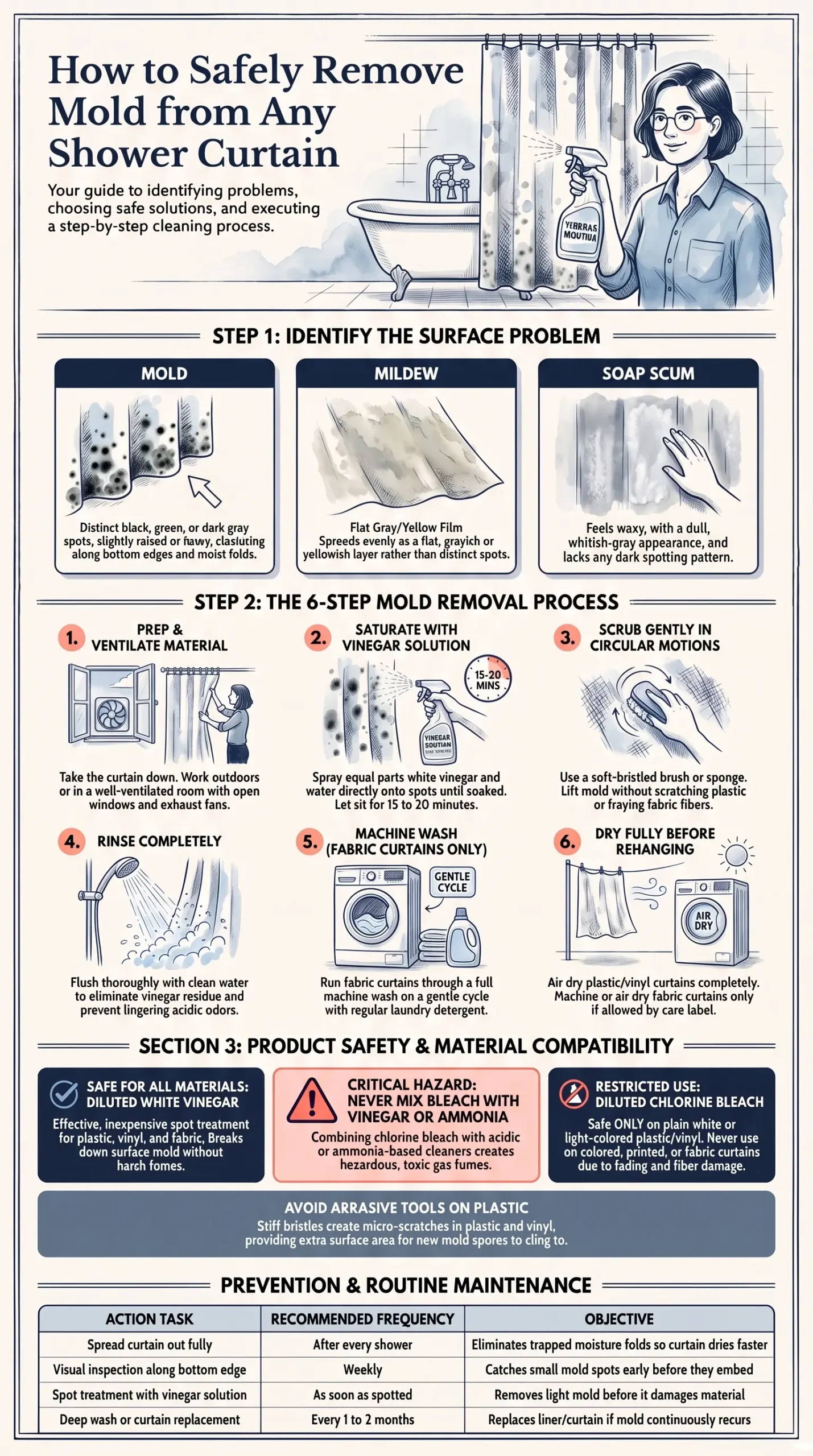
Photo Credit: Hobby Guidebook Editorial
How Often Should You Check for Mold on a Shower Curtain
|
Task |
Suggested Frequency |
|
Spread curtain out fully after each shower |
After each shower |
|
Visual check for new spots |
Weekly |
|
Full mold treatment if spots are present |
As soon as spotted |
|
Deep wash or replacement if mold keeps returning |
Every 1 to 2 months, if recurring |
Checking the curtain weekly, particularly along the bottom edge and in any folds, catches mold while it's still small and manageable. Spreading the curtain out fully after every shower, rather than leaving it bunched against the wall, does more to prevent mold from developing in the first place than any treatment can do after the fact, since mold needs sustained moisture and a flattened curtain dries far faster.
Best Product for Mold from a Shower Curtain
Diluted white vinegar is a reasonable first option for light to moderate mold on both plastic and fabric curtains, since it's inexpensive, widely available, and effective on surface-level mold without introducing harsh fumes. It works best when given time to sit on the spot rather than being wiped off immediately.
Commercial mold and mildew removers formulated for bathroom use tend to work faster on established mold than vinegar, particularly for spots that have been present for weeks rather than days. These products should always be used according to the label directions, applied in a well-ventilated space, and rinsed thoroughly afterward.
Diluted chlorine bleach can be effective on white or light-colored plastic and vinyl curtains without decorative printing, but it should never be used on fabric with color or pattern, since it can cause fading or damage. Bleach should always be used alone, in a well-ventilated space, and never combined with vinegar or ammonia, since that combination can produce hazardous fumes.
If mold keeps returning despite repeated treatment, particularly on a fabric curtain, the mold may have spread into a section of fabric that a standard wash can't fully reach, and replacing that curtain is often more practical than continuing to treat the same spot repeatedly.
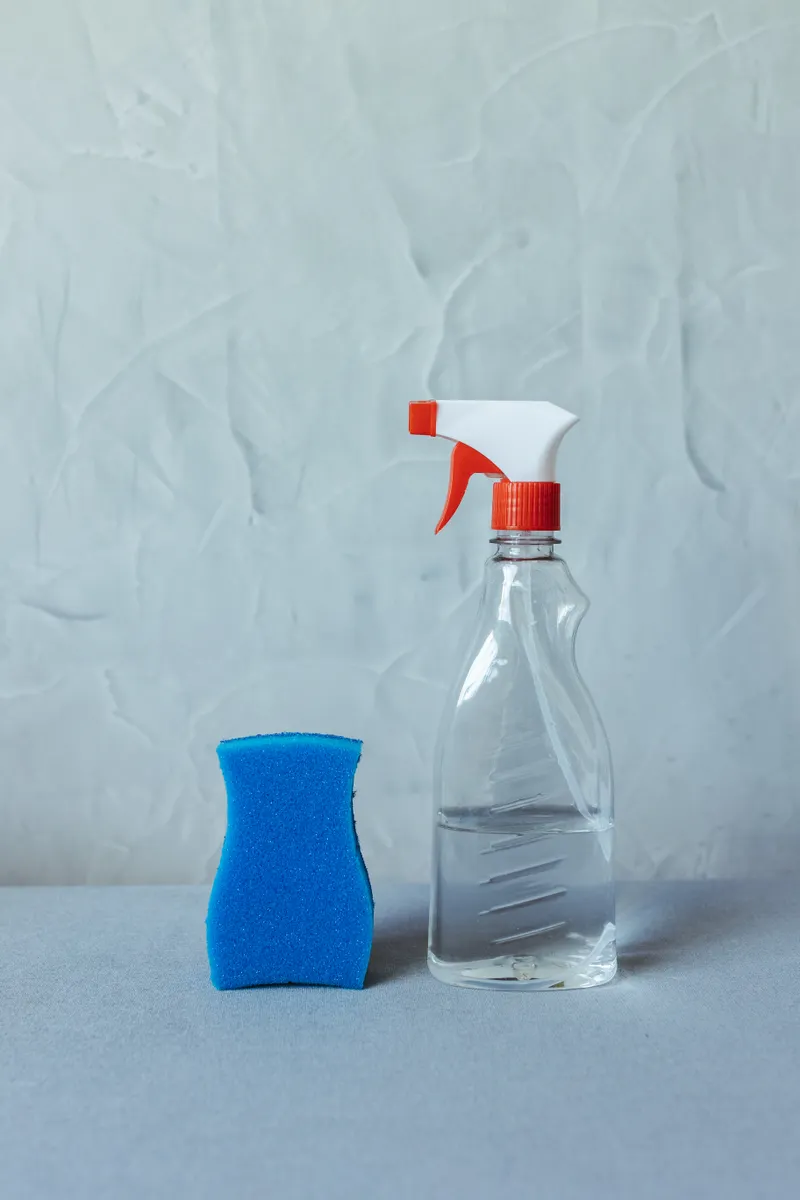
Photo Credit: Jonathan Borba
Mold from a Shower Curtain Without Scratching the Surface
Plastic and vinyl curtains can develop fine scratches from overly aggressive scrubbing, and scratched plastic actually holds onto mold and soap scum more easily afterward, since the tiny grooves give spores more surface area to cling to. A soft sponge or a brush with genuinely soft bristles handles most mold spots without this risk, and scrubbing gently in small circles works the treatment into the spot without needing heavy pressure.
For curtains with any printed design, textured pattern, or decorative coating, testing the vinegar or commercial cleaner on a small hidden section first is worth the extra minute, since some coatings react differently than plain smooth plastic. Many bathrooms also pair a fabric or decorative outer curtain with a separate plastic liner that takes on more direct water exposure, and that liner often needs mold treatment and replacement on its own schedule, a distinction covered in Shower Curtain Liner Cleaning for households running both pieces together.
What Cleaning Products Are Safe for Mold on a Shower Curtain
Generally safe:
- Diluted white vinegar for spot treatment on both plastic and fabric curtains
- Mild laundry detergent as part of a full wash for fabric curtains
- Commercial mold and mildew removers labeled safe for the curtain's specific material, used according to the label
Use with caution:
- Diluted chlorine bleach, safe only on white or light plastic and vinyl without printing, and only when used alone
- Baking soda paste, generally gentle but works better on odor and light residue than on established mold spots
Avoid:
- Mixing bleach with vinegar or ammonia, which can release hazardous fumes and should never be attempted regardless of how stubborn the mold looks
- Using bleach on colored or printed fabric, which can cause fading, discoloration, or fiber damage
- Scrubbing with stiff or abrasive brushes, which can scratch plastic surfaces or damage fabric weave
What Should You Avoid When Cleaning Mold from a Shower Curtain
- Mixing cleaning chemicals without confirming they're safe together. Bleach combined with vinegar or ammonia is the most common mistake here, and it can produce genuinely hazardous fumes.
- Working in a closed, unventilated bathroom. Mold treatment, especially with bleach or a strong commercial product, goes more safely with a window open or the door propped and the fan running.
- Ignoring the root moisture problem. Treating mold without addressing poor ventilation or a curtain that's routinely left bunched up means the mold is likely to return within weeks.
- Using the same sponge or brush on mold and other bathroom surfaces. This can spread mold spores to other spots rather than containing the problem to the curtain.
- Assuming a spot treatment is enough for fabric. Fabric usually needs a full wash to clear mold that's worked into the fibers, not just a surface spray on the visible spot.
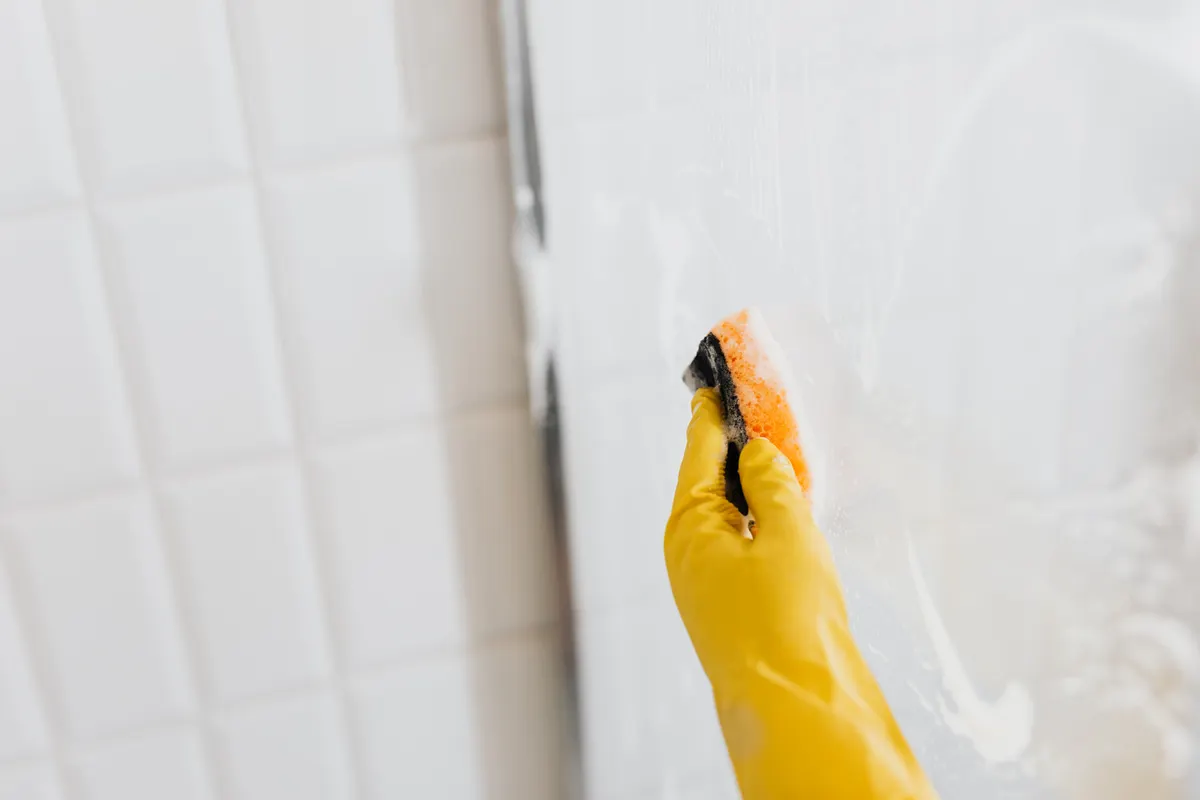
Photo Credit: https://kaboompics.com/
How Can You Clean Mold from a Shower Curtain Without Damaging It
Testing any treatment, vinegar, bleach, or a commercial cleaner, on a small hidden section of the curtain first helps confirm it won't affect color, coating, or printed design before it's applied to the whole mold spot. Working gently rather than scrubbing aggressively protects both plastic surfaces and fabric fibers, since mold often lifts with patience and mild acid or detergent rather than force.
If mold is present on both a fabric shower curtain and a nearby glass shower door, treating each surface according to its own material matters, since glass tolerates a wider range of cleaners than fabric does, and a method suited to glass isn't automatically safe for fabric. General glass care, including how to handle hard water and soap scum without damaging the surface, is covered in Glass Shower Door Cleaning for bathrooms dealing with buildup on both the door and the curtain.
Frequently Asked Questions
How do you remove mold from a shower curtain? Apply a diluted vinegar solution or a commercial mold remover directly to the spots, let it sit for 15 to 20 minutes, scrub gently, rinse thoroughly, and for fabric curtains follow with a full machine wash.
How often should you clean mold from a shower curtain? Check weekly for new spots and treat mold as soon as it appears. Curtains with recurring mold may need a deeper wash or replacement every one to two months.
What cleaning products are safe for mold from a shower curtain? Diluted white vinegar and mild detergent are safe for most curtains. Diluted bleach works only on white, uncoated plastic or vinyl, and should never be combined with vinegar or ammonia.
What should you avoid when cleaning mold from a shower curtain? Avoid mixing bleach with vinegar or ammonia, working without ventilation, using bleach on colored fabric, and treating only the visible spot on fabric without a full wash.
How can you clean mold from a shower curtain without damaging it? Test any treatment on a small hidden area first, scrub gently rather than aggressively, and match the cleaning method to the curtain's specific material.
Browse the complete bathroom cleaning guide for how mold prevention fits into full bathroom maintenance.
A Quick Safety Note
Mold on a shower curtain is a common household issue, but it should still be handled with a few precautions in mind. Never mix bleach with vinegar or ammonia, since this combination can release hazardous fumes. Work in a well-ventilated space, especially when using bleach or a strong commercial mold remover, and test any product on a small hidden area first. If mold covers a large portion of the curtain, keeps returning despite repeated treatment, or is accompanied by mold elsewhere in the bathroom, such as on walls or ceilings, consider professional mold assessment rather than continuing to treat it as a surface cleaning issue.




Leave a Reply