

Marble countertops bring a classic look to a kitchen, but they need more careful handling than most other surfaces. Marble is a natural stone that is softer and more reactive to acid than granite or quartz, which means the wrong cleaner can dull or etch the surface in a single use. This guide is part of the Kitchen Countertop Cleaning Guide, and it covers exactly what marble countertop cleaning requires day to day, along with the mistakes that cause the most damage.
The Safest Way to Clean Marble Countertops
For everyday cleaning, wipe the marble countertop with a soft microfiber cloth and warm water mixed with a few drops of mild, pH-neutral dish soap. Wring the cloth well so it's damp rather than wet, wipe gently in one direction, then dry the surface right away with a separate clean cloth. This routine removes crumbs, grease, and light spills without exposing the stone to anything acidic or abrasive.
That simple method handles most daily marble countertop cleaning needs. The sections below explain why marble behaves differently from other stone surfaces, what products to avoid, and how to deal with tougher marks safely.
Why Marble Cleans Differently Than Other Countertops
Marble is made mostly of calcium carbonate, which reacts with acid on contact. This is what causes etching, a dull, cloudy mark where the polished surface has been chemically worn away. Etching is not a stain that sits on top of the stone; it's actual damage to the surface itself, and it cannot be wiped off.
This reactivity is the main reason marble countertop cleaning calls for gentler products than granite or quartz. Even common kitchen items like lemon juice, vinegar, and tomato sauce can etch marble within seconds if left sitting. Marble is also softer than granite, so it scratches more easily from abrasive scrub pads or gritty cleaners. Understanding these two vulnerabilities, acid sensitivity and softness, explains almost every rule that follows in this guide.
Tools and Products Needed for Marble Countertop Cleaning
Marble doesn't need a long list of products. A few well-chosen tools do more to protect the surface than a cabinet full of mismatched cleaners.
- Soft microfiber cloths: gentle on the polished surface, won't leave scratches
- Mild, pH-neutral dish soap: a few drops diluted into warm water for daily wiping
- pH-neutral stone cleaner: labeled specifically safe for marble or natural stone, useful for a weekly deeper clean
- Soft-bristle brush: for grout lines or textured edges only, never a stiff scrub brush
- Marble sealer: applied periodically, not part of routine cleaning
Skip anything labeled as an all-purpose cleaner, bathroom spray, or glass cleaner unless the label specifically confirms it's safe for natural or polished stone.
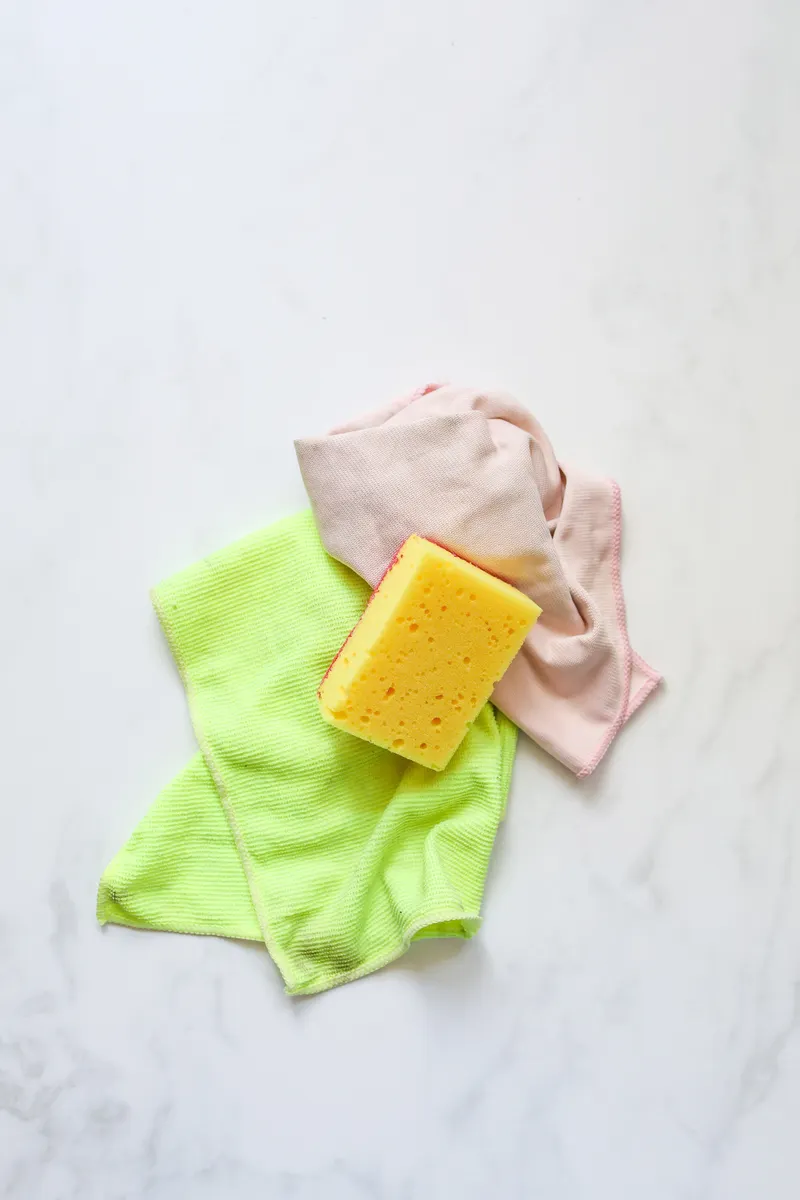
Photo Credit: Polina Tankilevitch
Daily and Weekly Marble Countertop Cleaning Steps
A short daily wipe combined with one slightly deeper weekly clean keeps marble looking good without extra effort or added risk.
Daily routine:
- Wipe up spills immediately, especially citrus juice, wine, coffee, and tomato-based foods.
- Mix a few drops of pH-neutral dish soap into warm water.
- Wipe the countertop gently with a damp microfiber cloth.
- Dry the surface completely with a separate clean cloth to prevent water spots.
Weekly routine:
- Apply a pH-neutral stone cleaner made for marble, following the label's instructions for contact time.
- Wipe in small sections using a soft microfiber cloth, applying light pressure only.
- Use a soft-bristle brush on textured edges if needed, without pressing hard on the polished top.
- Rinse the cloth and go over the surface again with plain water to remove cleaner residue, then dry thoroughly.
This weekly step catches light buildup that daily wiping might miss, all without introducing anything acidic or abrasive to the stone.
What to Avoid When Cleaning Marble Countertops
Marble reacts poorly to a specific set of products and habits, and avoiding them matters more than which particular cleaner you choose.
- Vinegar, lemon juice, and other acidic cleaners: these etch marble almost immediately on contact
- Bleach: can discolor the stone and weaken any sealant over time
- Ammonia-based glass cleaners: strip sealant and can dull the polish
- Abrasive powders, scouring pads, or stiff brushes: scratch marble more easily than granite because the stone is softer
- Mixing cleaning chemicals: never combine bleach with ammonia, vinegar, or other acids. This creates dangerous fumes and has no safe use in kitchen cleaning, on marble or anywhere else.
If a product's pH isn't listed on the label, check for a "safe for natural stone" or "safe for marble" claim before using it. When unsure, plain dish soap and water is the safest fallback.

Photo Credit: Internet
Handling Etching, Stains, and Water Spots
Because marble etches so easily, spotting the difference between a stain and an etch mark helps you choose the right fix.
- Etch marks look dull or cloudy and feel slightly rough compared to the surrounding polished surface. Light etching can sometimes be buffed out with a marble polishing powder made for this purpose, but deeper etching usually needs a professional stone restoration service.
- Surface stains sit on top of the stone and often respond to a poultice, a paste made from baking soda and water left over the stain and covered for a period of time to draw the substance out. This falls under stain-removal territory, and it's covered in more depth in dedicated stain-removal resources rather than repeated here.
- Water spots usually come from hard water evaporating on the surface, especially near the sink. Wiping the countertop dry after each use is the simplest prevention.
If a mark won't lift with gentle cleaning and you're unsure whether it's a stain or an etch, avoid experimenting with random household products. The wrong product on marble can turn a small mark into a bigger repair.
Checking and Maintaining the Marble Sealant
A simple water test shows whether your marble's seal is still working. Pour a small amount of water onto the countertop and check it after 15 to 20 minutes.
- Water beads up on the surface: the sealant is holding.
- Water soaks in or darkens the stone: it's time to reseal.
How often marble needs resealing depends on the sealant product used, how much the counter is used, and how the stone was finished during installation, so there's no single fixed schedule that fits every kitchen. The water test is a more reliable guide than a calendar reminder.
Resealing marble follows a similar process to sealing granite: a thin coat of penetrating stone sealer applied per the product's instructions, a wait time, then buffing off the excess. If the surface shows deep etching, heavy staining, or dullness that doesn't respond to basic cleaning, a professional stone care service can assess and restore the surface more effectively than DIY methods.
Marble vs Other Countertop Materials
Marble's acid sensitivity and softness set it apart from most other common countertop surfaces, which is worth knowing if your kitchen has a mix of materials or you're deciding what to install next.
|
Factor |
Marble |
Laminate |
Butcher Block / Wood |
|
Acid sensitivity |
Very high, etches easily |
Low, resists most spills |
Moderate, can stain and warp |
|
Heat resistance |
Good, but can crack from sudden extremes |
Poor, scorches easily |
Poor, can scorch and dry out |
|
Daily cleaner |
Mild soap and water only |
Mild soap and water |
Mild soap and occasional oil conditioning |
|
Sealing needed |
Yes, periodically |
No |
Yes, with food-safe oil |
|
Scratch risk |
High, softer than granite |
Moderate |
Moderate, knife marks common |
If your kitchen includes laminate counters alongside marble, the Laminate Countertop Cleaning guide covers that surface's specific care. For wood or butcher block sections, the Butcher Block & Wood Countertop Cleaning guide walks through oiling and cleaning steps suited to that material.

Photo Credit: edithub pro
How Often Should You Clean a Marble Countertop?
Wipe marble down daily after cooking or food prep, and give it a deeper weekly clean with a pH-neutral stone cleaner. Spills should never be left sitting, especially citrus, wine, vinegar, or tomato-based foods, since even a few minutes of contact can cause etching. This routine, paired with periodic resealing, keeps marble looking polished without requiring specialized products for everyday use.
Frequently Asked Questions
What is the best way to clean marble countertops? Warm water with a few drops of pH-neutral dish soap, applied with a soft microfiber cloth and dried right away, covers daily cleaning. A weekly clean with a stone-safe cleaner handles anything the daily wipe misses.
How often should you clean marble countertops? Wipe daily after use, with a more thorough clean once a week. Wipe up spills immediately, especially acidic foods and drinks, rather than letting them sit.
What cleaning products are safe for marble countertops? Mild, pH-neutral dish soap and cleaners labeled specifically safe for marble or natural stone are the safest options. Avoid anything acidic, abrasive, or ammonia-based.
What should you avoid when cleaning marble countertops? Avoid vinegar, lemon juice, bleach, ammonia-based cleaners, and abrasive scrub pads. Never combine bleach with ammonia, vinegar, or other acids, since this can release hazardous fumes.
How can you clean marble countertops without damaging them? Use only soft cloths and pH-neutral products, wipe up spills right away, and keep the sealant maintained through periodic resealing. Avoid pressing hard with brushes or pads, since marble scratches more easily than harder stones like granite.
A Quick Note on Safety
Stone cleaners, sealants, and polishing products should always be used according to the manufacturer's label, since formulas and contact times vary by brand. Never mix bleach with ammonia, vinegar, or other acidic products, as the combination can produce harmful fumes. Work in a well-ventilated area when using any stone cleaner or sealant, and test a new product on a small, hidden area of the countertop first. If your marble shows deep etching, persistent staining, or cracking, a professional stone restoration specialist can evaluate the damage more accurately than general home cleaning methods allow.
For more on caring for the rest of your kitchen, view the full kitchen cleaning guide.





Leave a Reply