
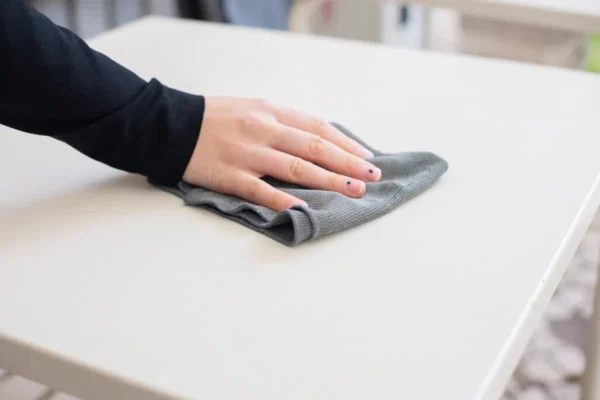
Laminate countertops are one of the easiest kitchen surfaces to keep clean, but that doesn't mean any cleaner will do. Laminate is a layered material, typically a printed pattern sealed under a plastic resin surface bonded to a particleboard core, and while it resists stains better than natural stone, it has its own weak points. Water can seep into the seams and edges, and abrasive scrubbing can dull or scratch the top layer over time. This guide is part of the Kitchen Countertop Cleaning Guide, and it covers exactly what laminate countertop cleaning needs, along with the mistakes that shorten its life.
The Simplest Way to Clean Laminate Countertops
For everyday cleaning, wipe the laminate countertop with a soft cloth or sponge and warm water mixed with a few drops of mild dish soap. Wipe in a circular motion to lift grease and food residue, then dry the surface with a clean towel. This basic routine handles most daily mess without risking scratches or dulling the surface.
That's the core method, and it covers the majority of laminate countertop cleaning needs. The rest of this guide explains why laminate behaves the way it does, which products to avoid, and how to handle tougher spots without damaging the surface.
Why Laminate Needs Gentler Care Than It Looks Like It Does
Laminate looks tough because the top layer is a hard plastic resin, but that layer is thinner than most people assume. It can scratch, and once scratched, dirt and grime settle into those grooves and become harder to clean out. The seams where laminate meets the edge of the counter, along with any spots near the sink, are also vulnerable to water damage if moisture sits there too long, since water can work its way into the particleboard core underneath.
This is why laminate countertop cleaning works best with soft tools and moderate moisture, never soaking wet cloths left sitting on the surface. Understanding these two weak points, the scratchable top layer and the water-sensitive edges, explains most of the do's and don'ts that follow.
Tools and Products for Cleaning Laminate Countertops
Laminate doesn't require a specialized product lineup. A short list of gentle tools covers nearly everything.
- Soft cloth or non-abrasive sponge: for daily wiping without scratching the surface
- Mild dish soap: a few drops in warm water handles most everyday cleaning
- All-purpose kitchen cleaner (non-abrasive): useful for a slightly deeper weekly wipe
- Baking soda paste: a small amount of baking soda mixed with water, useful for light scuffs, applied gently with a soft cloth
- Microfiber cloth for drying: prevents water from lingering on seams or edges
Skip anything labeled as a scouring cleaner, abrasive powder, or heavy-duty degreaser, since these products are more aggressive than laminate's surface can handle over repeated use.
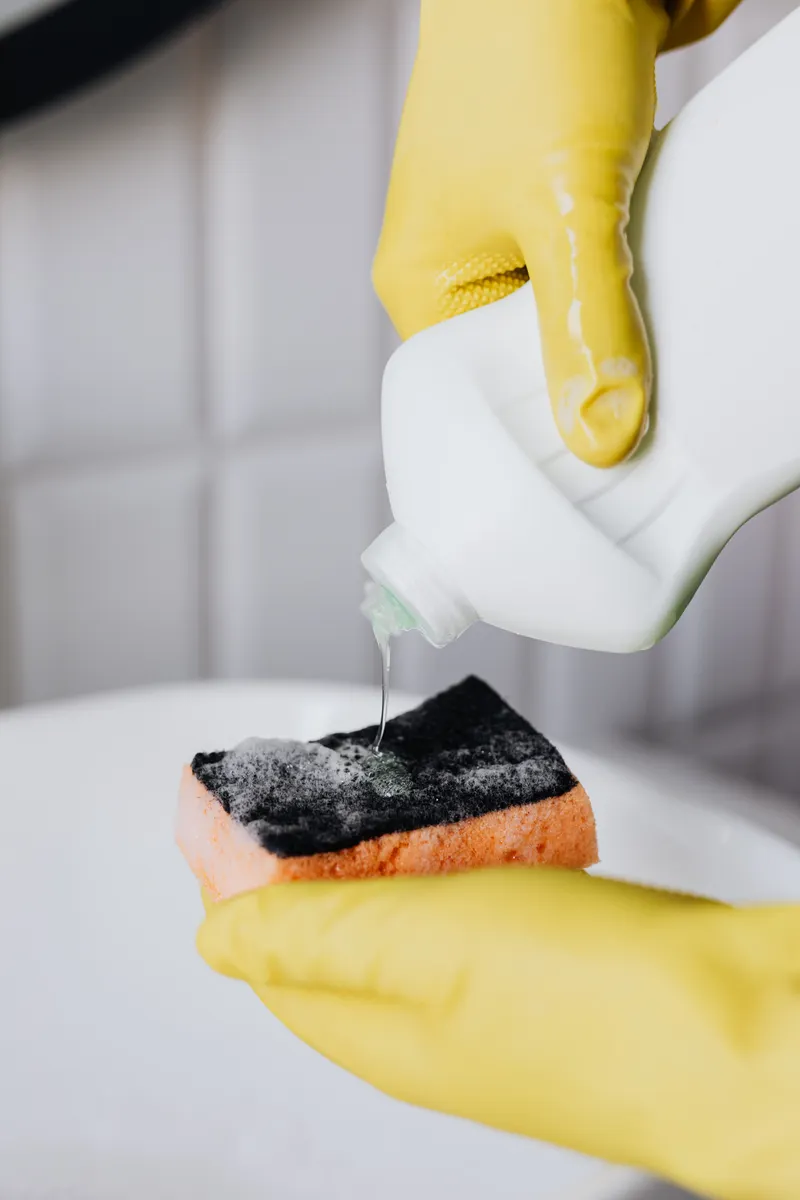
Photo Credit: https://kaboompics.com/
Daily and Weekly Laminate Countertop Cleaning Steps
A quick daily wipe combined with a slightly more thorough weekly clean keeps laminate looking good without extra effort.
Daily routine:
- Wipe up spills as soon as they happen, especially near seams or the edge of the sink.
- Mix a few drops of mild dish soap into warm water.
- Wipe the countertop with a soft cloth or sponge, using light pressure.
- Dry the surface with a clean towel, paying extra attention to seams and edges where water can collect.
Weekly routine:
- Spray a non-abrasive all-purpose kitchen cleaner onto the surface, following the label's instructions for contact time.
- Wipe in small sections with a soft cloth, avoiding scrubbing motions that could dull the finish.
- For light scuffs or marks, apply a small amount of baking soda paste with a soft cloth, rub gently, then rinse with a damp cloth.
- Dry thoroughly with a clean towel.
This weekly step handles buildup that a daily wipe might miss, without introducing anything abrasive.
Common Mistakes That Damage Laminate Countertops
Most laminate damage comes from a handful of repeated habits rather than one dramatic mistake. Recognizing these early prevents long-term wear.
- Using abrasive scrub pads or scouring powders: these dull the resin surface and create fine scratches over time
- Leaving standing water on seams or edges: water can seep into the particleboard core and cause swelling or lifting
- Cutting directly on the surface: laminate is not a cutting board, and knife marks cut into the top layer permanently
- Setting hot pots or pans directly on laminate: heat can warp or discolor the surface, since laminate has limited heat resistance compared to stone
- Using vinegar or acidic cleaners too often: while laminate tolerates occasional mild acid better than natural stone, frequent use of vinegar-based cleaners can wear down the surface's protective coating over time
A cutting board and trivet solve two of the most common causes of laminate damage, and they cost far less than replacing a countertop.
Is Vinegar and Baking Soda Safe for Laminate Countertops?
Vinegar diluted with water can be used occasionally on laminate for general cleaning, since laminate is more acid-tolerant than natural stone surfaces like marble or granite. However, it shouldn't become a daily go-to, since repeated acid exposure can gradually wear down the surface coating. Baking soda, used as a gentle paste, works well for light scuffs and marks without scratching the surface, as long as it's applied softly rather than scrubbed in hard.
Never combine vinegar with bleach. This mixing rule applies to every surface in the kitchen, not just laminate, since the combination can produce hazardous fumes. If you use a vinegar solution for laminate cleaning, make sure it's the only active cleaner on the surface at that time, and rinse thoroughly before using any other product afterward.
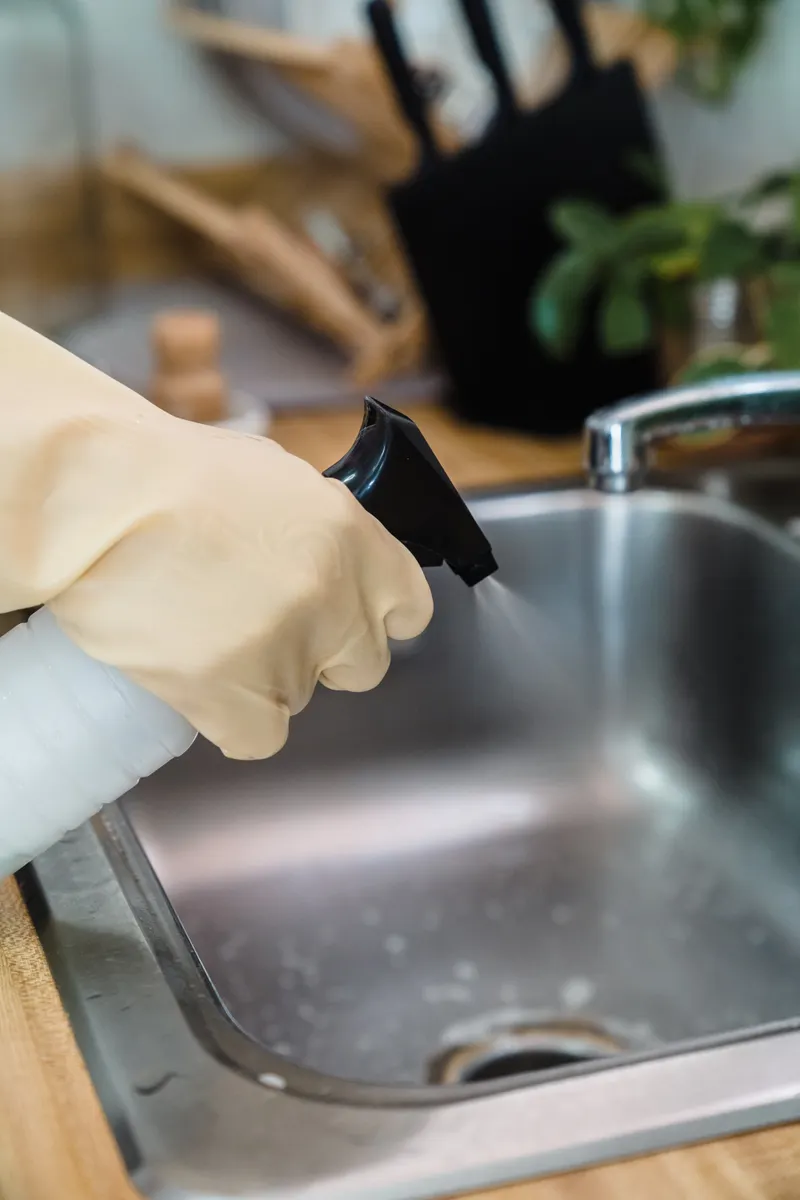
Photo Credit: Liliana Drew
Handling Stains, Scratches, and Heat Marks
Laminate resists most stains reasonably well, but a few situations need a slightly different approach.
- Surface stains from coffee, wine, or food dye often lift with a baking soda paste and a soft cloth. For tougher, set-in stains, more detailed stain-removal techniques go beyond the scope of routine kitchen cleaning and are better covered in dedicated stain-removal guidance.
- Light scratches are usually permanent, since laminate can't be sanded or buffed out like solid stone. Prevention (using cutting boards, avoiding abrasive tools) matters more than any after-the-fact fix.
- Heat marks or discoloration from hot pans typically can't be reversed. If this happens, avoiding direct pan contact going forward is the only real solution, since laminate doesn't respond well to reheating or chemical treatments aimed at reversing heat damage.
If a mark doesn't respond to gentle cleaning, avoid experimenting with stronger products or heavier scrubbing, since this often creates a bigger problem than the original mark.
Laminate vs Other Countertop Materials
Laminate's affordability and low maintenance set it apart from natural stone and metal surfaces, which is useful to know if your kitchen has a mix of countertop types or you're planning a renovation.
|
Factor |
Laminate |
Wood / Butcher Block |
Stainless Steel |
|
Heat resistance |
Poor, scorches easily |
Poor, can scorch and dry out |
Good, but can discolor from prolonged heat |
|
Scratch resistance |
Moderate, permanent once scratched |
Moderate, knife marks common |
Good, but shows scratches visibly |
|
Daily cleaner |
Mild soap and water |
Mild soap and occasional oil conditioning |
Mild soap and water or glass cleaner |
|
Sealing needed |
No |
Yes, with food-safe oil |
No |
|
Cost |
Low |
Moderate to high |
Moderate to high |
If your kitchen includes wood or butcher block sections, the Butcher Block & Wood Countertop Cleaning guide covers the oiling and cleaning steps that material needs. For stainless steel counters or appliances, the Stainless Steel Countertop Cleaning guide walks through safe products and streak-free techniques.
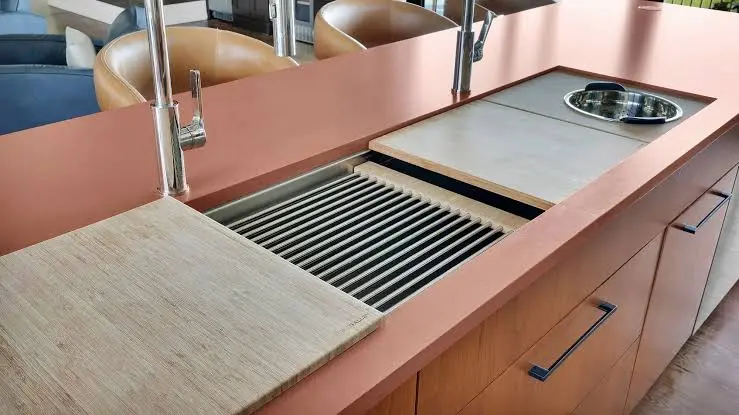
Photo Credit: Internet
How Often Should You Clean a Laminate Countertop?
Wipe laminate down daily after cooking or food prep, and give it a slightly deeper clean with a non-abrasive all-purpose cleaner once a week. Spills should be wiped up right away, especially near seams and edges, since standing water is the main long-term threat to this material. This routine is enough for most kitchens and doesn't require specialized stone cleaners or sealants, which laminate doesn't need.
Frequently Asked Questions
What is the best way to clean laminate countertops? Warm water with a few drops of mild dish soap, applied with a soft cloth and dried afterward, covers daily cleaning well. A weekly wipe with a non-abrasive all-purpose cleaner handles anything the daily routine misses.
How often should you clean laminate countertops? Wipe daily after use, with a slightly deeper clean once a week. Clean up spills immediately, especially near seams and the sink edge, to prevent water damage.
What cleaning products are safe for laminate countertops? Mild dish soap, non-abrasive all-purpose cleaners, and diluted vinegar used occasionally are all generally safe. Baking soda paste works well for light scuffs without scratching the surface.
What should you avoid when cleaning laminate countertops? Avoid abrasive scouring pads, scouring powders, and frequent use of acidic cleaners. Never mix vinegar with bleach, since this can release harmful fumes, and avoid setting hot pans directly on the surface.
How can you clean laminate countertops without damaging them? Stick to soft cloths, mild soap and water, and gentle wiping. Use cutting boards and trivets to prevent knife marks and heat damage, and dry seams and edges promptly to avoid water seeping into the core.
A Quick Note on Safety
Cleaning products used on laminate, including all-purpose cleaners and vinegar solutions, should be used according to the manufacturer's label instructions, since formulas vary by brand. Never mix vinegar or any acidic cleaner with bleach, as this combination can produce hazardous fumes. Work in a ventilated kitchen when using stronger cleaning products, and test a new product on a small, hidden area of the countertop first if you're unsure how it will react. If your laminate shows lifting at the seams, swelling near the sink, or damage that goes beyond the surface layer, a countertop repair professional can assess whether the affected section needs replacing.
For more on caring for the rest of your kitchen, browse the complete kitchen cleaning guide.





Leave a Reply