
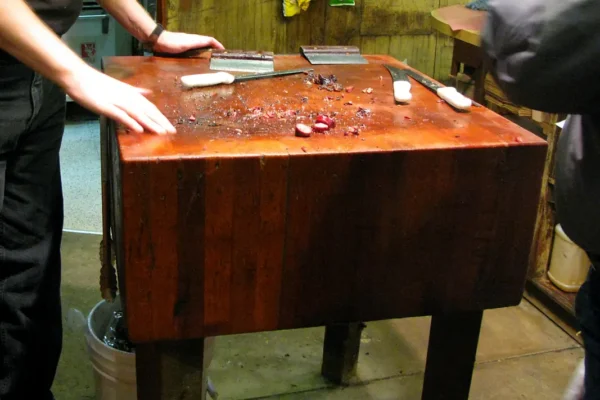
Butcher block and wood countertops bring warmth to a kitchen, but they behave differently from stone or laminate surfaces. Wood is porous, so it can absorb water, oil, and bacteria if it isn't cared for correctly, and it depends on a protective finish that needs regular attention. Wood countertop cleaning isn't complicated, but it does follow different rules than sealed stone or plastic laminate. This guide is part of the Kitchen Countertop Cleaning Guide, and it covers exactly what butcher block and wood countertops need to stay clean, sanitary, and free of cracking or warping.
The Best Way to Clean Butcher Block and Wood Countertops
For everyday cleaning, wipe the wood countertop with a damp cloth and warm water mixed with a few drops of mild dish soap. Wipe with the grain of the wood, then dry the surface immediately with a clean towel. Standing water is the main thing to avoid, since wood absorbs moisture quickly and can warp, crack, or grow mold if it stays wet too long.
That basic routine covers daily wood countertop cleaning needs. The sections below explain how oiling fits into the routine, which products are safe, and how to sanitize the surface properly, since wood used for food prep needs a bit more attention than a purely decorative countertop.
Why Wood Countertops Need a Different Cleaning Approach
Wood is a natural, porous material, which means liquids and bacteria can work their way into the surface if it isn't properly sealed with a food-safe oil or finish. This is different from granite or quartz, where a mineral sealant or resin does the protective work. With wood, that job falls to a food-safe oil, typically mineral oil or a specific butcher block conditioner, applied periodically to keep the wood from drying out and cracking.
Because wood absorbs what it comes into contact with, it also reacts to moisture and temperature swings more than stone does. Leaving a wet sponge sitting on the surface, or placing the countertop too close to a heat source, can cause the wood to warp or crack over time. Understanding wood's need for both surface cleaning and periodic oiling is the foundation of keeping this material in good shape.
Tools and Products for Wood Countertop Cleaning
Wood countertop cleaning uses a short, specific list of tools and products, and using the wrong ones can do more harm than good.
- Soft cloth or sponge: for daily wiping, always used with the wood grain
- Mild dish soap: a few drops diluted in warm water for regular cleaning
- Food-safe mineral oil or butcher block conditioner: applied periodically to keep the wood from drying out
- Fine-grit sandpaper (220 grit or higher): used occasionally for smoothing rough spots, not for routine cleaning
- Clean, dry towels: essential for drying the surface immediately after washing
Avoid dish soaps with heavy fragrance or added moisturizers meant for hands, since these aren't formulated for wood and can leave residue. Cooking oils like olive oil or vegetable oil should not be used for conditioning, since they can turn rancid over time; food-safe mineral oil or products labeled specifically for butcher block are the safer choice.
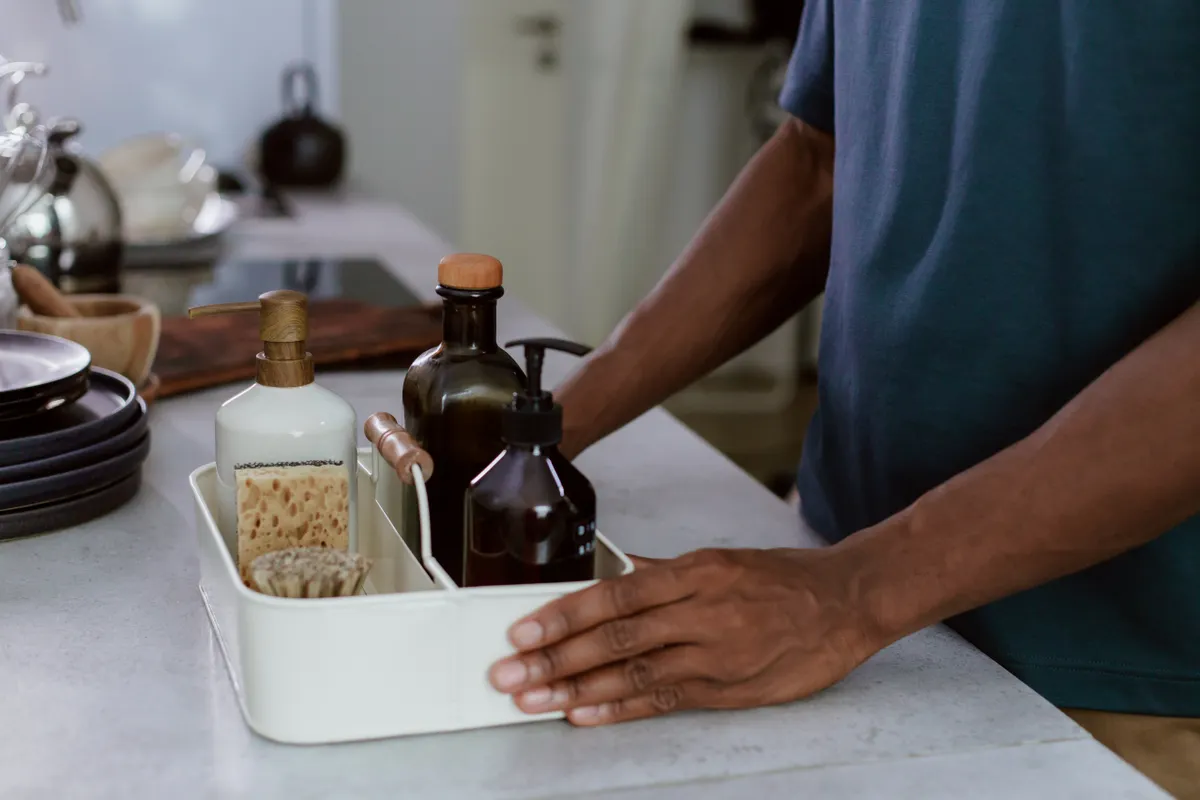
Photo Credit: Ron Lach
Daily and Weekly Wood Countertop Cleaning Steps
A short daily wipe combined with a slightly more thorough weekly clean, plus periodic oiling, keeps wood countertops in good condition.
Daily routine:
- Wipe up spills right away, especially water, since standing liquid is the biggest risk to wood.
- Mix a few drops of mild dish soap into warm water.
- Wipe the surface with a damp cloth, following the direction of the wood grain.
- Dry immediately with a clean towel. Never let the wood air-dry on its own.
Weekly routine:
- Wash the entire surface with warm, soapy water and a soft cloth or sponge.
- Rinse the cloth and wipe again with plain water to remove soap residue.
- Dry thoroughly and let the surface air out for a few minutes before it's used again.
- Check for any rough spots, dryness, or dullness that might signal it's time for oiling.
This weekly check helps catch dryness or minor damage before it becomes a bigger problem.
How and When to Oil a Butcher Block Countertop
Oiling is what keeps wood from drying out, cracking, or absorbing moisture unevenly. How often this is needed depends on how much the countertop is used, the climate in your home, and the specific finish originally applied, so there's no single fixed schedule that fits every kitchen.
A simple way to check if oiling is needed: sprinkle a few drops of water on the surface. If the water beads up, the wood is still protected. If it soaks in quickly, it's time to oil.
Steps to oil a wood countertop:
- Clean and fully dry the surface first; oil should never be applied over moisture.
- Apply a food-safe mineral oil or butcher block conditioner with a clean, soft cloth, following the product's label instructions.
- Let the oil soak in for the time stated on the label, often a few hours or overnight.
- Wipe off any excess oil with a clean cloth so the surface doesn't feel greasy.
- Repeat a second coat if the wood still looks dry after the first application.
Skip vegetable, olive, or canola oil for this job, since food oils don't fully cure and can go rancid inside the wood over time.
What to Avoid When Cleaning Wood Countertops
Wood countertops are forgiving in some ways, but a few habits cause damage that's hard to reverse.
- Letting water sit on the surface: standing water is the single biggest cause of warping and cracking
- Using bleach or harsh disinfectants regularly: these can dry out and discolor the wood over time; bleach also should never be combined with vinegar, ammonia, or other acids, since this creates dangerous fumes on any surface
- Putting wood countertops in the dishwasher: this applies mainly to cutting boards, but the same heat and moisture exposure would damage a wood countertop section too
- Using abrasive scouring pads: these scratch the wood surface and roughen the grain
- Skipping oiling for long stretches: dry wood cracks more easily and loses its water resistance
If you're unsure whether a cleaning product is appropriate for wood, mild dish soap and water is almost always the safer default over a specialty cleaner with an unclear ingredient list.
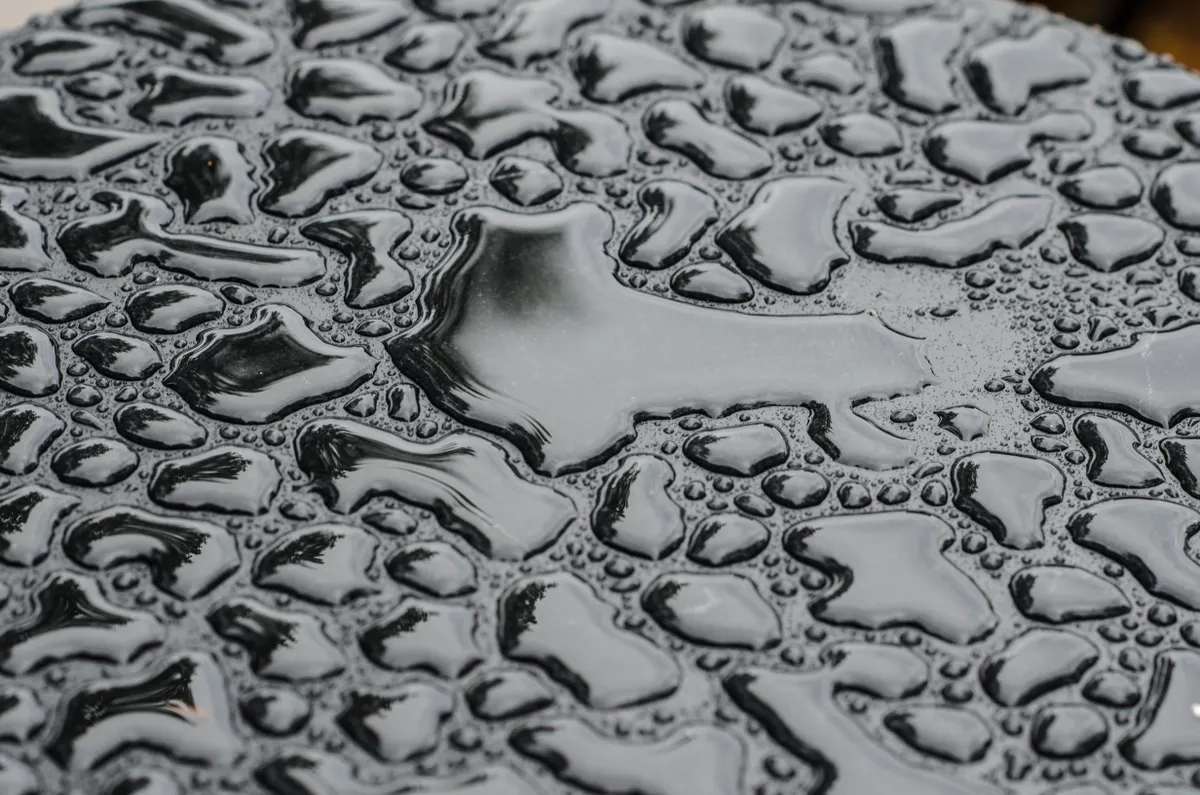
Photo Credit: Lelani Badenhorst
Sanitizing Wood Countertops Used for Food Prep
If your butcher block countertop is used directly for cutting meat, poultry, or produce, occasional sanitizing goes a step beyond basic cleaning. A simple approach many households use is wiping the surface with a diluted vinegar solution or a food-safe sanitizing spray, followed by a rinse and thorough drying. This matters more for surfaces in direct, repeated contact with raw food than for countertops used mainly for general kitchen tasks.
Sanitizing wood correctly, including safe dilution ratios and how often it's genuinely needed based on use, is covered in more detail in the dedicated guide on Wood Countertop Sanitizing for Food Safety, since that topic deserves more depth than a general cleaning overview can provide.
Wood vs Other Countertop Materials
Wood's need for oiling and its sensitivity to standing water set it apart from most other common countertop materials, which is useful to know if your kitchen combines wood with other surfaces.
|
Factor |
Wood / Butcher Block |
Stainless Steel |
Laminate |
|
Water sensitivity |
High, can warp or crack |
Low, water-resistant |
Low, but seams are vulnerable |
|
Maintenance needed |
Periodic oiling required |
Minimal, occasional polishing |
Minimal, no sealing needed |
|
Heat resistance |
Poor, can scorch |
Good, but prolonged heat can discolor |
Poor, scorches easily |
|
Daily cleaner |
Mild soap and water |
Mild soap and water or glass cleaner |
Mild soap and water |
|
Cutting directly on surface |
Generally fine with proper care |
Not recommended, scratches easily |
Not recommended, permanent scratches |
If your kitchen also has stainless steel counters, sinks, or appliances, the Stainless Steel Countertop Cleaning guide covers safe products and streak-free techniques for that surface.
How Often Should You Clean a Butcher Block or Wood Countertop?
Wipe wood countertops down daily after use, especially after food prep, and give the surface a slightly deeper wash once a week. Oiling frequency depends on use and climate, but checking with the water-bead test every few weeks helps catch dryness early. Spills, especially water, should never sit on the surface, since prevention here matters more than any after-the-fact fix.
Professional refinishing or deep restoration for wood countertops (sanding down scratches, reapplying a full finish) is available through woodworking or countertop specialists, and cost varies widely depending on the size of the countertop and the extent of the damage, so a local quote is more reliable than a general estimate.
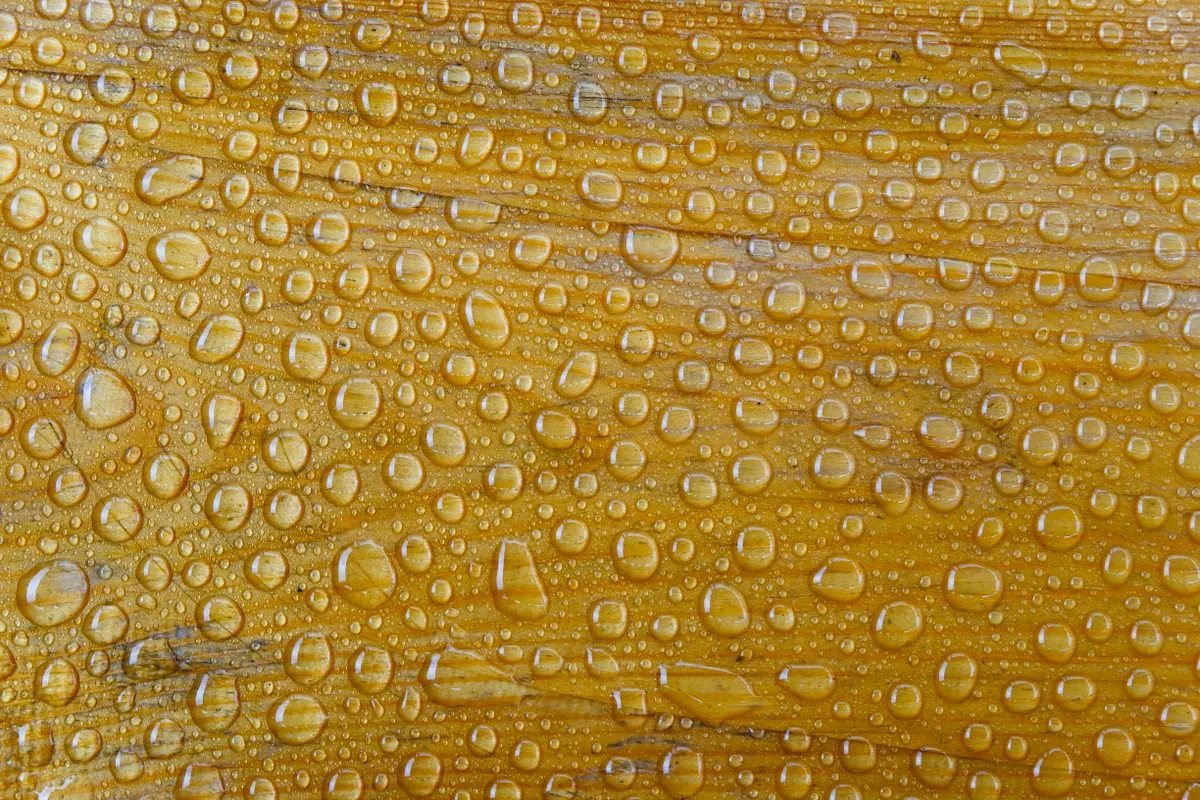
Photo Credit: sergeispas
Frequently Asked Questions
What is the best way to clean butcher block and wood countertops? Warm water with a few drops of mild dish soap, applied with a soft cloth and dried immediately, covers daily cleaning. Weekly washing plus periodic oiling keeps the wood protected long term.
How often should you clean butcher block and wood countertops? Wipe daily after use, with a deeper wash once a week. Oil the surface whenever the water-bead test shows the wood is absorbing moisture instead of repelling it.
What cleaning products are safe for butcher block and wood countertops? Mild dish soap and water for cleaning, and food-safe mineral oil or a butcher block conditioner for oiling. Diluted vinegar can be used occasionally for sanitizing food-prep areas.
What should you avoid when cleaning butcher block and wood countertops? Avoid standing water, dishwasher exposure, abrasive scouring pads, and frequent use of bleach. Never mix bleach with vinegar or ammonia, since this produces hazardous fumes.
How can you clean butcher block and wood countertops without damaging them? Wipe with the grain using a soft cloth, dry immediately after washing, and keep up with periodic oiling. Avoid letting water sit and skip food oils like olive or vegetable oil for conditioning.
A Quick Note on Safety
Food-safe mineral oil, sanitizing sprays, and any wood conditioning product should be used according to the manufacturer's label instructions, since drying times and application methods vary by product. Never mix bleach with vinegar, ammonia, or other acids, as this combination can release harmful fumes. Work in a ventilated kitchen when using sanitizing sprays or stronger cleaning products, and test a new product on a small, hidden area first if you're unsure how the wood will react. If the countertop shows deep cracking, mold growth, or damage that goes beyond the surface, a professional woodworker or countertop specialist can assess whether refinishing or replacement makes more sense.
For more on caring for the rest of your kitchen, check out the full kitchen cleaning guide.





Leave a Reply