

A good daily countertop cleaning routine takes just a few minutes, but it does more to protect your kitchen surfaces than any deep clean or specialty product ever will. Wiping up spills, crumbs, and grease before they sit prevents stains, buildup, and material damage that are much harder to fix later. This guide is part of the Kitchen Countertop Cleaning Guide, and it lays out a simple, repeatable routine that works across most common countertop materials.
The Fastest Daily Countertop Cleaning Routine
For most kitchens, a daily countertop cleaning routine takes three steps: clear the surface of crumbs and clutter, wipe it down with a damp cloth and a mild, material-appropriate cleaner, then dry it with a clean towel. Done consistently, this takes about two to five minutes per session and prevents the buildup that leads to deeper cleaning problems down the line.
That's the routine in its simplest form. The rest of this guide breaks down what to wipe daily, which products work for which materials, and how to adjust the routine so it protects rather than damages your specific countertop.
Why a Daily Routine Matters More Than Occasional Deep Cleans
Countertops take on grease, food particles, and moisture constantly throughout the day, and most kitchen materials handle fresh mess far better than mess that's had time to sit. Oil left overnight can seep into unsealed grout or wood. Acidic spills like tomato sauce or citrus juice can etch marble or granite if they sit for more than a few minutes. Even sealed, low-maintenance surfaces like laminate or quartz collect a film of grease over a day of cooking that becomes harder to remove once it dries.
A short daily routine catches all of this early, before it turns into a stain, an etch mark, or a sticky buildup that needs a stronger product to shift. It also means your weekly or monthly deep clean stays lighter, since there's less accumulated grime to deal with. Prevention, more than any specific product, is what actually keeps countertops looking good over the long run.
What to Wipe Down Every Day
Not every part of the counter gets equal wear, and knowing where mess collects helps you clean efficiently rather than scrubbing the whole surface out of habit.
- Areas around the stove and prep zones: grease and food splatter build up here fastest
- Near the sink: water spots, soap residue, and food particles from rinsing dishes
- Anywhere food is regularly prepped: crumbs, oils, and cutting residue
- Edges and seams: these trap crumbs and moisture more than flat, open sections
- Small appliance areas: coffee makers, toasters, and blenders tend to leave rings, drips, or crumbs underneath
A full wipe-down of the entire countertop once a day covers the rest, even the sections that look clean, since a light film of grease isn't always visible until it's built up for a few days.
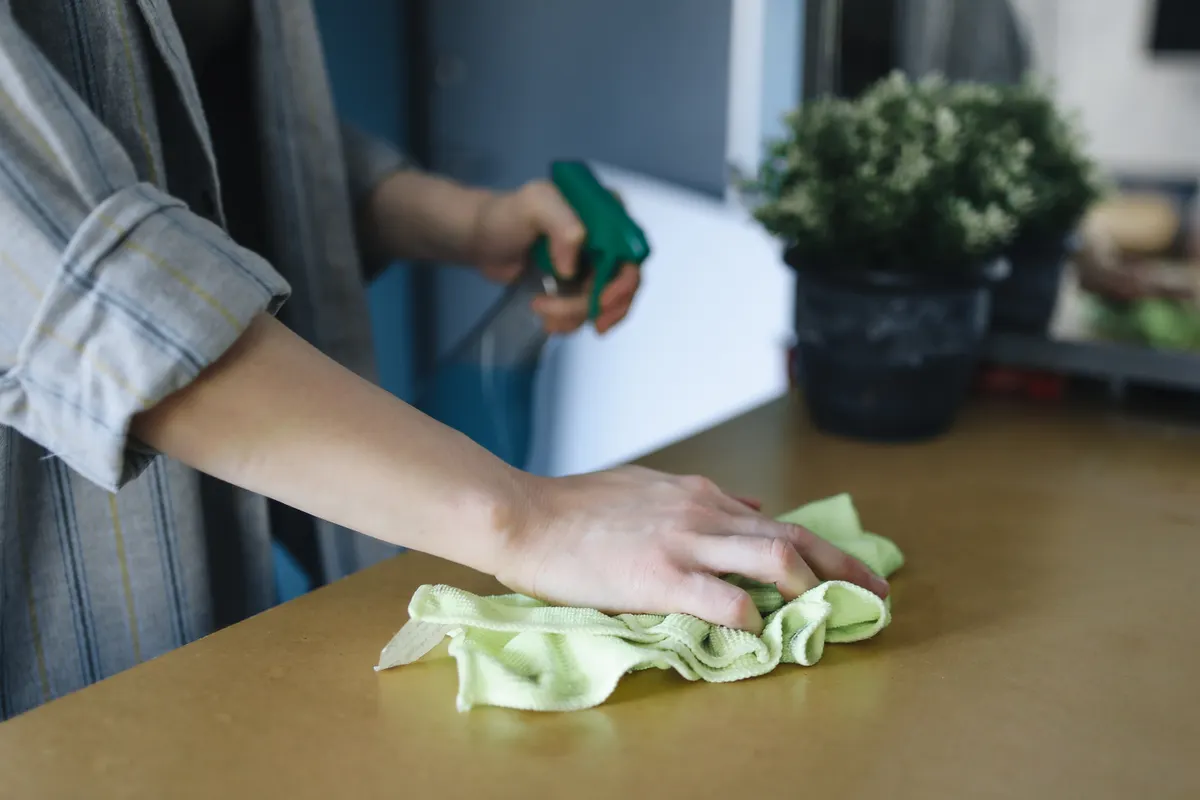
Photo Credit: Polina Tankilevitch
Step-by-Step Daily Cleaning Routine
This routine works as a general framework, and it adjusts slightly depending on your countertop material, which is covered in the next section.
- Clear the surface. Move small appliances, dishes, and clutter aside so you can reach the entire countertop.
- Wipe up loose debris. Use a dry cloth or paper towel to sweep crumbs and dry residue into your hand or a trash bin before adding any liquid.
- Dampen a soft cloth with warm water and a mild, material-appropriate cleaner. What counts as appropriate depends on your countertop material, covered below.
- Wipe the entire surface, paying extra attention to the areas listed above where mess collects fastest.
- Dry the countertop with a separate clean towel. Skipping this step lets water sit on seams, grout, or unsealed stone, which can lead to problems over time depending on the material.
- Spot-check for spills that need immediate attention, especially anything acidic or oily that may have already started to interact with the surface.
This entire process usually takes two to five minutes for an average kitchen countertop, longer if the day involved heavier cooking or more prep work.
Which Cleaners Are Safe for Common Countertop Materials?
Not every cleaner works safely across every countertop material, so matching the product to the surface matters more than picking one all-purpose spray for the whole kitchen.
|
Material |
Safe daily cleaner |
Avoid |
|
Granite |
Mild dish soap and water, or pH-neutral stone cleaner |
Vinegar, lemon, bleach, ammonia |
|
Marble |
Mild, pH-neutral dish soap and water only |
Any acidic cleaner, abrasive pads |
|
Quartz |
Mild dish soap and water |
Bleach, strong solvents, high heat |
|
Laminate |
Mild dish soap and water, occasional diluted vinegar |
Abrasive scouring powders |
|
Wood / Butcher block |
Mild dish soap and water, dry immediately |
Standing water, dishwasher exposure |
|
Tile & grout |
Mild dish soap and water, baking soda paste for grout |
Undiluted vinegar on unsealed grout |
|
Stainless steel |
Mild dish soap and water, or glass cleaner for shine |
Abrasive pads, chloride-based cleaners |
If you're unsure what your countertop is made of, plain mild dish soap and water is the safest default across nearly every material, since it's gentle enough not to cause damage while you confirm the exact surface type.
Eco-Friendly Options for Daily Countertop Cleaning
A daily countertop cleaning routine doesn't require harsh chemicals for most kitchens. Warm water and a few drops of mild dish soap handle the bulk of everyday mess on nearly every material. Baking soda mixed into a paste works as a gentle, low-impact option for lifting grease on tile, laminate, and grout lines without scratching.
Diluted vinegar is another commonly used natural option, but it isn't universally safe. It works fine on laminate and glazed tile in moderation, but it should never be used on marble, granite, or other natural stone, since the acid etches those surfaces. If your countertop is a material sensitive to acid, stick with soap and water rather than reaching for vinegar out of habit.
Never combine vinegar or any acidic cleaner with bleach. This applies regardless of countertop material, since the reaction produces hazardous fumes and has no place in a daily routine.
Photo Credit: https://kaboompics.com/
Handling Spills and Food Residue Promptly
Some spills need immediate attention rather than waiting for the end-of-day wipe-down, since a few minutes of contact time can make the difference between a quick clean and a lasting mark.
- Acidic foods and drinks (citrus, vinegar, wine, tomato-based sauces): wipe immediately, especially on marble, granite, or other natural stone
- Oils and grease: left sitting, these penetrate unsealed grout, wood, and porous stone more easily over time
- Food coloring and dark sauces: can stain grout and lighter-colored surfaces if left too long
- Sugary spills: can become sticky and attract debris if not wiped promptly
- Raw meat juices: wipe up right away and treat the area with a sanitizing step afterward, since this is a food safety concern beyond general cleaning
That last point matters enough to cover separately. If your kitchen regularly handles raw meat, poultry, or seafood prep, routine wiping isn't quite enough on its own. The dedicated guide on Disinfecting & Sanitizing Kitchen Countertops walks through when and how to sanitize safely, including which products are appropriate and how they differ from everyday cleaning.
Adjusting the Routine for Your Specific Countertop
While the basic daily steps stay the same across materials, a few adjustments matter depending on what your countertop is made of. Natural stone surfaces like granite and marble need pH-neutral products and quick attention to acidic spills, since their sealant and mineral makeup react differently than engineered or synthetic surfaces. If granite is part of your kitchen, the Granite Countertop Cleaning guide goes into more detail on sealant care and the specific products that keep that stone protected long term.
Wood and butcher block need extra attention to drying, since standing water causes more damage there than on sealed stone or laminate. Tile and grout split into two cleaning needs within the same surface, with grout requiring more frequent attention due to its porous nature. Matching your daily habits to your specific material, rather than applying one method to every surface in the kitchen, is what keeps the routine effective long term.
Photo Credit: Francesco Ungaro
How Long Should a Daily Countertop Cleaning Routine Take?
A daily countertop cleaning routine typically takes two to five minutes for an average kitchen counter, assuming spills are wiped up as they happen rather than left to build up. Kitchens with heavier daily cooking, more counter space, or multiple materials to manage may take closer to ten minutes for a full wipe-down. The time investment stays small as long as the routine happens consistently rather than being skipped for several days at a time.
Frequently Asked Questions
How often should you follow a daily countertop cleaning routine? Once a day at minimum, ideally after the last major cooking or food prep session, with spot spills wiped up immediately whenever they happen throughout the day.
What should you wipe down on a kitchen countertop every day? Focus on areas around the stove, sink, and prep zones, along with edges, seams, and the space under small appliances. A full wipe of the entire surface once daily catches anything missed in spot cleaning.
How long should a daily countertop cleaning routine take? Around two to five minutes for most kitchens, longer if the day involved more cooking or the countertop covers a larger area.
Which cleaners are safe for common kitchen countertop materials? Mild dish soap and water is safe across nearly every material. Beyond that, safety depends on the surface: pH-neutral stone cleaners for granite and marble, mild soap for quartz and laminate, and material-specific care for wood and tile grout.
What food residues should be cleaned promptly from countertops? Acidic foods and drinks, oils and grease, food coloring, sugary spills, and raw meat juices all need prompt attention rather than waiting for the end-of-day wipe-down.
A Quick Note on Safety
Most daily countertop cleaning uses mild, low-risk products like dish soap and water, but a few precautions still matter. Never mix vinegar or other acidic cleaners with bleach, since this combination produces hazardous fumes regardless of countertop material. When using any specialty stone cleaner, grout treatment, or sanitizing product, follow the manufacturer's label instructions, since contact times and dilution ratios vary by brand. If you're ever unsure whether a product is safe for your specific countertop material, test it on a small, hidden area first, or default to mild soap and water until you confirm what the surface is made of.
For more on keeping the rest of your kitchen clean, see the full kitchen cleaning guide.





Leave a Reply