
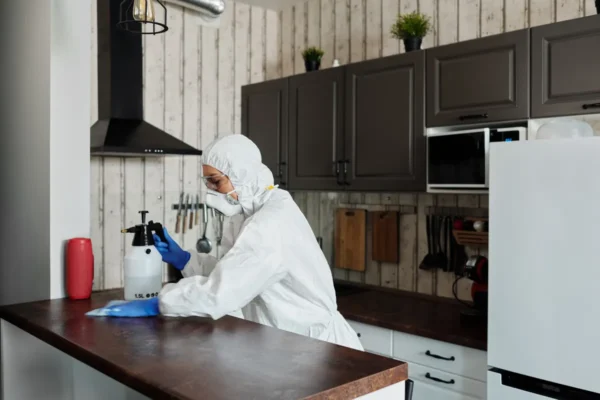
Cleaning removes visible dirt, but disinfecting and sanitizing go a step further by reducing germs on a surface. Not every countertop needs this step every day, but there are specific moments in a kitchen, raw meat prep, illness in the household, cutting boards used on the counter, where disinfecting or sanitizing genuinely matters. This guide is part of the Kitchen Countertop Cleaning Guide, and it explains the difference between these steps, which products are appropriate, and how to disinfect without damaging your specific countertop material.
How to Disinfect Kitchen Countertops Safely
To disinfect a kitchen countertop safely: clean the surface first to remove visible dirt and grease, apply an EPA-registered disinfectant appropriate for your countertop material, let it sit for the contact time listed on the product label (this varies by product, often several minutes), then wipe or rinse according to the label's instructions. Cleaning before disinfecting matters, since grease and grime can block a disinfectant from reaching the surface underneath.
That's the core process. The rest of this guide covers the difference between disinfecting and sanitizing, which products work for which materials, and the situations in a kitchen that actually call for this extra step.
Disinfecting vs Sanitizing: What's the Difference
These two words get used interchangeably, but they mean different things in practical terms. Sanitizing reduces germs to a level generally considered safe by public health standards, while disinfecting kills a higher percentage of germs, including specific bacteria and viruses listed on the product's label. Disinfecting is the stronger of the two steps.
For most everyday kitchen situations, sanitizing is enough, and it's what many food-safe sprays and diluted solutions are designed to do. Disinfecting becomes more relevant after handling raw meat, poultry, or eggs, or when someone in the household is sick and germs need to be reduced more thoroughly than a standard cleaning would manage.
When Does a Kitchen Countertop Actually Need Disinfecting?
Not every countertop cleaning session needs to include a disinfecting step. Reserve it for situations where germs are a specific concern, rather than making it part of the basic daily wipe-down.
- After handling raw meat, poultry, seafood, or eggs, since these carry bacteria that a simple soap-and-water wipe may not fully address
- When someone in the household is sick, particularly with a stomach illness or respiratory infection
- After cutting boards or raw food packaging touch the counter directly
- In households with young children, elderly members, or anyone with a weakened immune system, where extra caution is reasonable
For regular daily mess, food crumbs, grease, spills, a mild dish soap and water wipe-down is enough. Disinfecting on top of that daily routine, every single day, isn't necessary for most households and can be harder on some countertop materials over time.
Best Disinfectants for Kitchen Countertops
The right disinfectant depends partly on your countertop material, since some products are too harsh for natural stone or can dull certain finishes with repeated use.
|
Disinfectant type |
What it does |
Best used on |
Avoid on |
|
Diluted bleach solution |
Kills a broad range of bacteria and viruses when mixed and used correctly per label |
Sealed, non-porous surfaces like laminate, sealed granite, quartz |
Marble, unsealed stone, wood (can discolor or degrade sealant) |
|
EPA-registered disinfectant wipes or sprays |
Formulated for household surfaces, contact time listed on label |
Most sealed countertop materials |
Check label for stone-safe claims before using on natural stone |
|
Isopropyl alcohol (70%) |
Effective against many germs, evaporates quickly |
Sealed surfaces, small spot areas |
Can dull some finishes with frequent use; check compatibility |
|
Hydrogen peroxide (3%) |
Mild disinfecting properties |
Sealed countertops as a lighter-duty option |
Not as strong as EPA-registered disinfectants for heavy-duty needs |
Always check that a disinfectant is labeled EPA-registered if you want confirmed effectiveness against specific germs, since not every cleaning spray marketed as "antibacterial" carries that registration. The product label will state what it's effective against and how long it needs to remain wet on the surface to work.
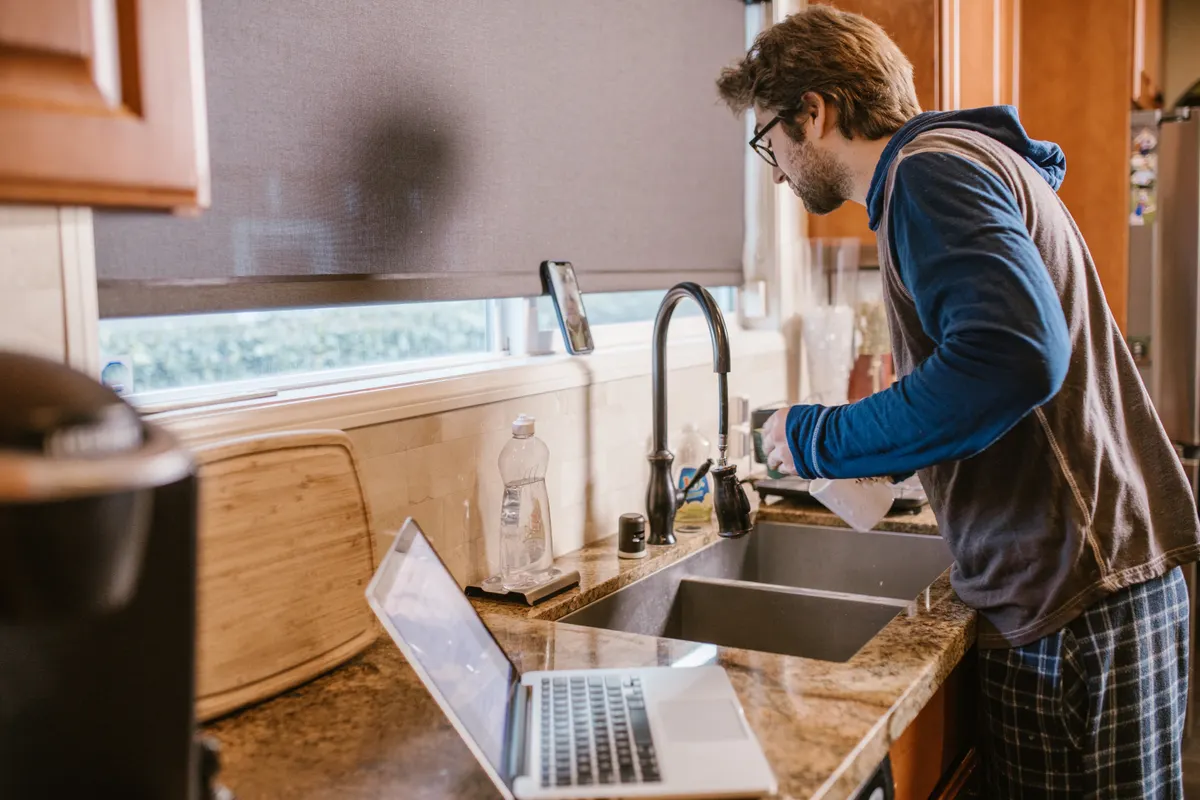
Photo Credit: RDNE Stock project
How Long Should Disinfectant Sit on a Countertop?
This is called the contact time or dwell time, and it's one of the most commonly skipped steps in home disinfecting. Wiping a disinfectant on and immediately drying it off often doesn't give the product enough time to actually work. The required contact time varies by product and is printed directly on the label, so checking that instruction matters more than following a generalized rule.
As a general pattern, many household disinfectants need to stay visibly wet on the surface for several minutes to be effective, but this differs by brand and formula. If the surface dries out before the labeled contact time is up, some products call for reapplying rather than assuming the job is already done. Following the label exactly, rather than guessing based on a similar product, is the more reliable approach here.
Step-by-Step Disinfecting Process
- Clear the countertop of dishes, food, and clutter.
- Clean the surface first with mild dish soap and water to remove visible grease and debris, since disinfectants work best on a surface that's already physically clean.
- Apply the disinfectant according to the product label, covering the full area that needs treatment.
- Let it sit for the labeled contact time, keeping the surface visibly wet during this period.
- Wipe or rinse if the label calls for it; some products air-dry and don't require a rinse step, while others do.
- Dry the surface with a clean towel if rinsing was involved, especially on wood or unsealed stone where standing moisture causes separate problems.
If the countertop involves food prep immediately afterward, check the label to see if a water rinse is required before food touches the surface again.
Material-Specific Safety Considerations
Disinfecting isn't one-size-fits-all across countertop materials, since some surfaces react poorly to specific chemicals or repeated harsh product use.
- Granite: sealed granite tolerates most EPA-registered disinfectants reasonably well, but bleach-based products used too often can wear down the sealant over time. The Granite Countertop Cleaning guide covers sealant care and safe everyday products in more depth.
- Quartz: quartz is non-porous and generally holds up well to disinfecting, but bleach and high-pH cleaners can dull the surface with frequent use. The Quartz Countertop Cleaning guide explains which products are safe for this engineered material specifically.
- Marble: highly sensitive to acid and bleach; stick to milder, stone-safe disinfectants and avoid frequent bleach exposure.
- Wood and butcher block: porous, so standing disinfectant or bleach can be absorbed into the material; dry thoroughly and don't oversaturate.
- Laminate: generally tolerates diluted bleach and most household disinfectants well, though standing moisture at the seams should still be avoided.
- Stainless steel: holds up well to most disinfectants, though chloride-based products used repeatedly can eventually cause pitting.
If you're unsure what your countertop is made of or how it will react, testing a disinfectant on a small, hidden area first is a reasonable precaution before treating the entire surface.
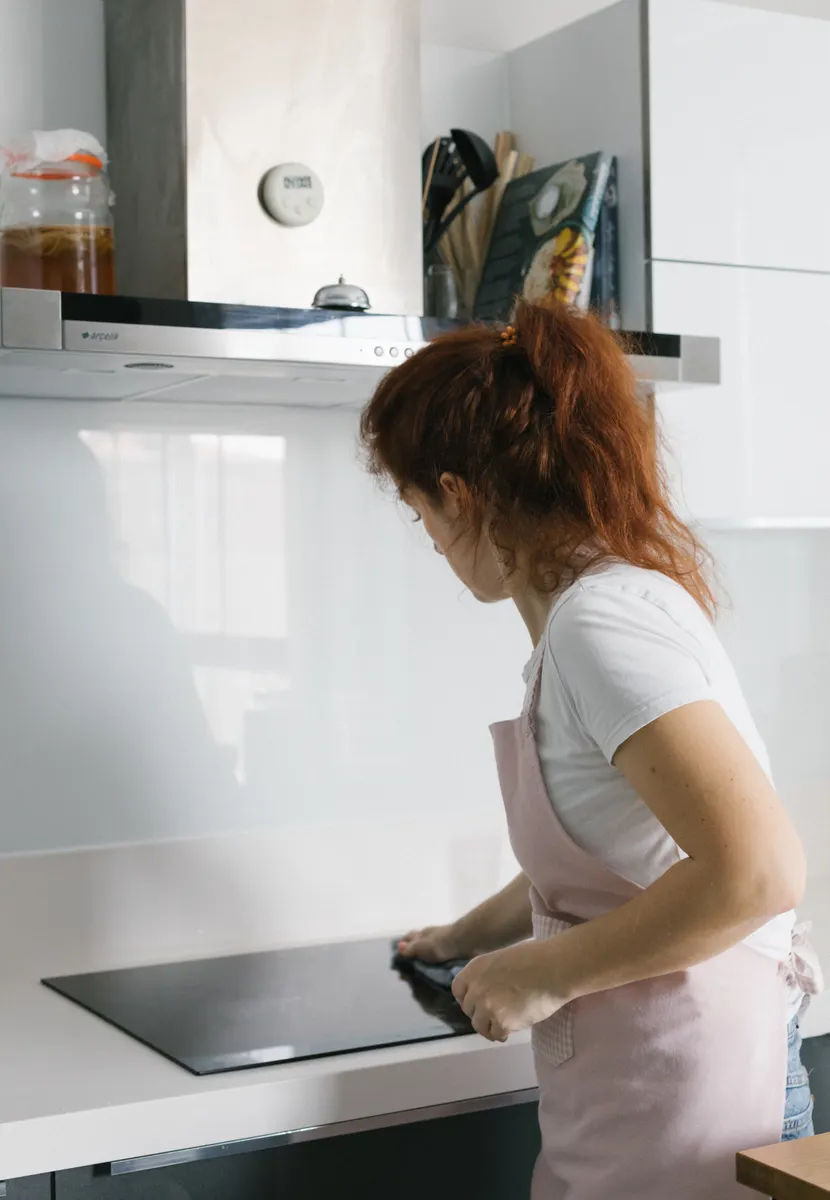
Photo Credit: Meruyert Gonullu
What to Avoid When Disinfecting Kitchen Countertops
A few mistakes come up often enough in home disinfecting that they're worth calling out directly.
- Never mix bleach with ammonia, vinegar, or other acids. This combination produces hazardous fumes and has no safe application in a kitchen. If you use a bleach-based disinfectant, make sure no other acidic or ammonia-based product is present on the surface at the same time.
- Don't skip the cleaning step before disinfecting. Grease and grime can block the disinfectant from reaching germs on the surface underneath.
- Don't cut the contact time short. Wiping a disinfectant off before the labeled time has passed reduces how effective it actually is.
- Don't use bleach or harsh disinfectants daily on sensitive materials like marble or wood, since frequent exposure can wear down sealant or discolor the surface over time.
- Don't assume all-purpose cleaners disinfect. Many cleaning sprays clean without meeting the standard for disinfecting or sanitizing; check the label for an EPA registration number or a specific claim about killing germs.
Ventilation matters here too. Disinfecting sprays and bleach solutions release fumes, and working in a room with a window open or a fan running reduces exposure, particularly if you're disinfecting a larger area or using a stronger product.
How Often Should You Disinfect Kitchen Countertops?
Daily disinfecting isn't necessary for most households. A daily wipe with mild soap and water covers general cleanliness, while disinfecting is reserved for specific situations: after raw meat or poultry prep, during an illness in the household, or after direct contact with raw food packaging. Sanitizing more routinely, using a milder food-safe spray, fits reasonably into a weekly routine for households that want an extra layer of reassurance without the wear that comes from frequent bleach use.
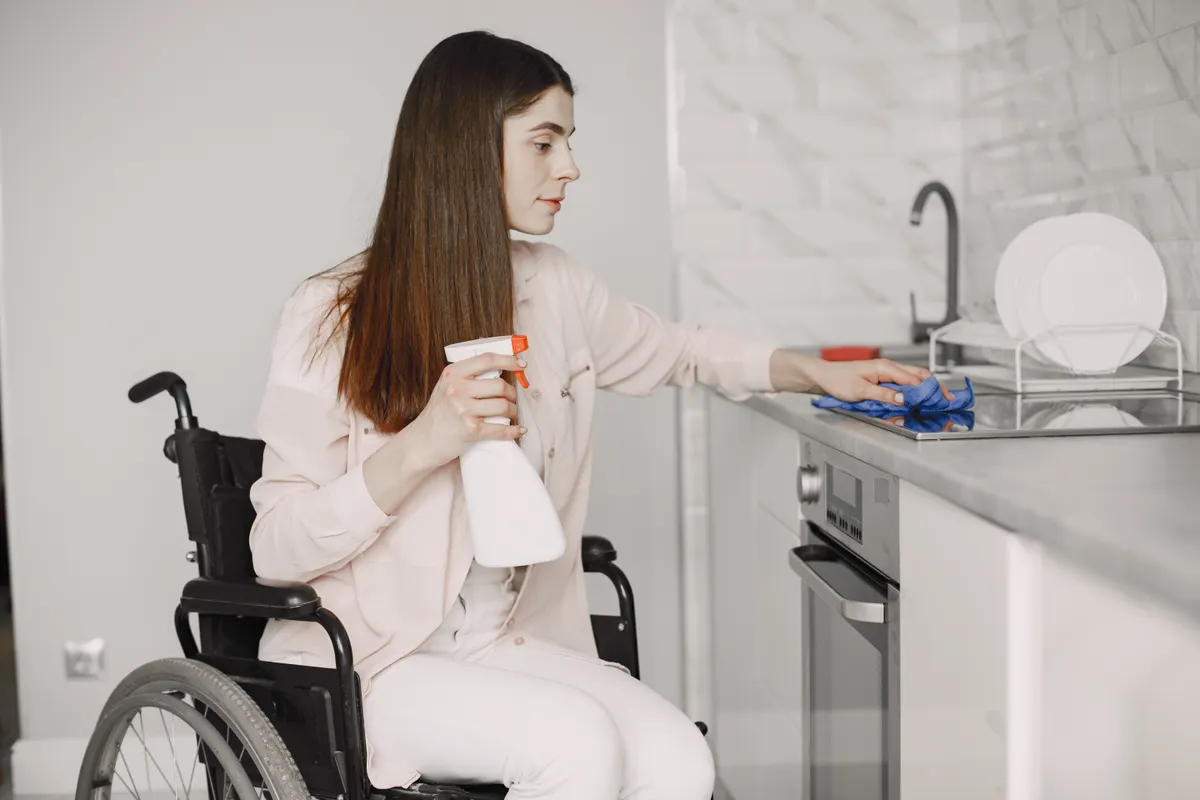
Photo Credit: Gustavo Fring
Frequently Asked Questions
How do you disinfect and sanitize kitchen countertops safely? Clean the surface first, apply an EPA-registered disinfectant suited to your countertop material, let it sit for the labeled contact time, then wipe or rinse as the label instructs. Ventilate the room and never mix disinfectants with other cleaning chemicals.
How often should you clean and sanitize kitchen countertops? Clean daily with mild soap and water. Disinfect specifically after raw meat prep, during household illness, or after contact with raw food packaging, rather than as a daily habit.
What cleaning products are safe for sanitizing kitchen countertops? EPA-registered disinfectants, diluted bleach solutions on sealed non-porous surfaces, isopropyl alcohol, and hydrogen peroxide are common options, though safety depends on your specific countertop material.
What should you avoid when cleaning and sanitizing kitchen countertops? Avoid mixing bleach with ammonia, vinegar, or other acids, skipping the cleaning step before disinfecting, and using harsh disinfectants daily on sensitive materials like marble or wood.
How can you clean and sanitize kitchen countertops without damaging them? Match the disinfectant to your countertop material, follow the labeled contact time exactly, dry the surface afterward, and avoid frequent bleach use on natural stone or wood where it can wear down sealant over time.
A Quick Note on Safety
Disinfectants, including bleach-based products, should always be used according to the manufacturer's label instructions, since contact times, dilution ratios, and material compatibility vary by product. Never mix bleach with ammonia, vinegar, or other acids, as this combination can release hazardous fumes. Work in a ventilated area when disinfecting, and consider gloves if you have sensitive skin. If a household member has a serious illness or a specific health condition requiring stricter sanitation, check with a healthcare provider or public health resource for guidance beyond general kitchen cleaning.
For more on keeping the rest of your kitchen clean, explore the complete kitchen cleaning guide.





Leave a Reply