
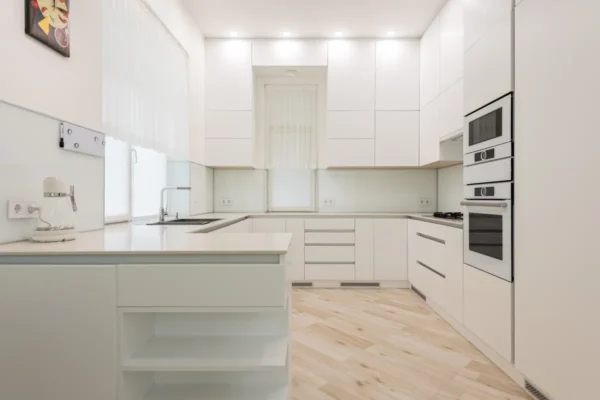
Laminate and thermofoil cabinets are two of the most common cabinet finishes in modern kitchens, and both are easier to keep clean than painted wood, as long as you understand what they're made of. Laminate is a plastic layer bonded to a particleboard or wood core, while thermofoil is a vinyl film heat-sealed over an MDF (medium-density fiberboard) core. Both finishes resist stains well, but both are sensitive to heat and moisture in ways that painted or solid wood cabinets aren't. Laminate cabinet cleaning done the right way keeps these surfaces looking good for years; done the wrong way, it can cause peeling, bubbling, or dulling that's hard to reverse. This guide is part of the Kitchen Cabinet & Drawer Cleaning Guide, and it covers exactly what these two finishes need.
The Best Way to Clean Laminate and Thermofoil Cabinets
For everyday cleaning, wipe laminate or thermofoil cabinets with a soft cloth and warm water mixed with a few drops of mild dish soap, then dry immediately with a clean towel. Avoid soaking the surface or letting water sit near edges and seams, since both materials can peel or lift if moisture gets underneath the top layer. For grease buildup, a slightly stronger all-purpose kitchen cleaner works, applied in small sections and wiped dry right away.
That covers the core routine. The rest of this guide explains the differences between laminate and thermofoil, which products are safe, and how to spot early signs that these finishes need attention before a small issue turns into a bigger repair.
Laminate vs Thermofoil: Why the Difference Matters
Laminate cabinet doors are made by bonding a hard plastic layer to a particleboard or wood substrate, using adhesive along the edges and seams. Thermofoil cabinets use a thin vinyl film that's heat-molded over an MDF core, which allows for more contoured door designs but creates a surface that's more sensitive to heat than laminate.
Both finishes share one major weak point: the adhesive bond between the surface layer and the core underneath. Excess moisture or high heat can weaken that bond over time, leading to peeling laminate edges or bubbling thermofoil. This is the reason laminate cabinet cleaning generally sticks to mild products and quick drying, rather than heavy scrubbing or prolonged wet cleaning.
Tools and Products for Cleaning Laminate and Thermofoil Cabinets
A short list of gentle products covers nearly all cleaning needs for both finishes.
- Soft microfiber cloth or sponge: for daily wiping without scratching either surface
- Mild dish soap: a few drops in warm water for regular cleaning
- Non-abrasive all-purpose kitchen cleaner: useful for cutting through grease near the stove
- Baking soda paste: a light option for stubborn grease spots, applied gently
- Soft-bristle brush: for reaching into handle grooves and decorative details without scratching the flat surface
Avoid anything abrasive, including scouring pads, powders, or steel wool, since these scratch both laminate and thermofoil finishes permanently. Also avoid heavily wet cleaning methods like steam cleaners, since both materials are vulnerable to heat and moisture working into the seams.
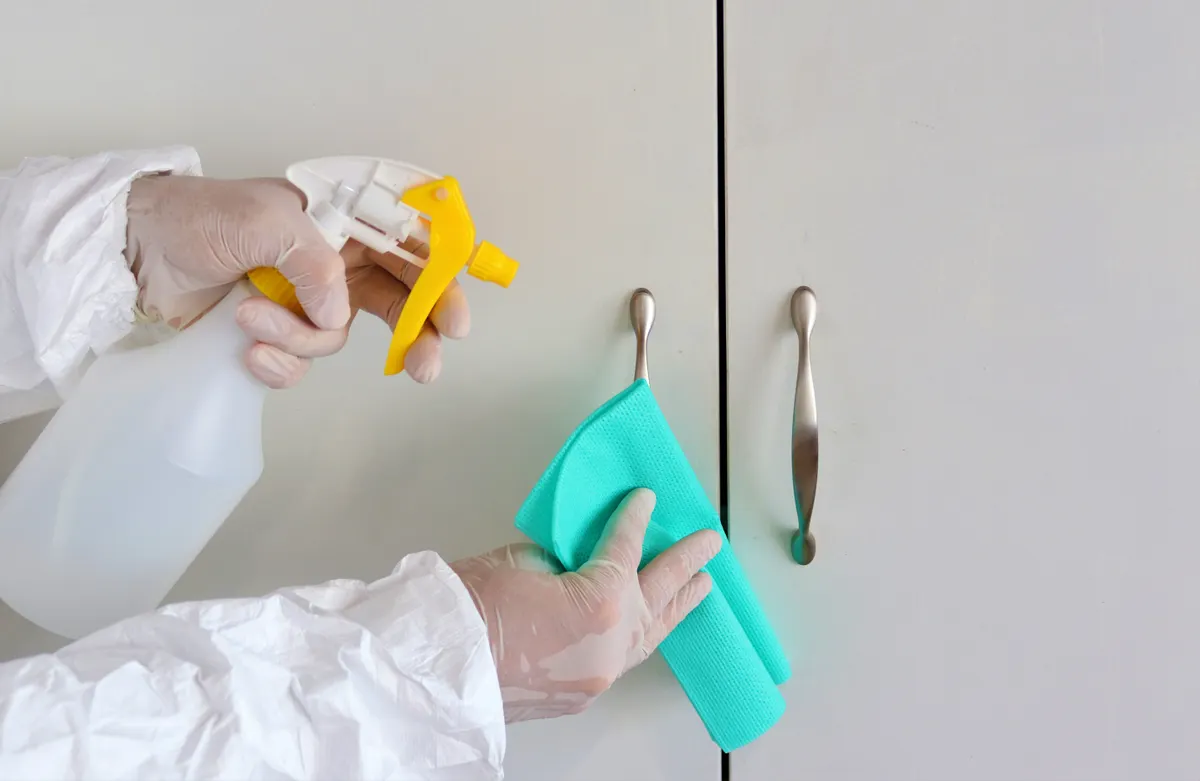
Photo Credit: Roger Brown
Daily and Weekly Cabinet Cleaning Steps
A quick wipe-down for spills and a more thorough weekly clean keeps laminate and thermofoil cabinets in good shape.
As-needed spot cleaning:
- Wipe up grease splatters near the stove as soon as you notice them, before they have time to build up.
- Use a damp cloth with a few drops of mild dish soap.
- Wipe gently, then dry the area immediately with a clean towel.
Weekly routine:
- Mix a few drops of mild dish soap into warm water, or use a non-abrasive all-purpose cleaner.
- Wipe the full face of each cabinet door and drawer front with a soft cloth.
- For handle areas or grooved details, use a soft-bristle brush to reach into corners without scratching the flat surface.
- Dry the entire surface with a clean towel, paying close attention to edges and seams where moisture tends to collect.
- Check for any lifting edges, bubbling, or discoloration while you clean, since catching these early makes a difference.
This routine handles typical kitchen grease and grime without introducing the moisture or abrasion that damages these finishes over time.
How to Tell If Your Cabinets Need More Than a Routine Wipe
Most of the time, a soft cloth and mild soap handle everything. But a few signs suggest it's time for a closer look or a different approach.
- Sticky residue that doesn't lift with soap and water often means grease has built up over time and needs a slightly stronger degreasing pass, done gently and in small sections.
- Dulling on the cabinet faces nearest the stove usually points to accumulated grease film rather than actual finish damage, and a weekly clean should restore some shine.
- Peeling edges on laminate doors signal the adhesive bond has weakened, often from moisture exposure near the sink or dishwasher.
- Bubbling on thermofoil doors is almost always heat-related, commonly from a dishwasher vent, oven proximity, or a hot pan set too close to the cabinet face.
Peeling and bubbling aren't something a cleaning routine can fix once they've started, and pushing harder with stronger cleaners or scrubbing won't reverse the underlying adhesive failure. At that point, the fix usually involves resealing the edge or replacing the affected door.
What to Avoid When Cleaning Laminate and Thermofoil Cabinets
A handful of habits cause most of the damage seen on these two finishes.
- Abrasive scouring pads or powders: these scratch both laminate and thermofoil permanently
- Excess water or soaking cloths left against the surface: moisture that gets under the edges weakens the adhesive bond
- Placing cabinets too close to heat sources: thermofoil in particular is sensitive to heat from ovens, dishwasher vents, or hot cookware set directly against the surface
- Steam cleaners: the combination of heat and moisture is one of the fastest ways to cause bubbling or peeling
- Harsh solvents or undiluted bleach: these can discolor or degrade the surface layer over repeated use
If you're not sure whether a cabinet door is laminate or thermofoil, check for a seam along the edge; laminate typically shows a visible edge banding, while thermofoil tends to wrap seamlessly around the door's contours since it's molded rather than applied as a flat sheet.
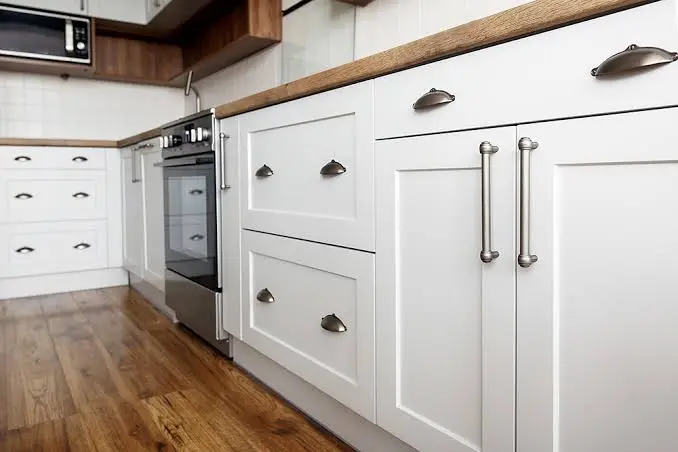
Photo Credit: Internet
Handling Water Damage on Laminate Cabinets
Water damage on laminate cabinets, usually showing up as swelling, peeling edges, or a soft spot near the sink or dishwasher, is one of the more common repair issues with this material. Catching it early, before the moisture spreads further into the particleboard core, makes a real difference in whether the door can be salvaged or needs replacing.
If you notice discoloration, swelling, or lifting laminate near a water source, the dedicated guide on Removing Water Damage Stains from Laminate Cabinets walks through how to assess the damage and what steps might help, since this goes beyond routine cleaning and into a repair-focused process.
Don't Forget the Hardware
Handles, knobs, and hinges collect grease and grime just as fast as the cabinet faces, sometimes faster, since hands touch them directly throughout the day. Cleaning the hardware separately, rather than only wiping around it, keeps the whole cabinet looking consistent.
For a full breakdown of safe products and methods for different hardware finishes (brass, brushed nickel, chrome, matte black), the Cabinet Hardware Cleaning guide covers this in more detail, since hardware often has different care needs than the cabinet surface itself.
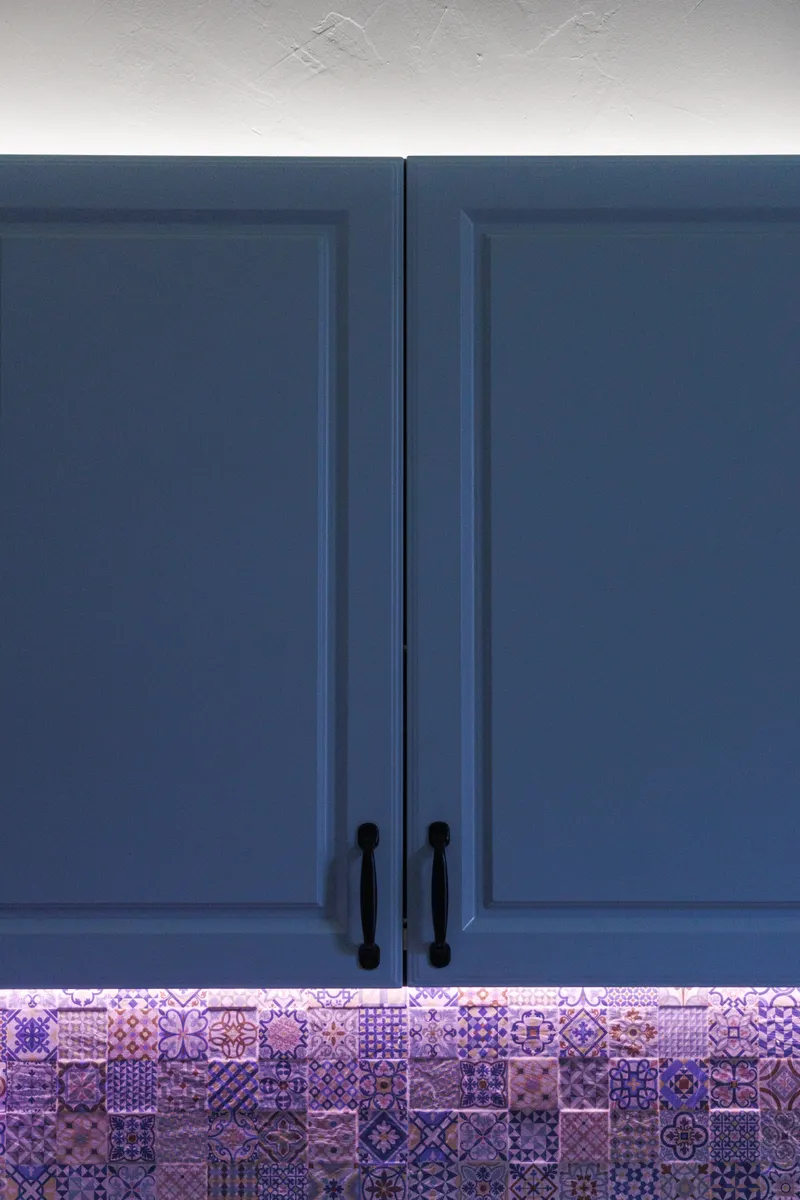
Photo Credit: Canary Vista ES
How Often Should You Clean Laminate or Thermofoil Cabinets?
Spot clean grease splatters as they happen, especially near the stove, and give the full cabinet face a proper wipe-down once a week. Check edges and seams periodically for early signs of peeling or bubbling, since catching these issues early is the only real way to avoid a larger repair. A full deep clean, including hardware, once a month keeps things consistent without requiring daily effort beyond spot cleaning.
Frequently Asked Questions
What is the best way to clean laminate and thermofoil cabinets? Warm water with a few drops of mild dish soap, applied with a soft cloth and dried immediately, covers most cleaning needs. A weekly wipe with a non-abrasive all-purpose cleaner handles grease buildup near the stove.
How often should you clean laminate and thermofoil cabinets? Spot clean grease as it happens, with a full wipe-down once a week. Check edges and seams periodically for early signs of peeling or bubbling.
What cleaning products are safe for laminate and thermofoil cabinets? Mild dish soap, non-abrasive all-purpose kitchen cleaners, and baking soda paste for stubborn grease spots are all generally safe for both finishes.
What should you avoid when cleaning laminate and thermofoil cabinets? Avoid abrasive scouring pads, steam cleaners, excess water near seams, and placing these cabinets close to heat sources like ovens or hot cookware.
How can you clean laminate and thermofoil cabinets without damaging them? Use soft cloths, mild products, and dry the surface immediately after cleaning. Keep moisture away from edges and seams, and address grease buildup before it hardens into a harder-to-remove film.
A Quick Note on Safety
Non-abrasive all-purpose cleaners used on laminate and thermofoil cabinets should be applied according to the manufacturer's label instructions, since formulas and dilution needs vary by brand. Avoid undiluted bleach or strong solvents on these finishes, and never mix bleach with vinegar, ammonia, or other acids, since this combination produces hazardous fumes regardless of the surface involved. Work in a ventilated kitchen when using stronger cleaning products, and test a new product on a small, hidden area first if you're unsure how the finish will react. If cabinets show significant peeling, bubbling, or water damage beyond the surface layer, a cabinet repair professional can assess whether the affected doors need resealing or replacement.
For more on caring for the rest of your kitchen, check out the full kitchen cleaning guide.





Leave a Reply