
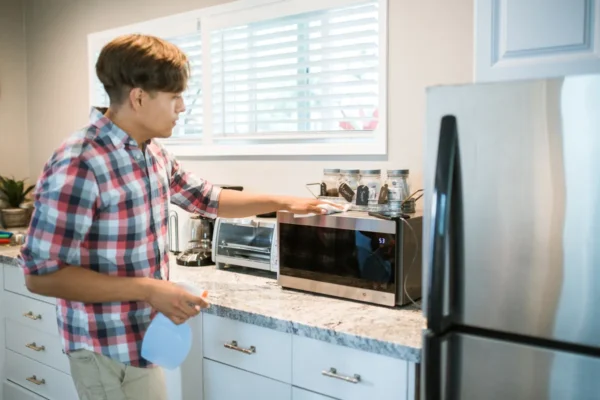
The outside of an oven takes on a different kind of grime than the inside. Instead of baked-on grease, it's fingerprints, dust, splatter from nearby cooking, and the occasional sticky handprint left by kids reaching for a snack. The control panel adds its own challenge, since it's covered in buttons, dials, or a touchscreen that shouldn't get wet the way a flat door panel can. Oven exterior cleaning is a simple task once you know which products work for your oven's finish and which ones to keep away from the electronics.
This guide covers safe methods for stainless steel, painted metal, and glass oven exteriors, along with specific care for control panels and touchscreens. It's part of the Oven & Stovetop Cleaning Guide, which covers the rest of the oven, including the racks, interior, and door glass.
The Best Way to Clean an Oven Exterior and Control Panel (Quick Answer)
For most ovens, this approach works well:
- Wipe down the exterior with warm water and mild dish soap on a soft cloth.
- For stainless steel, follow the grain and use a stainless-specific cleaner if needed.
- Clean the control panel with a barely damp cloth, avoiding moisture near buttons, seams, or vents.
- Dry the entire exterior with a clean cloth to prevent streaking or water spots.
The biggest difference between exterior cleaning and interior cleaning is moisture control. The outside of the oven doesn't need aggressive degreasing the way baked-on interior grime does, but it does need a careful approach around electronic components.
What You'll Need
Most of what's needed is already in the kitchen:
- Mild dish soap
- Warm water
- Microfiber cloths (at least two, one for washing and one for drying)
- A stainless steel cleaner, if your oven has that finish
- Isopropyl alcohol, useful for control panel smudges
- A soft-bristle brush or old toothbrush for seams and crevices
- Glass cleaner, for ovens with a glass front panel
Avoid abrasive scrub pads, steel wool, and powdered cleansers on any exterior finish. These can scratch painted metal, dull stainless steel, or leave marks on glass panels that are difficult to reverse.
Cleaning the Oven Exterior by Material
Not every oven exterior responds the same way to the same products, so it helps to know what finish you're working with before choosing a cleaning method.
Stainless Steel
Stainless steel shows fingerprints and water spots more easily than other finishes, but it's also fairly forgiving once you know the right technique.
- Wipe with warm, soapy water using a soft cloth, always moving in the direction of the metal's grain rather than in circles.
- For fingerprints or light streaking, a stainless steel specific cleaner applied with a dry cloth often works better than soap and water alone.
- Dry thoroughly with a separate cloth to prevent water spots from forming as the surface air dries.
Avoid cleaners containing chlorine bleach on stainless steel, since repeated exposure can cause pitting or discoloration over time. Ammonia-based glass cleaners are also generally best avoided on stainless finishes, even though they're common in many kitchens, since some can dull the surface with frequent use.
Painted or Enameled Metal
Painted and enameled oven exteriors are generally more resistant to smudging than stainless steel, but the painted surface can scratch if cleaned with anything abrasive.
Warm water and mild dish soap on a soft cloth handles most everyday cleaning. For tougher grease spots, a small amount of baking soda made into a paste can help lift residue without scratching, as long as it's applied gently and rinsed off completely afterward. Avoid scouring pads and powdered cleansers with any grit, since these can wear down the painted finish and leave visible scratches over time.
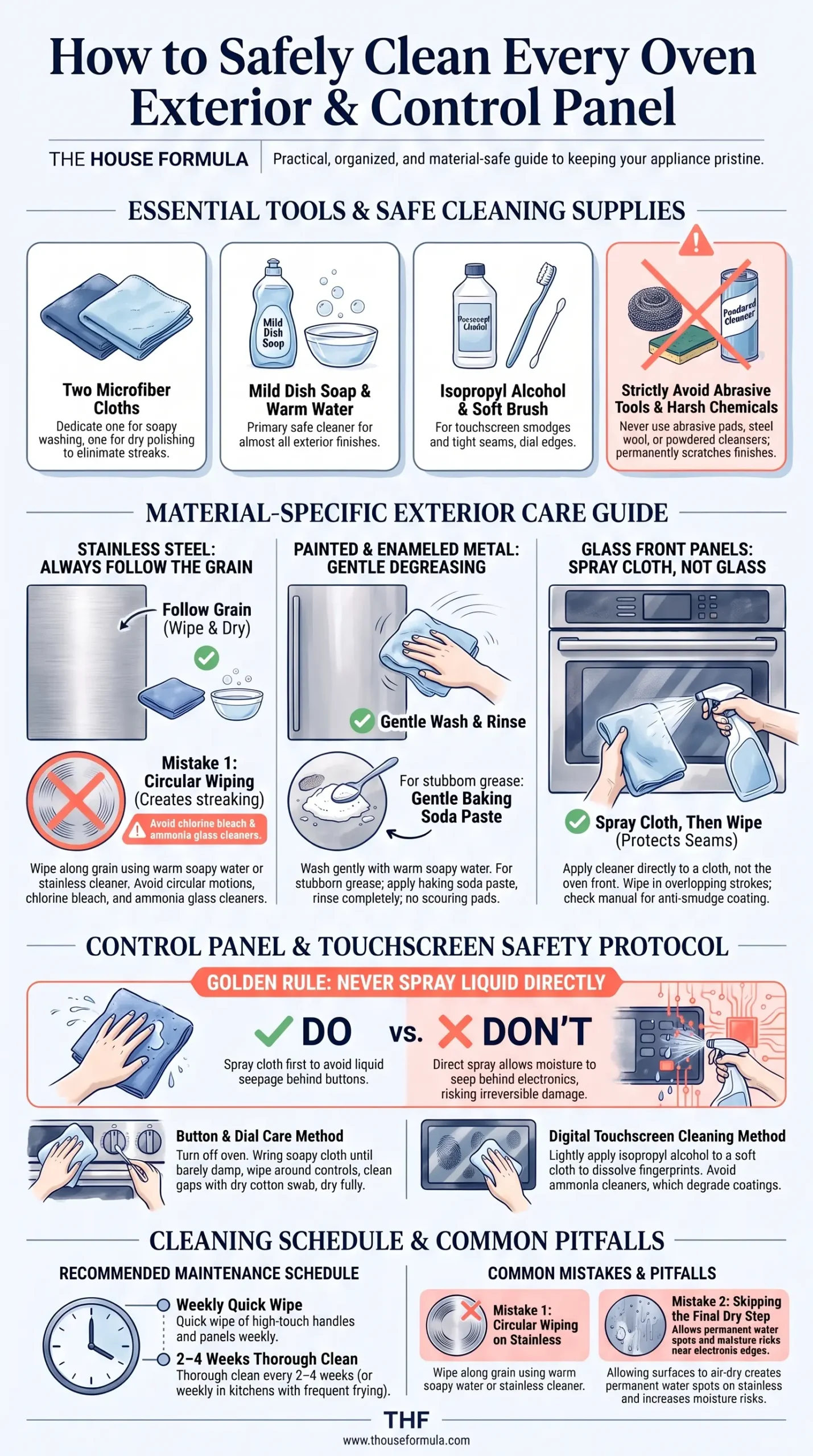
Photo Credit: Hobby Guidebook Editorial
Glass Front Panels
Many oven doors have a glass front panel as part of the exterior design, separate from the interior oven door glass. A standard glass cleaner works well here, applied to a cloth rather than sprayed directly onto the oven, which helps keep moisture away from any nearby seams or vents.
Wipe in overlapping strokes and follow up with a dry microfiber cloth to avoid streaking. If the glass panel has a smudge-resistant or reflective coating, check the manufacturer's care instructions first, since some coated glass surfaces recommend avoiding ammonia-based cleaners.
Cleaning the Control Panel Safely
The control panel is the part of the oven exterior that needs the most caution, since it sits close to buttons, dials, and in many newer models, a digital touchscreen.
For standard button or dial panels:
- Turn off the oven and let it cool completely before cleaning.
- Dampen a cloth with water and a small amount of mild dish soap, then wring it out well so it's barely damp rather than wet.
- Wipe gently around buttons and dials, avoiding any direct spraying of liquid onto the panel.
- Use a dry cotton swab to clean tight spaces around buttons or seams where a cloth can't reach.
- Dry the panel fully with a clean, dry cloth before using the oven again.
For touchscreen control panels:
Touchscreens need a gentler approach than physical buttons. Isopropyl alcohol on a soft cloth, applied lightly rather than saturated, works well for fingerprints and smudges on most touchscreen surfaces. Avoid ammonia-based glass cleaners on touchscreens, since some screen coatings can be damaged by ammonia over repeated use. Always check the oven's manual for touchscreen care instructions if you're unsure, since manufacturers sometimes specify particular products to avoid for their specific screen coating.
Never spray cleaner directly onto any control panel. Liquid can seep behind buttons or into seams around a touchscreen, which risks damaging the electronics underneath. Applying cleaner to a cloth first, rather than the panel itself, keeps moisture controlled and away from anything electronic.
Commercial Cleaner vs. Natural Method
Both commercial products and natural ingredients have a place in exterior oven care, and the right choice depends on the finish and the type of buildup.
|
Method |
Best Use |
Considerations |
|
Mild dish soap and water |
Everyday cleaning, all finishes |
Gentle and safe; needs thorough drying to avoid spots |
|
Stainless steel cleaner |
Fingerprints, streaking on stainless |
Apply with the grain; avoid on painted or glass surfaces |
|
Baking soda paste |
Grease spots on painted metal |
Mild abrasive; rinse fully to avoid residue |
|
Isopropyl alcohol |
Control panel smudges, touchscreens |
Apply to a cloth, not directly onto the panel |
|
Glass cleaner |
Glass front panels |
Apply to a cloth first; check coating compatibility |
|
All-purpose degreaser spray |
Heavier grease near stovetop area |
Confirm label safety for the exterior finish before use |
Commercial all-purpose degreasers can help with heavier grease buildup near the top of the oven, especially close to the stovetop, but always confirm the label states it's safe for your oven's specific finish. A degreaser made for general kitchen surfaces isn't automatically safe for stainless steel or a coated control panel, and using the wrong product can leave dulling or streaking that's hard to reverse.
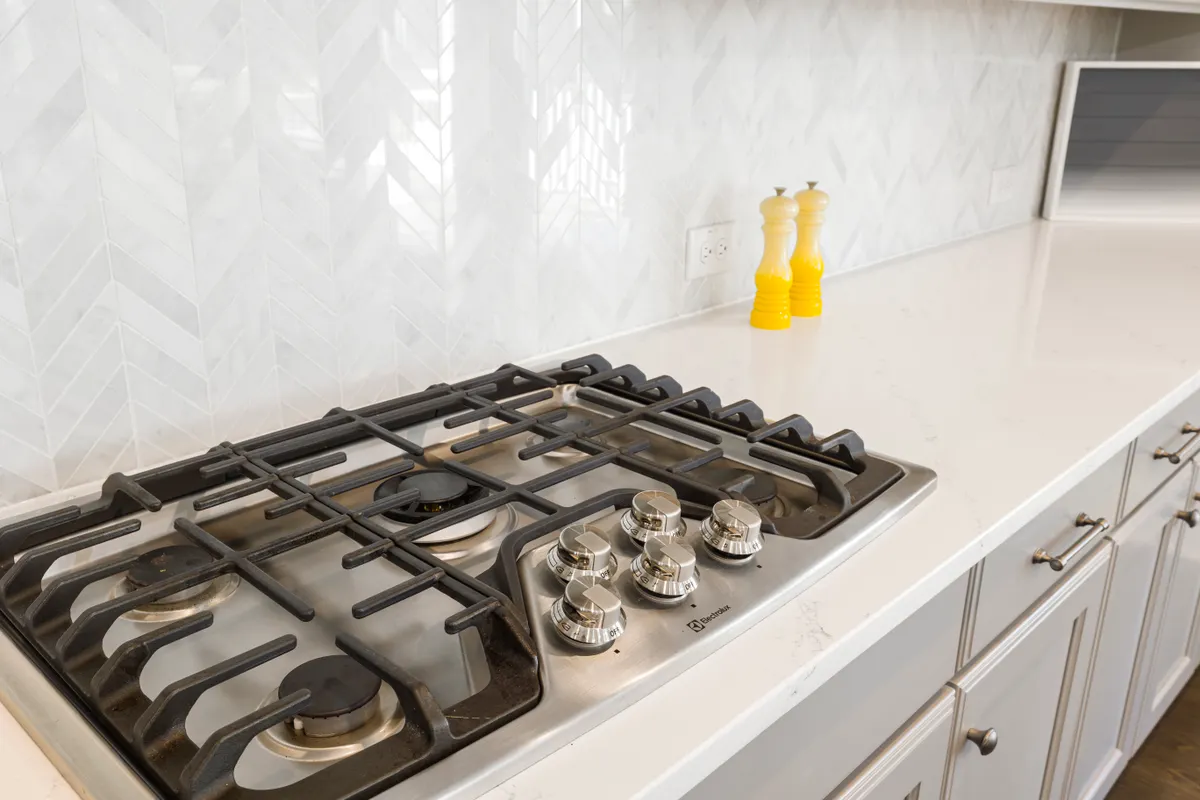
Photo Credit: Curtis Adams
Oven Exterior Cleaning and Nearby Stovetop Grease
The top edge of the oven exterior, right where it meets the stovetop, tends to collect more grease than the rest of the exterior simply because it's closer to where cooking happens. This is especially true for gas ranges, where grease and splatter from open burners can drift onto the oven's front panel and control area more than with other stovetop types.
If you're dealing with heavier buildup along this edge, addressing the stovetop itself as part of the same cleaning session usually makes more sense than treating the two as separate tasks. Our guide on Gas Stovetop Cleaning covers safe methods for burner grates, knobs, and the surrounding surface, which often needs a slightly different approach than the smooth exterior panel below it.
Electric coil stovetops present a different kind of splatter pattern, since spills tend to run down onto the drip pans and the surrounding surface rather than spreading outward the way gas burner splatter does. If your oven has this stovetop type, our guide on Electric Coil Stovetop Cleaning walks through cleaning the coils and drip pans safely, which pairs naturally with a full exterior cleaning session.
How Often Should You Clean the Oven Exterior and Control Panel
A quick wipe of the exterior, especially the door handle and control panel, is worth doing weekly in most kitchens, since these are high-touch areas that pick up fingerprints and light grime quickly.
A more thorough clean, including the stainless steel treatment or a deeper wipe of painted surfaces, works well every two to four weeks for most households. Kitchens with heavier daily cooking, especially frying or high-heat searing, may need this closer to weekly, since more airborne grease settles on nearby surfaces including the oven exterior.
The control panel itself often needs less frequent deep attention than the rest of the exterior, since it's not usually exposed to direct splatter the way the door front is, but a quick wipe whenever you notice smudging keeps it from building up unnoticed.

Photo Credit: Mikhail Nilov
Common Mistakes to Avoid
- Spraying cleaner directly onto the control panel. Liquid can seep behind buttons or a touchscreen and damage the electronics underneath.
- Using abrasive pads on stainless steel or painted finishes. Both can scratch, and scratches on stainless steel are particularly difficult to buff out.
- Wiping stainless steel in circular motions instead of following the grain. This can leave visible streaking even after the surface is clean.
- Using ammonia-based cleaners on touchscreens or coated glass. Some coatings can be damaged by ammonia with repeated exposure.
- Assuming one product works for every finish. A cleaner safe for painted metal isn't automatically safe for stainless steel, glass, or a touchscreen, so it's worth checking each surface separately.
- Skipping the final dry step. Leaving moisture on stainless steel or near the control panel can lead to water spots or, in rare cases, moisture reaching areas it shouldn't.
FAQ
What is the best way to clean an oven exterior and control panel? Wipe the exterior with warm, soapy water on a soft cloth, following the grain on stainless steel. Clean the control panel with a barely damp cloth or isopropyl alcohol for touchscreens, always applying products to the cloth rather than spraying directly onto the panel.
How often should you clean an oven exterior and control panel? A quick wipe weekly for high-touch spots like the handle and control panel, with a more thorough clean every two to four weeks depending on how much cooking happens in the kitchen.
What cleaning products are safe for an oven exterior and control panel? Mild dish soap, stainless steel cleaner (for stainless finishes only), baking soda paste for painted metal, and isopropyl alcohol for touchscreens and control panels are all generally safe choices.
What should you avoid when cleaning an oven exterior and control panel? Avoid abrasive pads, chlorine bleach on stainless steel, ammonia-based cleaners on touchscreens, and spraying any liquid directly onto the control panel.
How can you clean an oven exterior and control panel without damaging them? Apply cleaner to a cloth rather than the surface itself, follow the grain on stainless steel, dry thoroughly after cleaning, and check the manual before using any product on a touchscreen or coated glass panel.
For more oven and stovetop care, read the full kitchen cleaning guide for additional room-by-room instructions.
A quick safety note: always let the oven cool before cleaning, and check manufacturer guidance before using any cleaner near a touchscreen or digital control panel. Never spray liquid directly onto buttons or seams, and avoid combining ammonia-based products with bleach on any nearby surface, since this can produce hazardous fumes.





Leave a Reply