
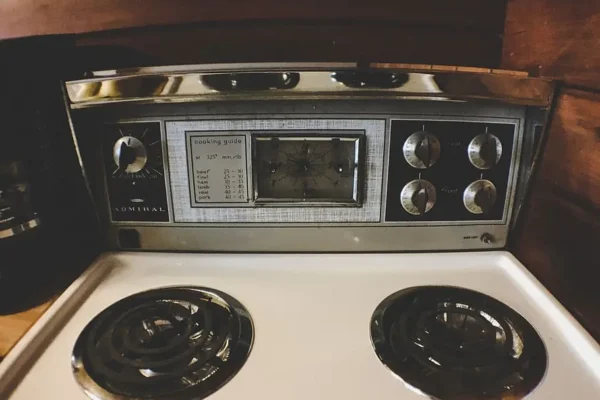
Electric coil burners collect a specific kind of mess. Spills run down the sides of the coil and settle into the drip pan underneath, then bake on with every use until they turn into a hard, dark ring that regular wiping won't touch. Electric coil stovetop cleaning gets much easier once you understand that the coils, the drip pans, and the surrounding surface each need a slightly different approach.
This guide covers how to clean the coils themselves, the drip pans below them, and the surface around the burners, along with which products actually help and which ones to avoid. It's part of the Oven & Stovetop Cleaning Guide, which covers care for every stovetop type and the oven that sits beneath it.
The Best Way to Clean an Electric Coil Stovetop (Quick Answer)
For most electric coil stovetops, this routine works well:
- Turn off the burners and let them cool completely before touching anything.
- Lift the coils and set them aside, then remove the drip pans underneath.
- Wipe the coils with a damp cloth and mild soap, never submerging them in water.
- Soak the drip pans in warm, soapy water to loosen baked-on residue.
- Wipe the surrounding surface, then dry everything before reassembling.
The coils and the drip pans need different handling because one contains electrical components and the other doesn't. Treating them the same way is one of the most common mistakes people make with this stovetop type.
What You'll Need
Most of what's needed is already in the kitchen:
- Mild dish soap
- Warm water
- A damp cloth or sponge
- A soft-bristle brush for the drip pans
- Baking soda
- White vinegar
- A dry towel
- Rubber gloves
Avoid submerging the coils themselves in water at any point, and avoid abrasive scouring pads on drip pans with a shiny chrome finish, since these can leave permanent scratches that make future buildup stick more easily.
Cleaning the Coil Burners
The coils are the part of this stovetop most people are unsure how to handle, mainly because they connect to an electrical socket underneath and shouldn't be soaked the way other stovetop parts can be.
- Turn off the burner and let it cool completely. This can take longer than it looks, since coils retain heat well after the stovetop is switched off.
- Lift the coil gently. Most electric coil burners lift up and out, or tilt to the side, revealing the drip pan and electrical connection underneath. Check your stove's manual if the coil doesn't lift easily, since some models have a locking mechanism.
- Wipe with a damp cloth, not a soaked one. Use a cloth wrung out well, with a small amount of mild dish soap if needed, to wipe down the coil's surface. Avoid letting water drip into the socket area where the coil connects.
- Dry before reconnecting. Let the coil air dry for a few minutes, or wipe it fully dry with a towel, before setting it back into place.
Never submerge coil burners in water or place them in a dishwasher. Water reaching the electrical connection point can cause a short or damage the burner, and this isn't something that dries out safely on its own. If a coil has heavy, baked-on residue that a damp cloth can't remove, running it on high heat for a minute or two (with nothing touching it) can sometimes help burn off light residue, but check your stove's manual first, since this isn't recommended for every model.
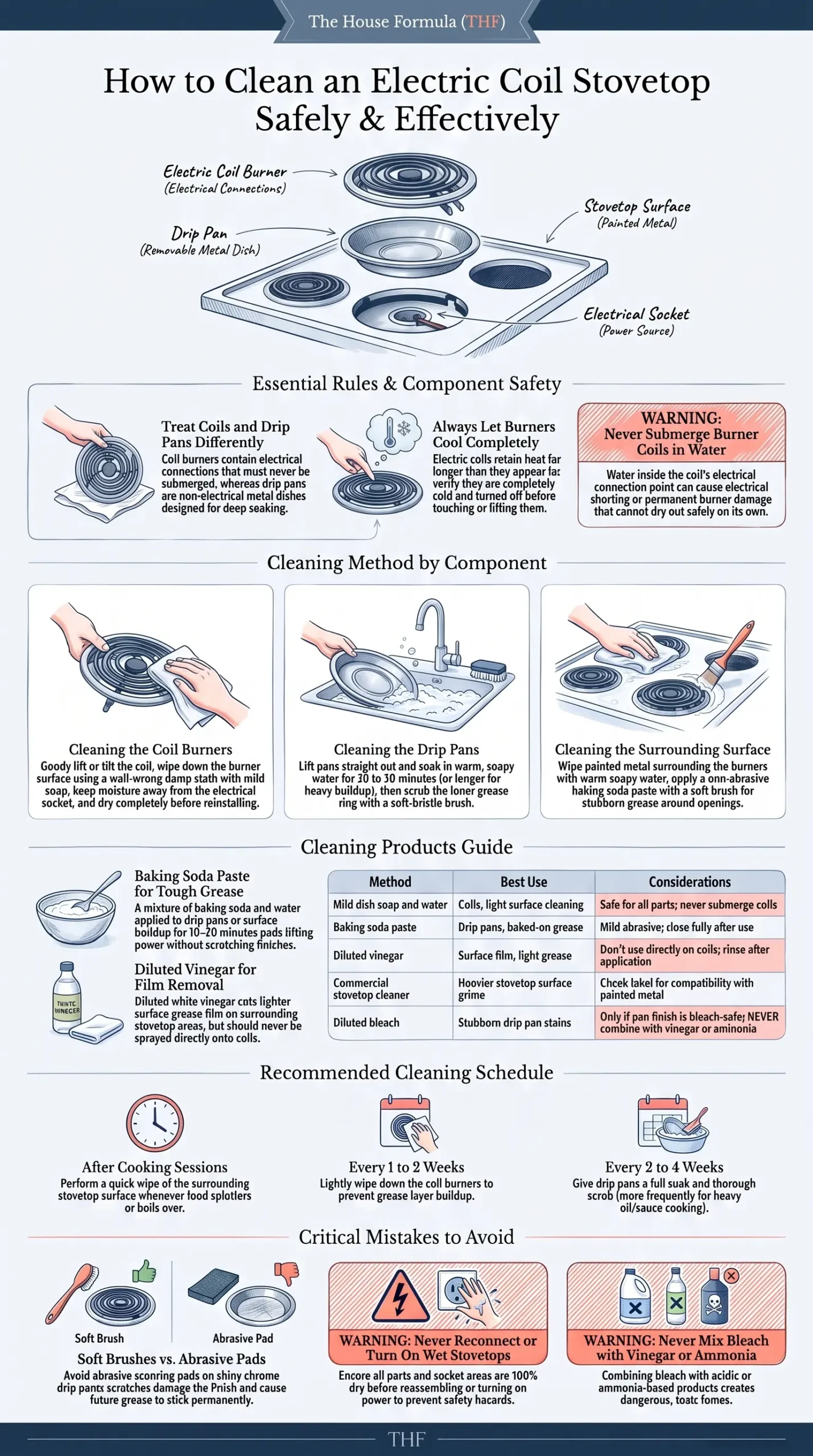
Photo Credit: Hobby Guidebook Editorial
Cleaning the Drip Pans
The drip pans are where most of the visible mess ends up, since they catch spills, grease, and drips that would otherwise fall further into the stove.
- Remove the pans once the coils are set aside. Most pans lift straight out without needing any tools.
- Soak in warm, soapy water. Fill a sink or basin and let the pans sit for at least 20 to 30 minutes. For pans with thick, baked-on buildup, soaking for an hour or longer makes a real difference.
- Scrub with a soft brush. After soaking, most residue should lift with light to moderate scrubbing. Focus on the inner edge where grease tends to collect in a ring.
- Rinse and dry completely before placing the pans back under the coils.
For pans with buildup that soaking alone doesn't fully clear, a baking soda paste applied directly to the residue and left for 15 to 20 minutes before scrubbing adds a bit of extra lifting power without risking the finish. This detailed soaking approach, including how long to soak for different levels of buildup and what to do about pans with rust spots, is covered fully in our guide on Cleaning Drip Pans Under Electric Coil Burners, which goes deeper into pan-specific care than a general stovetop overview can.
Vinegar and Baking Soda for Baked-On Residue
Both vinegar and baking soda have a place in electric coil stovetop cleaning, but they work best on different parts of the buildup.
Baking soda, made into a paste with a small amount of water, works well on drip pans and the surrounding stovetop surface for grease that has hardened slightly. Apply it to the affected area, let it sit for a few minutes, then scrub gently with a soft brush or sponge.
White vinegar, diluted with water, helps cut through lighter grease film and can be used on the stovetop surface around the burners. It shouldn't be used directly on the coils themselves, since the goal there is a light wipe rather than a soak or spray application. Vinegar and baking soda can be used in sequence on drip pans (baking soda paste first, rinsed, then a vinegar wipe for any remaining film) but they shouldn't be mixed together in a sealed container beforehand, since the reaction fizzes and works better applied separately.
Bleach is sometimes used on stubborn stains in drip pans, but it should only be used if the pan's finish is confirmed safe for bleach exposure, and it should never be combined with vinegar or ammonia-based cleaners under any circumstance, since that combination produces hazardous fumes.
Commercial Cleaner vs. Natural Method
|
Method |
Best Use |
Considerations |
|
Mild dish soap and water |
Coils, light surface cleaning |
Safe for all parts; never submerge coils |
|
Baking soda paste |
Drip pans, baked-on grease |
Mild abrasive; rinse fully after use |
|
Diluted vinegar |
Surface film, light grease |
Don't use directly on coils; rinse after application |
|
Commercial stovetop cleaner |
Heavier stovetop surface grime |
Check label for compatibility with your surface material |
|
Diluted bleach |
Stubborn drip pan stains |
Only if pan finish confirms compatibility; never combine with vinegar or ammonia |
For most households, soap and water combined with an occasional baking soda treatment handles everything this stovetop needs. Commercial cleaners can help with heavier grime on the surrounding surface, but always check that the product is labeled safe for painted metal or whatever finish surrounds your burners, since some general degreasers are too harsh for certain painted stovetop surfaces.
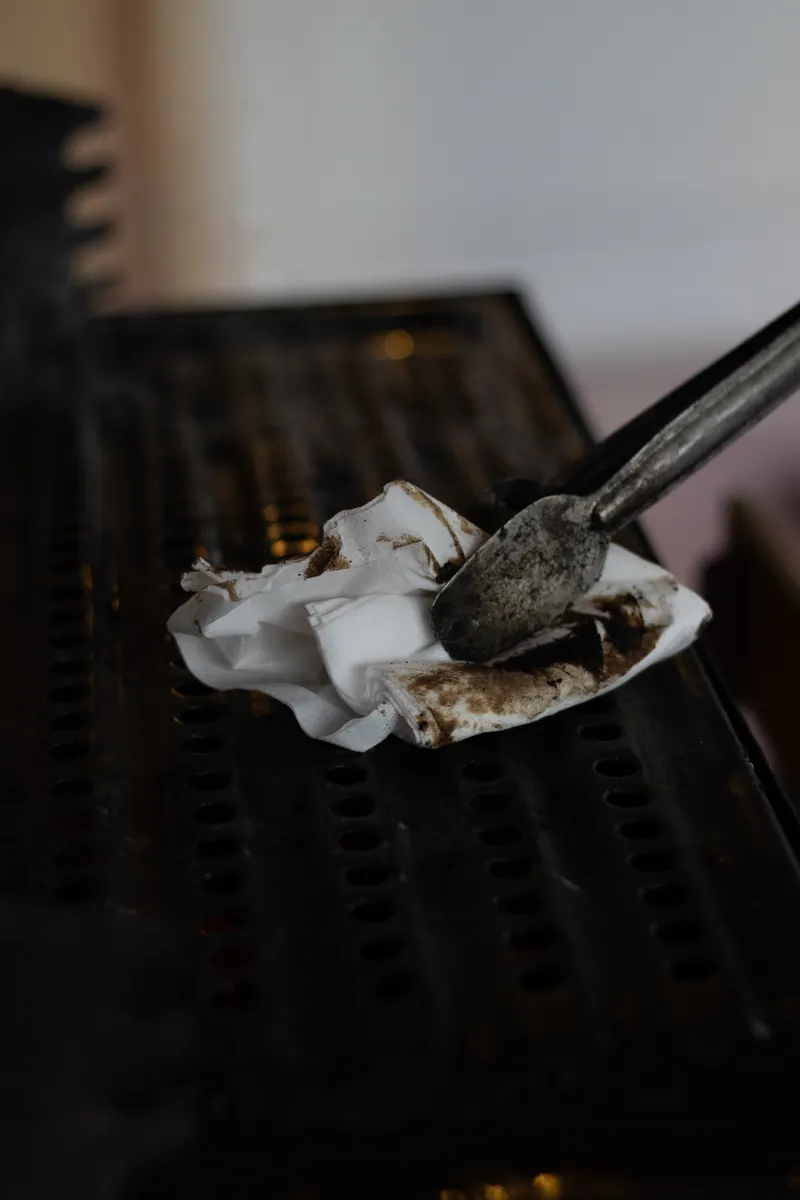
Photo Credit: Mehmet Ali Turan
Cleaning the Surface Around the Burners
The flat surface surrounding electric coil burners, usually painted metal, collects its own grease and splatter over time, separate from the coils and drip pans.
Wipe this area with warm, soapy water on a soft cloth for everyday cleaning. For grease that's built up around the burner openings, a baking soda paste worked in gently with a soft brush lifts residue without scratching the painted finish. Avoid abrasive pads here as well, since scratches in painted metal are permanent and tend to collect more grime going forward.
If your kitchen has a mix of appliance types, it's worth knowing that not every stovetop surface responds to the same products the same way. A glass or ceramic cooktop, for example, needs a different approach entirely since scratching risk and heat distribution work differently on that surface. Our guide on Glass & Ceramic Stovetop Cleaning covers that method in detail, which is useful if your household has more than one stovetop type across different appliances.
How Often Should You Clean an Electric Coil Stovetop
A quick wipe of the surface around the burners is worth doing after most cooking sessions, especially if anything splattered or boiled over.
The coils themselves need a light wipe every one to two weeks for most households, more often if you cook frequently with oils or sauces that tend to splatter. The drip pans typically need a full soak and scrub once a month, though households that cook often or deal with frequent spills may find every two to three weeks works better for keeping buildup manageable.
Photo Credit: ommy
Common Mistakes to Avoid
- Submerging coil burners in water. This risks damaging the electrical connection and isn't something that safely dries out on its own.
- Using abrasive scrub pads on chrome drip pans. Scratches in the chrome finish make future grease stick more easily and are difficult to buff out.
- Turning the stovetop back on before everything is fully dry. Moisture near the coil socket is a genuine safety concern, so drying time matters here more than with other appliances.
- Skipping the soak step for drip pans. Trying to scrub baked-on residue dry takes far more effort and often doesn't fully remove it.
- Combining bleach with vinegar or ammonia-based cleaners. This produces hazardous fumes and should never be done.
- Assuming every drip pan can handle bleach. Some finishes discolor or degrade with repeated bleach exposure, so checking compatibility first is worth the extra minute.
FAQ
What is the best way to clean an electric coil stovetop? Let the burners cool, lift the coils and wipe them with a damp cloth, soak the drip pans in warm soapy water to loosen residue, then scrub, rinse, and dry everything before reassembling.
How often should you clean an electric coil stovetop? Wipe the surface after cooking sessions with spills, clean the coils every one to two weeks, and soak the drip pans about once a month, more often for frequent cooking.
What cleaning products are safe for an electric coil stovetop? Mild dish soap, baking soda paste, and diluted vinegar (kept off the coils directly) are safe choices. Commercial cleaners work for the surrounding surface if labeled safe for painted metal.
What should you avoid when cleaning an electric coil stovetop? Avoid submerging coils in water, using abrasive pads on chrome drip pans, and combining bleach with vinegar or ammonia-based products.
How can you clean an electric coil stovetop without damaging it? Wipe coils with a damp cloth rather than soaking them, soak drip pans separately, use non-abrasive tools throughout, and make sure everything is fully dry before turning the stovetop back on.
For more stovetop and oven care, see the full kitchen cleaning guide for additional room-by-room instructions.
A quick safety note: always let burners cool and unplug or switch off the stove before removing coils, and never submerge coil burners in water. Check drip pan compatibility before using bleach, and never combine bleach with vinegar or ammonia-based cleaners, since this can produce hazardous fumes.





Leave a Reply