
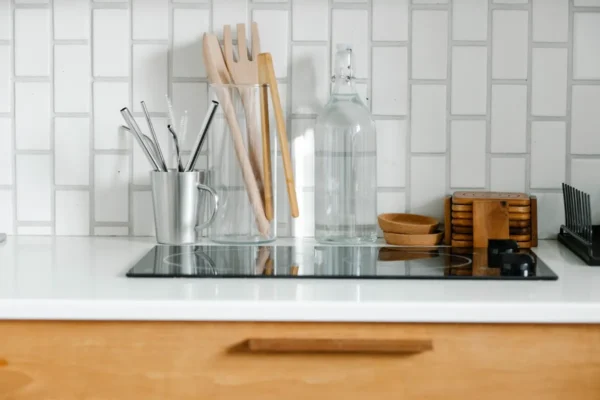
Glass and ceramic stovetops look sleek and modern, but they show every mark. A single simmering pot can leave a ring, a light dusting of flour turns into a visible smudge, and a boil-over that isn't wiped up quickly can bake onto the surface within minutes. Glass stovetop cleaning isn't complicated, but it does require the right products and a bit of restraint, since the smooth surface that makes these cooktops easy to wipe down is also easy to scratch with the wrong tool. This guide is part of the Oven & Stovetop Cleaning Guide, and it covers daily cleaning, deeper stain removal, and the habits that keep a glass or ceramic surface looking clear for years rather than clouded and scratched.
The Best Way to Clean a Glass or Ceramic Stovetop
Wait until the surface is completely cool, then wipe away loose crumbs and light residue with a soft cloth and warm water. For grease film or light stains, spread a thin layer of baking soda across the surface, spritz it with a little water to dampen it, and let it sit for 10 to 15 minutes. Wipe the area with a damp microfiber cloth, using a plastic scraper held at a low angle for anything stuck on, then finish with a clean, dry cloth to remove streaks. This combination handles the vast majority of everyday buildup without needing a specialty product, though a cooktop-specific cream cleaner works well for tougher spots when baking soda alone isn't enough.
The sections that follow go through the full process, what makes glass and ceramic surfaces different from other stovetops, and how to handle burnt sugar or melted plastic if that ever happens.
Why Glass and Ceramic Stovetops Need Their Own Method
Glass and ceramic stovetops are smooth, non-porous, and generally easy to wipe clean, but that same smoothness means scratches show up clearly and permanently once they happen. Unlike a porcelain or enameled surface, there's no texture to hide a fine scratch, so anything gritty or abrasive dragged across the surface tends to leave a visible mark that doesn't go away with more cleaning.
These cooktops also heat directly through the glass, meaning sugar-based spills or anything with plastic nearby can melt onto the surface and bond to it almost instantly if the burner is still hot. This is different from a gas stovetop, where spills mostly land on removable grates and caps rather than directly on a fixed glass surface. Because of this, quick action on fresh spills, and the right approach for anything that's already bonded to the glass, matters more here than on other stovetop types.
Step-by-Step Cleaning Process
- Make sure the stovetop is completely cool before starting, both for safety and because most cleaning products aren't meant to be used on a hot surface.
- Wipe away loose crumbs and light residue with a soft, dry cloth or a barely damp microfiber cloth.
- Sprinkle baking soda across any greasy or stained areas, then lightly mist it with water so it forms a thin paste on the surface.
- Let the baking soda sit for 10 to 15 minutes, giving it time to loosen grease and light staining without needing hard scrubbing.
- Wipe the area with a damp microfiber cloth, working in gentle circular motions.
- For anything still stuck on, use a plastic scraper or a scraper designed specifically for glass cooktops, holding it at a low angle and pushing gently rather than pressing down hard.
- Go over the surface once more with a clean, damp cloth to remove any baking soda residue, then dry with a separate dry cloth to avoid streaking.
This process typically takes 10 to 20 minutes for routine cleaning, longer if there's a stubborn spot that needs extra time with the scraper.
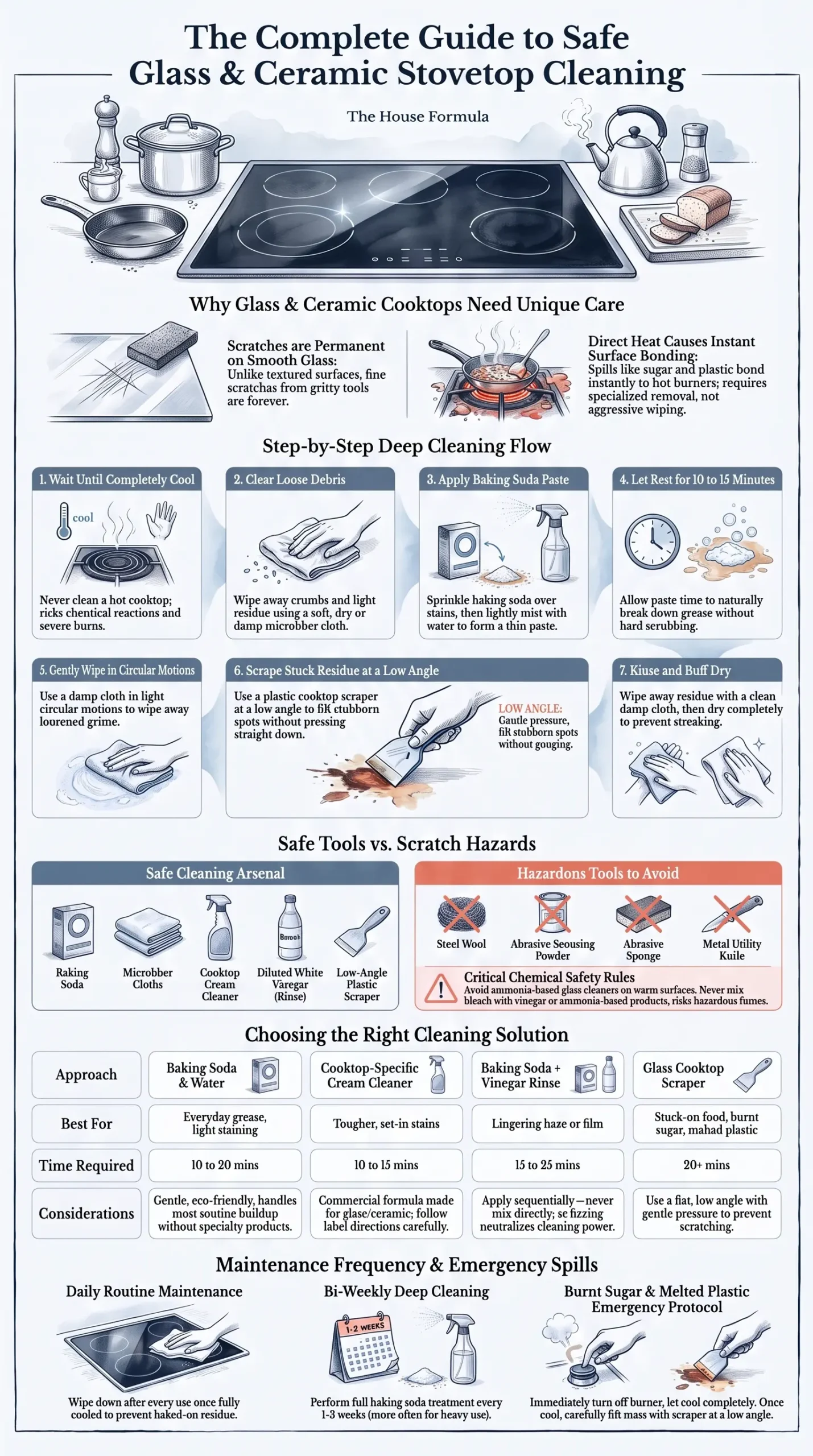
Photo Credit: Hobby Guidebook Editorial
What Cleaning Products Are Safe for Glass and Ceramic Stovetops?
A short, careful list of products covers what this surface actually needs.
- Baking soda and water: gentle and effective for most everyday grease and light staining
- Cooktop-specific cream cleaner: a commercial product formulated for glass and ceramic surfaces, useful for tougher stains that baking soda alone doesn't fully remove
- Distilled white vinegar (diluted): helpful as a final rinse step to cut through any remaining haze, applied after baking soda rather than mixed directly with it
- Microfiber cloths: the go-to material for wiping, since they clean effectively without introducing scratches
- A dedicated glass cooktop scraper: designed with a angled plastic or metal blade specifically safe for this surface, useful for lifting stuck-on residue without gouging the glass
Avoid regular household glass cleaner containing ammonia on a hot or recently used surface, since heat can affect how the product behaves, and check the product label for cooktop-specific suitability. Never mix bleach with vinegar or ammonia-based products anywhere in this process, since the combination produces hazardous fumes.
Eco-Friendly Cleaning for Glass and Ceramic Stovetops
Baking soda and water handle most routine cleaning on their own, making this a naturally low-impact option that doesn't require a specialty purchase for everyday use. Diluted white vinegar works well as a follow-up rinse, offering another simple, widely available ingredient that most households already keep on hand. For households that prefer to avoid commercial cream cleaners entirely, sticking to this baking soda and vinegar routine, combined with prompt spill cleanup, covers the majority of what a glass or ceramic stovetop needs without introducing a stronger chemical product into the kitchen.
Vinegar and Baking Soda for Glass and Ceramic Stovetops
Used together as separate steps, baking soda and vinegar make a reliable combination for this surface. Apply the baking soda first, following the paste method above, then wipe it away and rinse. Once the surface is clear of baking soda residue, a light wipe with diluted white vinegar can help remove any remaining film or haze, followed by a final water rinse and thorough drying. Avoid combining baking soda and vinegar directly in a container before applying them, since the fizzing reaction that happens when they mix neutralizes much of the cleaning benefit from both ingredients. Used one after the other instead, each step does its own job more effectively.
Photo Credit: Jaycee300s
Removing Stubborn Buildup Without Scratching the Surface
A few habits make the difference between a stovetop that stays clear and one that develops fine scratches over time.
- Use only a plastic scraper or one specifically designed for glass cooktops, never a metal knife or a general-purpose scraper not rated for this surface
- Hold the scraper at a low, flat angle rather than pressing straight down, which lifts residue more effectively and reduces pressure on the glass
- Avoid abrasive sponges, steel wool, or scouring powders, all of which can leave fine scratches that become more visible under certain lighting
- Let baking soda or a cream cleaner sit long enough to loosen buildup on its own, rather than scrubbing hard right away
- Wipe with light, even pressure, avoiding repeated hard pressing in one small spot
If a stain has fully bonded to the glass and doesn't respond to baking soda, a scraper, or a cooktop-specific cream cleaner after a couple of careful attempts, that's usually a sign the situation calls for a different approach rather than more aggressive scrubbing.
Handling Burnt Sugar or Melted Plastic
Sugar-based spills and anything involving melted plastic behave differently than typical grease or food residue on a glass stovetop, since both can bond tightly to the hot surface almost immediately. If this happens, turning off the burner right away and letting the area cool completely is the first step, since attempting to scrape or wipe a hot spill risks burns and can spread the melted material further across the surface. Once cooled, a scraper held at a low angle can often lift the bulk of the material, though this process sometimes takes more patience and a different technique than routine baking soda cleaning. The Removing Burnt Sugar or Melted Plastic from a Glass Stovetop guide walks through this specific situation in more detail, including safe scraping technique and what to do if residue remains after the initial attempt.
How Often Should You Clean a Glass or Ceramic Stovetop?
Wiping the surface after each use, once it's cooled, prevents most spills from turning into a bigger cleaning job later. A deeper baking soda treatment, following the process above, works well every one to two weeks for most households, or more often for households that cook frequently with sugar-based sauces or dishes prone to boiling over. Checking for any stuck-on spots during each deeper clean helps catch stubborn residue before it has time to bond further to the surface.

Photo Credit: Gustavo Fring
Comparing Cleaning Approaches
|
Approach |
Best For |
Time Required |
Considerations |
|
Baking soda and water |
Everyday grease, light staining |
10 to 20 minutes |
Gentle and widely available, handles most routine buildup |
|
Cooktop-specific cream cleaner |
Tougher, more set-in stains |
10 to 15 minutes |
Formulated specifically for glass and ceramic surfaces, follow label instructions |
|
Baking soda plus vinegar rinse |
Lingering haze or film after baking soda alone |
15 to 25 minutes |
Apply as separate steps, never combine directly in a container |
|
Glass cooktop scraper |
Stuck-on food, burnt sugar, melted plastic |
Varies, sometimes 20+ minutes for stubborn spots |
Use a low angle and gentle pressure to avoid scratching |
For most households, baking soda paired with a dedicated scraper covers the bulk of what a glass or ceramic stovetop needs, with a cream cleaner as a backup for anything more stubborn.
A Note on Induction Cooktops
Induction cooktops often share the same smooth glass surface as standard glass or ceramic electric stovetops, so much of the cleaning approach here applies equally well. However, induction models have some additional considerations related to their magnetic heating components and specific manufacturer guidance around compatible cookware and cleaning products. The Induction Cooktop Cleaning guide covers those differences in more detail for anyone with this specific cooktop type.
Frequently Asked Questions
What is the best way to clean a glass or ceramic stovetop? Wipe away loose debris, apply a baking soda paste to grease or stains, let it sit for 10 to 15 minutes, then wipe clean with a damp cloth and dry thoroughly to avoid streaking.
How often should you clean a glass or ceramic stovetop? Wipe after each use once cooled, and do a deeper baking soda clean every one to two weeks, more often for households prone to boil-overs or sugar-based cooking.
What cleaning products are safe for a glass or ceramic stovetop? Baking soda and water, cooktop-specific cream cleaner, and diluted white vinegar used as a separate rinse step. Avoid ammonia-based glass cleaners on a warm surface.
What should you avoid when cleaning a glass or ceramic stovetop? Avoid metal scrapers, steel wool, abrasive scouring powders, and mixing bleach with vinegar or ammonia-based products.
How can you clean a glass or ceramic stovetop without damaging it? Use a plastic or cooktop-specific scraper at a low angle, avoid pressing hard in one spot, let cleaning agents sit long enough to work on their own, and always wait until the surface is fully cool.
A Quick Note on Safety
Always let a glass or ceramic stovetop cool completely before cleaning, since some products aren't meant for hot surfaces and scraping a hot spill risks burns. Avoid abrasive tools that can scratch the glass permanently, and never mix bleach with vinegar or ammonia-based products, since this produces hazardous fumes. If a stain won't lift after a few careful attempts with baking soda and a proper scraper, stepping back rather than scrubbing harder helps avoid scratching the surface further.
For more on keeping the rest of your kitchen clean, explore the complete kitchen cleaning guide.





Leave a Reply