
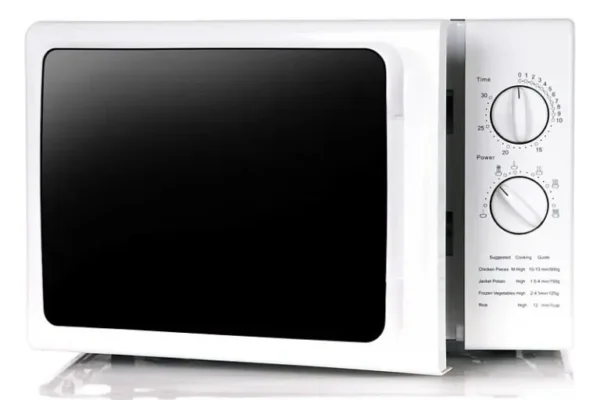
Fish, popcorn, and reheated curry all have one thing in common: they leave a smell behind long after the food is gone. Microwave odor removal is less about masking that smell and more about breaking down the source, whether that's food residue stuck to the walls or moisture trapped in a small, enclosed space with nowhere to go.
This guide covers the most effective ways to clear lingering smells, which products actually help, and how often odor control should be part of your regular microwave routine. It's part of the Microwave Cleaning Guide, which covers other microwave care topics including grease removal and general maintenance.
How to Remove Odors from a Microwave (Quick Answer)
For most lingering microwave odors, this approach works well:
- Heat a bowl of water with vinegar, lemon, or baking soda to create steam that loosens odor-causing residue.
- Let the bowl sit inside with the door closed for a few minutes after heating.
- Wipe down the interior fully, including the ceiling, door seal, and turntable.
- Leave the door open for 15 to 20 minutes afterward to let the interior air out completely.
Most microwave odors come from food residue that's dried onto the interior surfaces, not from something floating in the air. Once that residue is removed, the smell usually clears within a wash cycle or two.
Why Microwaves Hold Onto Smells
A microwave is a small, sealed box that heats food quickly, and that combination makes it a fairly efficient odor trap. Steam from heated food carries food particles and oils that settle onto the walls, ceiling, and door seal. Once the door closes and the space cools, those particles stay put, and the enclosed space means the smell has nowhere to escape until the door opens again.
This is different from an open stovetop, where odors dissipate into the room fairly quickly. A microwave holds onto smell until the source, usually dried residue, is physically removed rather than just aired out.
Step-by-Step: Steam Method with Vinegar
- Fill a microwave-safe bowl with about one cup of water. Add two tablespoons of white vinegar.
- Microwave on high for 3 to 5 minutes, until the door window fogs with steam.
- Leave the door closed for another 5 minutes, letting the steam settle onto the walls and loosen any dried residue.
- Remove the bowl carefully using oven mitts, since it will be hot.
- Wipe down every interior surface, including the ceiling, side walls, and door seal, where odor-causing residue often collects unnoticed.
Vinegar's mild acidity helps neutralize odor rather than just covering it up, which is part of why it works better here than a scented spray or air freshener would.
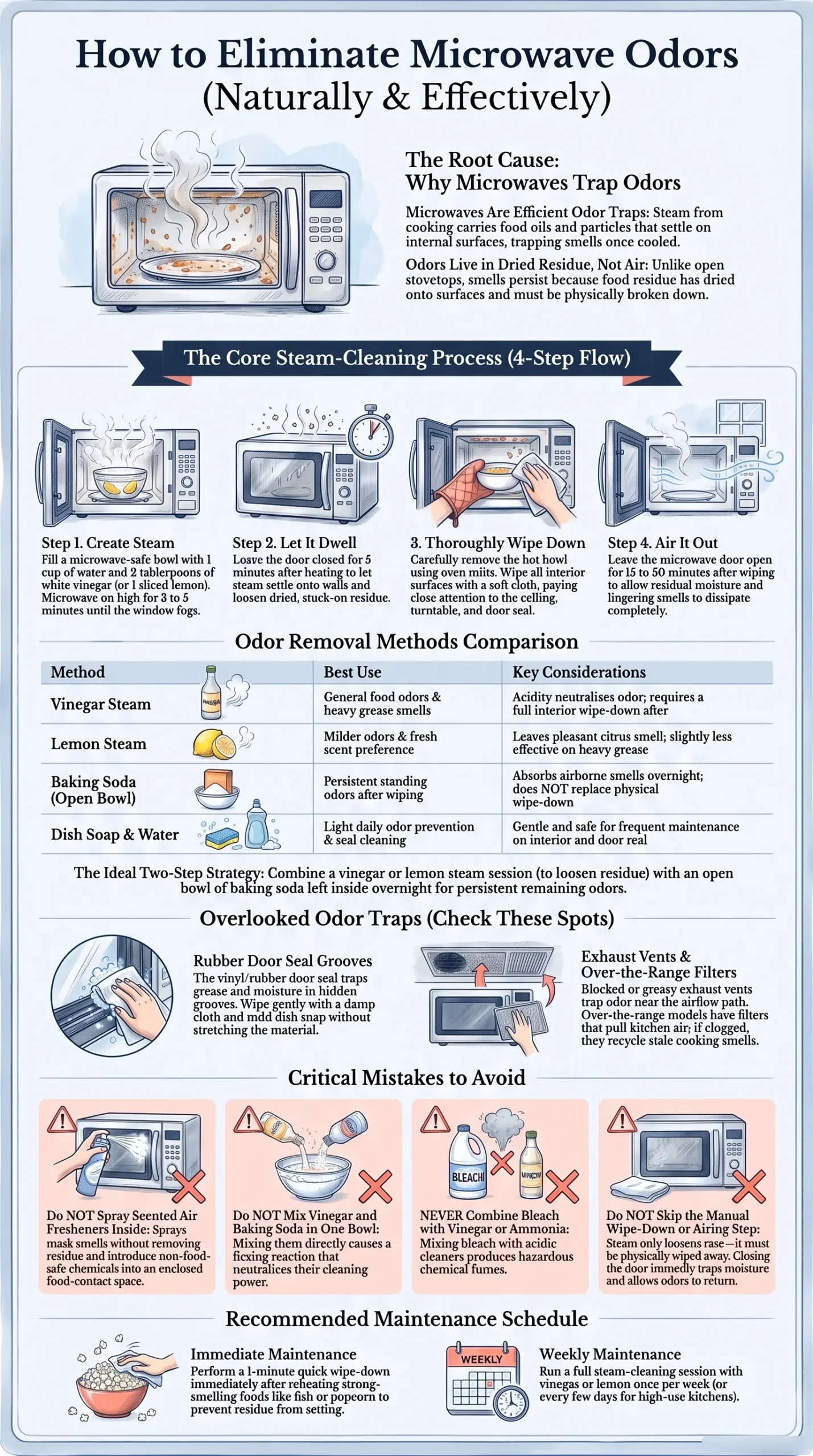
Photo Credit: Hobby Guidebook Editorial
Step-by-Step: Baking Soda for Standing Odors
For a microwave with a persistent smell that lingers even after wiping, an open container of baking soda left inside overnight can help absorb what's remaining in the air.
- Place a small open bowl of baking soda inside the cleaned, dry microwave.
- Close the door and leave it overnight, or for at least a few hours.
- Remove the bowl in the morning and wipe down the interior once more with a damp cloth.
Baking soda works well as an odor absorber specifically because it doesn't just mask smell, it actually pulls odor-causing particles out of the air over time. This step works best after the interior has already been wiped clean, since baking soda alone won't remove residue that's still stuck to the walls.
Vinegar and baking soda can both be used in the same overall cleaning routine, but at different stages rather than combined together in one container. Mixing them directly causes a fizzing reaction that isn't harmful, but it also isn't useful for cleaning, since the fizz uses up the ingredients before they can work on the actual residue. Neither should ever be combined with bleach or ammonia-based cleaners.
Lemon as an Alternative
Lemon works through the same basic steam process as vinegar and leaves a fresher scent behind, which some households prefer.
- Slice a lemon in half and place both halves cut-side down in a microwave-safe bowl with about one cup of water.
- Microwave on high for 3 to 5 minutes, until steam fogs the window.
- Let it sit for 5 minutes with the door closed before removing.
- Wipe down the interior the same way as the vinegar method.
Lemon and vinegar both loosen residue through steam, though vinegar tends to cut through grease-based odors slightly more effectively, while lemon leaves a more pleasant smell behind afterward. For a full comparison of these two methods, including which works better for specific types of buildup, our guide on Steam-Cleaning a Microwave Naturally covers the process in more detail.
What You'll Need
Most of what's needed is already in the kitchen:
- A microwave-safe bowl
- Water
- White vinegar or fresh lemon
- Baking soda
- A soft microfiber cloth or sponge
- Oven mitts or a folded towel for handling the hot bowl
Avoid scented sprays, air fresheners, or perfumed cleaning products as a first response to microwave odor. These cover the smell temporarily without addressing the residue causing it, and some scented products aren't meant for enclosed food-contact spaces like a microwave interior.
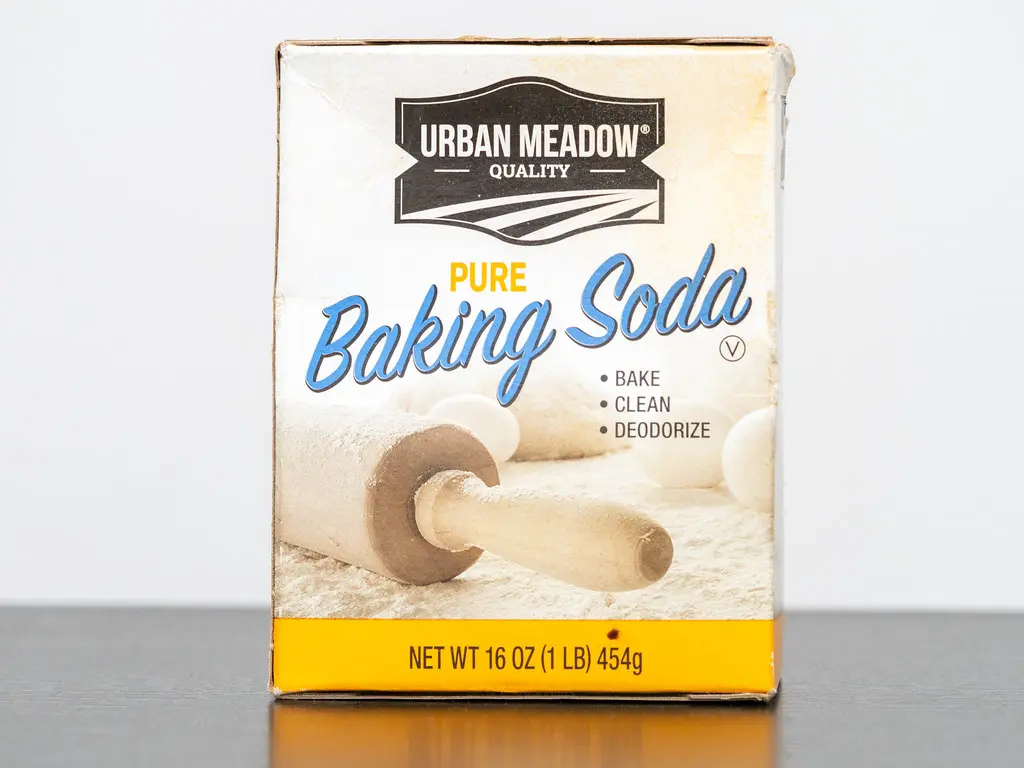
Photo Credit: Internet
Checking the Door Seal and Vents
Odor doesn't always come from the visible interior surfaces. The rubber or vinyl seal around the door edge can trap grease and moisture in a groove that's easy to miss during a quick wipe-down, and it's worth checking specifically if a smell persists after cleaning the main interior.
- Wipe the door seal gently with a damp cloth and a small amount of dish soap, working into the groove without pulling or stretching the seal material.
- Check the vent openings on the back or side of the microwave for grease buildup, since blocked or greasy vents can trap odor near the exhaust path.
If your microwave is an over-the-range model, the vent system connects to a larger filter that pulls air (and odor) up and out of the kitchen. A greasy or clogged filter can actually make kitchen odors linger longer, not just from the microwave itself but from general cooking nearby. Our guide on Over-the-Range Microwave Vent Cleaning explains how to clean this filter properly, which is a separate task from cleaning the microwave interior but often makes a noticeable difference in overall kitchen freshness.
What to Avoid When Removing Microwave Odors
- Using scented sprays or air fresheners inside the microwave. These aren't designed for enclosed food spaces and only mask the smell rather than removing its source.
- Skipping the wipe-down step after steaming. Steam loosens residue, but it still needs to be physically wiped away, or the odor will return.
- Combining bleach with vinegar or ammonia-based cleaners. This produces hazardous fumes and should never be done.
- Leaving the door closed right after cleaning. Airing out the interior for 15 to 20 minutes after wiping helps clear any remaining moisture and residual smell.
- Ignoring the door seal and vents. A smell that keeps returning after cleaning the main interior is often coming from one of these overlooked spots.
Comparing Odor Removal Methods
|
Method |
Best Use |
Considerations |
|
Vinegar steam |
General food odor, grease-based smells |
Effective and inexpensive; requires a full wipe-down after |
|
Lemon steam |
Milder odor, fresher scent preference |
Slightly less effective on heavy grease than vinegar |
|
Baking soda (open bowl) |
Standing odor after cleaning |
Absorbs lingering smell overnight; not a substitute for wiping |
|
Dish soap and water |
Light daily odor prevention |
Gentle, safe for frequent use on interior and door seal |
Most households get the best results combining two of these: a vinegar or lemon steam session to loosen and neutralize residue, followed by an open bowl of baking soda if any smell lingers afterward.
How Often Should You Clean Microwave Odors
A quick wipe-down after cooking anything with a strong smell, like fish or popcorn, helps prevent that odor from settling into the interior in the first place. This takes just a minute and is the single most effective habit for keeping a microwave smelling neutral.
A full steam-cleaning session, whether with vinegar or lemon, works well once a week for most households. Kitchens that regularly reheat strong-smelling foods may benefit from doing this every few days instead. If odor persists after a full clean, checking the door seal and vents is the next step, since these areas don't get addressed by a standard interior wipe-down.
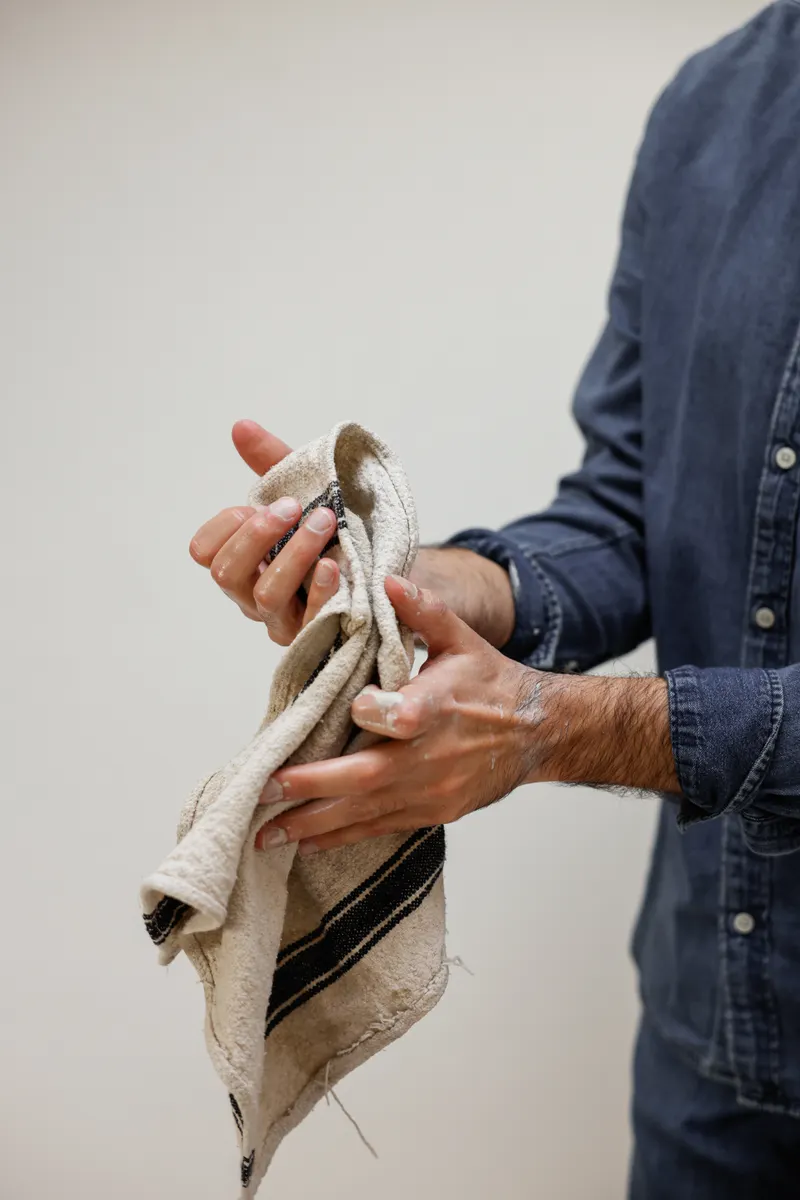
Photo Credit: Cup of Couple
FAQ
How do you remove odors from a microwave? Heat a bowl of water with vinegar or lemon to create steam, let it sit for a few minutes to loosen residue, then wipe down the entire interior including the door seal. Leave the door open afterward to air out.
How often should you clean odors from a microwave? Wipe up strong-smelling spills right away, and do a full steam-cleaning session about once a week, more often if you frequently reheat foods like fish or popcorn.
What cleaning products are safe for odors from a microwave? White vinegar, fresh lemon, baking soda, water, and mild dish soap are all safe choices. Avoid scented sprays or air fresheners inside the unit.
What should you avoid when cleaning odors from a microwave? Avoid masking odor with sprays instead of removing the source, skipping the wipe-down after steaming, and combining bleach with vinegar or ammonia-based cleaners.
How can you clean microwave odors without damaging it? Stick to microwave-safe bowls, use a soft cloth rather than anything abrasive, and handle the door seal gently rather than pulling or stretching it during cleaning.
For more appliance care throughout the kitchen, see the full kitchen cleaning guide for additional routines and schedules.
A quick safety note: let steam settle for a few minutes before opening the microwave door, and use oven mitts when removing the hot bowl to avoid burns. Stick to microwave-safe dishes, and never combine bleach with vinegar or ammonia-based cleaners.





Leave a Reply