
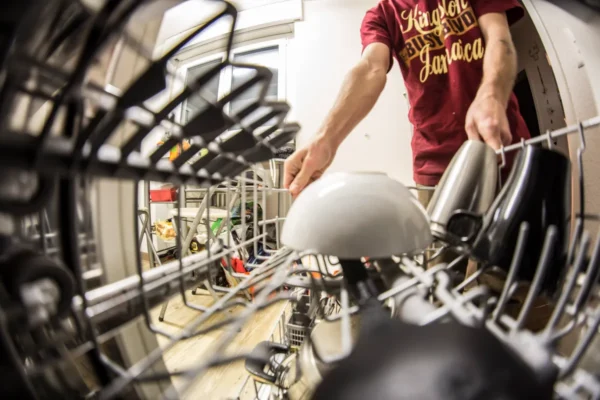
The rubber strip running around the inside edge of a dishwasher door does a lot of quiet work, keeping water and steam contained during every cycle. It's also one of the easiest spots to overlook, since it sits just out of view and collects moisture, food residue, and eventually mildew if it's never wiped down. Dishwasher door seal cleaning is a simple task once you know where to look and what to use, and it goes a long way toward keeping the whole machine smelling fresh.
This guide covers how to clean the seal safely, what causes buildup in the first place, and how often this small task should fit into your regular routine. It's part of the Dishwasher Cleaning Guide, which covers other dishwasher maintenance tasks beyond this specific part.
The Best Way to Clean a Dishwasher Door Seal (Quick Answer)
For most dishwashers, this approach works well:
- Wipe the seal with a damp microfiber cloth to remove loose debris and moisture.
- Mix warm water with a few drops of mild dish soap, or a diluted vinegar solution, and wipe along the entire groove.
- Use a soft brush or old toothbrush to reach into folds and corners where grime collects.
- Dry the seal fully with a clean cloth and leave the door open for a while to air out.
The gasket's rubber material is flexible but not indestructible, so gentle, non-abrasive cleaning matters more here than in most other parts of the dishwasher.
Why the Door Seal Gets Dirty
Every wash cycle leaves a small amount of moisture behind on the door seal, and that moisture doesn't always evaporate quickly since the door often stays closed between uses. Combined with tiny food particles that splash up during washing, this creates the right conditions for mildew and a musty smell to develop in the folds of the rubber.
The seal's shape also works against easy cleaning. Its ridged, accordion-like folds are designed to compress and form a tight closure, but those same folds trap grime in spots a quick wipe can miss entirely.
What You'll Need
Most of what's needed is already in the kitchen:
- Warm water
- Mild dish soap
- White vinegar (diluted with water)
- A soft microfiber cloth
- A soft-bristle brush or old toothbrush
- A dry cloth for finishing
Avoid anything abrasive, including scouring pads, steel wool, or stiff-bristled brushes. Rubber gaskets scratch and tear more easily than people expect, and a damaged seal won't close as tightly, which can lead to water leaking during future cycles.
Step-by-Step: Cleaning the Seal
- Wipe down the visible surface first with a dry or slightly damp microfiber cloth to clear loose crumbs and surface moisture.
- Mix a cleaning solution of warm water with a few drops of mild dish soap, or combine equal parts water and white vinegar for a slightly stronger option against grease and mildew.
- Dip a soft cloth or brush into the solution and wipe along the entire seal, paying attention to the full loop around the door rather than just the visible front section.
- Work the brush gently into the folds, since this is where residue and moisture tend to concentrate the most. Small, gentle strokes work better here than pressing hard in one direction.
- Rinse the cloth and wipe again with plain water to remove any leftover soap or vinegar residue.
- Dry the seal thoroughly with a clean cloth, then leave the dishwasher door open for 30 minutes to an hour afterward so any remaining moisture can air out completely.
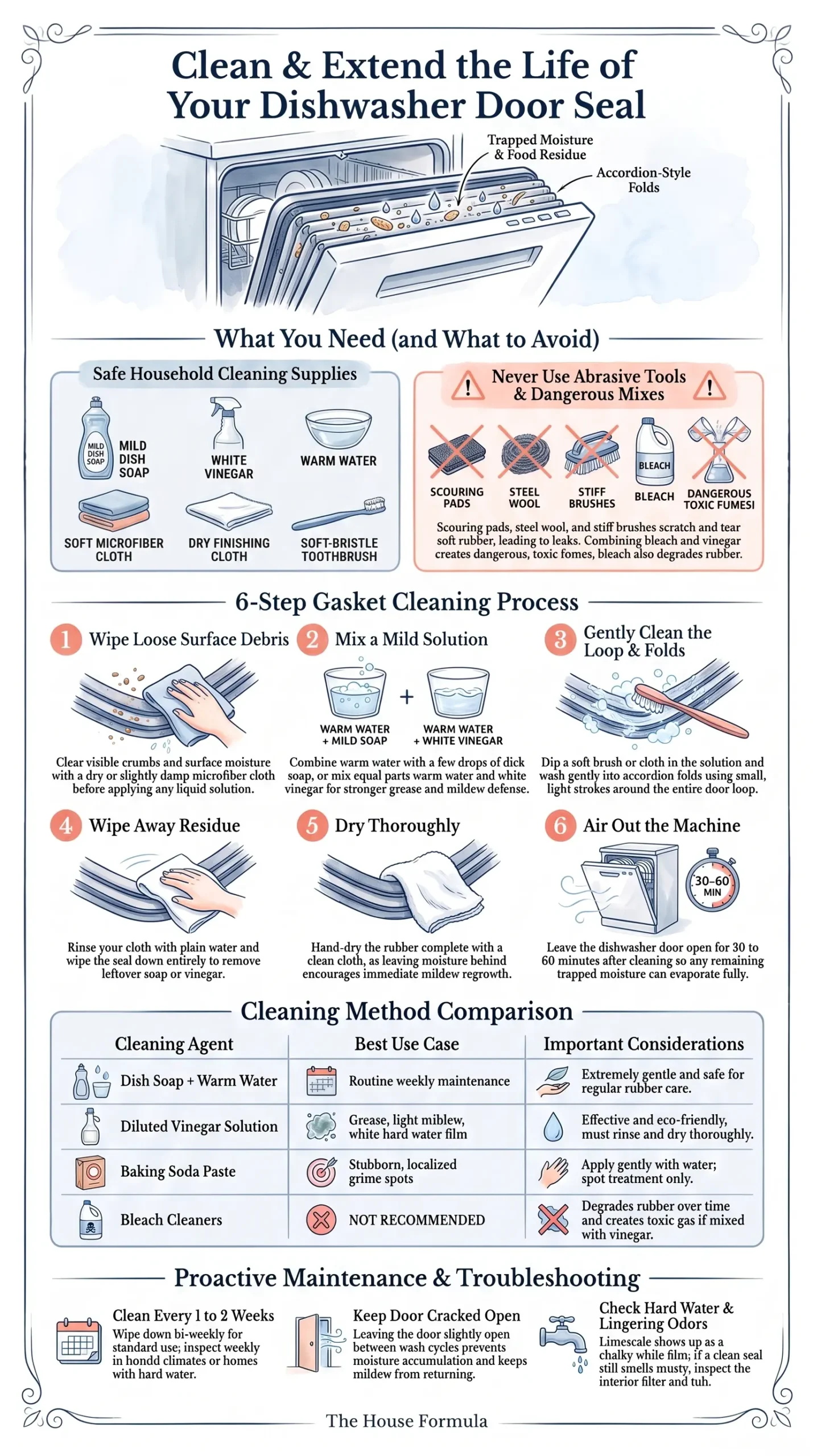
Photo Credit: Hobby Guidebook Editorial
Dealing With Mold or Mildew Spots
A door seal that's gone unwiped for a while sometimes develops small dark spots, which is usually mildew rather than anything more serious. In most cases, the vinegar solution described above is enough to lift light mildew spots when combined with a bit of gentle scrubbing and full drying afterward.
If mildew keeps returning in the same spot despite regular cleaning, or if you notice a persistent musty smell that doesn't clear even after wiping, that's usually a sign moisture is settling in that area more than elsewhere, often because the door isn't fully closing or airing out between uses. Leaving the dishwasher door cracked open slightly after each cycle, rather than closing it right away, helps prevent this kind of buildup from returning.
For mildew that appears extensive, deeply discolored, or that doesn't respond to a basic vinegar wipe-down after a couple of attempts, treat it as a sign to look more closely at ventilation and drying habits rather than reaching for a stronger chemical cleaner, since harsh disinfectants aren't necessary for routine gasket maintenance and can be harder on the rubber than the mildew itself.
An Eco-Friendly Approach
Cleaning the door seal doesn't require anything beyond what's already in most kitchens. A vinegar and water solution handles grease, mild mildew, and general grime effectively without introducing synthetic fragrances or harsh chemical residue into a space that comes into repeated contact with food and dishes.
Baking soda can also help as a gentle, natural option for spots that need a bit more lifting power. Made into a light paste with water, it can be applied directly to a stubborn spot on the seal, left for a few minutes, then wiped away with a damp cloth. This keeps the entire cleaning process limited to two simple, widely available ingredients rather than a cabinet full of specialty products.
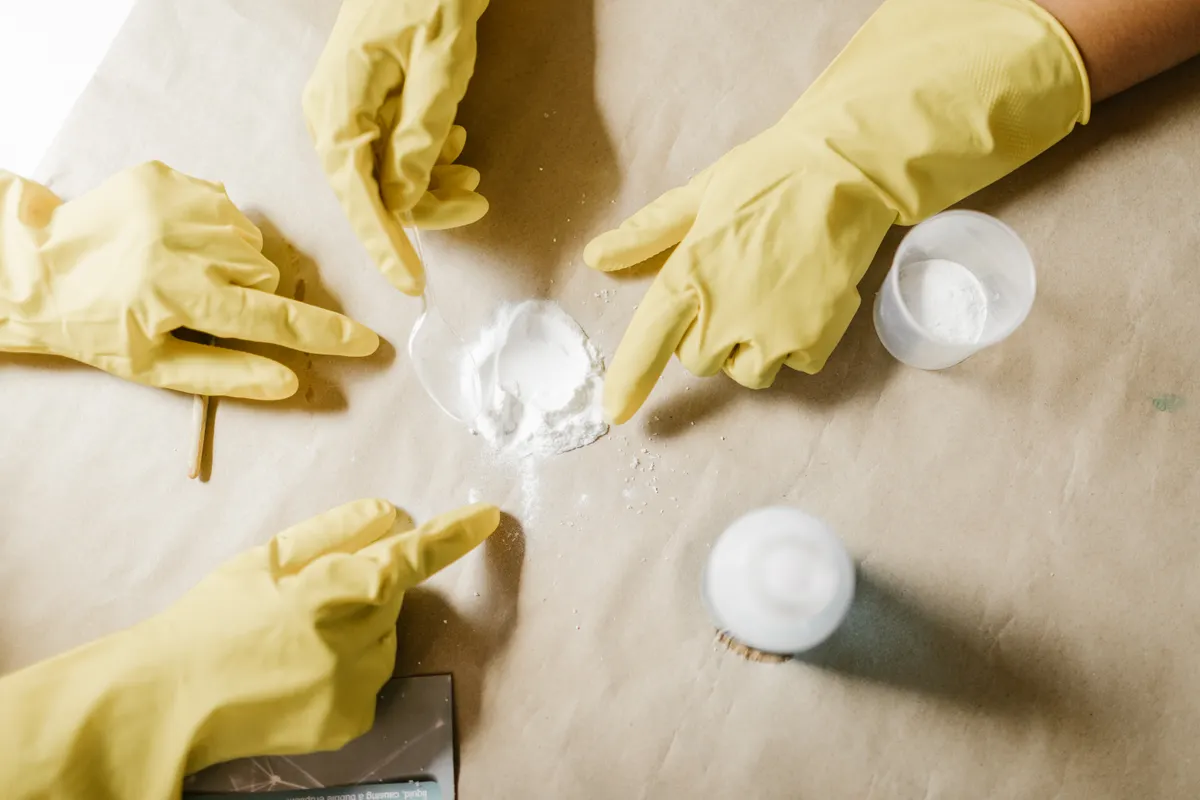
Photo Credit: RDNE Stock project
Checking for Hard Water Buildup Near the Seal
In homes with hard water, mineral deposits sometimes build up along the edges of the door seal and the surrounding frame, showing up as a chalky white film rather than the darker discoloration typical of mildew. This film can make the seal feel gritty rather than smooth, and over time it can interfere with how tightly the door closes.
A vinegar solution works on this type of buildup as well, though heavier limescale deposits elsewhere in the dishwasher, such as on the interior walls or spray arm, often need a more thorough approach. Our guide on Removing Hard Water & Limescale Buildup in a Dishwasher covers that process in more detail, including how to tell when buildup has spread beyond just the door seal.
What to Avoid When Cleaning the Door Seal
- Using bleach directly on the rubber gasket. Bleach can degrade rubber over time and shouldn't be combined with vinegar, since that mix produces hazardous fumes.
- Scrubbing with abrasive pads or stiff brushes. These can tear or wear down the rubber material, leading to gaps that affect the door's seal.
- Skipping the drying step. Leaving the seal damp after cleaning encourages the same mildew growth you just removed.
- Ignoring the folds and grooves. Wiping only the flat, visible surface leaves the areas most prone to buildup untouched.
- Pulling or stretching the seal to clean behind it. Most seals are designed to stay in place, and pulling on them can loosen or damage the fit over time.
Material Care for Rubber Seals
The gasket's rubber material behaves differently than the metal, plastic, and coated surfaces found elsewhere in the dishwasher, and it responds better to gentle, low-abrasion cleaning overall. For broader guidance on caring for rubber seals across kitchen appliances, including what products are generally safe for rubber and which ones shorten its lifespan, our Cleaning Rubber Door Seals guide covers material-specific care in more depth.
How Often Should You Clean the Door Seal
A quick wipe-down once every one to two weeks works well for most households, especially if the dishwasher runs several times a week. Leaving the door slightly open between cycles, rather than closing it immediately, also helps reduce how often deeper cleaning is needed in the first place.
Households in humid climates, or those with hard water, may notice buildup forming faster and benefit from checking the seal weekly instead. If a musty smell develops between regular cleanings, that's usually the clearest sign it's time for another wipe-down regardless of the usual schedule.
Photo Credit: Castorly Stock
Comparing Cleaning Methods
|
Method |
Best Use |
Considerations |
|
Dish soap and warm water |
Routine weekly maintenance |
Gentle and safe for regular use |
|
Vinegar and water solution |
Grease, mild mildew, light limescale |
Effective and eco-friendly; rinse and dry fully after |
|
Baking soda paste |
Stubborn spots after a vinegar wipe |
Use gently; not a substitute for regular cleaning |
|
Bleach-based cleaners |
Not recommended for this task |
Can degrade rubber and shouldn't be mixed with vinegar |
For most households, a simple soap and water routine with an occasional vinegar solution handles everything the door seal needs.
Addressing Lingering Odor
A seal that's clean but still smells musty is sometimes a sign the odor is coming from elsewhere in the dishwasher rather than the gasket itself, particularly the filter or the interior tub. If a full seal cleaning doesn't resolve a lingering smell, our guide on Removing Dishwasher Odors walks through checking other common sources and how to clear them.
FAQ
What is the best way to clean a dishwasher door seal and gasket? Wipe the seal with a damp cloth, then clean the full groove with warm soapy water or a diluted vinegar solution using a soft brush to reach into the folds. Dry thoroughly afterward.
How often should you clean a dishwasher door seal and gasket? Once every one to two weeks works for most households, with weekly cleaning recommended for humid climates or hard water conditions.
What cleaning products are safe for a dishwasher door seal and gasket? Mild dish soap, warm water, diluted white vinegar, and a light baking soda paste are all safe and effective choices.
What should you avoid when cleaning a dishwasher door seal and gasket? Avoid bleach, abrasive scrubbers, pulling or stretching the rubber, and skipping the drying step after cleaning.
How can you clean a dishwasher door seal and gasket without damaging them? Use a soft cloth or brush with gentle pressure, stick to mild soap or vinegar solutions, and dry the seal fully rather than leaving it damp.
For more appliance care throughout the kitchen, check out the full kitchen cleaning guide for additional routines and schedules.
A quick safety note: never combine bleach with vinegar, since the mixture produces hazardous fumes. Use gentle, non-abrasive tools on the rubber seal, and if mildew is extensive or keeps returning despite regular cleaning, consider having the appliance checked to rule out a ventilation or door-seal fit issue.





Leave a Reply