
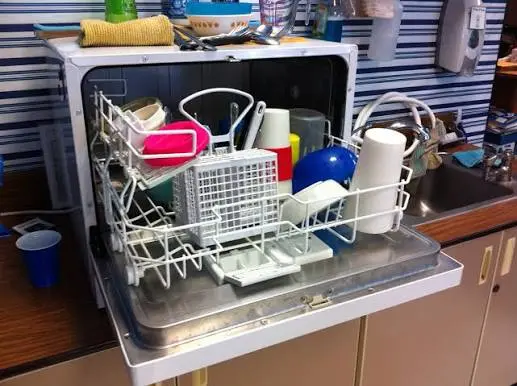
A dishwasher that runs every day without much thought still needs regular attention behind the scenes. Skipping maintenance doesn't usually cause a sudden breakdown, but it shows up gradually as spotty dishes, lingering odors, or a machine that just doesn't seem to clean as well as it used to. A clear dishwasher maintenance schedule takes the guesswork out of when to do what, so small tasks stay small instead of turning into bigger problems.
This guide breaks maintenance down by frequency, from quick weekly checks to deeper quarterly tasks, and explains how to adjust the schedule based on how your household actually uses the appliance. It's part of the Dishwasher Cleaning Guide, which covers each of these individual tasks in more detail.
Dishwasher Maintenance Schedule (Quick Answer)
Here's a general schedule that works for most households:
|
Frequency |
Tasks |
|
Weekly |
Wipe door seal, check for food debris in bottom of tub |
|
Every 2 weeks |
Remove and rinse the filter |
|
Monthly |
Run a vinegar rinse cycle, check spray arm holes for clogs |
|
Every 3 months |
Deep clean the filter, inspect for limescale buildup, check drain for blockages |
Households with heavier daily use, hard water, or larger families may need to shift some of these tasks to a more frequent tier, which is covered in more detail further down.
Why a Maintenance Schedule Matters
A dishwasher works by recirculating water through a filter and spray arms, and every part of that system depends on staying reasonably clean to function well. Food particles, grease, and mineral deposits build up gradually with every wash cycle, and if nothing is done to clear them, the buildup eventually affects how well the machine cleans dishes.
Following a schedule instead of waiting for a problem to appear also tends to save effort in the long run. A filter cleaned every two weeks takes a couple of minutes. The same filter left for months can require a longer soak and more scrubbing to clear, simply because the buildup has had more time to harden.
Weekly Tasks
These take only a minute or two but make a real difference in preventing bigger buildup later.
- Wipe the door seal with a damp cloth to clear moisture and food residue before it has a chance to settle into the rubber folds.
- Check the bottom of the tub for stray food debris that didn't make it into the filter, and clear it by hand if you spot any.
- Scan for standing water after a cycle finishes, since water that doesn't drain properly can be an early sign of a clog forming somewhere in the system.
These quick checks take almost no extra time if they're done right after unloading clean dishes, since the tub is already open and empty.
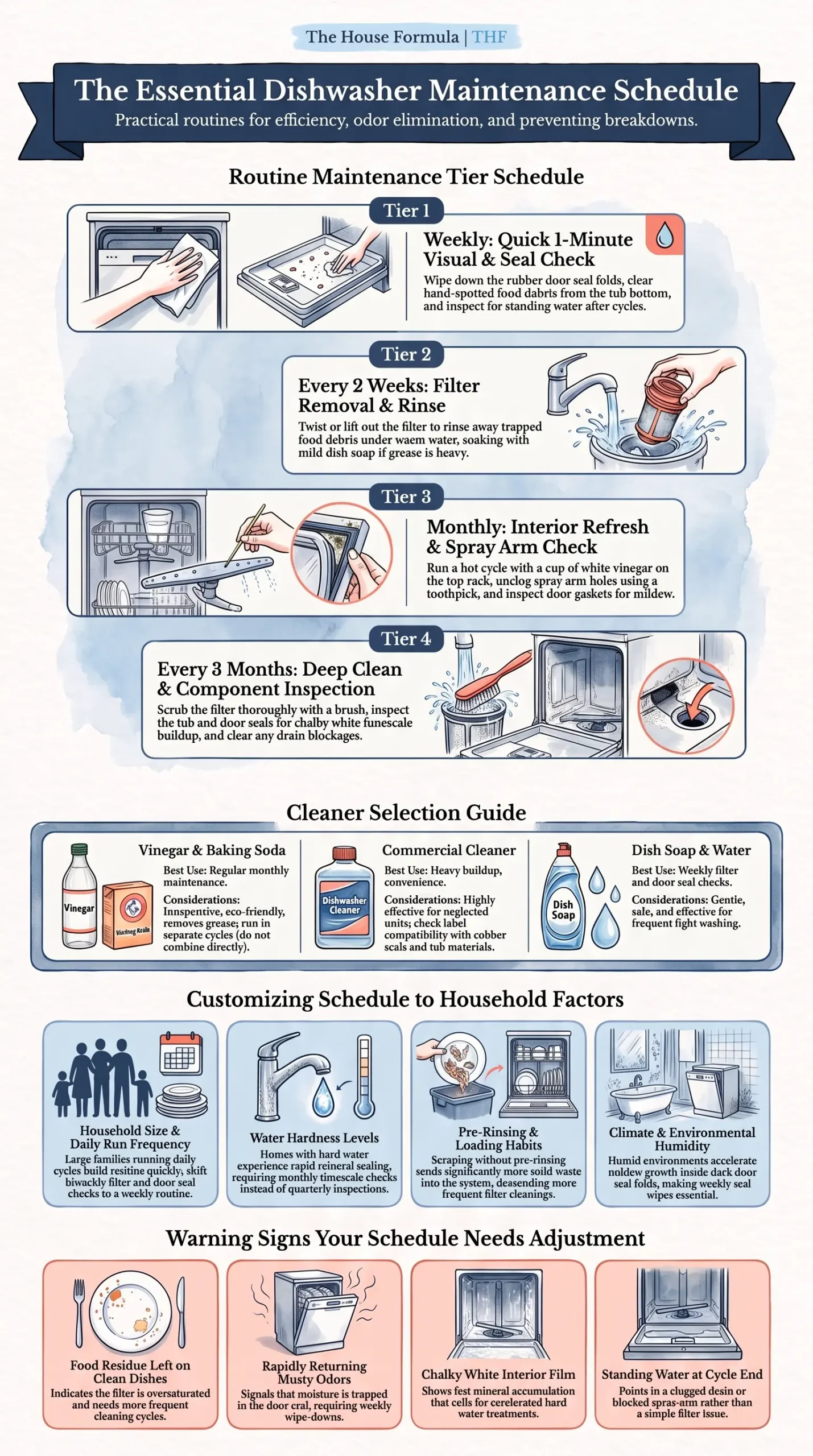
Photo Credit: Hobby Guidebook Editorial
Every Two Weeks: Filter Cleaning
The filter is the single most important part of the dishwasher to keep clear, since it catches food particles before they can recirculate through the wash. A filter left too long becomes a common source of both poor cleaning results and lingering odor.
- Remove the filter from the bottom of the tub, usually with a simple twist or lift.
- Rinse it under warm water to clear loose debris.
- Soak it briefly in warm water with a bit of dish soap if buildup looks heavier than usual.
- Reinstall it fully, making sure it locks or twists back into place correctly.
Our guide on Dishwasher Filter Cleaning covers this process in full detail, including how to handle stuck-on residue and what to check if the filter looks cracked or worn.
Monthly Tasks
Once a month, it's worth going a step further than the quick weekly checks.
- Run an empty vinegar rinse cycle. Place a cup of white vinegar in a dishwasher-safe bowl on the top rack and run a hot cycle with nothing else inside. This helps cut through grease and mineral film that builds up gradually on the interior walls.
- Check the spray arm holes. Small mineral deposits or trapped food particles can block these openings over time, which reduces water pressure during the wash. A toothpick or thin wire can help clear a blocked hole gently.
- Inspect the door gasket more closely than the weekly wipe-down allows, checking for any early signs of mildew in the folds.
Vinegar and baking soda both work well for this kind of monthly refresh, but they shouldn't be combined directly in the same cycle or container, since mixing them causes a fizzing reaction that isn't harmful but also isn't useful for cleaning. Using them separately, vinegar for one cycle and a light baking soda sprinkle for a follow-up cycle if odor persists, lets each ingredient do its job properly.
Every Three Months: Deeper Maintenance
A quarterly deep clean covers the parts of the dishwasher that don't need constant attention but shouldn't be ignored for too long either.
- Deep clean the filter with a more thorough soak and gentle brushing, rather than just a quick rinse.
- Check for limescale buildup, especially in homes with hard water, along the interior walls, spray arm, and around the door seal. A chalky white film is the typical sign. il- Inspect the drain area for any blockages, since a partially clogged drain can cause water to pool at the bottom of the tub even when the filter itself is clean.
- Look over the spray arm for cracks or wear, since a damaged spray arm affects water distribution throughout the entire wash cycle.
If the spray arm shows signs of clogging or reduced water flow even after checking the holes monthly, a more thorough cleaning may be needed. Our guide on Dishwasher Spray Arm Cleaning covers how to remove, soak, and clear this part fully.
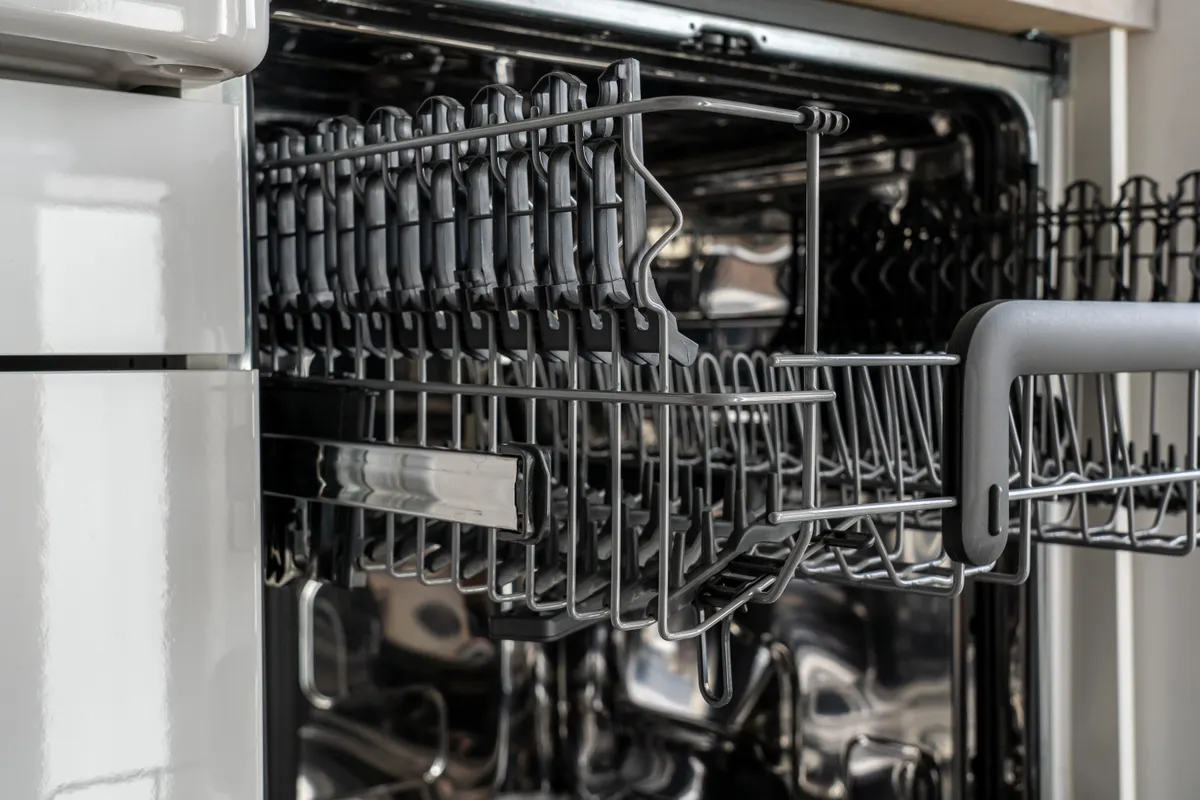
Photo Credit: Castorly Stock
Which Tasks Need More Frequent Attention
Not every part of the dishwasher wears at the same rate, and adjusting frequency based on actual buildup matters more than following a fixed calendar strictly.
The filter tends to need the most frequent attention of any single part, since it directly catches food debris with every cycle. Households that don't pre-rinse dishes before loading, or that wash a lot of pots and pans with heavier food residue, often find twice-monthly filter cleaning isn't quite enough and may benefit from a weekly check instead.
The door seal ranks second in terms of how quickly it can develop problems, mainly because trapped moisture supports mildew growth faster than food residue builds up elsewhere. Humid climates in particular may call for wiping the seal more than once a week.
The spray arm and interior walls generally build up more slowly and respond well to the monthly vinegar cycle without needing more frequent attention, unless your home has notably hard water, in which case checking for mineral buildup every two to three weeks rather than monthly can help prevent a heavier buildup from settling in.
Commercial Cleaner vs. Natural Method
|
Approach |
Best Use |
Considerations |
|
Vinegar and baking soda |
Regular monthly maintenance |
Inexpensive, eco-friendly, effective for grease and mild odor |
|
Commercial dishwasher cleaner |
Heavier buildup, convenience |
Check label for compatibility with interior material and rubber seals |
|
Dish soap and water |
Weekly filter and seal checks |
Gentle enough for frequent use |
For most households, a natural approach using vinegar and baking soda handles routine maintenance well and avoids introducing extra chemical residue into an appliance that comes into direct contact with food and dishes. Commercial dishwasher cleaners can help with heavier or long-neglected buildup, but it's worth checking that the product is labeled safe for your specific interior surface and rubber components before using it regularly.
Adjusting the Schedule to Fit Your Household
The schedule above works as a solid starting point, but a few household factors typically call for adjustment:
- Household size and dishwasher frequency. A dishwasher run daily by a large family will build up residue faster than one run every few days for a smaller household, and the filter and door seal checks should shift to weekly rather than every two weeks in that case.
- Water hardness. Homes with notably hard water tend to see limescale form faster, which means moving the quarterly limescale check to something closer to monthly.
- Pre-rinsing habits. Households that scrape but don't rinse dishes before loading often see more debris reach the filter, which argues for more frequent filter attention.
- Climate and humidity. Humid environments support mildew growth in the door seal more quickly, making weekly wipe-downs more important than in drier climates.
There's no single correct schedule for every home. The frequencies above are a reasonable starting point, and adjusting based on what you actually observe over a month or two of use will get you closer to what your specific dishwasher needs.
Photo Credit: cottonbro studio
Signs the Schedule Needs to Change
A few signals suggest the current schedule isn't quite matching your household's actual needs:
- Dishes coming out with visible food particles even shortly after a filter cleaning suggests the filter needs more frequent attention.
- A musty smell returning within days of cleaning the door seal points to needing weekly rather than biweekly wipe-downs.
- A chalky film appearing well before the next scheduled check means limescale is building up faster than the current schedule accounts for, and hard water treatment or more frequent cleaning may help.
- Water pooling at the bottom of the tub after cycles, even with a clean filter, is worth checking against the drain and spray arm rather than waiting for the next quarterly check.
Treating these as prompts to shift a task to a shorter interval, rather than sticking rigidly to a fixed calendar, keeps the whole system working the way it should.
FAQ
How often should you follow a dishwasher maintenance schedule? Weekly for quick checks like the door seal, every two weeks for the filter, monthly for a vinegar rinse cycle, and every three months for a deeper check of the spray arm, drain, and limescale buildup.
What tasks should be included in a dishwasher maintenance schedule? Filter cleaning, door seal wiping, spray arm checks, a vinegar rinse cycle, and periodic inspection for limescale and drain blockages.
Which tasks need more frequent attention than others in a dishwasher maintenance schedule? The filter typically needs the most frequent attention, followed by the door seal, especially in humid climates or households that don't pre-rinse dishes.
How can you adjust a dishwasher maintenance schedule to fit your household? Shift tasks to shorter intervals based on household size, water hardness, pre-rinsing habits, and climate, since these all affect how quickly residue and mineral buildup accumulate.
What signs show that a dishwasher maintenance schedule needs to be changed? Visible food debris shortly after filter cleaning, a musty smell returning quickly, chalky limescale film appearing early, or water pooling in the tub all suggest a task needs more frequent attention.
For more appliance care throughout the kitchen, see the full kitchen cleaning guide for additional routines and schedules.





Leave a Reply