
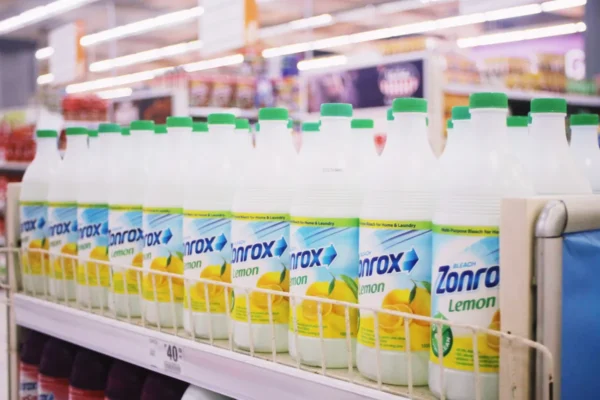
Bleach is one of the strongest disinfectants sitting in most homes, and it has a real place in kitchen cleaning when it's used the right way. The short answer to whether bleach is safe to use in the kitchen is yes, but only on the right surfaces, at the right dilution, and never mixed with certain other products. Used carelessly, bleach can damage countertops, ruin stainless steel, or, in a worst case, create dangerous fumes.
This guide breaks down exactly where bleach works well in a kitchen, where it should be avoided, and how to use it without putting yourself or your surfaces at risk. It's part of our Kitchen Cleaning Questions & Troubleshooting collection, built to answer the specific "can I use this here" questions that come up during everyday kitchen cleaning.
Is Bleach Safe to Use in the Kitchen? The Direct Answer
Bleach is generally safe on sealed, non-porous kitchen surfaces such as sealed countertops, glass, and some plastic cutting boards, as long as it's properly diluted and rinsed afterward. It is not safe or recommended on natural stone, unsealed wood, most metal fixtures over time, or anywhere it might contact ammonia-based cleaners or vinegar. Always check the surface manufacturer's care instructions first, since sealants and finishes vary and can change what's actually safe.
Where Bleach Works Well in the Kitchen
Bleach earns its reputation as a disinfectant because it's effective against a wide range of bacteria and viruses when used at the concentration listed on the product label. In the kitchen, that makes it genuinely useful in a handful of specific spots.
- Sealed countertops (laminate, sealed quartz, and similar surfaces) can generally tolerate a diluted bleach solution for disinfecting, provided it's rinsed off afterward rather than left to sit indefinitely.
- Sinks, particularly stainless steel or enamel basins, can be disinfected with diluted bleach, though it shouldn't become a daily habit since repeated exposure can eventually dull stainless steel's finish.
- Plastic cutting boards are a common spot where a bleach solution helps after cutting raw meat or poultry, since plastic holds up well to occasional diluted bleach contact compared to wood.
- Trash can interiors can be wiped down with diluted bleach when odor or residue builds up, as long as the can's material is plastic or sealed and not raw wood or a painted metal finish that could be affected.
For any of these uses, following the dilution ratio on the bleach product's label matters more than guessing at a "strong enough" mix. Most household bleach products list a specific tablespoon-per-gallon ratio for sanitizing food contact surfaces, and using more than directed doesn't disinfect better, it just increases the risk of residue and surface damage.
Where Bleach Should Not Be Used in the Kitchen
Bleach is too harsh or simply the wrong tool for several common kitchen materials and situations. Using it in these spots risks discoloration, pitting, or a shortened lifespan for the surface.
|
Kitchen Surface or Item |
Bleach Safe? |
Why |
|
Sealed laminate or quartz counters |
Generally yes, diluted |
Non-porous and typically chemical-resistant when sealed properly |
|
Natural stone (granite, marble) |
No |
Bleach can dull the sealant and etch the stone over time |
|
Unsealed wood cutting boards or butcher block |
No |
Wood absorbs liquid, and bleach residue can seep into the grain |
|
Stainless steel appliances (daily use) |
Occasional only |
Repeated bleach contact can dull the finish and cause streaking |
|
Cast iron cookware |
No |
Bleach strips seasoning and can promote rust |
|
Dishwasher interior with metal parts |
Check manufacturer guidance |
Some manufacturers advise against bleach due to rubber seal and metal compatibility |
|
Colored or patterned dish towels |
No |
Bleach can fade or damage colored fabric permanently |
If you're ever unsure whether a specific countertop or surface can handle bleach, testing a small, hidden area first, like the underside of a cutting board or an inconspicuous countertop edge, is a reasonable precaution before treating the whole surface.
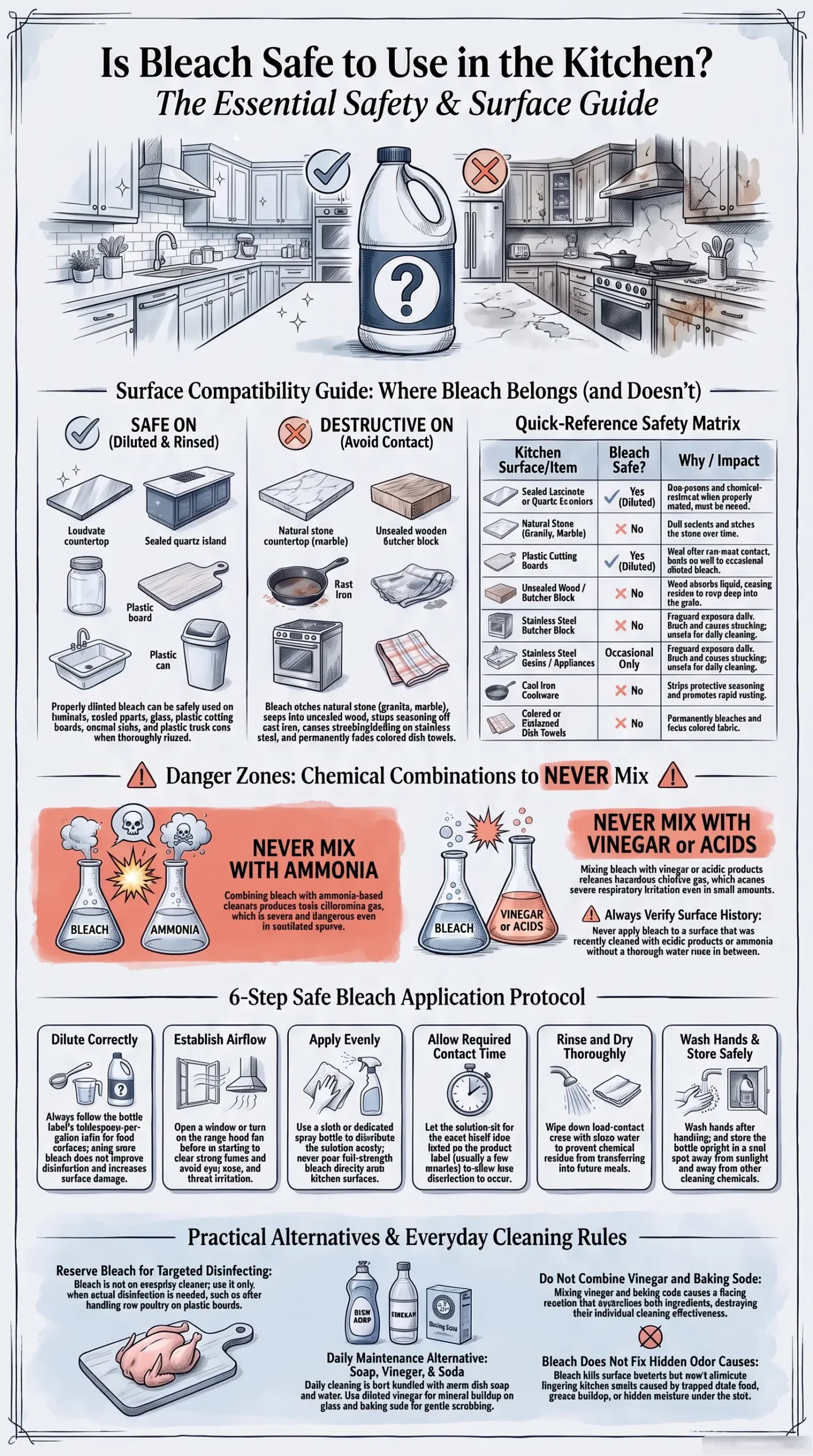
Photo Credit: Hobby Guidebook Editorial
How to Use Bleach Safely in the Kitchen
Using bleach correctly comes down to dilution, contact time, ventilation, and rinsing. Skipping any one of these steps is where most kitchen bleach mistakes happen.
- Check the product label for the correct dilution ratio. Most household bleach is designed to be diluted with water rather than used at full strength, and the label will specify the exact ratio for sanitizing food contact surfaces.
- Open a window or turn on the range hood fan before starting. Bleach fumes are strong even when properly diluted, and good airflow reduces irritation to your eyes, nose, and throat while you work.
- Apply the diluted solution to the surface using a clean cloth or spray bottle, covering the area evenly rather than pouring it directly and letting it pool.
- Let it sit for the contact time listed on the label, typically a short window of a few minutes, which allows the solution to actually disinfect rather than just wipe across the surface.
- Rinse thoroughly with clean water and dry the surface, especially on anything that will contact food afterward, since bleach residue left on a cutting board or counter isn't something you want transferring to your next meal.
- Wash your hands after handling bleach, even when using gloves, and store the bottle upright in a cool spot away from direct sunlight and away from other cleaning chemicals.
Stop and switch to a gentler product if you notice any discoloration, a chalky residue that won't rinse away, or a strong lingering smell well after rinsing, since these are signs the surface isn't tolerating bleach well.
What Should You Avoid When Using Bleach in the Kitchen?
A few mistakes come up often enough in kitchens that they're worth calling out directly.
- Never mix bleach with ammonia-based cleaners. This combination produces toxic chloramine gas and is dangerous even in a well-ventilated space.
- Never mix bleach with vinegar or other acidic cleaners. This releases chlorine gas, which is hazardous to breathe even in small amounts.
- Don't use bleach on natural stone, unsealed wood, or cast iron, since these materials absorb or react with bleach in ways that cause lasting damage.
- Avoid using bleach as your everyday stainless steel cleaner. Occasional disinfecting is fine, but frequent use tends to dull the finish faster than a mild dish soap routine would.
- Don't skip the rinse step on food contact surfaces. Bleach residue left on a countertop or cutting board isn't something that should transfer to food during meal prep.
Vinegar and Baking Soda as a Gentler Alternative
For everyday cleaning that doesn't specifically call for disinfecting, vinegar and baking soda handle a lot of routine kitchen grime without the same risk profile as bleach. Diluted white vinegar works well on sealed countertops, stovetops, and glass, cutting through grease and mineral buildup with mild acidity. Baking soda adds gentle scrubbing power for stuck-on residue in sinks or on stovetops without scratching most finishes.
These two ingredients shouldn't be combined into one all-purpose paste expecting extra cleaning power, since mixing them causes a fizzing reaction that neutralizes both rather than boosting effectiveness. Used separately and at the right moments, they're a reasonable everyday alternative to bleach for cleaning tasks that don't require disinfecting. For a closer look at when each one makes more sense, our Vinegar vs Bleach for Kitchen Cleaning guide compares the two directly across common kitchen scenarios.
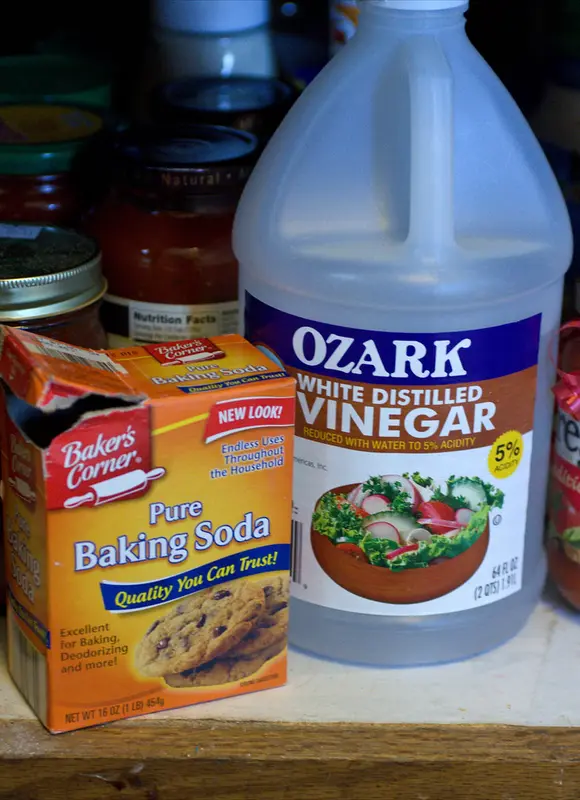
Photo Credit: Internet
Common Problems With Bleach Use in the Kitchen
A handful of issues come up repeatedly when bleach is used in a kitchen setting, and most trace back to a mismatch between the product and the surface or situation.
- Discoloration on countertops or cutting boards, usually from bleach left on too long or used at full strength instead of diluted.
- A lingering chemical smell that won't fully rinse away, often a sign the surface absorbed some of the solution rather than letting it sit on top, which points to a material that wasn't well suited for bleach in the first place.
- Rust developing on cast iron or certain metal tools after bleach contact strips protective seasoning or coating.
- Faded or damaged dish towels from tossing them into a bleach-treated load without checking whether the fabric is colorfast.
- Confusion over dishwasher compatibility, since some dishwasher manufacturers specifically advise against bleach due to effects on rubber seals and certain interior finishes.
Why Does the Kitchen Keep Smelling the Same After Using Bleach?
If a kitchen odor keeps returning even after bleach cleaning, the bleach likely disinfected the surface without addressing what's actually causing the smell underneath. Bleach kills bacteria and some odor-causing organisms on contact, but it doesn't remove grease buildup, food residue trapped in a drain, or moisture sitting in a hidden spot like under the sink. A surface can look and smell fine right after bleach cleaning and still have an odor return within a day if the underlying cause wasn't cleared. Our guide on Why Does My Kitchen Still Smell After Cleaning? walks through the common hidden sources behind a recurring smell that surface cleaning alone doesn't fix.
What Is the Safest Way to Troubleshoot Bleach Use in the Kitchen?
When you're unsure whether bleach is the right call for a specific spot, working through a short checklist helps avoid guesswork:
- Identify the surface material. If you're not certain whether a countertop is sealed, natural stone, or a composite, treat it cautiously and opt for dish soap and water instead.
- Check for existing damage or wear. Bleach on an already worn or scratched surface can cause more visible discoloration than it would on an intact one.
- Confirm nothing else is on the surface. Never apply bleach to a spot that was recently cleaned with vinegar, ammonia, or another acidic product without a thorough rinse in between.
- Test a small area first if you're uncertain, and wait a few minutes to check for any reaction before treating the full surface.
- Stop immediately if you notice fumes that seem stronger than expected, discoloration, or a reaction on the surface, and ventilate the space right away.
When Should You Stop DIY Bleach Cleaning and Call a Professional?
Most kitchen bleach use is a straightforward DIY task, but a few situations call for stepping back. If bleach has caused visible damage to a countertop, cabinet finish, or appliance surface, a surface repair specialist may be able to address it better than continued cleaning attempts. If you've accidentally mixed bleach with ammonia or an acidic cleaner and are experiencing difficulty breathing, eye irritation, or a strong reaction, leave the area, ventilate it, and seek medical attention if symptoms don't clear quickly. If a persistent odor or contamination issue in the kitchen doesn't resolve despite thorough bleach disinfecting and cleaning, it may point to a plumbing or moisture issue underneath the surface that's worth having a professional assess directly.
Photo Credit: Internet
How Often Should You Use Bleach in the Kitchen?
Bleach doesn't need to be part of a daily kitchen routine. For most households, reserving it for specific disinfecting tasks, like after handling raw meat on a plastic cutting board or occasionally sanitizing the sink basin, is enough. Daily general cleaning is better handled with dish soap and warm water, or diluted vinegar for surfaces that tolerate it, since this reduces unnecessary wear on countertops and stainless steel while still keeping the kitchen clean. Save bleach for the moments where actual disinfection is the goal rather than routine tidying.
Tools Needed for Using Bleach in the Kitchen
A short list of basics covers safe bleach use in most kitchens:
- Household bleach with an intact, legible label for dilution instructions
- A clean measuring cup for accurate dilution
- A spray bottle or bucket dedicated to bleach solutions, not shared with other chemicals
- Rubber gloves to protect skin during application
- Clean cloths or paper towels for application and rinsing
- Good ventilation, whether an open window or a running range hood fan
Keeping a bleach-specific spray bottle separate from other cleaning bottles reduces the chance of accidental cross-contamination with vinegar or ammonia residue left in a shared container.
Related Kitchen Cleaning Questions
Bleach questions often come up alongside similar concerns in other rooms of the house. If you're weighing the same question for a different space, our guide on Is Bleach Safe to Use in the Bathroom? covers how the answer shifts based on tile, grout, and fixture materials common in that room.
A Quick Note on Safety
Bleach is an effective disinfectant when used correctly, but it carries real risks if mishandled. Always follow the product label's dilution and contact time instructions over any general guidance, since formulations vary between brands. Never mix bleach with ammonia, vinegar, or other acidic cleaners, as this can produce hazardous gas. Work in a ventilated space, wear gloves, and rinse food contact surfaces thoroughly after use. If you experience breathing difficulty, eye irritation, or another strong reaction after bleach exposure, move to fresh air immediately and seek medical attention if symptoms persist.
FAQ
Is bleach safe to use in the kitchen? Yes, on sealed, non-porous surfaces like laminate counters, glass, and plastic cutting boards, when properly diluted, given adequate contact time, and rinsed afterward.
What are the most common problems with using bleach in the kitchen? Discoloration from full-strength or prolonged use, lingering odor on absorbent surfaces, rust on cast iron, and fading on colored fabrics are the most frequent issues.
Why does the kitchen keep smelling the same after using bleach? Bleach disinfects but doesn't remove grease, food residue, or trapped moisture, so if those underlying causes aren't cleaned separately, the odor tends to return.
What is the safest way to troubleshoot bleach use in the kitchen? Identify the surface material, check for existing damage, avoid mixing with other cleaners, test a small area first, and stop immediately if you notice fumes or a reaction.
When should you stop DIY bleach cleaning and call a professional? Call a professional if bleach has visibly damaged a surface, if you've experienced a reaction from an accidental chemical mix, or if odor and contamination issues persist despite thorough cleaning.
To explore more kitchen cleaning solutions and troubleshooting guides, check out the full kitchen cleaning guide for additional routines and answers.





Leave a Reply