

You wipe every counter, mop the floor, and take out the trash, but the smell is still there. It's one of the most frustrating kitchen problems, because it feels like the cleaning didn't work even though you did everything right. This guide is part of Kitchen Cleaning Questions & Troubleshooting, and it walks through the real reasons a kitchen smells after cleaning is a common problem, along with a practical way to track down the actual source instead of just masking it.
The Quick Answer
In most cases, a kitchen smells after cleaning because the smell isn't coming from the surfaces you already cleaned. It's coming from somewhere less obvious, such as:
- The garbage disposal or drain
- Inside the refrigerator or a small appliance like a microwave or dishwasher
- A wet sponge, dish rag, or cloth left sitting out
- Grease buildup inside the range hood filter
- A trash can or recycling bin that needs a full wash, not just a new liner
- Moisture trapped under the sink or inside a cabinet
Cleaning the countertops and floor handles the surfaces you can see, but odor often builds up in spots that get missed during a normal wipe-down. Tracking down the actual source, rather than cleaning the same visible areas again, is usually what finally solves it.
Why Cleaning the Visible Surfaces Isn't Always Enough
A kitchen can look completely clean and still smell, because grease, food residue, and moisture don't stay only where you can see them. Steam from cooking carries oil droplets into the air, and those droplets settle on cabinet fronts, the underside of upper cabinets, and inside the range hood filter, not just on the stovetop itself. Over time, that thin film holds onto odor even after the visible mess has been wiped away.
Moisture behaves the same way. A damp sponge, a leaking pipe under the sink, or condensation that collects behind an appliance creates a steady environment for bacteria to grow, and bacteria are what actually produce most of the sour or musty smells people associate with a "dirty" kitchen. None of that is solved by wiping a countertop, since the countertop was never the actual source.
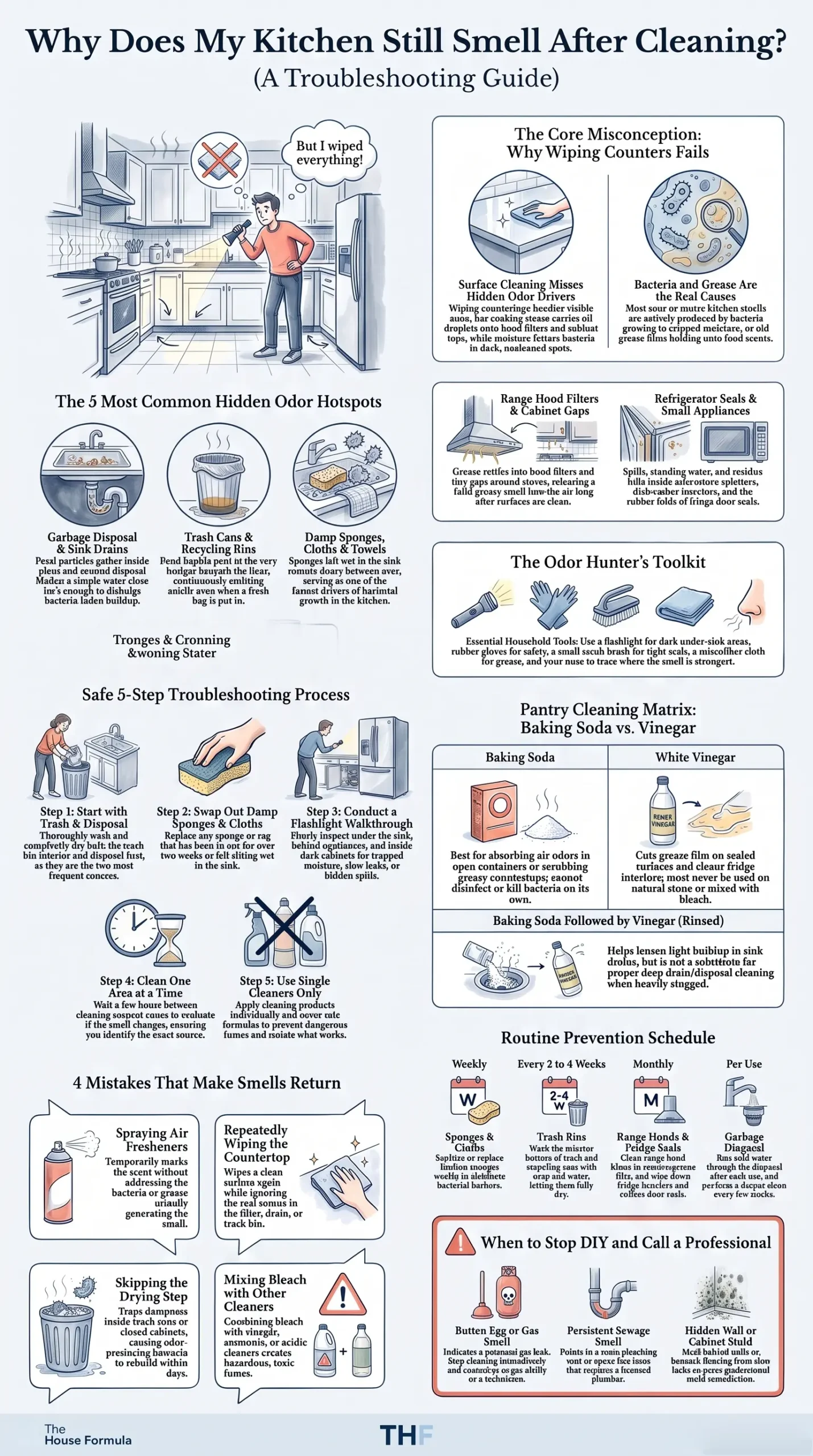
Photo Credit: Hobby Guidebook Editorial
The Most Common Hidden Sources of Kitchen Odor
Drains and the Garbage Disposal
Food particles that slip past the sink strainer collect inside the drain pipe and around the blades of a garbage disposal, where they sit in a damp, dark environment that's perfect for bacteria. A quick rinse with water doesn't reach this buildup. Running the disposal with a few ice cubes and a small amount of dish soap, followed by cold water, helps knock residue loose. For a stronger clean, some manufacturers recommend a specific disposal cleaner or a mix of baking soda followed by vinegar, but always check your disposal's manual first, since not every unit handles the same treatment the same way.
Trash Can and Recycling Bin
A fresh liner doesn't fix a can that's never been washed. Liquid from food scraps can pool underneath the bag, at the very bottom of the bin, and that residue keeps producing smell no matter how often the bag itself gets changed. The bin needs an occasional full wash with soap and water, followed by a full dry, to actually clear this out.
Refrigerator and Small Appliances
Spilled liquids, expired leftovers, and even the rubber door seal on a refrigerator can hold onto smell long after the main shelves are wiped down. Dishwashers and microwaves develop the same issue, since food splatter and standing water inside them are easy to overlook during a regular kitchen clean.
Sponges, Cloths, and Dish Towels
A damp sponge left in the sink is one of the most common sources of a lingering kitchen smell, since it stays wet and holds onto bacteria between uses. Replacing sponges regularly and wringing out cloths fully before setting them down helps prevent this from becoming a repeat problem.
Cabinets, Cracks, and the Range Hood Filter
Grease settles into small gaps around the stove, behind appliances, and inside range hood filters. If the filter hasn't been washed in a while, it can keep releasing a faint greasy smell into the room even after everything else is spotless.
Common Mistakes That Make the Smell Come Back
A few habits tend to bring the smell right back, even after a thorough cleaning session:
- Spraying air freshener instead of finding the source. This covers the smell temporarily but does nothing about the grease or bacteria actually causing it.
- Cleaning the same visible surfaces repeatedly. If the countertop wasn't the source to begin with, wiping it again won't change anything.
- Leaving a wet sponge or cloth in the sink. This keeps recreating the exact bacteria-friendly environment you just cleaned up elsewhere.
- Skipping the drying step. Putting a trash liner into a can that's still damp, or closing a cabinet before it's fully dry, traps moisture that leads to odor again within a day or two.
- Mixing cleaning products without checking compatibility. Never combine bleach with vinegar, ammonia, or other acidic cleaners, since this can produce hazardous fumes. Each product should be used on its own unless the label specifically confirms it's safe to combine.
Photo Credit: Fatma Çekmez
Vinegar and Baking Soda: What They Actually Fix
Vinegar and baking soda are both useful, low-risk tools for kitchen odor, but they work differently and aren't interchangeable for every situation.
|
Method |
Best Use |
Limitations |
|
Baking soda |
Absorbing odor in an open container, or lightly scrubbing greasy residue on sealed countertops |
Doesn't disinfect or kill bacteria on its own |
|
White vinegar |
Cutting through grease film on sealed surfaces, wiping down the inside of a fridge or trash can |
Shouldn't be used on natural stone, and never combined with bleach |
|
Baking soda followed by vinegar (rinsed after) |
Loosening buildup in a sink drain |
Not a substitute for a proper disposal or drain cleaning when buildup is heavy |
These two ingredients handle general odor and light grease well, but they won't fix a genuinely clogged drain or a heavily soiled range hood filter on their own. For a fuller comparison of when a natural approach is enough versus when a stronger product makes more sense, see Vinegar vs Bleach for Kitchen Cleaning, which covers where each one is appropriate and where they shouldn't be used together.
Tools You Actually Need to Track Down the Smell
Finding the real source of a lingering kitchen smell doesn't require anything specialized. A few simple tools make the process much easier:
- A flashlight, for checking dark spots like under the sink, behind appliances, and inside cabinets.
- Rubber gloves, for handling the garbage disposal, drain, or trash can interior safely.
- A small scrub brush, for reaching the bottom of a trash can or the folds of a rubber refrigerator seal.
- A microfiber cloth, for wiping grease film off cabinet fronts without leaving scratches or lint behind.
- Your own nose, moving slowly around the kitchen, since odor is usually strongest right at its source and fades as you move away from it.
If you'd rather skip stronger commercial products altogether, a natural approach with these tools plus basic pantry ingredients can handle most everyday odor sources, which is covered in more detail in How to Clean a Kitchen Without Harsh Chemicals.
How Often You Should Clean to Prevent This
Preventing repeat odor comes down to a few consistent habits rather than one deep clean:
- Change or sanitize sponges weekly, since they hold bacteria longer than almost anything else in the kitchen.
- Wash the trash can interior every two to four weeks, not just when a bag leaks.
- Clean the range hood filter monthly, or more often if you fry food regularly.
- Wipe down the refrigerator interior and door seal monthly.
- Run the garbage disposal with cold water after each use, and give it a deeper clean every few weeks.
A kitchen that gets these small, regular touches rarely builds up the kind of hidden odor that takes real troubleshooting to solve.
What Are the Most Common Problems with the Kitchen?
Beyond lingering smell, a few recurring kitchen problems tend to show up again and again: grease buildup on surfaces near the stove, moisture collecting under the sink or behind appliances, a slow or smelly drain, and mildew developing in damp corners like under a dishwasher or refrigerator. Most of these share the same root cause, which is moisture and food residue sitting somewhere that doesn't get cleaned as part of the regular routine.
Why Does the Kitchen Keep Causing the Same Problem?
If a smell or a stain keeps coming back after cleaning, it usually means the cleaning routine is treating the symptom instead of the source. Wiping a counter every day doesn't help if the actual issue is a leaking pipe under the sink or a disposal that's never been deep cleaned. The fix is to widen the search past the obvious surfaces and check the less visible spots, drains, appliance seals, and filters, that get skipped during a normal wipe-down.
Photo Credit: Konstantin Mishchenko
What Is the Safest Way to Troubleshoot the Kitchen?
A simple, low-risk troubleshooting process works well for most kitchen odor problems:
- Start with the trash can and disposal, since these are the two most common sources. Wash both thoroughly and let them dry completely.
- Check sponges and cloths, replacing anything that's been in use for more than a couple of weeks.
- Walk the kitchen slowly with a flashlight, checking under the sink, behind the fridge, and inside cabinets for any dampness or hidden spills.
- Clean one suspect area at a time, waiting a few hours between each to see if the smell changes, rather than cleaning everything at once and guessing which step worked.
- Use single products, not combinations, especially avoiding bleach mixed with vinegar or ammonia, since testing multiple products together at once also raises safety risk.
This step-by-step approach avoids wasted effort and helps confirm exactly what fixed the problem, which makes it easier to prevent next time.
When Should You Stop DIY Work and Call a Professional?
Most kitchen odor problems can be solved with the steps above, but a few situations call for outside help. If the smell resembles rotten eggs or gas rather than food or mildew, stop immediately and contact your gas utility or a qualified technician, since this can indicate a gas leak rather than a cleaning issue. A sewage-like smell that doesn't improve after cleaning the drain and disposal may point to a plumbing vent or sewer line problem that needs a licensed plumber. If you suspect mold behind a wall, under flooring, or inside a cabinet that's been exposed to a slow leak, that's also a situation better handled by a professional, since mold behind a surface can be more extensive than what's visible.
Frequently Asked Questions
Why does my kitchen still smell after cleaning? The smell is usually coming from a spot that wasn't part of the regular clean, such as the garbage disposal, trash can interior, a damp sponge, or the range hood filter, rather than the countertops or floor.
What are the most common problems with the kitchen? Grease buildup near the stove, moisture under the sink or behind appliances, slow or smelly drains, and mildew in damp, low-traffic corners are the most frequent recurring issues.
Why does the kitchen keep causing the same problem? Repeat problems usually mean the routine is cleaning visible surfaces while missing the actual source, like a drain, appliance seal, or filter that needs its own separate attention.
What is the safest way to troubleshoot the kitchen? Check one likely source at a time, starting with the trash can and disposal, use single cleaning products rather than combinations, and give each step time to show results before moving to the next.
When should you stop DIY work on the kitchen and call a professional? Call for help if you notice a gas or rotten egg smell, a sewage smell that doesn't clear after cleaning the drain, or any sign of mold behind a wall, cabinet, or flooring.
A Quick Note on Safety
Most of the troubleshooting steps here are low-risk, but a few precautions matter. Never mix bleach with vinegar, ammonia, or other acidic cleaners, since the combination can release hazardous fumes. Work in a well-ventilated space when using any disinfecting product, and always check manufacturer instructions before treating a garbage disposal or appliance interior. If you ever notice a gas-like or rotten egg smell, treat it as a potential safety issue rather than a cleaning one, and contact a professional right away.
Return to the complete kitchen cleaning guide for more ways to keep every part of the kitchen clean and odor-free.





Leave a Reply