

The wall area directly behind and beside the stove takes more abuse than almost any other spot in the kitchen. Oil pops out of pans, sauces bubble over, and steam carries fine grease particles that settle onto the wall even when nothing visibly splatters. Stove splash zone cleaning needs a slightly different approach than the rest of the kitchen wall, since this area deals with heat, grease, and food residue all at once, often on whatever surface happens to sit behind the range, whether that's tile, painted drywall, or glass.
This guide covers the best way to clean the stove splash zone, which tools and products actually cut through baked-on grease, and how to avoid damaging the surface underneath. It's part of the Kitchen Wall & Backsplash Cleaning Guide, which covers the full range of kitchen wall materials and how each one holds up to regular cleaning.
The Best Way to Clean the Stove Splash Zone (Quick Answer)
For most stove splash zones, this approach works well:
- Turn off and let the stove cool completely before cleaning anything nearby.
- Wipe away loose crumbs or dry debris first with a dry cloth.
- Apply a degreasing cleaner suited to the wall material, whether that's a mild dish soap solution, a commercial degreaser, or a glass cleaner.
- Let the cleaner sit for a few minutes on greasy spots to loosen the residue before wiping.
- Wipe in small sections with a soft cloth or sponge, then rinse and dry the surface.
The exact cleaner and technique depend on whether the splash zone is tile, painted wall, or glass, but this general sequence, cool down, dust, degrease, loosen, wipe, applies across all three.
Why the Splash Zone Needs Special Attention
This section of wall accumulates grease faster and more heavily than anywhere else in the kitchen, which means it usually needs cleaning more often and sometimes with a stronger degreasing approach than the rest of the wall. Grease that's allowed to sit through multiple cooking sessions starts to bake onto the surface from repeated stovetop heat, and that baked-on layer is considerably harder to remove than fresh splatter.
Heat exposure is also a factor here that doesn't apply elsewhere on the kitchen wall. Cleaning right after cooking, while the stove and surrounding surface are still warm, can make some cleaners evaporate too quickly to work effectively, and it also raises the risk of burns from a hot surface or residual steam. Letting everything cool first is a simple step that's easy to skip when you're in a hurry, but it matters for both safety and results.
Tools You'll Need
- A soft microfiber cloth or sponge for wiping
- A soft-bristled brush or old toothbrush for grout lines or textured surfaces
- A degreasing cleaner suited to the wall material (dish soap solution, commercial degreaser, or glass cleaner)
- A second clean, dry cloth for buffing or final drying
- Rubber gloves, if using a stronger commercial degreaser
Having a soft brush on hand specifically for grout lines or any textured wall surface makes a real difference, since a flat cloth alone often can't reach into recessed lines where grease tends to settle first.
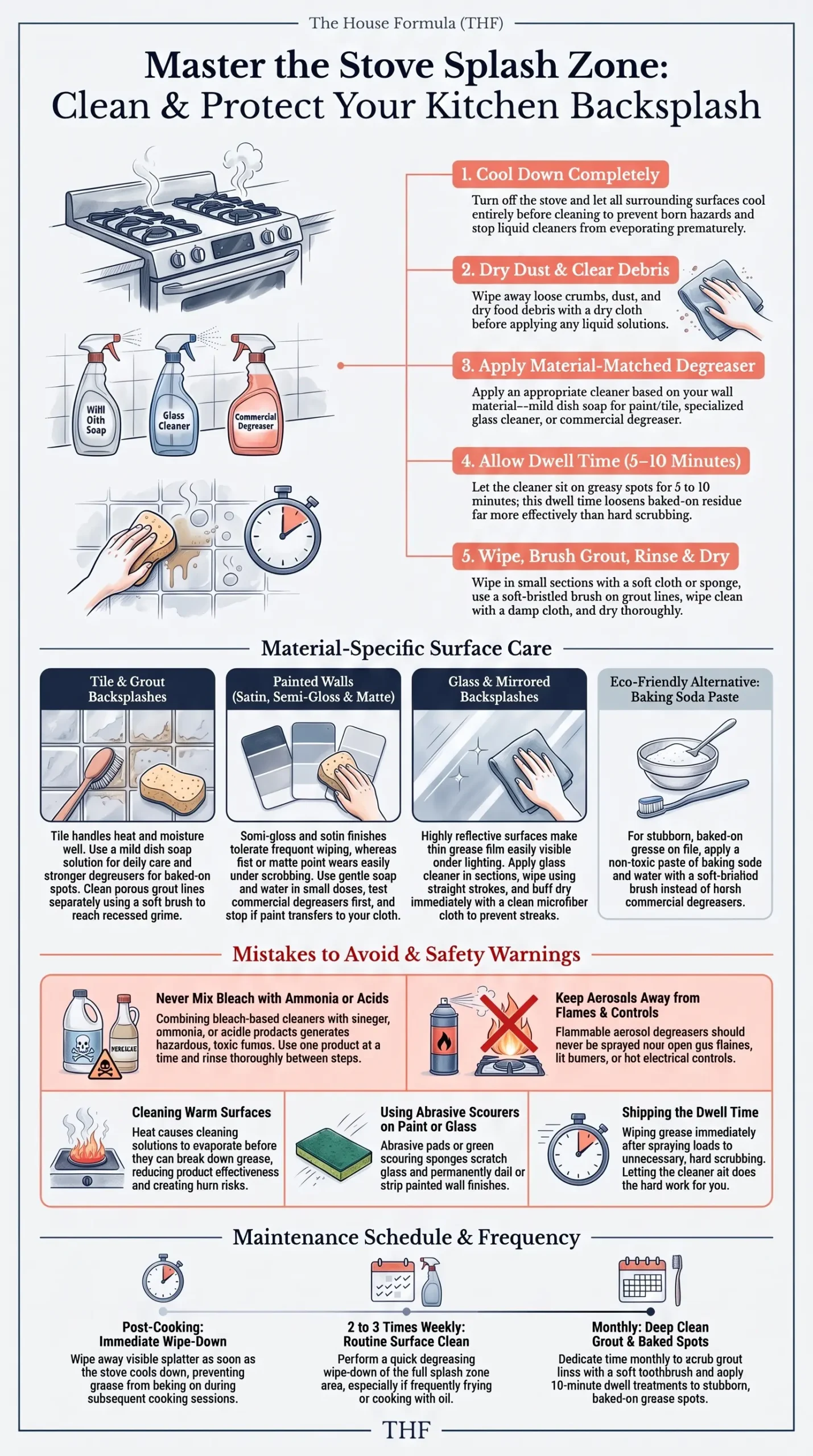
Photo Credit: Hobby Guidebook Editorial
Cleaning by Surface Type
Tile Splash Zone
Tile handles grease and moisture better than most other wall materials, which makes it a common and practical choice directly behind a stove. A mild dish soap and warm water solution works for regular cleaning, while a slightly stronger degreaser can help with baked-on spots that don't lift with soap alone. Grout lines need separate attention with a soft brush, since grease settles into the porous surface differently than it does on the glazed tile itself. Our guide on Tile Backsplash Cleaning covers grout care and material-specific products in more depth for anyone dealing with tile in this high-grease area.
Painted Wall Splash Zone
A painted wall behind the stove faces more repeated grease exposure than painted walls elsewhere in the kitchen, and the finish matters just as much here as anywhere else. Flat and matte paint is more prone to showing wear from frequent scrubbing, so a gentle soap and water approach, applied more often in smaller amounts, tends to work better than an occasional heavy scrub. Semi-gloss and satin finishes tolerate more frequent wiping and are often a more practical choice for this specific spot if a repaint is ever on the table. Our guide on Painted Kitchen Wall Cleaning walks through finish-specific care in more detail, including how to test a cleaner safely before using it on a visible section.
Glass or Mirrored Splash Zone
Glass and mirror show grease film more obviously than other materials, since the reflective surface makes even a thin haze noticeable under kitchen lighting. A commercial glass cleaner applied in sections, followed by a straight-stroke wipe and immediate dry buff, generally handles grease well here as long as it's cleaned regularly rather than left to build up over several cooking sessions.
Step-by-Step Deep Clean for Baked-On Grease
- Let the area cool completely. Never apply cleaner to a warm stove or surrounding surface, both for safety and because some products won't work as intended on a heated surface.
- Apply cleaner and let it sit. Spray or apply your chosen degreaser to the affected area and let it sit for five to ten minutes. This dwell time is what actually loosens baked-on grease, rather than the scrubbing itself.
- Wipe with a soft cloth first. Try lifting the residue with gentle wiping before reaching for anything more abrasive. Many spots that seem stuck will loosen once the cleaner has had time to work.
- Use a soft brush on stubborn spots or grout. If a soft cloth isn't enough, a soft-bristled brush can help work cleaner into textured surfaces or grout lines without scratching the surrounding material.
- Rinse and dry thoroughly. Wipe away any remaining cleaner with a clean, damp cloth, then dry the surface to prevent streaking or, on painted walls, water spotting.
- Stop if the surface starts to change. If paint color transfers onto your cloth, or a tile or grout surface starts looking scratched or dulled, stop and switch to a gentler method for that spot.
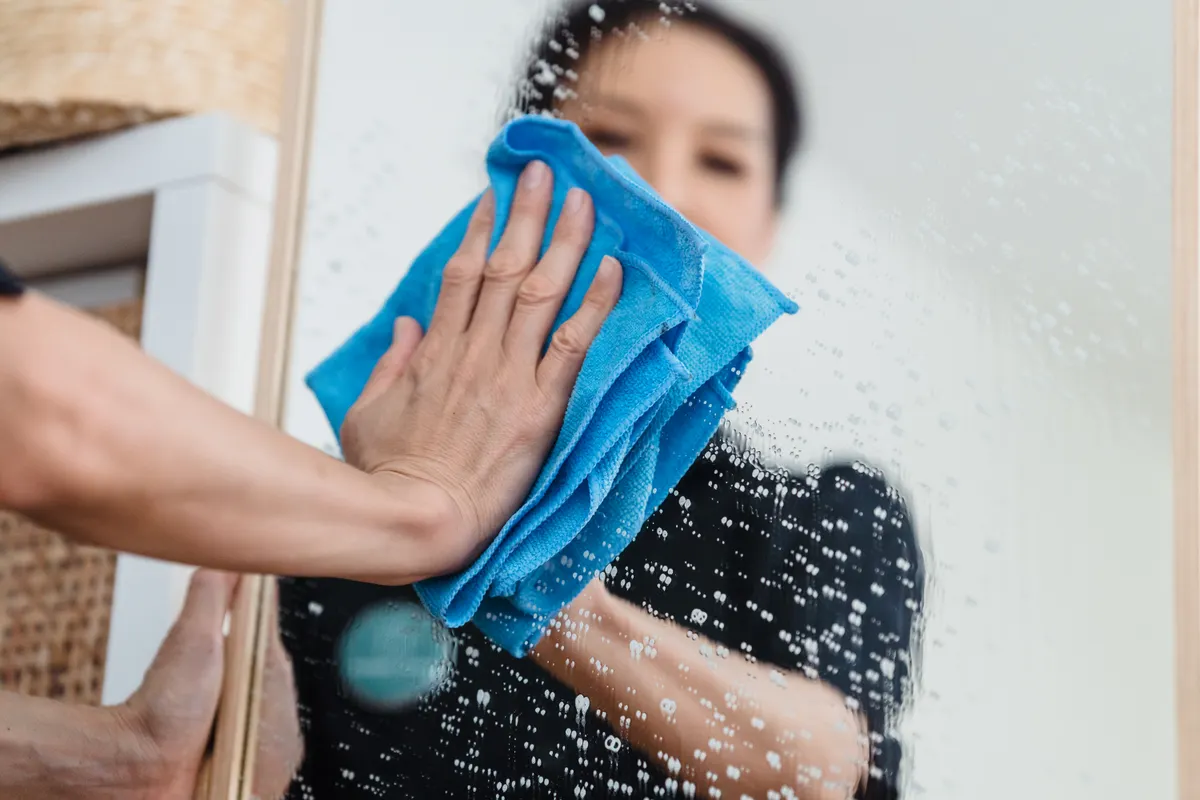
Photo Credit: Liliana Drew
Common Mistakes When Cleaning the Splash Zone
- Cleaning a hot surface. This is both a burn risk and a reason some cleaners underperform, since heat can cause certain products to evaporate before they've had time to work.
- Skipping the dwell time. Wiping baked-on grease immediately after applying cleaner, without giving it a few minutes to loosen, usually means more scrubbing than necessary.
- Using an abrasive scouring pad on painted walls or glass. This is one of the fastest ways to scratch or dull these surfaces permanently.
- Ignoring grout on tile splash zones. Grease settles into grout differently than it does on tile itself, and skipping this step leaves a visibly darker grout line over time.
- Using a strong commercial degreaser on flat paint without testing first. Some degreasers are more likely to dull or discolor low-sheen paint finishes.
Eco-Friendly Options for the Splash Zone
For households that prefer to limit commercial products, a warm water and mild dish soap solution handles most everyday grease splatter effectively on tile and glass. Applying it while the grease is still relatively fresh, rather than waiting for it to bake on over multiple cooking sessions, reduces the need for anything stronger. Painted walls generally do best with plain soap and water regardless of preference, since this is already the gentler option for that surface. For genuinely stubborn, baked-on spots on tile, a baking soda paste applied with a soft brush offers a mild, non-toxic alternative to a stronger commercial degreaser.
What to Avoid Near the Stove
- Avoid mixing cleaning products, particularly bleach-based cleaners with vinegar, ammonia, or other acidic products, since combining these can produce hazardous fumes. Use one product at a time and rinse thoroughly between different cleaners if switching.
- Avoid spraying cleaner directly near stove controls or an open flame source, especially with aerosol degreasers, which can be flammable.
- Avoid applying any cleaner while a gas burner is lit or an electric burner is still warm.

Photo Credit: https://kaboompics.com/
How Often Should You Clean the Splash Zone
- Wipe down visible splatter immediately after cooking, while it's still fresh and hasn't had a chance to bake onto the surface.
- Do a more thorough wipe-down two to three times a week, depending on how often the stove is used and what kind of cooking is happening.
- Deep clean grout lines or stubborn baked-on spots monthly, or sooner if grease buildup becomes visible between regular cleanings.
Households that cook frequently with oil-heavy methods like frying or searing will likely need to clean this area more often than the rest of the kitchen wall, simply because grease accumulates faster here than anywhere else.
A Quick Note on Safety
Always let the stove and surrounding wall cool before cleaning, and never combine bleach with ammonia, vinegar, or other acidic cleaners, since this can create dangerous fumes. Keep the kitchen ventilated when using any commercial degreaser, and check the product label for specific surface compatibility before applying it to tile, paint, or glass. When manufacturer instructions are available for a specific wall material or finish, those take priority over general guidance.
FAQ
What is the best way to clean the stove splash zone? Let the area cool, apply a degreasing cleaner suited to the wall material, let it sit for a few minutes, then wipe with a soft cloth and rinse thoroughly.
How often should you clean the stove splash zone? Wipe visible splatter right after cooking, do a full wipe-down two to three times a week, and deep clean grout or stubborn spots monthly.
What cleaning products are safe for the stove splash zone? Mild dish soap and water work well on tile and glass. Painted walls need a gentler soap and water approach, and stronger commercial degreasers should be tested first on flat or matte paint.
What should you avoid when cleaning the stove splash zone? Avoid cleaning a hot surface, skipping dwell time on baked-on grease, using abrasive pads on paint or glass, and mixing bleach with vinegar or ammonia.
How can you clean the stove splash zone without damaging it? Let cleaner sit before wiping, use a soft cloth or brush rather than anything abrasive, test new products on a small area first, and stop immediately if the surface shows signs of wear.
For more surface and appliance care throughout the kitchen, return to the complete kitchen cleaning guide for additional routines and schedules.

Leave a Reply