
A bathroom faucet handles daily contact with soap, toothpaste, hard water, and hands, which makes it one of the fastest surfaces in the bathroom to look grimy even after a general wipe-down. Bathroom faucet cleaning also depends heavily on the finish, since chrome, brushed nickel, and matte black all react differently to certain cleaners and tools. Using the wrong product on the wrong finish is one of the most common ways a faucet ends up scratched or dulled.
This guide covers the best way to clean a bathroom faucet, which products are safe for different finishes, how often the job needs doing, and the mistakes that lead to scratches or a permanently hazy finish. This article is Part of Bathroom Sink & Vanity Cleaning Guide, which covers sink and vanity care across every part of the fixture.
The Best Way to Clean a Bathroom Faucet
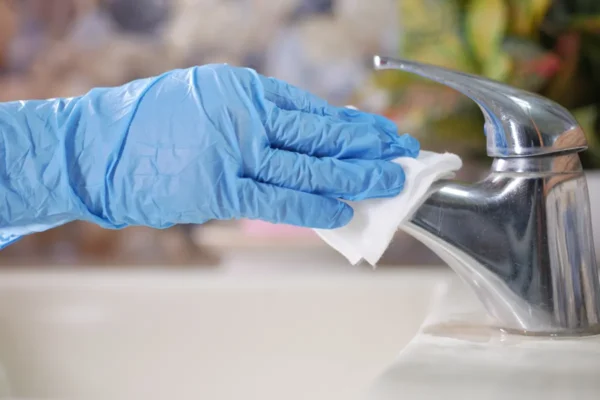
- Wipe down the faucet with a soft, damp cloth to remove loose dust, toothpaste splatter, and surface grime before applying anything else.
- Apply a small amount of mild dish soap diluted in warm water, using a soft cloth rather than a sponge with a rough side.
- Work the soapy cloth around the base, handle, and spout, paying close attention to the area where the faucet meets the counter, since grime tends to collect in that seam.
- Rinse with a clean, damp cloth to remove all soap residue, since leftover soap film can make a shiny finish look streaky once it dries.
- Dry immediately with a soft, dry cloth, which helps prevent water spots and keeps the finish looking polished rather than hazy.
- Check small crevices around the handle and base for any remaining residue, using an old soft toothbrush if needed to reach tight spots.
This basic routine works for most common faucet finishes, but the specific cleaner used in step two should always match what the finish can handle, since chrome tolerates more than a brushed or matte finish typically does.
How Often Should You Clean a Bathroom Faucet
|
Task |
Suggested Frequency |
|
Quick wipe with a soft cloth |
Daily |
|
Full clean with mild soap and water |
2 to 3 times per week |
|
Check for water spots or mineral buildup |
Weekly |
|
Deeper limescale treatment |
As needed, based on hard water buildup |
Bathrooms with hard water tend to need the deeper limescale check more often than the general guideline suggests, since mineral deposits build up faster in areas with higher water hardness. A faucet handle that feels gritty or looks cloudy near the base is usually a sign that mineral buildup has started forming and needs attention sooner rather than waiting for the next scheduled clean.
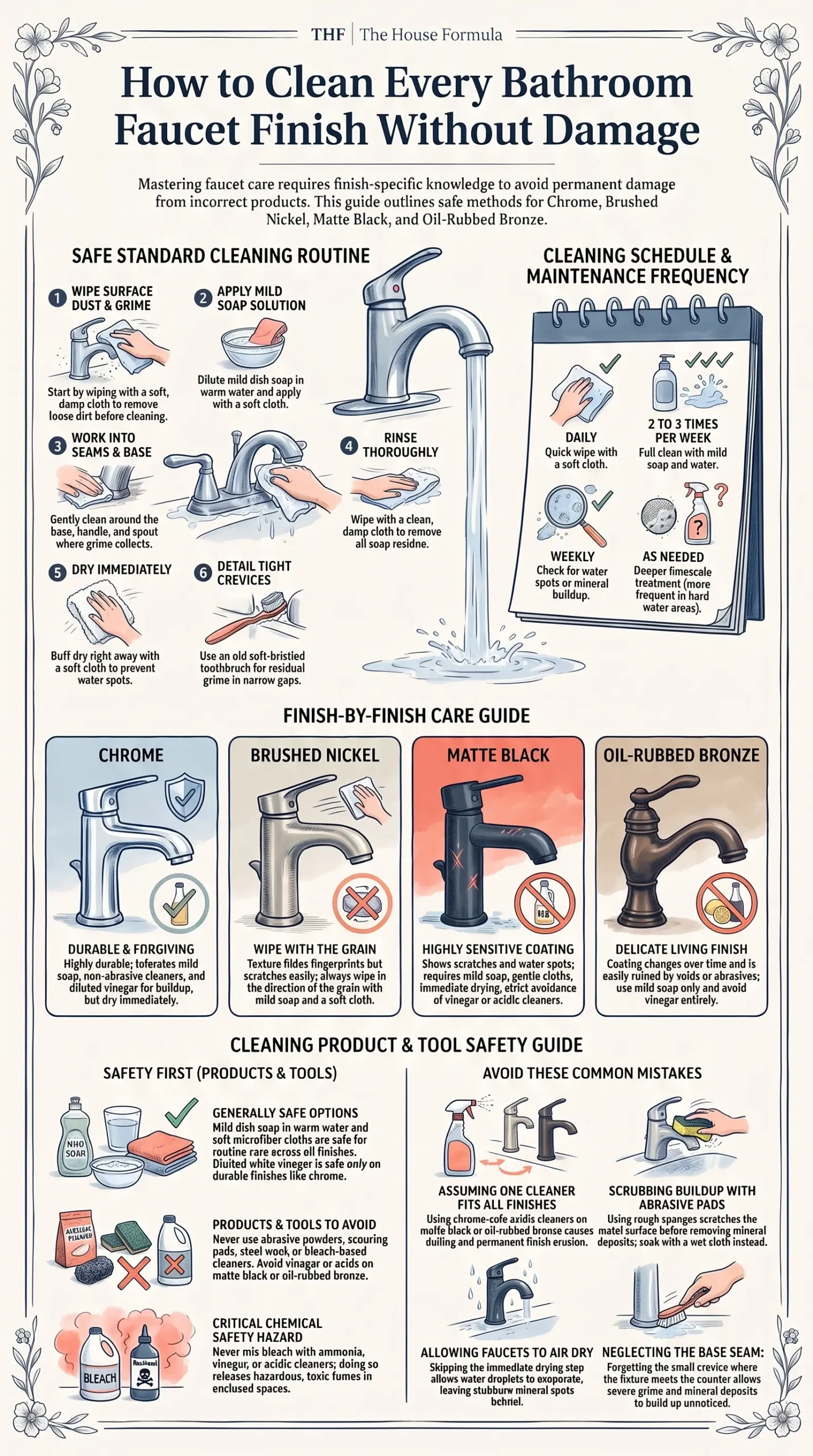
Photo Credit: Hobby Guidebook Editorial
Cleaning a Bathroom Faucet by Finish Type
Not every bathroom faucet finish reacts to cleaners the same way, so knowing which type you have matters before reaching for a product.
Chrome faucets are generally the most durable and forgiving finish, tolerating mild soap, most non-abrasive cleaners, and even a light vinegar solution for mineral buildup without much risk. They do show water spots easily, so drying immediately after cleaning keeps them looking their best.
Brushed nickel faucets have a matte texture that hides fingerprints well but can scratch more easily than chrome if an abrasive pad or gritty cleaner is used. Mild soap and a soft cloth, applied in the direction of the brushed texture rather than in circles, keeps this finish looking consistent.
Matte black faucets are the most sensitive of the common finishes, since many matte black coatings can show scratches, water spots, and even fingerprints more visibly than shinier finishes. Mild soap, a very soft cloth, and immediate drying matter more here than with any other finish, and manufacturers often recommend avoiding vinegar or acidic cleaners entirely on this coating.
Oil-rubbed bronze faucets have a living finish that changes slightly over time and can be damaged by acidic or abrasive cleaners, which strip the coating unevenly. A soft cloth with mild soap, avoiding vinegar and anything acidic, keeps this finish intact longer.
What Cleaning Products Are Safe for a Bathroom Faucet
Generally safe:
- Mild dish soap diluted in warm water, suitable for daily and routine cleaning across most finishes
- A soft microfiber cloth, which cleans effectively without scratching polished or matte surfaces
- A diluted white vinegar solution, useful for mineral deposits, but only on finishes confirmed to tolerate it, such as chrome
Use with caution:
- Commercial bathroom cleaners not labeled for the specific faucet finish, since some formulas contain ingredients that can dull matte or brushed finishes over repeated use
Avoid:
- Abrasive powders, scouring pads, or steel wool, which scratch almost every faucet finish
- Vinegar or other acidic cleaners on matte black or oil-rubbed bronze finishes, since these coatings are more vulnerable to acid damage
- Bleach-based cleaners, which can discolor certain finishes and shouldn't be used as a routine faucet cleaner
- Mixing bleach with ammonia, vinegar, or other acidic products, which can release hazardous fumes in an enclosed bathroom
Manufacturer guidance should always take priority when it's available, since faucet finishes vary between brands and some come with specific cleaning instructions tied to a particular coating process.
Commercial Cleaner Versus Natural Method for a Bathroom Faucet
Both approaches can handle routine grime, and the right choice often depends on the faucet's finish and how much mineral buildup has accumulated.
|
Factor |
Commercial Bathroom Cleaner |
Mild Soap and Water |
|
Effectiveness on soap scum |
Generally effective, formulated for bathroom grime |
Effective for light to moderate buildup |
|
Finish safety |
Varies by product, check label for finish compatibility |
Safe for nearly all common finishes |
|
Cost |
Ongoing product purchase |
Very low cost |
|
Mineral deposit removal |
Some formulas target limescale directly |
Limited, may need a vinegar solution instead |
|
Best use |
Heavier grime or scheduled deep cleaning |
Daily and routine maintenance |
A diluted vinegar solution can help with light mineral deposits on finishes that tolerate acidity, such as chrome, but it isn't a universal solution, since matte black and oil-rubbed bronze finishes can be damaged by the same treatment that works fine on chrome. Commercial cleaners formulated specifically for bathroom fixtures can handle tougher buildup, but the label should always be checked for finish compatibility before use, since not every product is safe across every coating type.
Cleaning a Bathroom Faucet Without Scratching the Surface
Scratches on a bathroom faucet almost always come from the tool, not the cleaner itself. A soft microfiber cloth is gentle enough for daily use on any finish, while anything with texture, like the rough side of a kitchen sponge, a scouring pad, or a stiff-bristled brush, poses a real risk to polished or coated surfaces.
For faucets with textured or brushed finishes, wiping in the same direction as the texture rather than in circles helps avoid visible scratching that can show up as light streaks under certain lighting. If mineral deposits feel stubborn, soaking a cloth in warm water and holding it against the area for a few minutes to loosen buildup works better than scrubbing harder, since added pressure is more likely to cause fine scratches than actually remove the deposit.

Photo Credit: Towfiqu barbhuiya
Faucets that develop persistent white or chalky buildup around the spout or base are usually dealing with limescale, a mineral deposit left behind by hard water. This buildup needs a slightly different approach than routine grime, since it often requires a longer soak or a specific treatment method depending on the faucet's finish, covered in more detail in Removing Limescale from a Bathroom Faucet for anyone dealing with heavier mineral deposits than a quick wipe can handle.
Common Mistakes When Cleaning a Bathroom Faucet
- Using the same cleaner on every finish without checking compatibility. What works safely on chrome can damage matte black or oil-rubbed bronze, so assuming one product suits every faucet is a common source of avoidable damage.
- Scrubbing with an abrasive sponge to remove mineral buildup. This often scratches the finish before it actually clears the deposit, making the problem look worse rather than better.
- Skipping the immediate dry-off step. Letting a faucet air dry leads to water spots that build up over time and become harder to remove the longer they sit.
- Using vinegar on a finish that can't tolerate acid. This is one of the more common mistakes with matte black and oil-rubbed bronze faucets, since a treatment that's completely safe on chrome can dull or damage these coatings.
- Ignoring the base and seam where the faucet meets the counter. Grime collects in this area just as much as on the visible spout and handle, and it's easy to overlook during a quick wipe.
- Mixing bleach with ammonia or acidic cleaners near the faucet. This risk applies to the whole bathroom, not just the faucet, and it's worth keeping in mind whenever multiple cleaning products are being used in the same space.
Cleaning a Bathroom Faucet Without Damaging It
The safest approach for any bathroom faucet is matching the cleaner to the finish rather than assuming one method works everywhere. Mild soap and a soft cloth handle the vast majority of routine cleaning needs across chrome, brushed nickel, matte black, and oil-rubbed bronze without any real risk to the coating.
Testing a new product on a small, hidden section of the faucet base first is a reasonable precaution whenever the finish type isn't clearly known, since some coatings react in ways that aren't obvious until damage has already started. If a faucet's finish starts looking dull, streaky, or slightly rough despite regular cleaning, that's usually a sign the current cleaning method needs adjusting rather than an indication that something's wrong with the faucet itself.

Photo Credit: Luis Quintero
A clean faucet doesn't mean much if the drain right below it is still collecting hair and soap residue, since both areas contribute to how the whole sink setup looks and functions day to day. Clearing out the drain and stopper on a similar schedule, covered in Bathroom Sink Drain & Stopper Cleaning, rounds out the routine so the faucet and the rest of the sink stay on the same maintenance schedule.
Frequently Asked Questions
What is the best way to clean a bathroom faucet? Wipe with a soft cloth and mild soap diluted in warm water, rinse thoroughly, and dry immediately with a soft cloth to prevent water spots. Match the cleaner to the specific finish before using anything beyond basic soap and water.
How often should you clean a bathroom faucet? A daily quick wipe and a full clean two to three times per week keep most bathroom faucets looking good. Check weekly for mineral buildup, especially in homes with hard water.
What cleaning products are safe for a bathroom faucet? Mild dish soap and water are safe across nearly every finish. A diluted vinegar solution works for mineral deposits on chrome, but should be avoided on matte black and oil-rubbed bronze finishes.
What should you avoid when cleaning a bathroom faucet? Avoid abrasive sponges or scouring pads, vinegar on sensitive finishes like matte black, bleach-based cleaners, and mixing bleach with ammonia or acidic products.
How can you clean a bathroom faucet without damaging it? Use a soft cloth and a cleaner matched to the specific finish, avoid abrasive tools, dry the faucet immediately after cleaning, and test any new product on a hidden area first.
Browse the complete bathroom cleaning guide for how faucet care fits into full sink and vanity maintenance.
A Quick Safety Note
Bathroom faucet cleaning depends on matching the cleaner to the finish, since some products safe for chrome can damage matte black or oil-rubbed bronze coatings. Never mix bleach with ammonia, vinegar, or other acidic products, since this can release hazardous fumes in an enclosed bathroom. Always check product labels for finish compatibility, test new cleaners on a small hidden area first, and consult the faucet manufacturer's care instructions if you're unsure which products are appropriate for your specific fixture.



Leave a Reply