

A glass sink brings a clean, modern look to a bathroom, but it also shows every fingerprint, water spot, and streak far more visibly than porcelain or stone ever would. That transparency is part of the appeal, and it's also exactly why glass bathroom sink cleaning needs a slightly different approach than other sink materials. What looks spotless on a ceramic basin can look smudged and dull on glass within a day or two of regular use.
This guide covers the best way to clean a glass bathroom sink, how often it needs attention, which products are safe, and how to tell when a quick wipe isn't enough. This article is Part of Bathroom Sink & Vanity Cleaning Guide, which covers sink and vanity care across every common material.
The Best Way to Clean a Glass Bathroom Sink
- Rinse the basin with warm water to clear loose debris, toothpaste, and soap residue before applying any cleaner.
- Spray a glass cleaner or a diluted vinegar and water solution directly onto the basin, covering the interior bowl and the visible exterior sides.
- Wipe with a soft, lint-free cloth, such as microfiber, using small circular motions to lift soap scum and mineral spots without leaving fibers behind.
- Rinse thoroughly to remove any cleaner residue, since leftover product often shows up as a hazy film once the glass dries.
- Dry immediately with a dry microfiber cloth rather than letting the basin air dry, since air drying is the main cause of the water spots that make glass sinks look dull.
- Buff lightly in one direction for the final pass, which helps avoid streaking and gives the glass an even, clear finish.
Because glass shows imperfections so clearly, the drying step matters more here than with almost any other sink material. Skipping it, even once, often means starting the whole process over the next time someone looks closely at the basin.
How Often Should You Clean a Glass Bathroom Sink
|
Task |
Suggested Frequency |
|
Quick wipe of fingerprints and splashes |
Daily |
|
Full clean with glass cleaner or vinegar solution |
2 to 3 times per week |
|
Deeper mineral buildup treatment |
Every 1 to 2 weeks, depending on water hardness |
|
Exterior base and faucet area |
Weekly, alongside the full clean |
Glass sinks generally need more frequent light cleaning than porcelain or stone, simply because fingerprints and water spots are so visible on a clear or translucent surface. Homes with hard water often need the deeper mineral treatment more often than the general guideline, since mineral spotting shows up faster on glass than on most other basin materials.
How to Tell a Glass Bathroom Sink Needs Cleaning
Glass makes it easy to spot when a sink needs attention, which is one advantage of the material despite the extra upkeep.
- A hazy or cloudy film across the basin, usually from mineral deposits building up faster than expected in areas with hard water.
- Visible fingerprints or handprints on the exterior sides, which show up almost immediately on glass compared to opaque materials.
- Streaks left behind from a previous cleaning, often a sign the basin wasn't dried properly or that too much product was used.
- Soap scum collecting near the drain or around the faucet base, which tends to look worse on glass than it would on a similarly dirty porcelain sink.
- A dull, less reflective look to the glass overall, which can build up gradually from repeated air drying rather than towel drying after each clean.
Because these signs are so visible, most people notice a glass sink needs cleaning well before buildup becomes difficult to remove, which makes staying on top of it easier than with less visible materials.
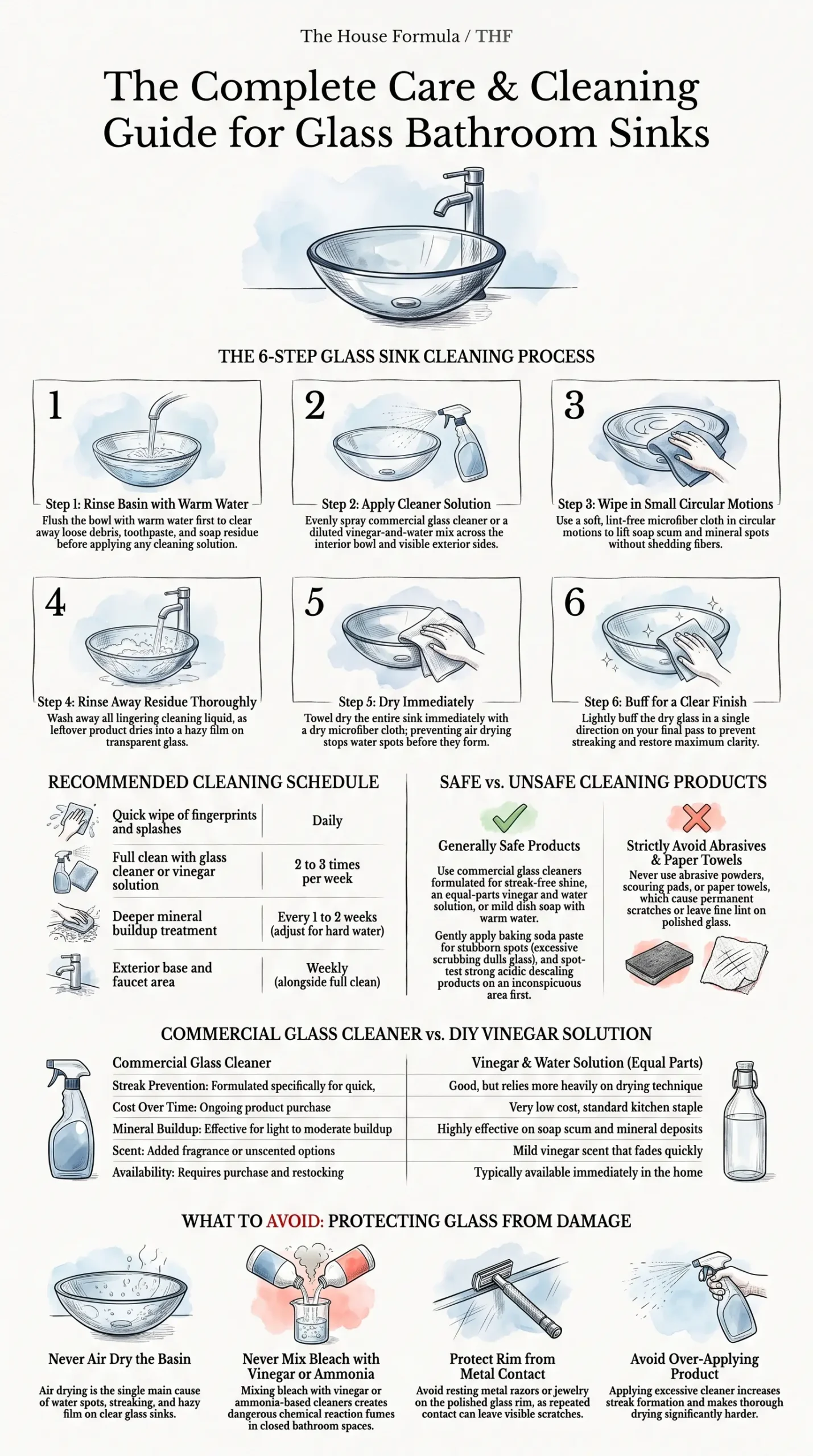
Photo Credit: Hobby Guidebook Editorial
What Cleaning Products Are Safe for a Glass Bathroom Sink
Generally safe:
- A commercial glass cleaner, formulated specifically to avoid streaking and cut through fingerprints and water spots
- A vinegar and water solution (roughly equal parts), effective for mineral deposits and soap scum without leaving a residue
- Mild dish soap and warm water, suitable for a basic daily wipe-down
Use with caution:
- Baking soda paste, which can help with stubborn mineral spots but should be used gently, since even mild abrasion can dull glass with repeated aggressive scrubbing over time
- Stronger acidic descaling products, which may work faster on heavy mineral buildup but should be tested on a small area first, since concentration and formulation vary by brand
Avoid:
- Abrasive powders, scouring pads, or anything with visible grit, since these scratch glass more easily and more permanently than almost any other bathroom sink material
- Mixing bleach with vinegar or ammonia, which can release hazardous fumes in an enclosed bathroom space
- Paper towels for the final dry, since they can leave fine lint or, in some cases, tiny scratches with repeated use compared to a soft microfiber cloth
Manufacturer guidance should take priority if your glass sink has a tempered or specialty coating, since some finishes are more sensitive to certain chemicals than standard tempered glass.
Commercial Cleaner Versus Natural Method for Glass Bathroom Sink
Both approaches work for routine glass sink cleaning, and the better choice usually comes down to convenience, buildup severity, and personal preference rather than one being definitively superior.
|
Factor |
Commercial Glass Cleaner |
Vinegar and Water Solution |
|
Streak prevention |
Formulated specifically for it |
Good, but technique matters more |
|
Cost over time |
Ongoing product purchase |
Very low cost, pantry staple |
|
Mineral buildup |
Effective for light to moderate buildup |
Effective, especially for soap scum |
|
Scent |
Often has added fragrance or none |
Mild vinegar smell that fades quickly |
|
Availability |
Needs to be purchased and restocked |
Usually already in the kitchen |
A commercial glass cleaner tends to dry a bit faster and leave less room for streaking mistakes, which some people prefer for a quick daily wipe. A vinegar solution costs less and works just as well for most routine buildup, though it depends more on thorough drying to avoid streaks. Either option should be followed by a full rinse and immediate drying with a soft cloth for the best results.

Photo Credit: Liliana Drew
What to Avoid When Cleaning a Glass Bathroom Sink
- Using abrasive pads or powders, which scratch glass more visibly and more permanently than they would on an opaque surface.
- Letting the basin air dry, which is the single biggest cause of the water spots and hazy film that make glass sinks look dull over time.
- Applying too much cleaner at once, which increases the chance of streaking, especially if the drying step isn't thorough.
- Setting metal objects, like razors or jewelry, directly on the rim, since repeated contact can leave small scratches on a polished glass surface.
- Mixing bleach with vinegar or ammonia-based products, which can produce hazardous fumes regardless of the material being cleaned.
Cleaning a Glass Bathroom Sink Without Damaging It
Glass is more forgiving in some ways than natural stone, since it doesn't need sealing or worry about etching from acidic cleaners the way marble or granite does. But it's less forgiving in others, since scratches on glass are permanent and immediately visible in a way they often aren't on other materials. A soft microfiber cloth, used for both cleaning and drying, is the single most protective habit for a glass basin.
If your bathroom pairs a glass sink with a stone or granite countertop, keep in mind that stone surfaces have very different needs, particularly around sealant maintenance and acidic cleaners, which is covered separately in Stone & Granite Vanity Top Cleaning for anyone managing both surfaces in the same space.
Testing any new product on a small, inconspicuous area, such as the underside of the basin, is worth doing before using it across the whole sink, especially with tempered or coated glass where the exact finish may not be obvious just by looking at it.
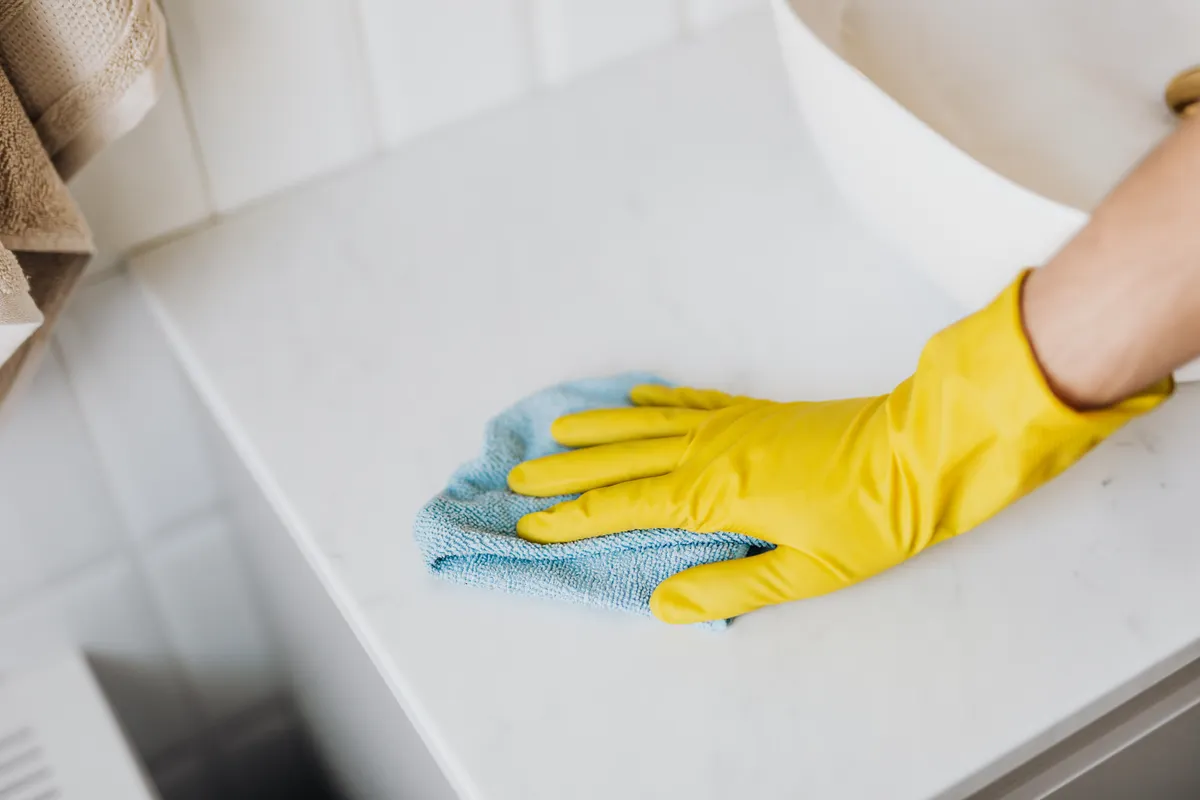
Photo Credit: https://kaboompics.com/
Professional Cost to Clean a Glass Bathroom Sink
Routine glass sink cleaning is something almost every household handles on its own with a glass cleaner or vinegar solution and a soft cloth. Professional cleaning services typically don't offer glass sink cleaning as a standalone service, and when it's included, it's usually part of a broader bathroom cleaning package rather than priced separately.
Where professional help becomes more relevant is with a glass sink that has developed scratching, etching from an incompatible cleaner, or persistent hard water staining that routine cleaning can't remove. Glass restoration and polishing are specialized services, and pricing depends on the extent of the damage and the provider handling the work.
Glass Sinks Compared to Other Vanity Surfaces
A glass sink's exposed, reflective surface behaves differently than the surfaces often found nearby in the same bathroom. Cultured marble, a manufactured material used in many vanity tops and integrated sinks, needs its own care approach that differs from both glass and natural stone, particularly around which cleaners are safe for its gel coat finish, which is covered in Cultured Marble Vanity Cleaning.
Matching the cleaning method to the actual material sitting in your bathroom, rather than using one generic approach across every surface, is what keeps a glass sink looking clear and every surrounding surface protected at the same time.
Frequently Asked Questions
What is the best way to clean a glass bathroom sink? Rinse the basin, apply a glass cleaner or diluted vinegar solution, wipe with a soft microfiber cloth, rinse thoroughly, and dry immediately to prevent streaking and water spots.
How often should you clean a glass bathroom sink? A daily wipe of fingerprints and a full clean two to three times per week keeps most glass sinks looking clear. Deeper mineral treatment is often needed every one to two weeks depending on water hardness.
What cleaning products are safe for a glass bathroom sink? Commercial glass cleaners and a vinegar and water solution both work well. Avoid abrasive powders and scouring pads, which can scratch the surface permanently.
What should you avoid when cleaning a glass bathroom sink? Avoid air drying, abrasive tools, setting metal objects on the rim, and mixing bleach with vinegar or ammonia-based products.
How can you clean a glass bathroom sink without damaging it? Use a soft microfiber cloth for both cleaning and drying, avoid abrasive products, and test anything new on a small hidden area before applying it to the whole basin.
See the full bathroom cleaning guide for how glass sink care fits into complete bathroom maintenance.
A Quick Safety Note
Glass bathroom sink cleaning often involves vinegar, commercial glass cleaners, or occasional descaling products. Never mix bleach with vinegar or ammonia, since this can release hazardous fumes in an enclosed bathroom. Test any new product on a small hidden area first, keep the space ventilated when using stronger cleaners, and consult a glass specialist if the basin develops scratching, etching, or staining that routine cleaning doesn't resolve.


Leave a Reply