
The right kitchen cleaning cloths and sponges make everyday cleanup faster and more effective, while the wrong ones can spread bacteria, scratch surfaces, or fall apart after a week of use. Most kitchens end up with a mismatched drawer of sponges, rags, and cloths collected over time, without much thought about which tool actually fits which job. This guide is part of the Kitchen Cleaning Tools & Supplies Guide, and it breaks down the main types of cloths and sponges, how to match them to specific kitchen tasks, and how to keep them clean enough to actually help rather than hurt.
What Tools Do You Actually Need for the Kitchen?
A well-stocked kitchen doesn't need a dozen different products. At minimum, you need:
- A non-scratch sponge for dishes and everyday counter wiping
- A microfiber cloth for glass, stainless steel, and general dusting
- A dedicated dish rag or cloth for wiping down counters and spills
- A scrub brush or scrub sponge for baked-on messes on pots and pans
- A separate cloth for raw meat spills, kept apart from other cleaning cloths
Everything beyond this list is optional and depends on how you cook and how much surface variety your kitchen has (stone, wood, stainless steel, glass).
Matching the Right Cloth or Sponge to the Job
Not every sponge belongs on every surface, and using the wrong one is one of the most common mistakes people make in the kitchen. A rough scouring pad that works fine on a cast iron skillet can leave fine scratches on a glass cooktop or a stainless steel sink in a matter of seconds. Meanwhile, a soft microfiber cloth that's perfect for wiping down a stainless fridge won't do much against grease baked onto a pan. Matching the tool to the surface and mess isn't complicated once you understand the basic categories, but it does require slowing down for a moment before grabbing whatever's closest.
Sponges: Types and Best Uses
|
Sponge Type |
Best Use |
Avoid On |
|
Standard cellulose sponge (soft side) |
Everyday dishes, wiping counters |
Nothing specific, but wears out fast |
|
Non-scratch scrub sponge |
Dishes with light stuck-on food |
Non-stick pans if scrub side is too coarse |
|
Heavy-duty scouring sponge |
Cast iron, grill grates, oven racks |
Glass cooktops, non-stick coatings, stainless steel with a polished finish |
|
Silicone sponge |
Dishes, easy to sanitize, dries fast |
Not as absorbent for spills |
|
Melamine sponge (magic eraser type) |
Scuffs on hard, sealed surfaces |
Non-stick pans, some painted or coated finishes, since it's mildly abrasive |
The heavy-duty scouring side is the one that causes the most accidental damage. It's tempting to reach for it on a stubborn stain, but if the surface is glass, coated, or has any kind of shine to it, that same abrasiveness that cuts through baked-on food can also dull or scratch the finish.
Cloths: Types and Best Uses
|
Cloth Type |
Best Use |
Notes |
|
Microfiber cloth |
Glass, stainless steel, dusting, general wiping |
Washes and reuses well, holds up over time |
|
Cotton dish rag |
Counters, spills, general cleanup |
Needs frequent washing to avoid odor |
|
Paper towels |
One-time messes, raw meat spills, grease |
Not reusable, best for anything you don't want to wash |
|
Disinfecting wipes |
Quick surface wipe-downs |
Check the label for surface compatibility before using on wood or stone |
Microfiber cloths tend to be the most versatile option in a kitchen, since they pick up dust and grime without leaving lint or streaks, and they hold up to repeated washing better than cotton rags.
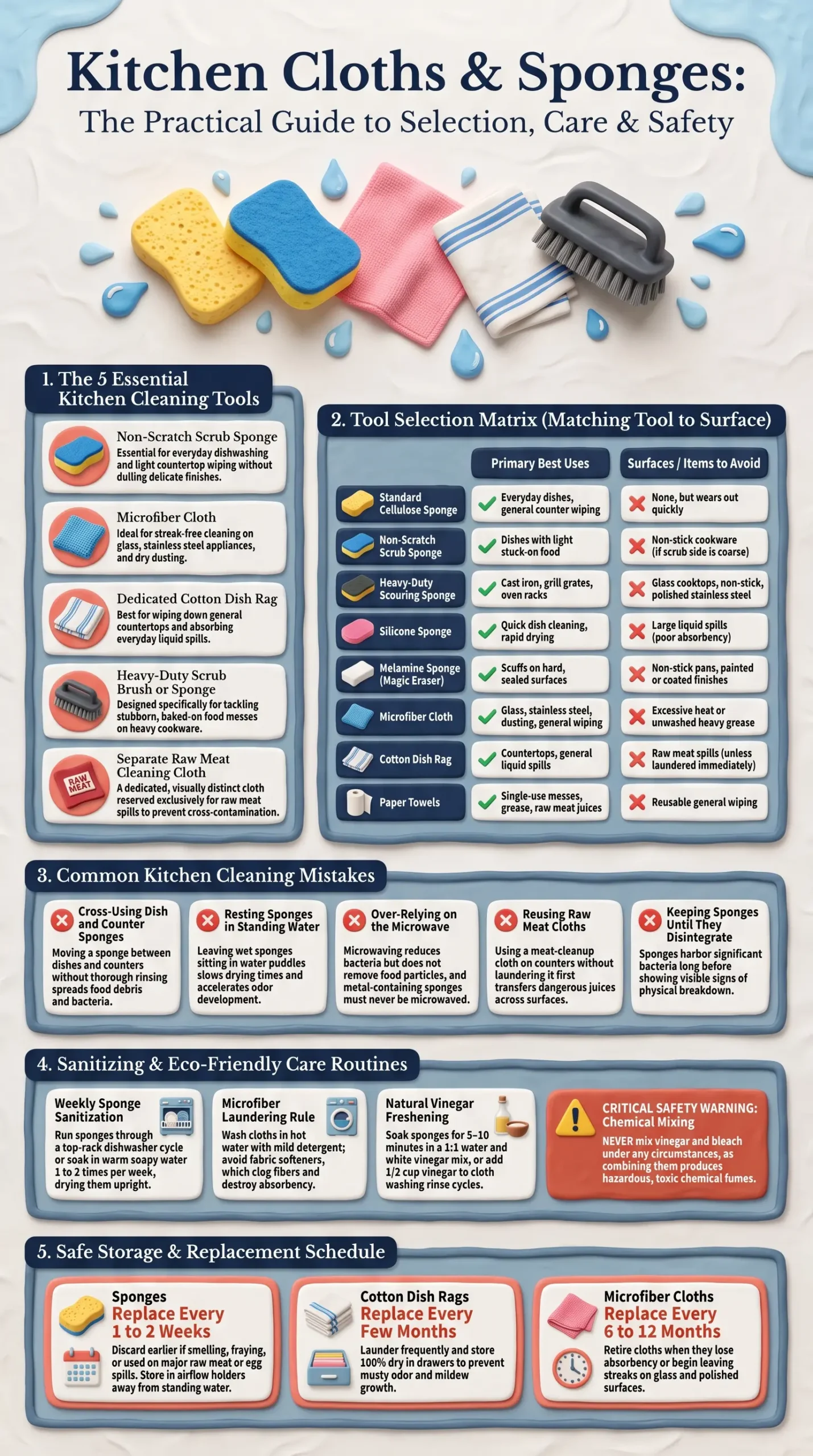
Photo Credit: Hobby Guidebook Editorial
Common Mistakes When Cleaning Kitchen Cloths and Sponges
A sponge or cloth that isn't cleaned regularly can end up spreading more bacteria than it removes. Some of the most common mistakes include:
- Using the same sponge for dishes and countertop wiping without rinsing well in between. Food residue left in a sponge creates a place for bacteria to grow.
- Leaving a wet sponge sitting in a puddle at the sink. Sponges dry out slower this way, and a damp sponge left too long tends to develop odor faster.
- Never replacing a sponge until it visibly falls apart. A sponge that looks fine can still hold onto bacteria long after it stops looking new.
- Using one cloth for raw meat cleanup and then reusing it on countertops without washing it first. This is one of the more serious mistakes, since raw meat juices can carry bacteria that need proper washing to remove.
- Microwaving a sponge as the only way to clean it. Heating a wet sponge in the microwave can help reduce some bacteria, but it doesn't remove food debris, and a sponge that's falling apart or has any metal scouring material should never go in the microwave at all.
How to Clean and Sanitize Sponges and Cloths
Keeping cleaning tools clean is just as important as using the right one for the job. A dirty sponge or cloth can undo the work it's supposed to be doing.
For sponges:
- Rinse the sponge thoroughly after each use, squeezing out food particles and excess water.
- Once or twice a week, run the sponge through a full cycle in the dishwasher (top rack, if the sponge is dishwasher safe) or soak it in a solution of warm water and a small amount of dish soap for several minutes.
- Let the sponge air dry fully between uses, ideally standing up rather than lying flat in water.
- Replace the sponge every one to two weeks, sooner if it starts to smell, fray, or lose its shape.
For cloths:
- Wash cotton rags and microfiber cloths in the washing machine using a mild detergent, ideally on a hot water setting for cloths used on raw meat spills or heavy grime.
- Avoid washing microfiber cloths with fabric softener, since it can coat the fibers and reduce their ability to grab dust and grease.
- Let cloths dry fully before storing them in a drawer, since damp cloths stored in a closed space can develop mildew odor.
- Keep a rotation of at least three to four cloths so you're never forced to reuse a dirty one out of necessity.
If you'd rather rely on simple pantry ingredients instead of commercial disinfecting sprays for this kind of routine cleanup, the Natural Kitchen Cleaning Ingredients guide covers options like vinegar and baking soda that work well for many everyday kitchen tasks, sponges and cloths included.
Commercial Cleaner vs Natural Method for Cloths and Sponges
There's more than one way to keep cleaning tools sanitary, and the right choice depends on convenience, cost, and personal preference.
Commercial disinfecting sprays or wipes:
- Convenient and fast for quick sanitizing between deeper cleans
- Formulated to target bacteria on hard surfaces, though effectiveness on porous sponges varies
- Always check the label to confirm the product is meant for the material you're using it on
Natural methods (vinegar soak, hot water and soap, dishwasher cycle):
- Lower cost over time since they use ingredients most kitchens already have
- Generally gentler on cloth fibers, especially microfiber
- Require a bit more hands-on effort, like measuring a vinegar soak or running a full dishwasher cycle
Neither approach is universally better. A commercial disinfecting wipe might be the faster choice on a busy weeknight, while a vinegar soak might make more sense as part of a weekly routine. What matters most is consistency, since even the best product doesn't help much if cloths and sponges only get cleaned occasionally.
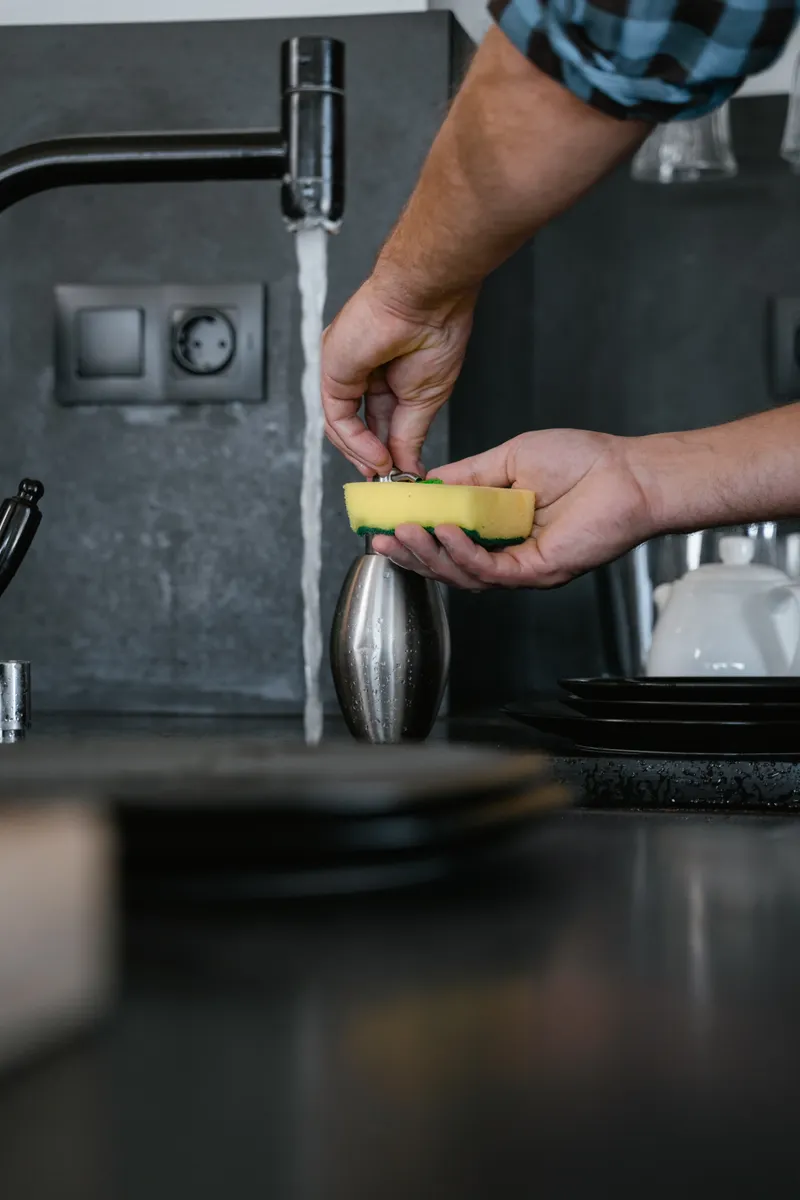
Photo Credit: MART PRODUCTION
Eco-Friendly Way to Clean Kitchen Cloths and Sponges
For a simpler, lower-waste approach, a basic solution of white vinegar and water works well for freshening most sponges and cloths. Soak the sponge in a mix of about one part white vinegar to one part water for five to ten minutes, then rinse thoroughly and let it air dry. This helps cut through odor-causing residue without relying on a scented commercial spray. For cloths, adding a half cup of white vinegar to the rinse cycle of a regular wash can help remove lingering smells, particularly with microfiber cloths that tend to hold onto odor if not washed often enough. Avoid combining vinegar with bleach at any point in this process, since mixing the two can create hazardous fumes; if you want to sanitize with bleach, do it separately from any vinegar-based step and always follow the product label's dilution instructions. Choosing washable, reusable cloths over disposable wipes also cuts down on ongoing waste, since a good microfiber cloth can be laundered and reused hundreds of times before it needs replacing.
Which Tools Are Useful and Which Are Optional
Not every kitchen needs every tool on the shelf at the cleaning supply store. Here's a simple way to think about it:
Genuinely useful for most kitchens:
- A basic sponge and a scrub brush for dishes
- A microfiber cloth or two for glass and stainless steel
- A dedicated cloth for raw meat cleanup
- Paper towels for one-time messes
Often optional, depending on your kitchen:
- Melamine erasers, useful mainly for stubborn scuffs on hard, sealed surfaces
- Silicone sponges, a nice alternative if you prefer something that dries fast and resists odor, but not essential
- Specialty grout brushes, only needed if your kitchen has tiled counters or a tiled backsplash with visible grout lines
Buying a large variety of specialty tools rarely improves results if the basics aren't being used consistently and replaced on schedule.
How to Store Cleaning Cloths and Sponges Safely
Storage affects both how long these tools last and how sanitary they stay between uses.
- Keep sponges out of standing water. A small caddy or holder that lets air circulate underneath helps sponges dry faster and last longer.
- Store cloths dry, not damp. A damp cloth folded into a drawer is a common cause of musty smells and mildew growth.
- Separate raw meat cloths from general-purpose ones. Keeping a different color or style for meat cleanup makes it easy to avoid mixing them up.
- Avoid storing sponges or cloths directly next to raw food prep areas where they might pick up contamination before they're even used.
- Keep unopened replacement sponges and cloths in a dry cabinet, away from moisture that could cause premature mildew even before use.
If you're building out a simple, low-cost cleaning routine using pantry staples, the Homemade Kitchen Cleaner Recipes guide pairs well with this one, since many of those recipes use the same cloths and sponges covered here.
Photo Credit: Polina Tankilevitch
How Often to Replace Kitchen Cloths and Sponges
Sponges wear out faster than most people expect. As a general guideline:
- Replace sponges every one to two weeks, or sooner if they start to smell or fall apart.
- Replace cotton dish rags every few months, assuming they're washed regularly.
- Replace microfiber cloths when they stop absorbing well or start leaving streaks, often after six months to a year of steady use, depending on wash frequency.
A sponge that's visibly falling apart, has a persistent odor even after washing, or has been used on a significant spill involving raw meat or eggs should be replaced right away rather than pushed for another few days of use.
Frequently Asked Questions
What tools and supplies do you actually need for the kitchen? A basic sponge, a microfiber cloth, a dish rag, a scrub brush, and a dedicated cloth for raw meat cleanup cover most everyday kitchen cleaning needs.
What are the essential tools or supplies for the kitchen? The essentials are a non-scratch sponge for dishes, a microfiber cloth for glass and stainless steel, and paper towels for one-time messes. Everything else is a helpful extra rather than a requirement.
How do you choose products that are appropriate for the kitchen? Match the tool to the surface: soft sponges and microfiber for delicate or shiny surfaces, and heavier scouring pads only for cookware that can handle abrasion, like cast iron.
Which tools are useful and which are optional for the kitchen? Sponges, scrub brushes, and microfiber cloths are useful in almost every kitchen. Specialty items like melamine erasers or grout brushes are optional and only needed for specific surfaces.
How should products or supplies for the kitchen be stored safely? Store sponges in a way that allows airflow, keep cloths fully dry before storing, and separate anything used for raw meat from general-purpose cleaning tools.
A Quick Note on Safety
Sponges and cloths used for raw meat or egg cleanup should always be washed separately from those used on other surfaces to avoid spreading bacteria. If using bleach to sanitize any cleaning tool, never combine it with vinegar or ammonia-based products, since this can produce hazardous fumes; follow the product label for correct dilution and ventilation. When in doubt about whether a cloth or sponge is still sanitary enough to use, it's simpler and safer to replace it than to keep pushing it past its useful life.
Back to the complete kitchen cleaning guide for more practical routines and product guidance.



Leave a Reply