
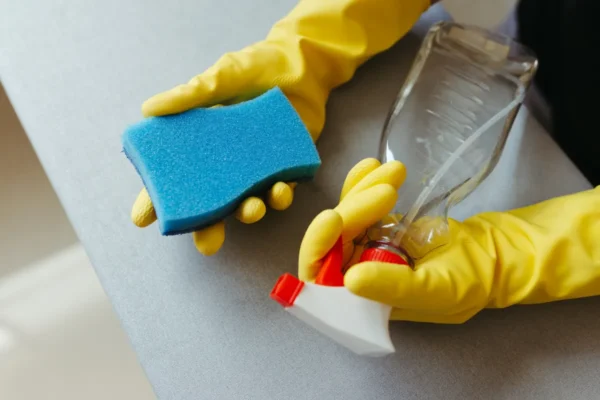
The right kitchen cleaning supplies make every job faster and safer. The wrong ones leave streaks, scratch surfaces, or tempt you to mix products you should keep apart. You do not need a store full of gear. A small, well-chosen set of tools and a few basic cleaners will handle almost everything in a kitchen.
This guide explains what to buy, what to skip, how to choose products that fit your surfaces, and how to store everything safely. It is part of our kitchen series, so you can also go Back to the complete kitchen cleaning guide for the full picture.
What Kitchen Cleaning Supplies Do You Actually Need?
Most kitchens need about ten basic items. Here is the essential kitchen cleaning kit in one list:
- Dish soap
- Microfiber cloths (several)
- A non-scratch sponge or scrub pad
- A soft-bristle scrub brush
- An all-purpose cleaner suited to your surfaces
- A degreaser for the stove area
- Baking soda
- A broom, dustpan, and mop that fit your floor type
- Rubber gloves
- A small trash bag or bin for scraps and wipes
That set covers daily wiping, weekly cleaning, and most stuck-on messes. Everything else in this guide is either a helpful extra or a tool for a specific job.
Essential Kitchen Cleaning Tools
Tools do the physical work, so it pays to know what each one is for.
Cloths and Sponges
Microfiber cloths (soft, fine-fiber cloths that trap dirt) are the workhorse. Keep several so you can use one for counters, one for the stove, and one for drying. A non-scratch sponge handles dishes and sink scrubbing. Replace sponges when they smell sour or fall apart, and wash cloths often in hot water if the label allows it. For more on picking the right type, read Choosing Kitchen Cleaning Cloths & Sponges.
Brushes and Scrapers
A soft-bristle brush reaches grout lines, faucet bases, and drain edges. An old toothbrush works for tight spots. A plastic scraper lifts burnt-on food from the stovetop or oven door without scratching. Avoid metal blades on glass cooktops and coated surfaces.
Floor Tools
A broom or vacuum picks up crumbs, and a dustpan finishes the job. For mopping, choose a mop and cleaner that match your floor. A flat microfiber mop uses less water, which helps on wood and laminate. Wring any mop well so the floor dries quickly.
Protective Gear
Rubber gloves protect your hands from soap, hot water, and stronger cleaners. Wear them for oven cleaning and long scrubbing sessions. If you use a strong product, keep a window open or run the range hood fan, and read the label first.
Other Handy Tools
A spray bottle, a small bucket, a squeegee for glass and tile, and a long-handled brush for bottles and narrow containers are all useful. If you add a spray bottle, label it clearly with what is inside. Never refill it with a different product without washing it out first. Keep each tool for its own job, since a brush that scrubbed the stove should not go near the cutting board. Tools that stay clean and dry between uses last longer and work better.
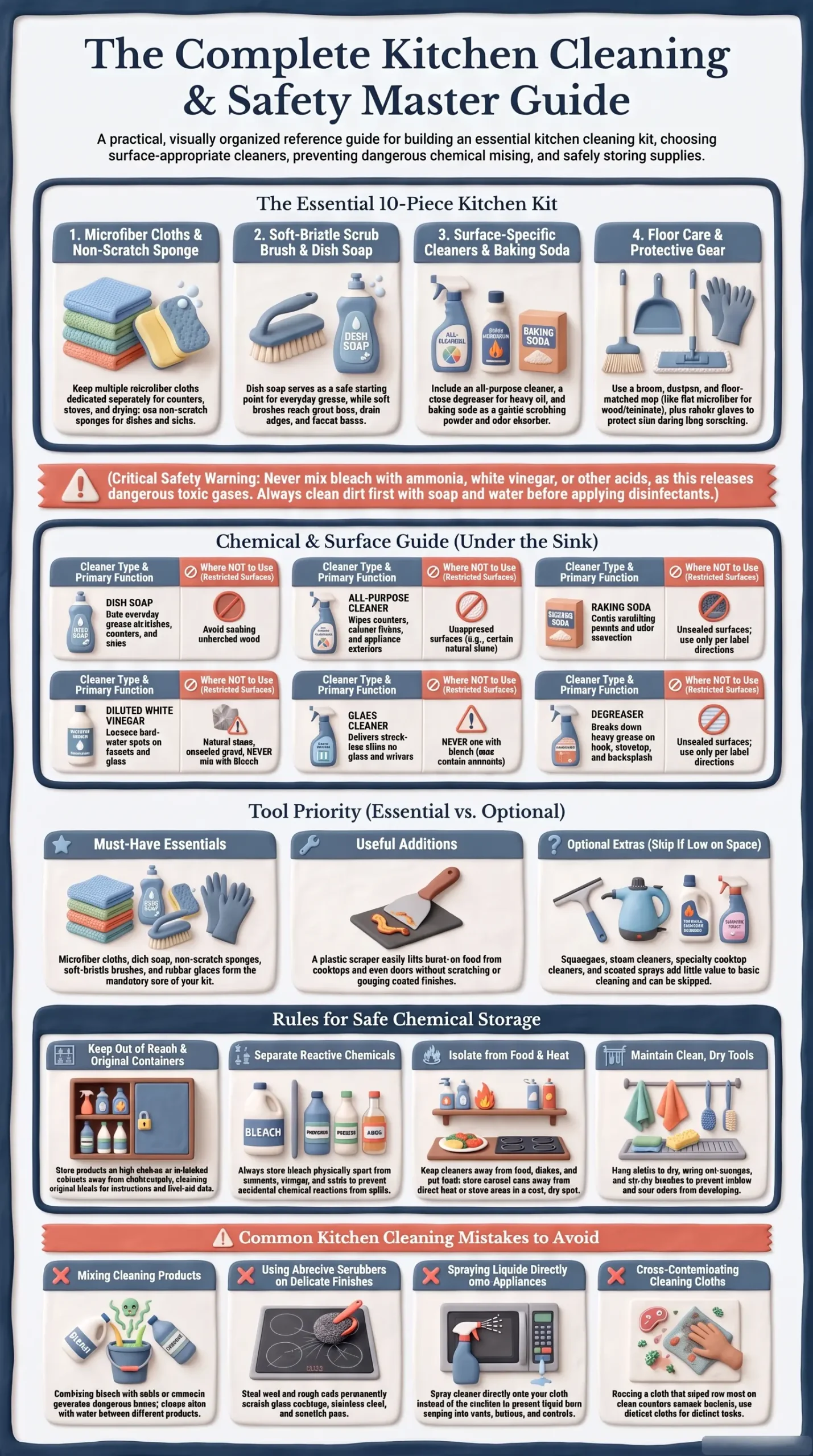
Photo Credit: Hobby Guidebook Editorial
Cleaning Products: What to Keep Under the Kitchen Sink
A short list of products is safer and cheaper than a crowded cabinet. Each product below has a clear job and a clear limit.
|
Product |
What it does |
Where it should not go |
|
Dish soap |
Cuts everyday grease on dishes, counters, and sinks |
Soaking unfinished wood |
|
All-purpose cleaner |
Wipes counters, cabinet fronts, and appliance exteriors |
Surfaces the label does not list, such as some natural stone |
|
Degreaser |
Breaks down heavy grease on the hood, stovetop, and backsplash |
Unsealed surfaces; use only as the label directs |
|
Baking soda |
Gentle scrubbing powder and odor absorber |
Glass cooktops and soft or polished finishes |
|
White vinegar (diluted) |
Loosens hard-water spots on faucets and some glass |
Natural stone, unsealed grout, and never with bleach |
|
Glass cleaner |
Streak-free glass and mirrors |
Never mix with bleach; some contain ammonia |
|
Disinfectant labeled for kitchen use |
Sanitizing counters after raw meat, when needed |
Any surface the label excludes |
A few points keep this list safe:
- Clean first, disinfect second. Soap and water remove the dirt that blocks a disinfectant. Then follow the label for how long the product must stay wet.
- Use one product at a time. Never mix bleach with ammonia, vinegar, or other acids. If you switch products, rinse the surface with water between them.
- "Natural" is not a safety guarantee. Vinegar can damage stone, and some essential oils irritate skin and pets.
- Check food-contact rules. Counters and cutting boards may need rinsing after cleaning, depending on the label.
Keep the list short. The fewer bottles you own, the less chance there is of a bad mix, a spill, or a forgotten product that sits unused for years. Store only what you actually use. When a bottle runs low, replace it only if it earned its place. If a product is not on the label list for a surface, skip it on that surface and use plain soap and water instead.
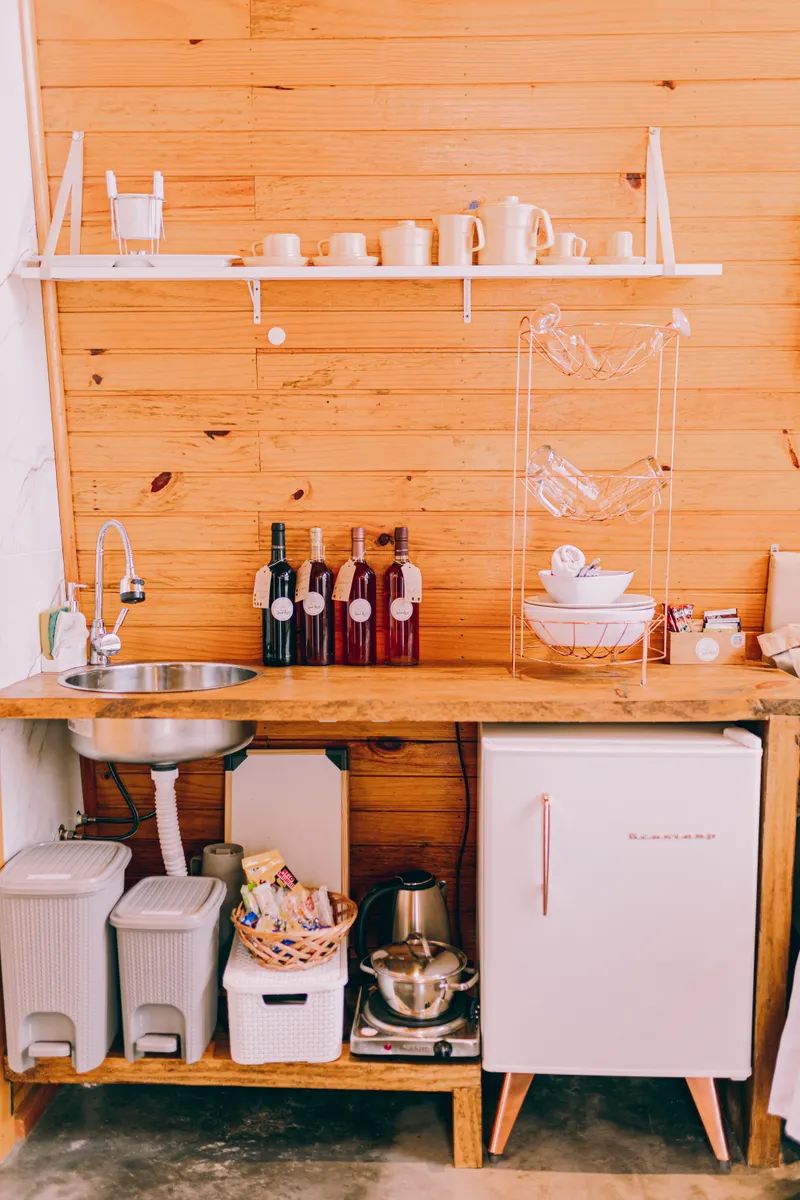
Photo Credit: Alexander Mass
Useful vs Optional: Which Kitchen Cleaning Tools Are Worth Buying?
Not every gadget earns its space. This table separates the must-haves from the extras.
|
Item |
Essential or optional |
Why |
|
Microfiber cloths |
Essential |
Wipe, dry, and polish without much product |
|
Dish soap |
Essential |
Safe starting point for most surfaces |
|
Non-scratch sponge |
Essential |
Scrubs without scratching most finishes |
|
Soft-bristle brush |
Essential |
Reaches grout, drains, and faucet bases |
|
Rubber gloves |
Essential |
Protect skin from water and cleaners |
|
Plastic scraper |
Useful |
Lifts burnt-on food without gouging |
|
Squeegee |
Optional |
Speeds up glass and tile drying |
|
Steam cleaner |
Optional |
Helps on some floors and grout; follow the maker's guidance |
|
Specialty cooktop cleaner |
Optional |
Needed only for glass or ceramic cooktops |
|
Scented sprays and gadgets |
Optional |
Add little to real cleaning |
A Simple Budget Kitchen Cleaning Kit
If money is tight, start with dish soap, three or four microfiber cloths, a non-scratch sponge, baking soda, and a spray bottle for an all-purpose cleaner that suits your counters. Add a degreaser only if you cook with a lot of oil. Add gloves if you have sensitive skin. This small kit can handle daily and weekly cleaning, and you can add items as real needs come up. To compare your own list against ours, use the Essential Kitchen Cleaning Tool Checklist.
How to Choose Products That Are Right for Your Kitchen
The best product is the one that cleans the mess without harming the surface. Use these questions to decide.
- What is the surface? Stainless steel, laminate, wood, painted cabinets, stone, glass, and tile all react differently. If you are unsure, start with dish soap and warm water.
- What is the mess? Grease needs a degreaser or hot, soapy water. Hard-water spots need a mild acid on surfaces that can handle it. Light dust and crumbs need only a dry cloth.
- What does the label say? Look for the surfaces listed, the contact time, rinsing directions, and warnings. The label beats general advice every time.
- Does the surface touch food? For counters and cutting boards, check whether you need to rinse after cleaning.
- Have you tested it? Try any new product on a small hidden spot first, such as the inside of a cabinet door. Let it dry, then look for dulling, color change, or stickiness.
Also check the appliance manual. Makers often say which cleaners to avoid on cooktops, stainless steel fronts, and nonstick coatings. When a label and a household tip disagree, follow the label.
Scent and marketing words are poor guides. "Heavy duty" does not mean safer or better for a delicate finish. A gentler product used more often usually protects surfaces better than a harsh one used rarely. If a product leaves a film or a sticky feel, it may be too strong or used in too large an amount, so rinse well and try less next time.

Photo Credit: Polina Tankilevitch
How to Store Kitchen Cleaning Supplies Safely
Cleaning products are chemicals, so where you keep them matters.
- Keep them out of reach. Store products where children and pets cannot get to them. A high shelf or a cabinet with a child-safety latch is better than an open space under the sink.
- Keep the original container and label. The label has the directions, the warnings, and the first-aid information. If you must use a spray bottle, label it and never use a food or drink container.
- Store away from food. Do not keep cleaners next to cereal, pet food, or dishes.
- Separate products that should not meet. Keep bleach away from ammonia-based products, vinegar, and other acids. Storing them apart lowers the risk of a spill that mixes them.
- Close lids tightly. This prevents leaks, spills, and fumes.
- Keep a cool, dry spot. Heat and damp can break down products and rust metal parts. Do not store aerosol cans near the stove or in direct sun.
- Let tools dry. Hang cloths to dry, wring out sponges, and let brushes air out so they do not grow odors or mildew.
Check your cleaning area every few months. Throw out empty bottles, containers with damaged labels, and old sponges. Follow your local rules for disposing of leftover chemicals rather than pouring them down the drain or into the trash.
Common Kitchen Cleaning Mistakes to Avoid
- Mixing products. The most serious mistake. Bleach with ammonia, vinegar, or other acids can release dangerous gases.
- Using abrasive pads on delicate surfaces. Steel wool and rough scrubbers can scratch glass cooktops, stainless steel, and nonstick pans.
- Using too much cleaner. Extra product leaves a film that attracts dirt and is harder to rinse.
- Using the same cloth or sponge for everything. A cloth that wiped raw meat juices should not wipe a clean counter or a cutting board.
- Keeping sponges too long. A sponge that stays damp and dirty can spread more grime than it removes.
- Spraying cleaner directly onto appliances. Spray the cloth instead, and keep liquid out of vents, buttons, and controls.
- Skipping the label and the manual. Product labels and appliance manuals come first.
- Buying a product for every problem. A small, versatile kit is easier to store, safer to use, and cheaper.
Kitchen Cleaning Supplies FAQs
What tools and supplies do you actually need for the kitchen?
Dish soap, several microfiber cloths, a non-scratch sponge, a soft brush, an all-purpose cleaner, baking soda, a broom and mop, and gloves. Add a degreaser if you cook with a lot of oil.
What are the essential tools or supplies for the kitchen?
The essentials are the items that do daily work: soap, cloths, a sponge, a brush, and floor tools. Specialty products are extras for specific surfaces or messes.
How do you choose products that are appropriate for the kitchen?
Match the product to the surface and the mess, read the label for approved surfaces and rinsing rules, check the appliance manual, and test in a hidden spot first.
Which tools are useful and which are optional for the kitchen?
Useful tools include a plastic scraper and spray bottle. Optional ones include a squeegee, a steam cleaner, and scented or single-purpose gadgets. Buy optional items only when a real need comes up.
How should products or supplies for the kitchen be stored safely?
Keep them in their original labeled containers, out of reach of children and pets, away from food, with lids closed. Store bleach separately from ammonia products and acids, and keep everything cool and dry.
What common mistakes should you avoid with the kitchen?
Avoid mixing cleaners, using harsh scrubbers on delicate surfaces, using too much product, reusing the same cloth everywhere, and ignoring labels and manuals.
Final Thoughts
A small set of the right tools and a few well-chosen products will do more than a cabinet full of extras. Start with the essentials, add only what you need, and store everything safely. When you are ready to put these supplies to work, See the full kitchen cleaning guide for the order to clean in, safety basics, and a daily, weekly, and monthly plan.
Safety note: Follow product labels and manufacturer instructions first. Do not mix cleaning products unless a label clearly says it is safe, and never combine bleach with ammonia, vinegar, or other acids. Ventilate the room and wear gloves when you use strong products. For electrical faults, a gas smell, or a situation you are unsure about, stop and contact a qualified professional.



Leave a Reply