
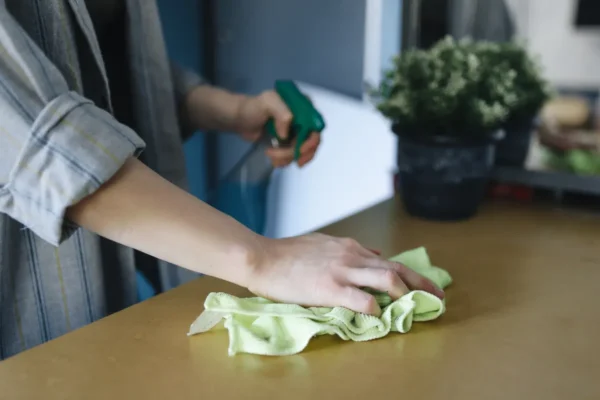
Standing at the store shelf trying to decide between a pack of microfiber cloths and plain cotton rags is a small decision, but it affects how well your kitchen actually gets clean day to day. Microfiber vs cotton kitchen cloths comes down to a tradeoff between fine detail work and heavy-duty absorbency, and most kitchens end up needing both rather than picking just one. This guide is part of the Kitchen Cleaning Tools & Supplies Guide, and it breaks down where each cloth type genuinely performs better, so you're not guessing which one to grab for a given mess.
Microfiber vs Cotton: The Quick Answer
Microfiber is a synthetic fabric made of extremely fine fibers, which lets it pick up dust, grease, and fine particles without leaving lint or streaks. It works best on glass, stainless steel, and general wiping where a streak-free finish matters.
Cotton is a natural, absorbent fabric that handles larger spills and heavier scrubbing well, but it tends to leave lint on shiny surfaces and doesn't grab fine dust the way microfiber does.
|
Factor |
Microfiber |
Cotton |
|
Best use |
Glass, stainless steel, dusting, streak-free wiping |
Spills, general counters, heavier scrubbing |
|
Absorbency |
Good, but not as high-volume as cotton |
Higher, soaks up liquid spills well |
|
Lint |
Minimal |
Can leave lint on glass or steel |
|
Durability |
Holds up to hundreds of washes if cared for |
Wears down and thins faster with heavy use |
|
Cost |
Slightly higher upfront |
Lower upfront, but replaced more often |
|
Washing needs |
No fabric softener, lower heat |
Tolerates hot water and regular detergent well |
What Is the Difference Between Microfiber and Cotton Cloths?
The difference starts at the fiber level. Microfiber is made from split synthetic fibers, usually a blend of polyester and polyamide, woven so tightly that the fabric has a huge amount of surface area for its size. That's what lets it trap dust, oil, and fine grime instead of just pushing it around. Cotton, on the other hand, is a natural fiber that's been used for cleaning cloths for generations, valued mainly for how much liquid it can hold and how well it tolerates hot water and heavy use.
In practical kitchen terms, this means microfiber tends to win on finish quality (streak-free glass, smudge-free stainless steel), while cotton tends to win on raw absorbency (soaking up a spilled glass of juice or wiping down a genuinely wet counter). Neither fabric is universally better. The right choice depends on the specific surface and type of mess you're dealing with. If you're not sure what belongs in your cleaning drawer beyond these two cloth types, the Essential Kitchen Cleaning Tool Checklist covers the full basics, from sponges to scrub brushes, so cloths aren't the only thing you're stocking up on.
When Microfiber Is the Better Choice
Microfiber cloths perform noticeably better in a few specific kitchen situations:
- Glass surfaces, including oven doors, glass cooktops (once cooled), and kitchen windows, where lint and streaking are the main concerns
- Stainless steel appliances, where fingerprints and smudges show easily and a lint-free finish matters
- Dusting on top of cabinets, appliance vents, and other dry surfaces where you want to trap particles rather than scatter them
- Polished or glossy countertops, where a soft touch avoids fine scratching
- General everyday wiping where a streak-free result is worth the slightly higher cost
Microfiber also tends to work well with just water alone for light dusting or touch-ups, since the fiber structure does a lot of the work without needing a cleaning solution every time.
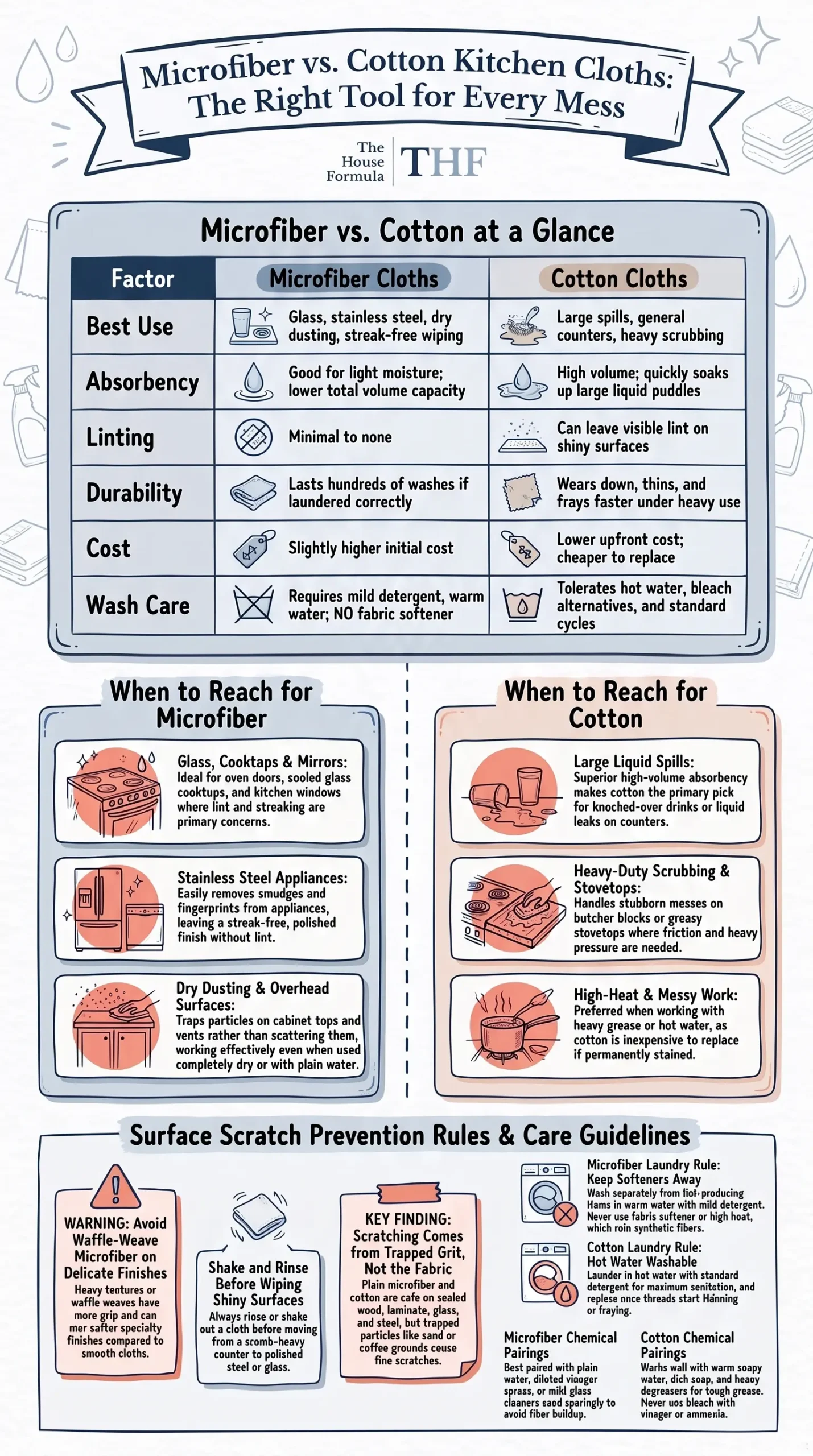
Photo Credit: Hobby Guidebook Editorial
When Cotton Is the Better Choice
Cotton cloths still earn their place in the kitchen for a different set of jobs:
- Larger spills, like a knocked-over glass of milk or a puddle from a leaking bag, where raw absorbency matters more than a streak-free finish
- Heavier scrubbing tasks, such as working on a stubborn spot on a butcher block counter or wiping down a particularly greasy stovetop before a more detailed cleanup
- High-heat washing needs, since cotton tolerates hot water and standard detergent without the fiber damage that can happen to microfiber over time with the wrong wash settings
- Situations where the cloth might get genuinely dirty or greasy, since cotton is generally cheaper to replace and doesn't feel like as much of a loss if it gets stained
- Everyday counter wiping in kitchens where a slight bit of lint on a laminate or wood surface doesn't matter much
Microfiber vs Cotton Without Scratching the Surface
Scratching is less about the fabric type and more about texture and what's mixed into the cloth. Plain microfiber and plain cotton are both generally safe on most sealed kitchen surfaces, including laminate, sealed wood, glass, and stainless steel, as long as the cloth itself is clean and free of trapped grit. The real risk comes from what's on the cloth, not the fabric itself: a cotton rag that picked up sand, coffee grounds, or another gritty particle can drag that grit across a surface and cause fine scratches, and the same is true for a microfiber cloth used without rinsing after wiping up something abrasive.
A few practical habits reduce scratching risk with either fabric:
- Shake out or rinse the cloth before using it on a glossy or polished surface, especially if it was last used somewhere with crumbs or grit.
- Avoid using the same cloth on a rough surface and then immediately on glass or steel without a rinse in between.
- Skip textured or waffle-weave microfiber on very soft or easily marred finishes, since some heavier microfiber textures have more grip than a smooth one.
- Test a new cloth on a small section first if you're using it on a natural stone or specialty finish for the first time, since some coatings react differently to fiber texture than others.
Neither fabric is inherently scratch-proof, and both can cause fine marks on a delicate finish if used carelessly. The safer approach is paying attention to what's been picked up by the cloth before wiping a shiny or polished surface.
Tools Needed for Microfiber and Cotton Cleaning
You don't need much beyond the cloths themselves, but a few supporting supplies make both fabrics more effective.
For microfiber:
- A few clean microfiber cloths, ideally kept separate from ones used on greasy surfaces
- A mild, low-suds laundry detergent for washing (fabric softener coats the fibers and reduces effectiveness)
- A spray bottle with water or a light cleaning solution for glass and steel
For cotton:
- A rotation of at least three or four rags so a dirty one is never the only option
- Standard laundry detergent, since cotton tolerates regular washing well
- A designated bin or hamper to keep dirty kitchen rags separate from other household laundry
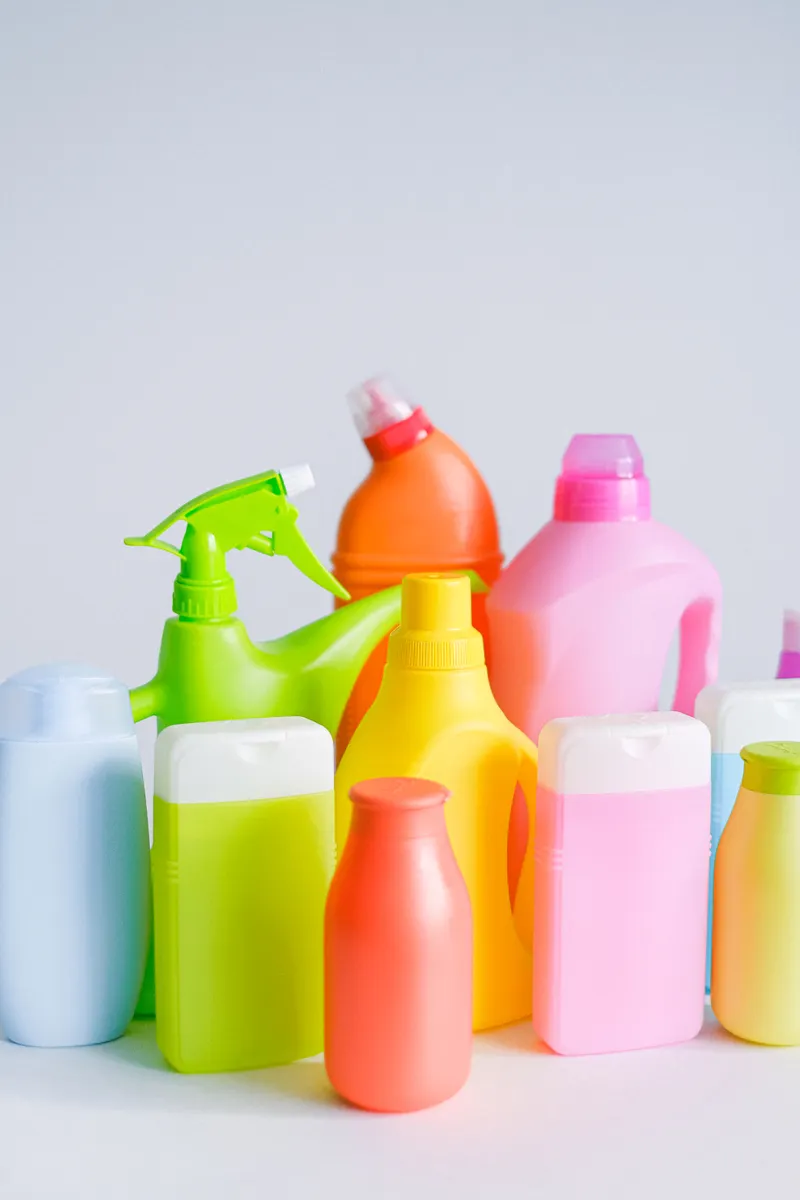
Photo Credit: Anna Shvets
Commercial Cleaner vs Natural Method for Each Cloth Type
Both fabrics pair differently with cleaning products, and it's worth knowing which combinations make sense.
Microfiber pairs well with:
- Plain water for light dusting and touch-ups
- A diluted vinegar and water spray for glass and stainless steel
- Mild commercial glass cleaners, used sparingly to avoid buildup on the fibers over time
Cotton pairs well with:
- Warm water and dish soap for general spills and counters
- Stronger degreasing sprays for stovetop or greasy cabinet cleanup, since cotton holds up better to repeated heavy-duty use
- Commercial disinfecting wipes as a one-time-use alternative when a cotton rag isn't the right tool for a sanitizing job
Neither fabric should be used with bleach-soaked cloths that are then reused without a full wash cycle in between, and bleach should never be combined with vinegar or ammonia-based products on any cloth, since that combination can produce hazardous fumes.
How to Wash and Care for Each Fabric
Microfiber cloths:
- Wash separately from cotton and other lint-producing fabrics, since lint clings to microfiber's fine fibers.
- Use a mild detergent and skip fabric softener entirely.
- Wash in warm, not hot, water to protect the fiber structure.
- Air dry or tumble dry on low heat, since high heat can damage the synthetic fibers over repeated cycles.
Cotton cloths:
- Wash in hot water for cloths used on greasy or heavily soiled messes.
- Standard detergent works fine, and fabric softener isn't a concern the way it is with microfiber.
- Tumble dry on a normal setting without issue.
- Replace once the fabric thins out or starts fraying at the edges, since a worn-out rag holds less liquid and can shed threads onto surfaces.
Washing habits matter, but so does knowing which cloth or sponge to reach for in the first place. The Choosing Kitchen Cleaning Cloths & Sponges guide walks through building out a full set that covers dishes, counters, and glass without overbuying, which pairs naturally with the microfiber-versus-cotton decision covered here.
Advantages and Limitations at a Glance
Microfiber advantages: streak-free finish, traps fine dust well, reusable for hundreds of washes, works with just water for light jobs. Microfiber limitations: less absorbent for large spills, needs specific washing care (no fabric softener, moderate heat), slightly higher upfront cost.
Cotton advantages: high absorbency, tolerates hot water and heavy scrubbing, inexpensive to replace, widely available. Cotton limitations: leaves lint on glass and polished steel, wears out faster with heavy daily use, less suited to a truly streak-free finish.
Photo Credit: Valentin Ivantsov
Which Cloth Fits Which Kitchen Situation
A simple way to decide in the moment: if the job involves glass, stainless steel, or dusting, reach for microfiber. If it involves a spill, a wet mess, or heavy scrubbing, reach for cotton. Most kitchens do best with a small stock of both rather than trying to make one fabric handle every job. Keeping two or three microfiber cloths for glass and steel, alongside three or four cotton rags for spills and general counters, covers nearly everything without overcomplicating the cleaning drawer. The same logic applies just outside the kitchen too. If your bathroom routine could use the same comparison, the Microfiber vs Cotton Cloths for Bathroom Cleaning guide covers how these fabric tradeoffs play out on tile, glass shower doors, and fixtures.
Frequently Asked Questions
What is the difference between microfiber and cotton cloths for kitchen cleaning? Microfiber is a synthetic fabric that traps fine dust and grease without leaving lint, best for glass and stainless steel. Cotton is a natural, highly absorbent fabric better suited to spills and heavier scrubbing.
When is microfiber preferable to cotton cloths for kitchen cleaning? Microfiber works better for glass, stainless steel, dusting, and any surface where a streak-free, lint-free finish matters.
When is cotton preferable to microfiber for kitchen cleaning? Cotton is the better choice for large spills, heavier scrubbing jobs, and situations where hot water washing and lower cost matter more than a polished finish.
What are the main advantages and limitations of microfiber and cotton cloths for kitchen cleaning? Microfiber offers a streak-free finish and long-term reusability but needs careful washing and isn't as absorbent for big spills. Cotton offers strong absorbency and easy care but leaves lint on shiny surfaces and wears out faster.
Which materials or situations are suitable for microfiber versus cotton in kitchen cleaning? Microfiber suits glass, stainless steel, and dry dusting. Cotton suits wet spills, general counter wiping, and tougher scrubbing jobs like stovetops.
Browse the complete kitchen cleaning guide for more practical tools and routines for every part of the kitchen.





Leave a Reply