

If you share your kitchen with a dog or cat, the products under your sink matter more than you might think. Pets walk on the floor you mop, sniff the counters you wipe, and sometimes lick their paws right after crossing a freshly cleaned surface. Kitchen cleaning safe for pets isn't about being overly cautious. It's about understanding which everyday ingredients can cause real harm to a curious nose or a paw that gets licked clean.
This guide is part of Eco-Friendly & Non-Toxic Kitchen Cleaning, and it focuses specifically on keeping cats and dogs safe while you keep your kitchen clean.
Why Pet Safety Changes How You Clean
A kitchen with pets in the house has more contact points than one without. Dogs and cats jump on counters, walk across floors, and investigate open cabinets. Anything sprayed, mopped, or left within reach can end up on fur, paws, or a curious tongue.
Some common household cleaning chemicals are genuinely toxic to cats and dogs, even in small amounts. Bleach and ammonia-based products can irritate the respiratory tract and skin, and cats are especially sensitive to certain essential oils, including tea tree, citrus, cinnamon, and pine oils, which can cause vomiting, tremors, or liver problems if ingested or absorbed through the skin. Dogs are generally more tolerant of some plant oils but can still react badly to concentrated products.
This doesn't mean every cleaner is dangerous. It means the goal is choosing products and methods with pets in mind, and understanding what to avoid rather than guessing.
Are Natural or Homemade Cleaners Automatically Safer?
No. This is one of the most common misunderstandings in pet-safe cleaning. "Natural" does not automatically mean "safe for pets."
- White vinegar is generally considered low-risk for pets when diluted and used on appropriate surfaces, but it is still an acid, and cats in particular may dislike the smell enough to avoid the area, which isn't a safety issue but is worth knowing.
- Essential oils marketed as natural are frequently the most dangerous ingredient in a homemade cleaner for cats. Tea tree oil, citrus oil, and pine oil should be avoided in any cleaner used in a home with cats.
- Baking soda is safe in small amounts but can cause stomach upset if a pet ingests a large quantity directly.
- Castile soap, a plant-based liquid soap, is a reasonably gentle option, but concentrated or undiluted, it can still irritate skin and paws.
The safer approach is to check every ingredient, whether it comes from a bottle or your own pantry, rather than assuming "homemade" equals "harmless."
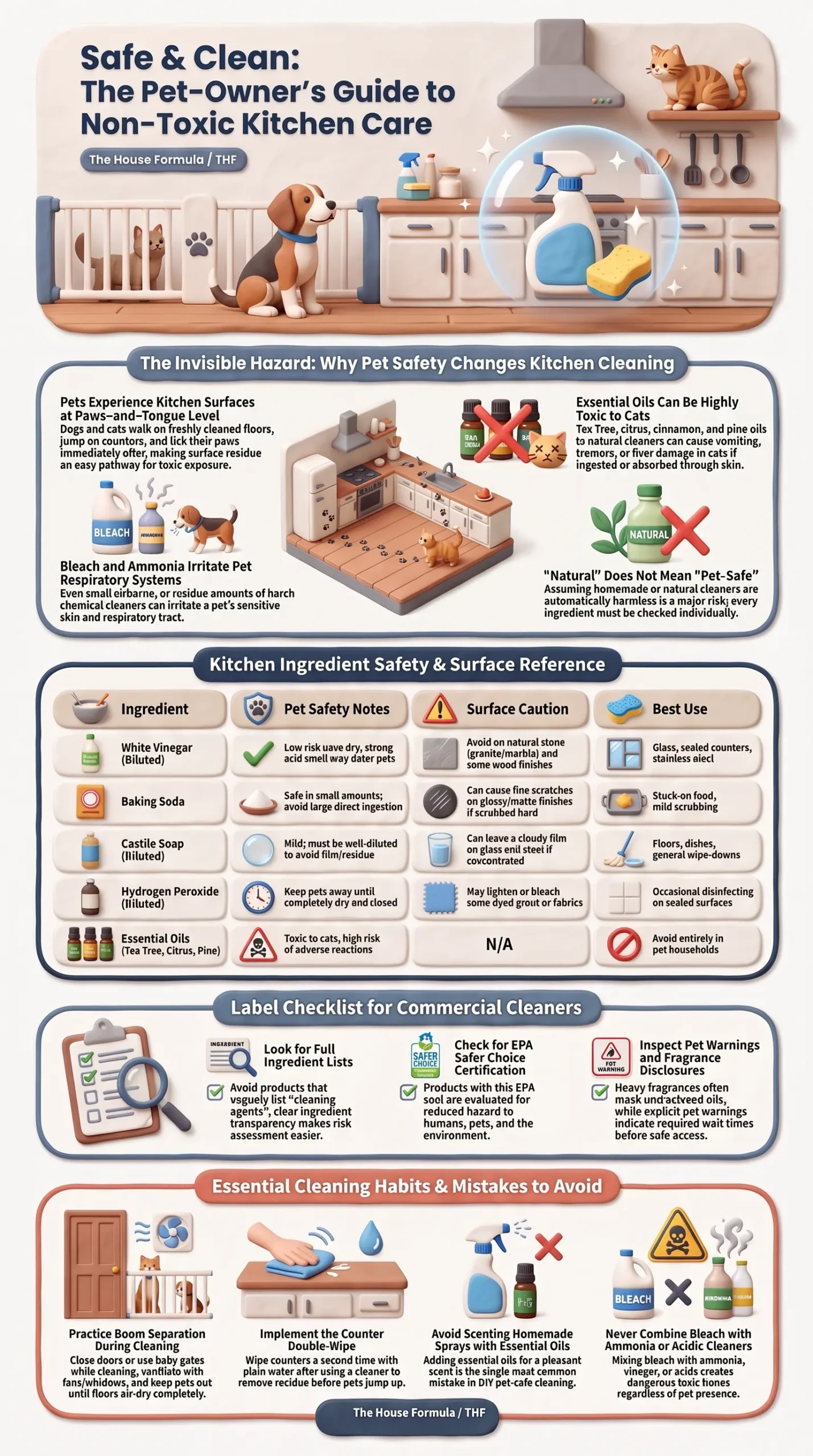
Photo Credit: Hobby Guidebook Editorial
What to Check on a Cleaning Product Label
Before you buy or mix a cleaner for a kitchen shared with pets, look for a few specific things on the label.
- Full ingredient list. Products that disclose ingredients clearly are easier to evaluate than those that only list "cleaning agents."
- Warnings about pets or children. If a label specifically says to keep pets away during and after use, take that instruction seriously and follow the stated wait time before allowing pets back into the room.
- EPA Safer Choice label. Products carrying this certification from the U.S. Environmental Protection Agency have been reviewed for reduced hazard to people, pets, and the environment, though the label doesn't mean a product is completely risk-free for every situation.
- Fragrance disclosure. Heavily fragranced products often contain undisclosed essential oils or synthetic compounds that may not be tested for pet safety.
- Ventilation instructions. If a label calls for open windows or ventilation during use, that's a signal the fumes are strong enough to matter, for pets as well as people.
If a product doesn't list ingredients and offers no pet guidance, it's reasonable to be cautious rather than assume it's fine.
Lower-Impact Cleaning Methods That Work Well in the Kitchen
Several simple, lower-impact methods handle most routine kitchen cleaning without introducing harsh chemicals into a space your pet uses daily.
- Diluted white vinegar works well on sealed countertops, glass, and stainless steel, cutting through everyday grease and water spots. Avoid it on natural stone like granite or marble, since the acid can dull or etch the surface over time.
- Baking soda paste (baking soda mixed with a small amount of water) lifts stuck-on food from stovetops and sinks without scratching most finishes, though it should be tested first on delicate or matte surfaces.
- Plain hot water and a microfiber cloth remove a surprising amount of daily grime from cabinet fronts and counters, especially between deeper cleanings.
- Diluted castile soap is a mild option for floors and dishes, though it should be well diluted to avoid leaving a residue that pets could later lick from the floor.
- Steam cleaning on sealed hard floors can sanitize without chemical residue at all, which is worth considering for households where a pet spends a lot of time at floor level.
For more ingredient-based recipes and ratios, Zero-Waste Kitchen Cleaning Supplies covers reusable tools and low-waste products that pair well with these methods.
Keeping Pets Out During Cleaning
Even a pet-safe cleaner benefits from a little separation while it's being used and while surfaces dry.
- Close the kitchen door or use a baby gate while spraying countertops or mopping floors.
- Ventilate the room by opening a window or running an exhaust fan, especially with vinegar-based sprays, since strong smells can bother a cat or dog even if the ingredient itself is low-risk.
- Let floors air dry completely before letting pets back in. A damp floor picks up more residue on paws than a dry one.
- Wipe counters a second time with plain water after using any cleaner, then let them dry before your pet has access, especially if the counter is a surface your cat likes to walk across.
- Store all cleaning products, including natural ones, in a closed cabinet. Curious pets have been known to knock over spray bottles or chew through packaging.
This kind of separation is a small habit that meaningfully reduces the chance of a pet coming into contact with anything harsh.

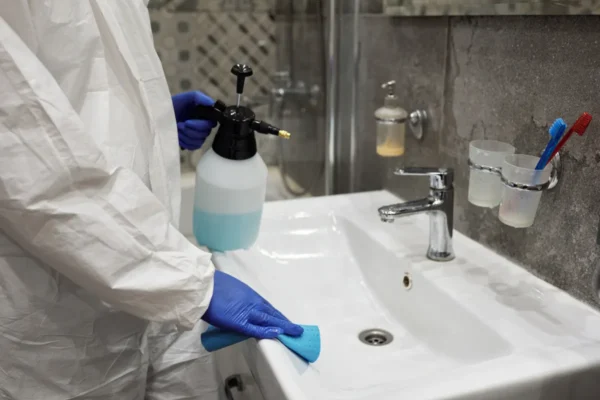
Photo Credit: Ron Lach
Can a Homemade Cleaner Damage the Kitchen?
Yes, and this matters as much as pet safety does. A cleaner can be gentle on pets and still harmful to a surface if it's used incorrectly.
- Vinegar can etch natural stone counters, damage grout sealant with repeated use, and dull certain wood finishes.
- Baking soda, while mild, can leave fine scratches on glossy or matte finishes if scrubbed too aggressively rather than used as a soft paste.
- Undiluted castile soap can leave a cloudy film on glass and stainless steel, which then requires extra rinsing.
If you're building your own cleaning routine from scratch, DIY Eco-Friendly Kitchen Cleaners walks through ratios and surface-specific guidance in more depth. As a general rule, test any new mixture on a small, hidden area first, and always check your countertop or floor manufacturer's care instructions before applying anything acidic.
Quick Comparison: Common Natural Ingredients
|
Ingredient |
Pet Safety Notes |
Surface Caution |
Best Use |
|
White vinegar (diluted) |
Generally low risk once dry; strong smell may deter pets |
Avoid on natural stone, some wood finishes |
Glass, sealed counters, stainless steel |
|
Baking soda |
Safe in small amounts; avoid large ingestion |
Test on glossy/matte finishes first |
Stuck-on food, mild scrubbing |
|
Castile soap (diluted) |
Mild; dilute well to avoid residue |
Can film glass/steel if too concentrated |
Floors, dishes, general wipe-downs |
|
Hydrogen peroxide (diluted) |
Keep pets away until fully dry and rinsed |
Can lighten some dyed grout or fabric |
Occasional disinfecting on sealed surfaces |
|
Essential oils (tea tree, citrus, pine) |
Not recommended in households with cats |
N/A |
Avoid in pet households |
Common Mistakes to Avoid
A few habits show up again and again in kitchens shared with pets, and they're easy to fix once you know to look for them.
- Adding essential oils to a homemade spray for scent, without checking pet safety first. This is the single most common mistake in DIY pet-safe cleaning.
- Leaving a bucket or spray bottle unattended on the floor or counter while cleaning.
- Assuming "eco-friendly" always means "pet-safe." The two labels overlap often but aren't identical.
- Skipping the rinse step after using vinegar or soap-based cleaners, leaving residue a pet could lick from a paw.
- Mixing cleaning products together to boost strength. Never combine bleach with ammonia, vinegar, or other acids, since this can produce dangerous fumes; this applies regardless of whether pets are in the home, but it's worth repeating because kitchens are where these products are most often stored side by side.

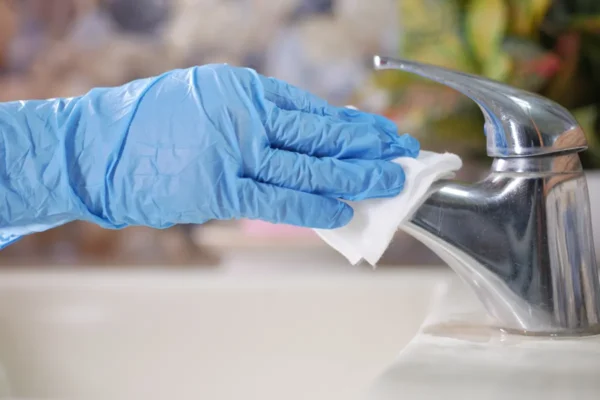
Photo Credit: Bethany Ferr
When a Store-Bought Pet-Safe Cleaner Makes Sense
Homemade options work well for routine cleaning, but there are times a commercial product designed with pet safety in mind is the more practical choice, particularly for disinfecting after raw meat prep, cleaning up pet-related messes near food areas, or when you want a consistent, tested formula rather than a mixed batch.
Look for products with the EPA Safer Choice label, a full ingredient list, and no essential oils known to affect cats. These products are formulated to break down predictably and are generally easier to rinse fully than some homemade mixtures, which reduces the residue your pet might come into contact with later.
If pet safety is a priority in more than one room of your home, Non-Toxic Bathroom Cleaning for Pet Owners covers the same approach applied to bathroom surfaces and litter box areas.
Frequently Asked Questions
Are natural or homemade cleaners automatically safer for the kitchen? No. Some natural ingredients, especially essential oils like tea tree and citrus, are genuinely toxic to cats. Safety depends on the specific ingredient and how it's used, not on whether it's labeled natural.
Which lower-impact cleaning methods work well for the kitchen? Diluted vinegar on sealed surfaces, baking soda paste for stuck food, diluted castile soap, plain hot water with a microfiber cloth, and steam cleaning on sealed hard floors all work well without heavy chemical residue.
What should you check on a cleaning-product label for the kitchen? Check for a full ingredient list, any pet or child warnings, fragrance disclosure, and certifications like EPA Safer Choice. Follow any stated wait time before letting pets back into a cleaned area.
Can a homemade cleaner damage the kitchen? Yes. Vinegar can etch natural stone and dull some wood finishes, baking soda can scratch glossy surfaces if scrubbed too hard, and undiluted castile soap can leave a film on glass and steel. Always test a small area first.
What common mistakes should you avoid with the kitchen? Adding essential oils to homemade sprays without checking pet safety, leaving cleaning products unattended, skipping the rinse step, and mixing cleaning chemicals together are the most frequent and most avoidable mistakes.
For more kitchen-specific cleaning guidance beyond pet safety, read the full kitchen cleaning guide.
A note on safety: Always follow the manufacturer's instructions on any cleaning product, and never combine cleaning chemicals unless the combination is explicitly confirmed safe, particularly bleach with ammonia, vinegar, or other acids. Keep pets out of the room during cleaning and until surfaces are fully dry, and store all products, including homemade mixtures, out of reach of curious paws. If you suspect your pet has ingested or been exposed to a cleaning product, contact a veterinarian or a pet poison control hotline right away.

Leave a Reply