

A refrigerator has more moving parts to keep clean than most people realize. There's the interior, the exterior, the door seal, the drip pan, the coils, and the freezer, and each one collects grime at a different pace. Trying to clean all of it on the same day, every time, either means doing too much too often or letting some parts go longer than they should. A refrigerator cleaning schedule solves this by matching each task to how often it actually needs attention.
This guide breaks down which tasks belong on a daily, weekly, monthly, and seasonal schedule, along with how to adjust the routine based on your household's habits. It's part of the Refrigerator Cleaning Guide, which covers detailed steps for each individual task mentioned here.
Refrigerator Cleaning Schedule at a Glance
Here's a simple breakdown of how often each major task typically needs doing for an average household:
|
Frequency |
Tasks |
|
Daily |
Wipe visible spills, check for expired food |
|
Weekly |
Wipe down shelves and door seal, check for odors |
|
Monthly |
Full interior wipe-down, clean drawers and bins |
|
Every 3 to 6 months |
Clean exterior thoroughly, check drip pan, vacuum coils |
|
Every 6 to 12 months |
Deep clean freezer, defrost if needed, inspect door seal for wear |
This is a starting point rather than a fixed rule. Households that cook often, store a lot of fresh produce, or have more people using the fridge daily may need to shift some of these tasks to a shorter interval.
Daily Tasks
Daily refrigerator care isn't really about deep cleaning. It's about catching small messes before they turn into bigger ones.
- Wipe up spills right away. A fresh spill takes seconds to clean, but the same spill left overnight can dry into a sticky residue that takes much longer to remove.
- Do a quick visual check for expired or spoiling food. This takes less than a minute and prevents forgotten leftovers from turning into a bigger cleaning job later.
These two habits alone prevent most of the buildup that eventually requires a more involved cleaning session.
Weekly Tasks
A slightly more thorough check once a week keeps small issues from becoming bigger ones.
- Wipe down visible shelf surfaces, especially any spots where spills happened during the week.
- Check the door seal for crumbs or sticky residue in the folds. A soft cloth or brush handles this quickly.
- Smell test the interior. A faint odor is often the first sign that something needs attention, whether it's a forgotten container or the start of buildup somewhere less visible.
This weekly pass usually takes ten minutes or less and catches most problems before they require a deeper clean.
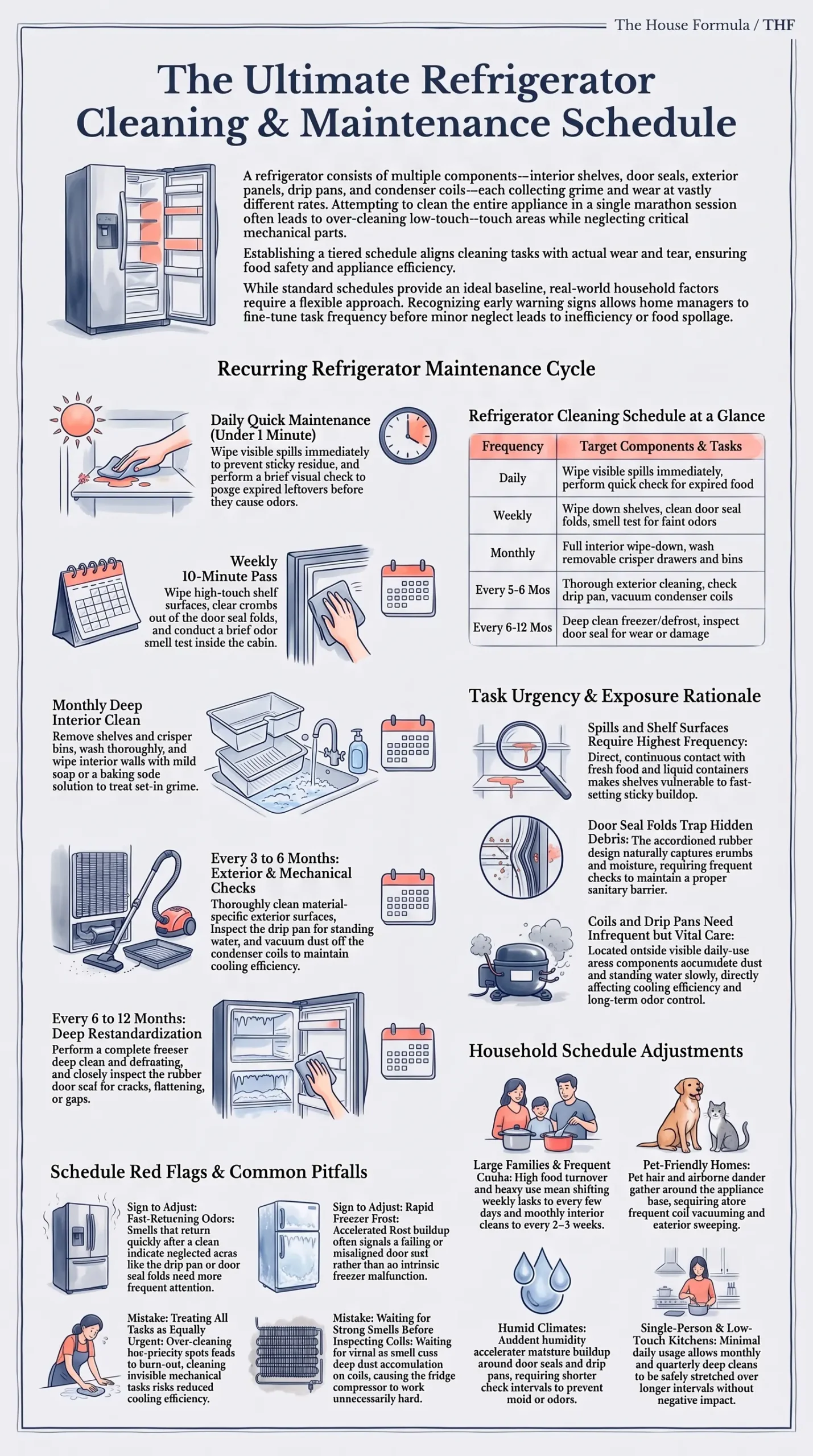
Photo Credit: Hobby Guidebook Editorial
Monthly Tasks
Once a month, a fuller interior clean is worth doing for most households. This includes removing shelves and drawers, washing them separately, and wiping down the interior walls with a mild soap and water solution or a baking soda and water mix for odor control.
This is also a good time to check crisper drawers closely, since produce residue tends to build up in corners that don't get noticed during a quick weekly wipe. A full walkthrough of this process, including how to handle different drawer materials and what to do about set-in spills, is covered in our guide on Refrigerator Interior Cleaning, which goes into more detail than a schedule overview can.
Households that cook frequently, or that go through a lot of fresh produce, sometimes find that a monthly interior clean isn't quite enough and shift to every two to three weeks instead, since spills and expired food accumulate faster in that kind of kitchen.
Every 3 to 6 Months
This is where the tasks that don't touch food directly come in. The refrigerator's exterior, including the door handles, top surface, and sides, tends to collect fingerprints, dust, and kitchen grease over time, even if it looks clean at a glance.
A thorough exterior clean, appropriate to your fridge's finish (stainless steel, painted metal, or a textured plastic panel all respond differently to certain products), is worth doing every few months. Our guide on Refrigerator Exterior Cleaning covers material-specific methods, since a product that works well on stainless steel isn't always right for a painted or textured surface.
This window is also a reasonable time to check the drip pan for standing water or odor and to vacuum dust off the condenser coils, either behind or underneath the unit depending on the model. Dust buildup on coils can make the fridge work harder to stay cool, so this task pulls double duty as both a cleaning step and a small efficiency check.
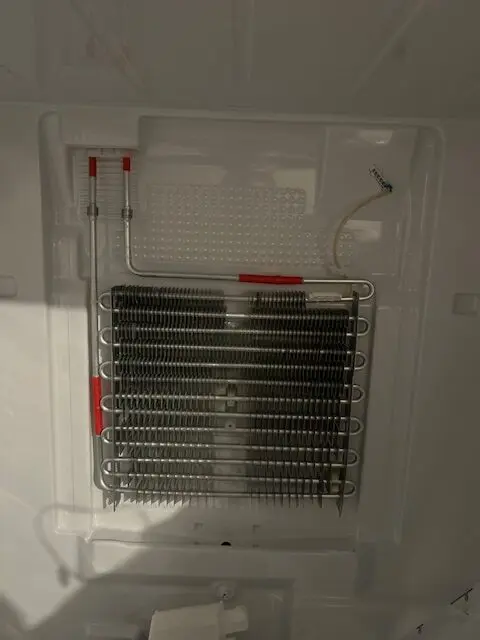
Photo Credit: Internet
Every 6 to 12 Months
A few tasks only need attention once or twice a year for most households. A full freezer clean, including defrosting if your model requires it, falls into this category, since frost buildup and freezer odor typically develop slowly.
This is also a good time to inspect the door seal more closely rather than just wiping it. Look for cracks, flattened sections, or spots where the rubber no longer sits flush against the door frame. A seal that's simply dirty responds well to regular cleaning, but one that's worn or damaged usually needs replacing rather than continued cleaning attempts.
Which Tasks Need More Frequent Attention
Not every part of the fridge wears at the same rate, and understanding why helps explain the schedule above rather than just following it blindly.
- Spills and shelf surfaces need the most frequent attention because they're in direct, constant contact with food and liquids.
- The door seal needs more frequent checks than people expect, since its folded design traps crumbs and moisture in a way flat surfaces don't.
- The exterior can often go longer between deep cleans, since it's not exposed to food residue the same way, though high-traffic spots like door handles benefit from more frequent wiping.
- The drip pan and coils need the least frequent attention of the group, since they're not part of the visible, daily-use areas, but they shouldn't be ignored entirely, since buildup here can lead to odor or reduced cooling efficiency over time.
Thinking about frequency this way, based on exposure and how quickly a task can go from minor to messy, is more useful than treating every task as equally urgent.
Adjusting the Schedule for Your Household
The schedule above works as a solid default, but a few household factors can reasonably shift it:
- Larger families or frequent cooking often means more spills and faster food turnover, which can push weekly tasks toward every few days and monthly tasks toward every two to three weeks.
- Households with pets sometimes deal with more fur or dander around the fridge's base and coils, which can shorten the interval for exterior and coil cleaning.
- Humid climates tend to see faster moisture buildup around the door seal and drip pan, so those checks may need to happen a bit more often than the general guideline suggests.
- Single-person or smaller households with less frequent fridge use may find that monthly and quarterly tasks can stretch slightly longer without any real downside.
There's no single correct schedule that fits every kitchen. The goal is matching the routine to how the fridge actually gets used, rather than forcing every household into the same fixed calendar.

Photo Credit: PNW Production
Signs Your Schedule Needs to Change
A cleaning schedule isn't something to set once and never revisit. A few signs suggest it's time to adjust:
- A recurring odor that returns quickly after cleaning often means one task, commonly the drip pan or door seal, needs more frequent attention than it's currently getting.
- Buildup that requires more scrubbing than it used to is a sign a task has been stretched too long between cleanings.
- Frost building up faster than expected in the freezer can point to a door seal issue rather than a freezer problem itself, which is worth checking before assuming the schedule for freezer cleaning needs to change.
- Visible grime on the exterior between scheduled cleanings suggests that high-traffic households may need to shorten the exterior interval, particularly around handles and frequently touched panels.
Paying attention to these signals over a few weeks is a better way to fine-tune a schedule than guessing at the right frequency from the start.
Common Scheduling Mistakes to Avoid
- Treating every task as equally urgent. This leads to either over-cleaning low-priority spots or neglecting the ones that actually need frequent attention.
- Skipping the less visible tasks entirely. The drip pan and coils are easy to forget since they're out of sight, but neglecting them can lead to odor or reduced cooling efficiency.
- Not adjusting the schedule after a household change. A new baby, a pet, or simply cooking more at home can shift how quickly things build up, and the schedule should shift with it.
- Waiting for a strong smell before checking the drip pan or coils. By the time an odor is obvious, buildup has often had time to settle in.
- Assuming a deep clean fixes everything. A thorough one-time clean doesn't replace the need for a regular schedule going forward, since buildup starts accumulating again immediately.
FAQ
How often should you follow a refrigerator cleaning schedule? Most households benefit from daily spill checks, weekly shelf and seal wipe-downs, a monthly full interior clean, and quarterly to biannual attention to the exterior, drip pan, and coils.
What tasks should be included in a refrigerator cleaning schedule? A complete schedule covers daily spill checks, weekly shelf and door seal wipes, monthly interior and drawer cleaning, and periodic exterior, drip pan, coil, and freezer maintenance.
Which tasks need more frequent attention than others in a refrigerator cleaning schedule? Shelves and the door seal need the most frequent attention due to direct food contact and their tendency to trap moisture and crumbs. The drip pan and coils can go longer between cleanings.
How can you adjust a refrigerator cleaning schedule to fit your household? Consider household size, cooking frequency, pets, and climate. Larger or more active households usually need shorter intervals, while smaller households can often stretch monthly and quarterly tasks slightly longer.
What signs show that a refrigerator cleaning schedule needs to be changed? A recurring odor, buildup that takes more effort to remove than before, unexpected frost in the freezer, or visible exterior grime between cleanings are all signs the current schedule needs adjusting.
For more room-by-room routines, view the full kitchen cleaning guide for additional maintenance schedules across the kitchen.





Leave a Reply