
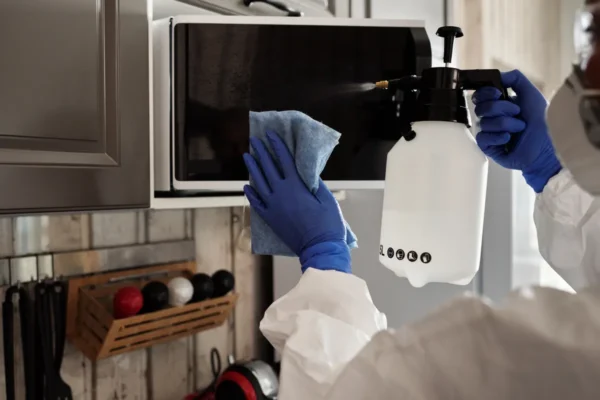
Microwaves get messy fast. Splattered sauce, dried-on soup, and popcorn grease build up on the inside walls after just a few uses, and once that residue dries, scrubbing it off directly can take a lot of effort. Steam clean microwave methods solve this problem without any harsh chemicals, using nothing more than water, heat, and a little help from vinegar or lemon to loosen grime so it wipes away easily.
This guide walks through the full steam-cleaning process, when to use vinegar versus lemon, and how often this method should be part of your microwave routine. It's part of the Microwave Cleaning Guide, which covers other microwave care topics beyond this natural steaming method.
The Best Way to Steam Clean a Microwave (Quick Answer)
For most microwaves, this approach works well:
- Fill a microwave-safe bowl with water and add either vinegar or lemon slices.
- Microwave on high for 3 to 5 minutes, until the window fogs up with steam.
- Let the bowl sit inside for another 5 minutes with the door closed to let the steam work.
- Carefully remove the bowl and wipe down the interior with a damp cloth or sponge.
The steam is what does most of the work here. It softens dried residue so it lifts away with light wiping instead of hard scrubbing, which is the entire point of this method.
Why Steam Cleaning Works
Microwaves heat water quickly, and that heat turns to steam that fills the enclosed space. Since the interior is sealed while the door is closed, that steam has nowhere to go, so it settles onto the walls, ceiling, and turntable, softening anything dried onto those surfaces.
This is a genuinely gentle method, since it doesn't rely on any abrasive scrubbing or strong chemical cleaners. It's particularly useful for the ceiling and back wall of the microwave, which are awkward to scrub directly but respond well to steam loosening residue before a simple wipe-down.
What You'll Need
This method uses very little:
- A microwave-safe bowl (glass or ceramic works well)
- Water
- White vinegar or a fresh lemon, sliced
- A microfiber cloth or sponge
- Oven mitts or a folded towel for handling the hot bowl
Avoid using metal bowls or anything with metallic trim, since metal shouldn't go in a microwave at all. Stick to plain glass or ceramic dishes labeled microwave-safe.
Step-by-Step: Steam Cleaning with Vinegar
- Fill a microwave-safe bowl with about one cup of water. Add two tablespoons of white vinegar.
- Place the bowl in the microwave and run it on high for 3 to 5 minutes, until you see steam fogging up the inside of the door.
- Leave the door closed for another 5 minutes after the microwave stops, letting the steam continue to work on the residue without escaping.
- Open the door carefully, since built-up steam will release quickly. Use an oven mitt or a folded towel to remove the bowl, since it will be hot.
- Wipe down the interior with a microfiber cloth or damp sponge, working from the top down. Most residue should lift away easily at this point.
- Wipe the turntable and any grooves around the edges, since these areas often catch extra moisture and loosened grime.
Vinegar's mild acidity helps cut through grease and also reduces lingering food odors, which makes it a solid all-around choice for this method.
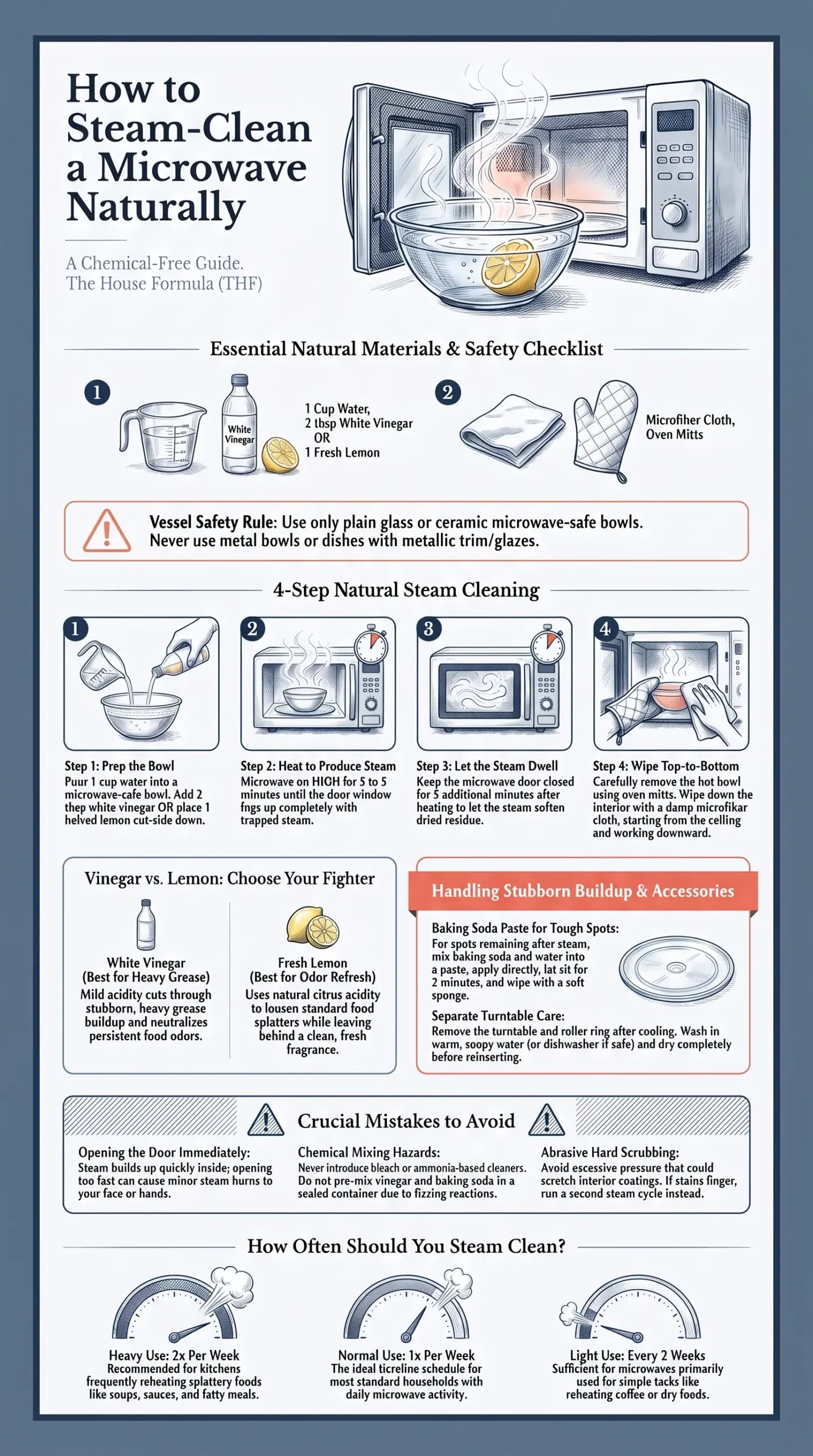
Photo Credit: Hobby Guidebook Editorial
Step-by-Step: Steam Cleaning with Lemon
Lemon works through the same steam process but leaves a fresher scent behind, which some people prefer over the smell of vinegar.
- Slice a lemon in half and place both halves cut-side down in a microwave-safe bowl filled with about one cup of water.
- Microwave on high for 3 to 5 minutes, until steam fogs the window.
- Let it sit for 5 minutes with the door closed.
- Remove the bowl carefully, using oven mitts since it will be hot.
- Wipe down the interior the same way as the vinegar method, starting from the top and working down.
Lemon's natural acidity works similarly to vinegar for loosening residue, though vinegar tends to be slightly more effective against heavier grease buildup. For a closer look at how these two compare, including which one handles specific types of stains better, our guide on Vinegar vs Lemon for Steam-Cleaning a Microwave breaks down the differences in more detail.
Baking Soda for Extra Stubborn Spots
Steam alone handles most residue, but a few particularly stubborn spots sometimes need a little extra help after the steaming step. A small amount of baking soda made into a paste with water can be applied directly to dried-on spots that didn't fully loosen during steaming.
Apply the paste, let it sit for a couple of minutes, then wipe with a damp cloth or the soft side of a sponge. This works well as a follow-up step rather than a replacement for steaming, since baking soda alone doesn't loosen residue the way steam does.
Baking soda and vinegar can be used in the same overall cleaning session, but they shouldn't be combined together in a sealed container beforehand, since the reaction fizzes and is more useful applied at different stages rather than mixed ahead of time. Neither should ever be combined with bleach or ammonia-based cleaners, and there's no reason to introduce either of those into a microwave cleaning routine in the first place, since this method is meant to stay entirely natural.
What to Avoid During Steam Cleaning
- Opening the microwave door too quickly after heating. Steam builds up and releases fast, which can cause a minor burn if your hand or face is too close to the opening.
- Using a bowl that isn't microwave-safe. Some ceramic or glass dishes have metallic trim or glazes that aren't safe to microwave, so check for a microwave-safe label first.
- Skipping the sitting time. Removing the bowl immediately after heating doesn't give the steam enough time to fully soften dried residue.
- Scrubbing hard instead of wiping. If residue doesn't lift with gentle wiping after steaming, a second round of steam usually works better than forcing it with pressure, which can scratch certain interior coatings.
- Introducing bleach or ammonia-based products. These aren't necessary for this method and shouldn't be combined with vinegar or baking soda under any circumstance.
Photo Credit: AJ Ahamad
Handling Grease That Steam Alone Doesn't Fully Remove
Steam cleaning works well for most food splatter and dried spills, but heavier grease buildup, especially from popcorn or fatty foods, sometimes needs a bit more attention beyond a single steaming session. Repeating the steam process a second time often loosens the remaining residue enough for a full wipe-down.
For microwaves with grease that's built up over a longer period, our guide on Removing Grease & Splatters from a Microwave Interior goes into more detail on handling heavier buildup, including how to tell when steaming alone isn't enough and what gentle additional steps can help.
Cleaning the Turntable and Roller Ring Separately
The turntable and the roller ring underneath it deserve their own attention during a steam-cleaning session, since steam mostly affects the walls and ceiling rather than these two pieces directly.
- Remove the turntable and roller ring once the microwave has cooled and the steaming step is done.
- Wash both in warm, soapy water, either by hand or in the dishwasher if the manufacturer confirms they're dishwasher-safe.
- Dry thoroughly before placing them back inside, since a damp turntable can leave water spots on the sensor pad underneath.
Cleaning these two pieces on the same schedule as the interior steaming keeps the whole microwave consistent rather than leaving one part clean and another still grimy.
How Often Should You Steam Clean a Microwave
For most households, a steam-cleaning session once a week works well, especially if the microwave gets daily use for reheating meals or cooking. Kitchens that use the microwave heavily, particularly for foods that splatter like sauces or soups, may find twice a week keeps buildup from settling in.
Lighter use, such as a microwave mainly used for reheating simple items like coffee or plain leftovers, can often stretch this to every two weeks without much visible buildup. If you notice lingering odors or see splatter accumulating faster than your current schedule handles, that's a sign to shorten the interval.
Photo Credit: Liliana Drew
FAQ
What is the best way to steam clean a microwave naturally? Heat a bowl of water with vinegar or lemon on high for 3 to 5 minutes until steam fogs the window, let it sit for 5 more minutes with the door closed, then wipe down the interior with a damp cloth.
How often should you steam clean a microwave? Once a week works for most households, with twice a week for heavy use involving splattery foods, and every two weeks for lighter use.
What cleaning products are safe for steam cleaning a microwave? White vinegar, fresh lemon, water, and a small amount of baking soda for stubborn spots are all safe, natural choices for this method.
What should you avoid when steam cleaning a microwave? Avoid opening the door immediately after heating, using non-microwave-safe bowls, and introducing bleach or ammonia-based products into the process.
How can you steam clean a microwave without damaging it? Use only microwave-safe glass or ceramic bowls, wipe gently rather than scrubbing hard, and let the turntable and roller ring dry completely before placing them back inside.
For more appliance care throughout the kitchen, check out the full kitchen cleaning guide for additional routines and schedules.
A quick safety note: let steam settle for a few minutes before opening the microwave door, and use oven mitts or a towel when removing the hot bowl to avoid burns. Stick to microwave-safe dishes only, and avoid introducing bleach or ammonia-based products into this cleaning method.





Leave a Reply