
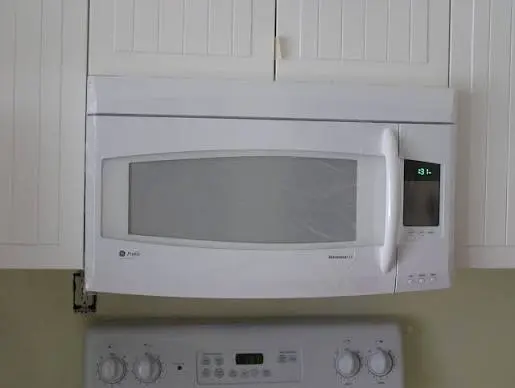
An over-the-range microwave does double duty, heating food and also pulling smoke, steam, and grease away from the stovetop below through a built-in vent system. That vent usually includes a grease filter, sometimes a charcoal filter for recirculating models, and a fan opening that can collect dust and grease film over time. Microwave vent filter cleaning gets overlooked more than range hood cleaning does, mostly because the vent sits underneath the microwave rather than in plain view, but the same grease buildup happens here and can reduce how well the fan actually pulls air away from your cooking. This guide is part of the Microwave Cleaning Guide, and it covers the filter, vent opening, and fan area, along with which products are safe and how often this task needs attention.
The Best Way to Clean an Over-the-Range Microwave Vent
Remove the grease filter, usually located on the underside of the microwave facing the stovetop, and soak it in hot water with dish soap or a degreasing detergent for 10 to 15 minutes. While it soaks, wipe the vent opening and surrounding area with a cloth dampened in warm, soapy water, using a soft brush to reach into any grille slots. Scrub the filter gently, rinse thoroughly, and let it air dry completely before reinstalling. If your model uses a charcoal filter for recirculating airflow, check the manual, since charcoal filters typically need replacing rather than washing.
The sections below walk through this process in full detail, cover both filter types, and explain the tools and products that work best for this specific vent setup.
Understanding the Over-the-Range Microwave Vent System
Over-the-range microwaves handle ventilation in one of two ways, and knowing which type you have changes part of the cleaning approach.
- Ducted models pull air through the vent, filter it, and push it outside through ductwork, similar to how a range hood works
- Recirculating models pull air through a grease filter and often a charcoal filter, then release the filtered air back into the kitchen rather than venting it outside
- The grease filter, usually a metal mesh screen, sits on the underside of the microwave and catches most of the airborne grease from stovetop cooking below
- The charcoal filter, found only on recirculating models, absorbs odors and doesn't wash the way a metal mesh filter does
Checking your microwave's manual clarifies which setup you have, since a recirculating model's charcoal filter needs periodic replacement on a schedule the manufacturer specifies, while the metal grease filter on either system can be washed and reused indefinitely with proper care.
Step-by-Step Cleaning Process
- Turn off the microwave and make sure the stovetop below has cooled before starting.
- Locate and remove the grease filter, typically found on the underside of the microwave, facing down toward the stovetop. Most slide out or release with a simple push tab.
- Soak the filter in hot water with dish soap or a degreasing dish detergent for 10 to 15 minutes to loosen grease buildup.
- While the filter soaks, wipe the vent opening and the underside of the microwave with a cloth dampened in warm, soapy water.
- Use a soft brush to reach into grille slots or vent grooves where grease and dust tend to concentrate.
- Scrub the filter gently with a soft brush, working into the mesh to loosen any remaining residue.
- Rinse the filter thoroughly under running water, checking that no soap residue remains in the mesh.
- Let the filter air dry completely before reinstalling, since a damp filter placed back into regular use can encourage grime to build up again more quickly.
- Check the charcoal filter, if your model has one, against the manufacturer's replacement schedule rather than attempting to wash it.
This process usually takes 30 to 40 minutes, most of that running alongside the filter soak time.
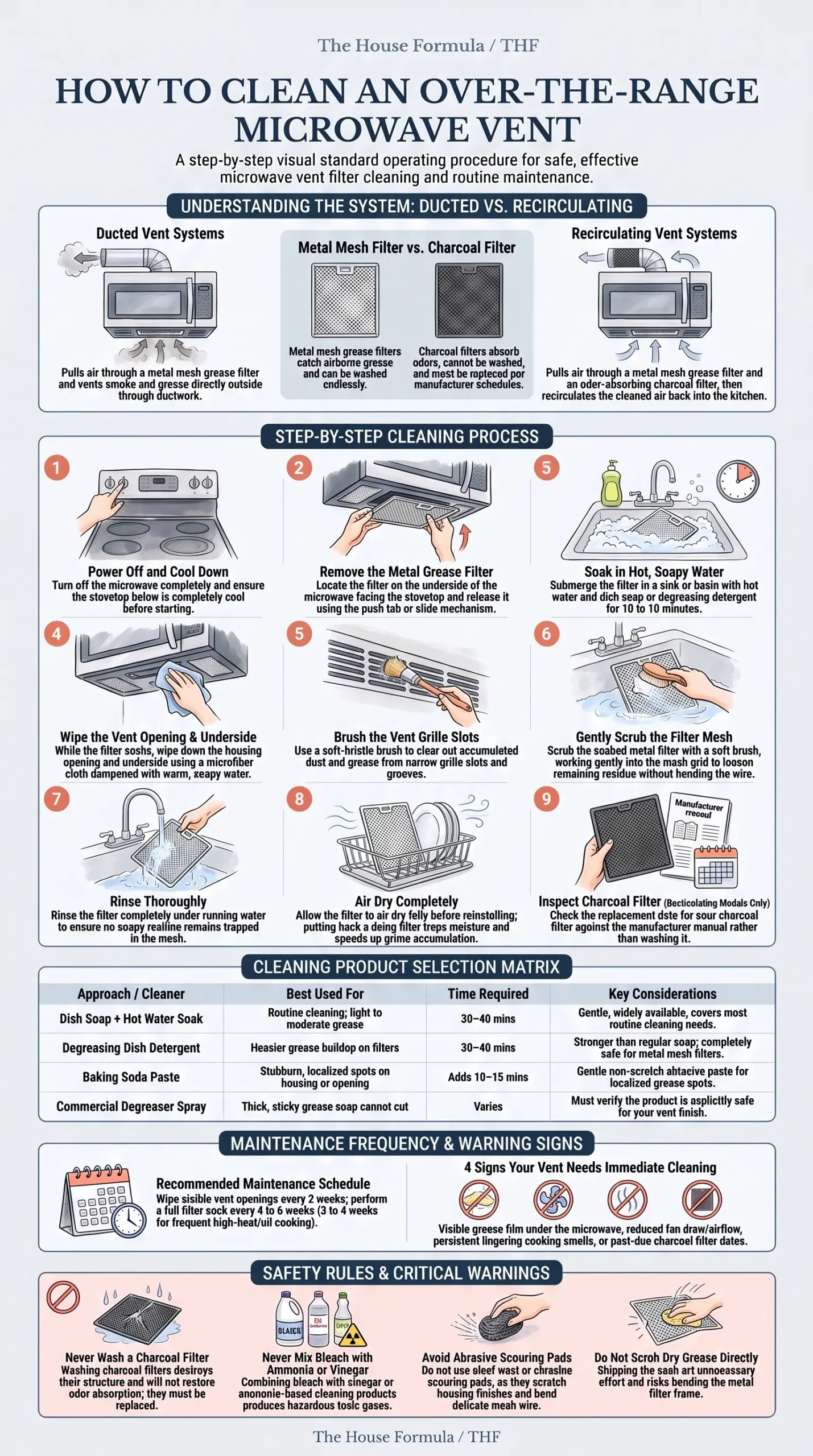
Photo Credit: Hobby Guidebook Editorial
Tools Needed for Over-the-Range Microwave Vent Cleaning
This task requires a modest set of tools, most of which are already common in most kitchens.
- A basin or sink: for soaking the grease filter in hot, soapy water
- A soft-bristle brush: for scrubbing the filter mesh and reaching into vent grille slots
- Microfiber cloths: for wiping the vent opening and underside of the microwave
- Dish soap or a degreasing dish detergent: the main cleaning agent for the soak
- A step stool: since the vent sits above the stovetop and often requires reaching up to work comfortably
No specialty equipment is necessary for routine cleaning, and most of this task comes down to patience during the soak rather than any particular skill.
Commercial Cleaner vs. Natural Method for Microwave Vents
Both routes work, and the better choice generally depends on how much grease has built up and how often the vent gets cleaned.
|
Approach |
Best For |
Time Required |
Considerations |
|
Dish soap and hot water soak |
Routine cleaning, light to moderate grease |
30 to 40 minutes |
Gentle, widely available, handles most buildup without extra products |
|
Degreasing dish detergent |
Heavier grease buildup on the filter |
30 to 40 minutes |
Stronger than plain soap, still safe for soaking metal mesh filters |
|
Baking soda paste |
Stubborn spots on the vent opening or housing |
Adds 10 to 15 minutes |
Gentle enough to avoid scratching, useful for localized grease spots |
|
Commercial degreaser spray |
Thick, sticky buildup that soap alone won't cut |
Varies |
Check that the product is rated safe for your vent's specific finish |
For most households, dish soap and hot water handle this task well without needing a stronger commercial product. A degreasing detergent or spray becomes more useful when the filter has gone several months without cleaning and grease has thickened into a stickier coating.
What Cleaning Products Are Safe for an Over-the-Range Microwave Vent?
A short list covers what this task typically needs.
- Warm water and mild dish soap: effective for the filter soak and for wiping the vent opening during routine cleaning
- Degreasing dish detergent: a stronger option for the filter soak when grease has built up more heavily
- Baking soda and water: useful as a paste for stubborn spots on the vent opening or surrounding housing
- A soft-bristle brush and microfiber cloths: for scrubbing and wiping without scratching the filter mesh or housing finish
Avoid abrasive scouring pads on the vent housing or filter frame, since these can scratch the finish or bend the delicate mesh. Never attempt to wash a charcoal filter, since these are designed for replacement rather than cleaning, and washing one won't restore its odor-absorbing capacity. Never mix bleach with vinegar or ammonia-based degreasers, since this produces hazardous fumes.

Photo Credit: Ron Lach
How to Tell If Your Microwave Vent Needs Cleaning
A few signs point to a vent and filter that are overdue for attention.
- A visible grease film on the underside of the microwave, especially noticeable when touched
- Reduced airflow or a weaker draw when the fan runs during cooking
- A lingering grease or cooking smell that doesn't clear even with the fan running
- Visible grease buildup in the grille slots or vent opening
- A charcoal filter (on recirculating models) that's past its recommended replacement date, even if it doesn't look visibly dirty
If none of these apply, a lighter wipe-down on a more relaxed schedule is usually enough.
How Often Should You Clean an Over-the-Range Microwave Vent?
A quick wipe of the visible vent opening every couple of weeks helps catch light dust and grease before it settles in. The grease filter benefits from a full soak-and-scrub cleaning every four to six weeks for most households, similar to a range hood filter, though frequent high-heat or oil-based cooking may call for cleaning every three to four weeks instead. Charcoal filters, where applicable, should be replaced according to the manufacturer's specific schedule rather than cleaned on this same routine.
What to Avoid When Cleaning an Over-the-Range Microwave Vent
A few habits tend to cause more problems than they solve.
- Skipping the soak and scrubbing dry grease directly: this takes far more effort and risks bending the metal mesh filter
- Washing a charcoal filter: these need replacement, not cleaning, and washing won't restore their function
- Using abrasive pads on the vent housing: this can scratch the finish or damage delicate grille slots
- Reinstalling a damp filter immediately: let it air dry fully first to avoid trapping moisture against grease residue
- Ignoring reduced airflow: if the fan seems weaker even after cleaning, that may point to a filter issue or a duct problem beyond routine cleaning
Photo Credit: Ron Lach
Cleaning the Rest of the Microwave
Vent cleaning handles the grease and airflow side of things, but a microwave's interior needs its own separate approach for splatters and buildup from actual cooking. If you're looking for a gentler, chemical-free way to loosen dried food inside the unit, the Steam-Cleaning a Microwave Naturally guide covers that method in detail, using nothing more than water and heat to soften stuck-on residue.
For grease and splatters that have already dried onto the interior walls or ceiling of the microwave, a slightly different scrubbing approach works better than the vent cleaning process described here. The Removing Grease & Splatters from a Microwave Interior guide walks through that process specifically, including which tools reach into corners without scratching the interior surface.
Frequently Asked Questions
What is the best way to clean an over-the-range microwave vent? Remove the grease filter and soak it in hot, soapy water while wiping the vent opening with a damp cloth. Scrub the filter gently, rinse thoroughly, and let it dry completely before reinstalling.
How often should you clean an over-the-range microwave vent? Wipe the visible vent opening every couple of weeks, and do a full filter soak every four to six weeks, more often for frequent high-heat or oil-based cooking.
What cleaning products are safe for an over-the-range microwave vent? Warm water and mild dish soap, degreasing dish detergent for heavier buildup, and baking soda paste for stubborn spots. Avoid abrasive pads and never wash a charcoal filter.
What should you avoid when cleaning an over-the-range microwave vent? Avoid scrubbing dried grease without soaking first, washing a charcoal filter instead of replacing it, and using abrasive pads on the housing or grille.
How can you clean an over-the-range microwave vent without damaging it? Let the filter soak long enough to loosen grease naturally, use a soft brush rather than anything abrasive, and let the filter dry fully before putting it back to avoid trapping moisture.
A Quick Note on Safety
Turn off the microwave and let the stovetop below cool before starting any vent cleaning. Never attempt to wash a charcoal filter, since these are designed for replacement rather than cleaning. Never mix bleach with vinegar or ammonia-based products, since this produces hazardous fumes. If airflow stays weak even after a thorough filter cleaning, that may point to a duct or fan issue worth having checked by a qualified technician.
For more on keeping the rest of your kitchen clean, explore the complete kitchen cleaning guide.





Leave a Reply