

A lot of kitchens get cleaned with whatever spray is under the sink, without much thought about what's actually in the bottle. If you'd rather skip the fumes, the warning labels, and the guesswork, you can clean a kitchen without harsh chemicals and still get it fully clean, from the countertops to the floor. This guide is part of Kitchen Cleaning Questions & Troubleshooting, and it covers exactly which tools and ingredients work, which surfaces need a gentler touch, and where a natural approach has real limits.
What Counts as a "Harsh" Chemical in the Kitchen?
Before swapping anything out, it helps to know what you're actually avoiding. In most kitchens, the harsher products are the ones with strong fumes, warning labels about ventilation, or instructions never to mix them with anything else. This usually includes:
- Bleach-based cleaners, which disinfect well but produce strong fumes and can damage certain finishes if used too often or too strong.
- Ammonia-based glass and multi-surface cleaners, which cut through grease fast but shouldn't ever be mixed with bleach.
- Heavy-duty oven and drain cleaners, which are effective but caustic, meaning they can burn skin or eyes on contact.
- Some all-purpose sprays, which may contain a mix of solvents that aren't always clearly listed on the front label.
None of these are automatically "bad," and there are situations, like disinfecting after raw meat or handling a stubborn oven, where a stronger product is genuinely the right tool. But for the majority of everyday kitchen cleaning, a gentler approach handles the job just as well, without the fumes or the risk of an accidental bad mix.
Tools You Need to Clean a Kitchen Without Harsh Chemicals
You don't need anything specialized to switch to a more natural routine. A basic kit covers almost everything:
- A few microfiber cloths, since they lift grease and grime without needing a strong solvent to do the work.
- A soft-bristle scrub brush for stovetops, sinks, and grout lines.
- A spray bottle for mixing diluted vinegar or soapy water.
- A small bowl or shaker for baking soda, so it's easy to sprinkle onto a stubborn spot.
- Rubber gloves, mainly for comfort during longer cleaning sessions rather than for protection from anything caustic.
- A mop with a washable head, if you're also swapping your floor cleaner for a gentler mix.
With this short list, most kitchen surfaces, from countertops to the inside of the microwave, can be handled without reaching for anything with a hazard warning on the label.
Eco-Friendly Ingredients That Actually Work
A handful of simple ingredients do most of the heavy lifting in a chemical-free kitchen routine. Each one has a specific strength, and knowing which one fits which job saves a lot of trial and error.
|
Ingredient |
What It's Good For |
Where to Avoid It |
|
White vinegar (diluted with water) |
Cutting grease, wiping glass, freshening cutting boards |
Natural stone counters (marble, granite), since the acid can etch the surface |
|
Baking soda |
Scrubbing stuck-on grime, absorbing odors, mild abrasive on non-scratch surfaces |
Polished or glossy surfaces that scratch easily |
|
Castile soap |
General dish and surface washing, gentle enough for daily use |
Nothing major, though it should be well rinsed on glass to avoid streaking |
|
Lemon juice |
Cutting through grease, freshening the garbage disposal |
Sealed wood, since acid can dull the finish over time |
|
Hydrogen peroxide (3%) |
Light disinfecting on sealed, non-metal surfaces |
Painted or coated surfaces, since it can lighten color with repeated use |
These ingredients work well individually, but combining the wrong two can undo the benefit of going natural in the first place. Vinegar and baking soda, for example, react and fizz together, which feels satisfying but actually neutralizes both, leaving you with mostly salt water once the reaction settles. Used one at a time, though, both are genuinely effective.
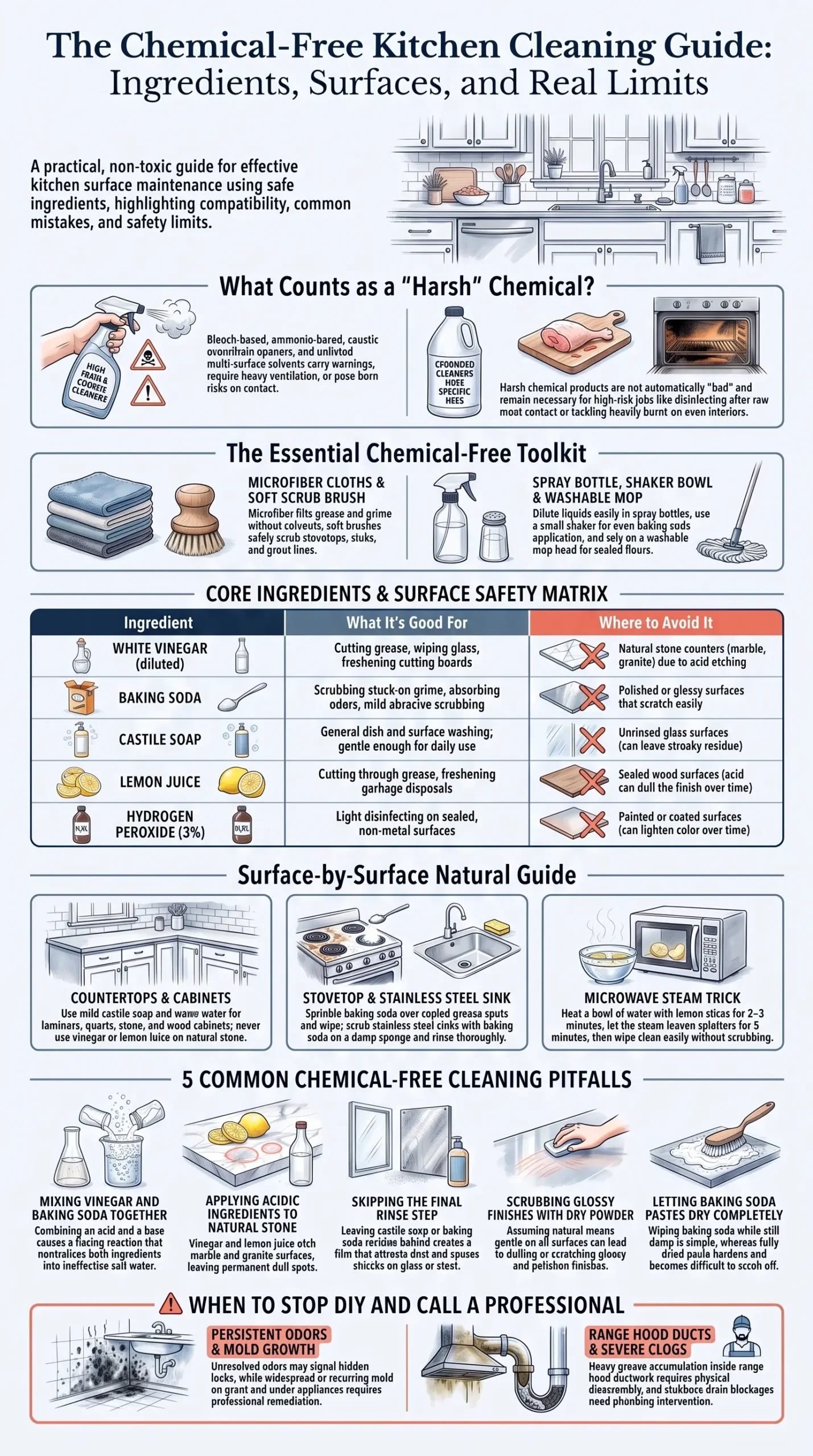
Photo Credit: Hobby Guidebook Editorial
Cleaning Kitchen Surfaces Without Harsh Chemicals, Step by Step
Different parts of the kitchen respond to different natural methods, so it helps to go surface by surface rather than using one mix for everything.
Countertops. For sealed laminate or quartz, a mix of a few drops of castile soap in warm water handles daily cleaning. For natural stone like marble or granite, skip vinegar and lemon entirely, since the acid can etch the surface over time, and stick with plain warm water and a stone-safe soap instead.
Stovetop. Sprinkle baking soda over cooled, greasy spots, then wipe with a damp cloth. For burnt-on residue, let a baking soda and water paste sit for ten to fifteen minutes before scrubbing gently with a soft brush.
Sink. Baking soda scrubbed with a damp sponge removes most everyday grime from stainless steel. Rinse well afterward, since leftover residue can look dull once it dries.
Cabinets. A cloth lightly dampened with diluted castile soap wipes away fingerprints and light grease without leaving excess moisture that could damage wood over time.
Microwave. Heat a bowl of water with a few lemon slices for two to three minutes, then let the steam sit for another five minutes before wiping the interior clean. The steam loosens splatters without needing to scrub.
Floors. A mop dampened with warm water and a small amount of castile soap works for sealed tile, vinyl, or laminate. Avoid using vinegar on natural stone floors for the same reason it's avoided on stone counters.
Working through the kitchen in a consistent order, rather than jumping between spots, keeps the process efficient and makes sure nothing gets missed. If you'd like a full walkthrough of which area to tackle first, Best Order to Clean a Kitchen (Top to Bottom) lays out a sequence that works well alongside a chemical-free routine.
Common Mistakes When Going Chemical-Free
A few habits tend to undercut an otherwise solid natural cleaning routine:
- Mixing vinegar and baking soda expecting a stronger result. The fizzing reaction actually cancels out both ingredients rather than boosting their power.
- Using vinegar or lemon on natural stone. Acid etches marble, granite, and similar stone surfaces, sometimes permanently.
- Skipping the rinse step. Natural ingredients like castile soap can leave a slight film if not rinsed thoroughly, which then attracts more dust and grime.
- Assuming "natural" always means gentle enough for any surface. Baking soda's mild abrasiveness can still dull glossy or polished finishes if scrubbed too hard.
- Letting a paste dry completely before wiping. A dried-on baking soda paste is harder to remove than one wiped away while still slightly damp.
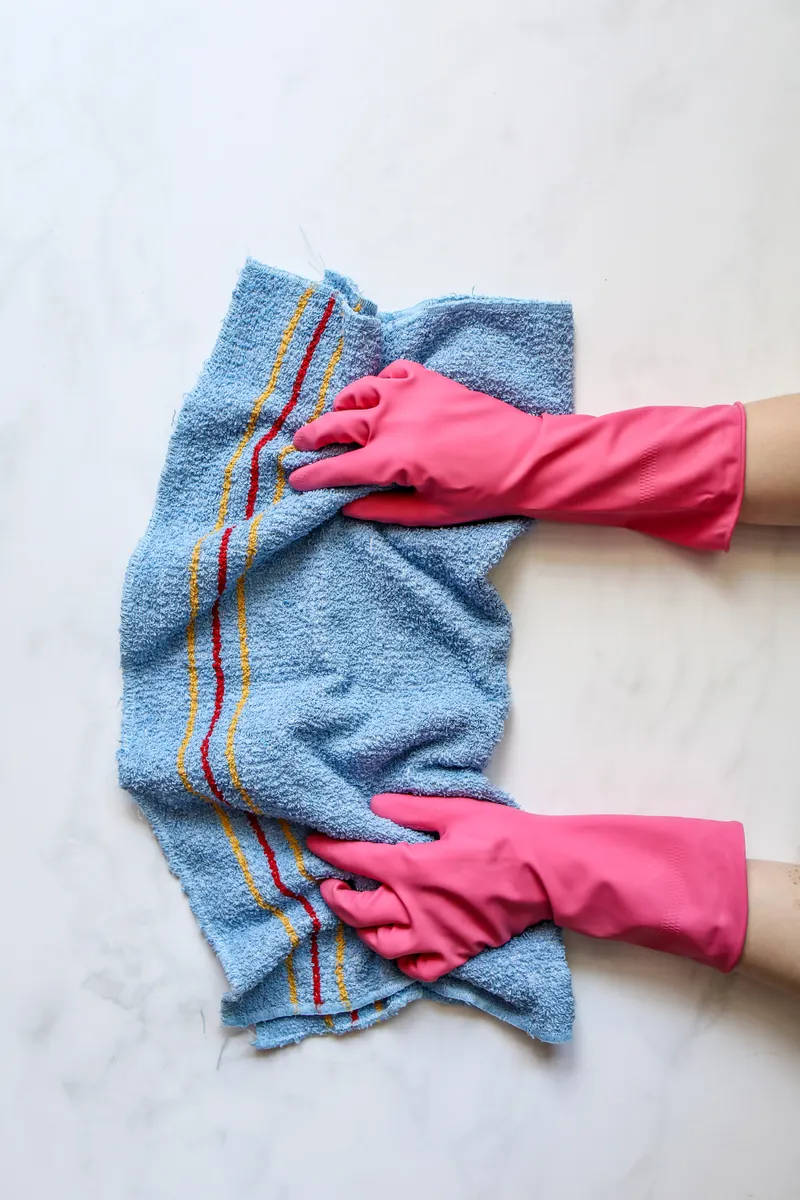
Photo Credit: Polina Tankilevitch
When Natural Cleaning Isn't Enough
There are moments where a gentler approach genuinely isn't the right call, and it's worth being honest about those limits rather than forcing a natural method where it doesn't fit. After handling raw meat or poultry, a proper disinfecting step matters more than staying chemical-free, since the goal is reducing harmful bacteria, not just cleaning visible mess. Similarly, a heavily baked-on oven interior or a badly clogged drain may need a stronger, purpose-made product to actually resolve the problem instead of just masking it. In these cases, it's worth weighing the natural approach against a stronger option rather than defaulting to one or the other automatically. The same trade-off comes up in other rooms too. If you're rethinking your bathroom routine at the same time, How to Clean a Bathroom Without Harsh Chemicals covers where a gentler approach works well there and where it has similar limits.
What Are the Most Common Problems With Going Chemical-Free?
Most issues people run into aren't about the ingredients failing, they're about mismatched expectations or the wrong ingredient on the wrong surface. The most frequent problems include:
- Grease that doesn't fully lift on the first pass, especially around the stovetop, which usually just needs a second wipe or a slightly longer dwell time with the baking soda paste.
- Etching on stone counters from vinegar or lemon, which often shows up as a dull spot that wasn't there before.
- Streaky glass or stainless steel from soap that wasn't rinsed off completely.
- A lingering smell that natural cleaning alone doesn't fully resolve, which is often more about ventilation or trash odor than the cleaning method itself.
Why Does the Kitchen Keep Causing the Same Problem?
If the same grease film, streak, or smell keeps coming back no matter how you clean, the ingredient usually isn't the issue, the routine around it is. A few things worth checking:
- Are you cleaning often enough? Grease builds up gradually, and skipping a few days lets it harden into something that needs more scrubbing than a quick wipe would have.
- Is the surface actually sealed? Unsealed wood or certain stone finishes absorb moisture and residue differently than a sealed surface, which can make a normally effective method seem like it's not working.
- Is ventilation part of the problem? A kitchen with poor airflow holds onto cooking odors and grease particles longer, meaning the surfaces get dirty faster between cleanings.
- Is the cloth or sponge itself dirty? Reusing a grimy sponge just redistributes grease instead of removing it, no matter how good the cleaning solution is.
What Is the Safest Way to Troubleshoot Kitchen Cleaning Problems?
When something isn't coming clean, the safest approach is to change one variable at a time rather than reaching for something stronger right away. Start by confirming the surface material, since that determines which natural ingredients are even appropriate. Next, try a slightly longer dwell time with the same ingredient before assuming it doesn't work. If that still doesn't help, test a different but equally gentle ingredient, like switching from vinegar to castile soap, rather than jumping straight to a harsh chemical. And always test any new combination on a small, hidden spot first, especially on stone, wood, or coated surfaces, so a mistake doesn't show up somewhere visible.
When Should You Stop DIY and Call a Professional?
Most everyday kitchen cleaning is well within DIY territory, but a few situations call for outside help rather than more scrubbing:
- A persistent odor that doesn't improve after thorough cleaning and good ventilation, which may point to a hidden leak, mold behind an appliance, or a drain issue.
- Grease buildup inside range hood ductwork, since this often requires disassembly that goes beyond surface cleaning.
- Visible mold on grout, caulking, or under appliances, particularly if it covers a large area or keeps returning.
- A drain that stays clogged after a natural approach like baking soda and hot water, which may need a plumber rather than a stronger chemical drain cleaner.
In these cases, a natural cleaning routine isn't the wrong idea, it's just not the right tool for a problem that goes beyond the surface.
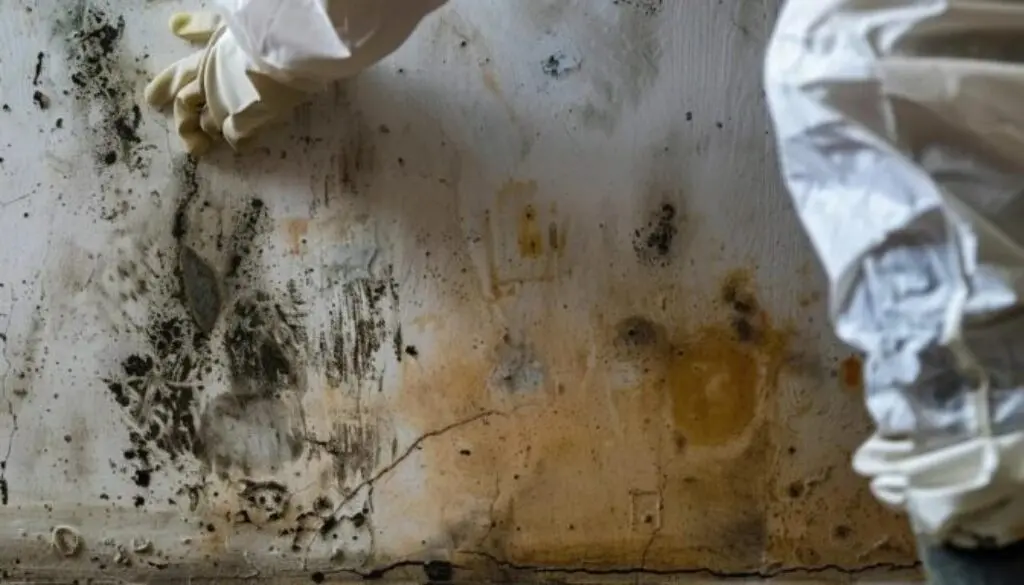
Photo Credit: Internet
How Often Should You Clean This Way?
A chemical-free routine works best as a consistent habit rather than an occasional deep effort. Wiping counters and the stovetop daily, washing dish towels and sponges weekly, and doing a fuller surface-by-surface clean every week or two keeps grease and grime from building up to the point where it needs extra scrubbing. If you're deciding how much daily upkeep actually makes sense for your household, Do I Need to Clean My Kitchen Every Day? breaks down a realistic daily versus weekly split that pairs well with a natural cleaning approach.
Frequently Asked Questions
How do you clean a kitchen without harsh chemicals? Use ingredients like diluted vinegar, baking soda, castile soap, and lemon juice matched to the right surface, working countertop to floor with a microfiber cloth and soft brush instead of a bleach or ammonia-based spray.
What are the most common problems with the kitchen when cleaning naturally? Grease that needs a second pass, etching on stone from acidic ingredients, and streaks left behind by soap that wasn't rinsed off fully.
Why does the kitchen keep causing the same problem? Usually because of infrequent cleaning, a surface that isn't actually sealed, poor ventilation, or a sponge that's redistributing grime instead of removing it.
What is the safest way to troubleshoot kitchen cleaning issues? Change one variable at a time, confirm the surface material first, extend the dwell time before switching ingredients, and always test a new combination in a small hidden spot.
When should you stop DIY work and call a professional? When an odor persists despite thorough cleaning, when grease has built up deep inside range hood ductwork, when mold covers a large area, or when a clogged drain doesn't clear with a natural method.
A Quick Note on Safety
Most natural cleaning ingredients covered here are low-risk, but a few precautions still matter. Never mix vinegar or lemon juice with bleach, since combining an acid with bleach can release hazardous fumes. Keep natural ingredients and any stronger commercial products stored separately and used one at a time, and always check a surface's care instructions before trying a new ingredient, especially on natural stone or unsealed wood. For anything that goes beyond routine cleaning, like persistent mold or a stubborn clog, professional help is the safer route.
Back to the complete kitchen cleaning guide for more practical, room-by-room cleaning advice.





Leave a Reply