

Kitchen drawers collect more mess than people expect. Crumbs settle into corners, sticky spills dry onto the bottom, and utensils leave behind small flecks of food that are easy to miss during a quick wipe of the counters. Cleaning kitchen drawers regularly keeps that buildup from turning into a bigger problem, especially in drawers that hold food, utensils, or dishware.
This guide covers practical, safe methods for cleaning the inside of kitchen drawers, from a quick weekly wipe to a full deep clean. It's part of the Kitchen Cabinet & Drawer Cleaning Guide, which covers care for every storage area in the kitchen.
The Best Way to Clean Inside Kitchen Drawers (Quick Answer)
For most kitchen drawers, this basic routine works well:
- Empty the drawer completely and sort items as you go.
- Vacuum or shake out crumbs and loose debris.
- Wipe the interior with a cloth dampened in warm water and a small amount of mild dish soap.
- Wipe again with a clean, barely damp cloth to remove soap residue.
- Dry the drawer fully before putting items back.
This method is gentle enough for most drawer materials, including painted wood, laminate, and unfinished wood, though a few materials need extra care, covered further down.
What You'll Need
You likely already have most of these items at home:
- A small handheld vacuum or a soft brush attachment
- Microfiber cloths, at least two
- Mild dish soap, unscented if possible
- Warm water
- A dry towel for drying
- Cotton swabs or a small brush for corners and grooves
Avoid reaching for anything abrasive like scouring pads or powder cleansers. These can scratch the drawer's interior finish, and a scratched surface tends to collect dirt faster than a smooth one. If your drawers have a fabric or felt lining, that material needs a different approach entirely, since water can soak in and cause the lining to warp or smell musty.
Step-by-Step: Cleaning Inside Kitchen Drawers
Step 1: Empty the drawer completely. Take everything out and set items on a towel or the counter. This is also a good moment to sort through what's actually being used. Kitchen drawers tend to accumulate duplicate tools and gadgets that rarely get touched.
Step 2: Remove loose debris first. Turn the drawer upside down over a trash can to knock out crumbs, or use a small vacuum with a brush attachment to clear out corners. Doing this before adding any moisture keeps you from turning dry crumbs into a sticky paste.
Step 3: Check the drawer material. Before applying any liquid, take a moment to identify what the drawer is made from. Painted wood, sealed wood, laminate, and unfinished wood all respond differently to moisture. If you're not sure, treat it as unfinished wood and use the driest method possible, since that's the safer default when the material is unclear.
Step 4: Wipe with a mild soap solution. Mix a few drops of dish soap into warm water. Dip a cloth into the solution and wring it out well so it's damp, not wet. Wipe the bottom, sides, and back of the drawer, paying extra attention to corners where crumbs and spilled liquids tend to settle.
Step 5: Rinse with a second cloth. Dampen a fresh cloth with plain water and wipe over the same areas. This removes any leftover soap film, which can attract more dust once it dries and feel slightly tacky to the touch.
Step 6: Dry completely before restocking. Use a dry towel to wipe the interior, then leave the drawer open for ten to fifteen minutes to air out fully. Putting items back into a damp drawer can trap moisture against wood or metal utensils, which may lead to rust spots or a musty smell over time.
Step 7: Wipe down items before returning them. While the drawer dries, quickly wipe utensils, tools, or containers before placing them back. This prevents you from reintroducing the same grime you just cleaned out.

Photo Credit: https://kaboompics.com/
Cleaning Different Types of Kitchen Drawers
Not all kitchen drawers serve the same purpose, and the cleaning approach shifts slightly depending on what's stored inside.
Utensil drawers These tend to collect the most food debris since utensils go straight from cooking or eating back into the drawer. Crumbs, sauce residue, and small food particles build up fast, especially in drawers with divided trays. A mild soap wipe usually handles this, but drawers with removable trays benefit from a deeper clean where the tray itself gets washed separately. For a more thorough approach to this specific drawer type, see our guide on Deep Drawer & Utensil Drawer Cleaning, which covers tray removal and disinfecting steps in more detail.
Junk drawers Nearly every kitchen has one, and it usually holds a mix of loose items like rubber bands, batteries, and old receipts. These drawers rarely get liquid spills but do collect dust and small debris. A vacuum pass followed by a dry or barely damp wipe is often enough, since there's less food contact to worry about.
Drawers near the sink or stove These see more moisture and grease than drawers elsewhere in the kitchen. Steam from cooking and splashes from the sink can settle inside even when the drawer is closed. These benefit from slightly more frequent cleaning, and a mild degreasing dish soap (not a heavy-duty degreaser spray) works well for cutting through the light grease film that builds up here.
Deep drawers for pots and pans Heavier items mean more scuffing on the drawer bottom, and dust tends to settle since these drawers are opened less often. A quick vacuum and wipe every month or two usually keeps them in good shape, since spills are less common in this type of storage.
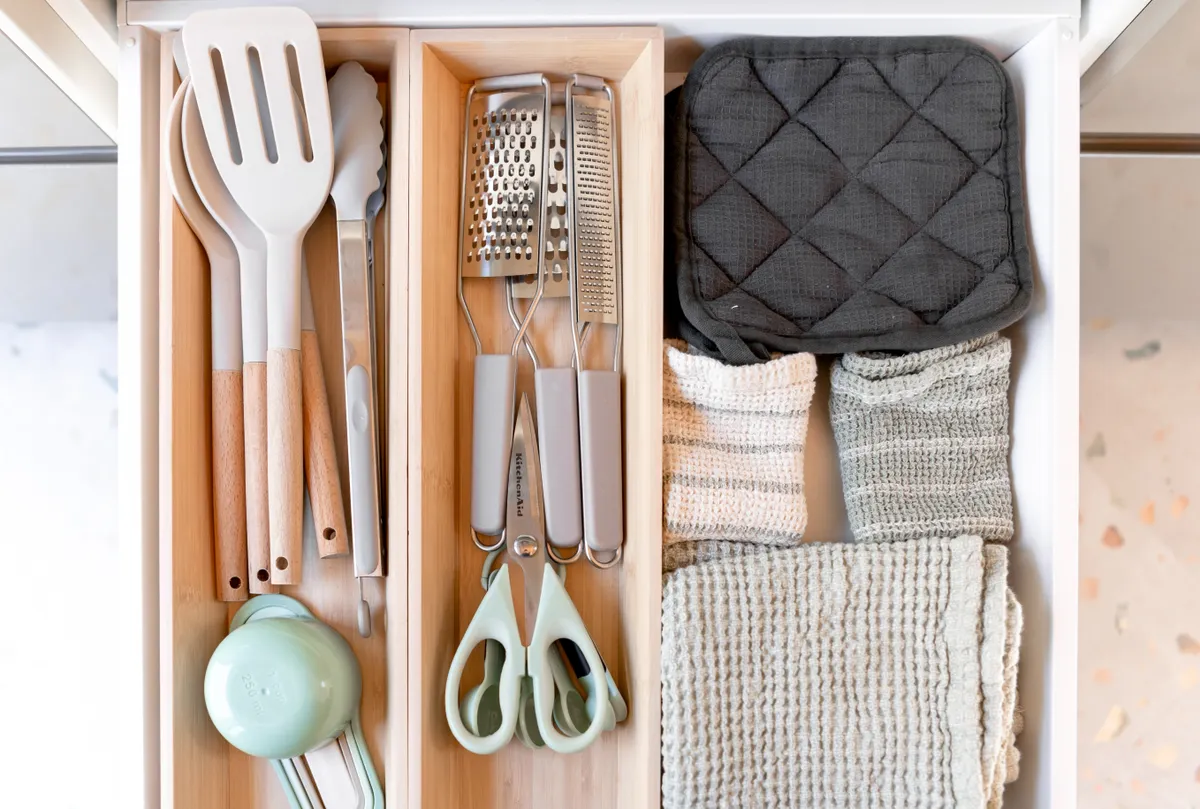
Photo Credit: Andrea Davis
Cabinet Interior and Drawer Liners
Many kitchen drawers use a liner, whether it's a non-slip mat, adhesive paper, or a simple sheet of shelf liner. Liners help protect the drawer surface, but they also need their own care, since spills can seep underneath if the liner isn't sitting flush.
If your liner is peeling, curling at the edges, or holding onto stains that won't wipe away, it may be time to replace it rather than keep cleaning around the problem. Our guide on Cabinet Interior & Shelf Liner Cleaning walks through cleaning and replacing liners across cabinets and drawers, including how to tell when a liner has reached the end of its useful life.
When wiping a lined drawer, lift the liner slightly if possible rather than scrubbing directly on top of it. This lets you clean underneath, where crumbs and moisture often collect unnoticed.
Commercial Cleaners vs. Natural Methods
For most kitchen drawers, a mild dish soap and water solution is enough, and it's the safest default for drawers holding food items or utensils that touch food directly. Commercial all-purpose cleaners can work for tougher grime, but they come with a few tradeoffs worth knowing.
|
Method |
Best Use |
Considerations |
|
Mild dish soap and water |
Everyday cleaning, food-contact drawers |
Gentle, low risk, needs full drying before restocking |
|
Baking soda paste |
Mild odor control, light grime |
Effective for smells; rinse fully to avoid gritty residue |
|
Commercial all-purpose cleaner |
Grease near stove-adjacent drawers |
Check the label for food-contact safety before use near utensils |
|
Disinfecting wipes |
Occasional sanitizing |
Read the label; some contain ingredients not meant for direct food contact until fully dry |
|
Vinegar solution |
Mild odor or light residue |
Can dull certain painted or varnished finishes with repeated use; test first |
If you choose a commercial cleaner, check that it's labeled safe for surfaces near food, and always let the drawer air dry and ventilate before placing utensils or dishware back inside. Never mix cleaning products together, and keep bleach-based cleaners away from vinegar, ammonia, or other acidic products, since combining these can release harmful fumes.
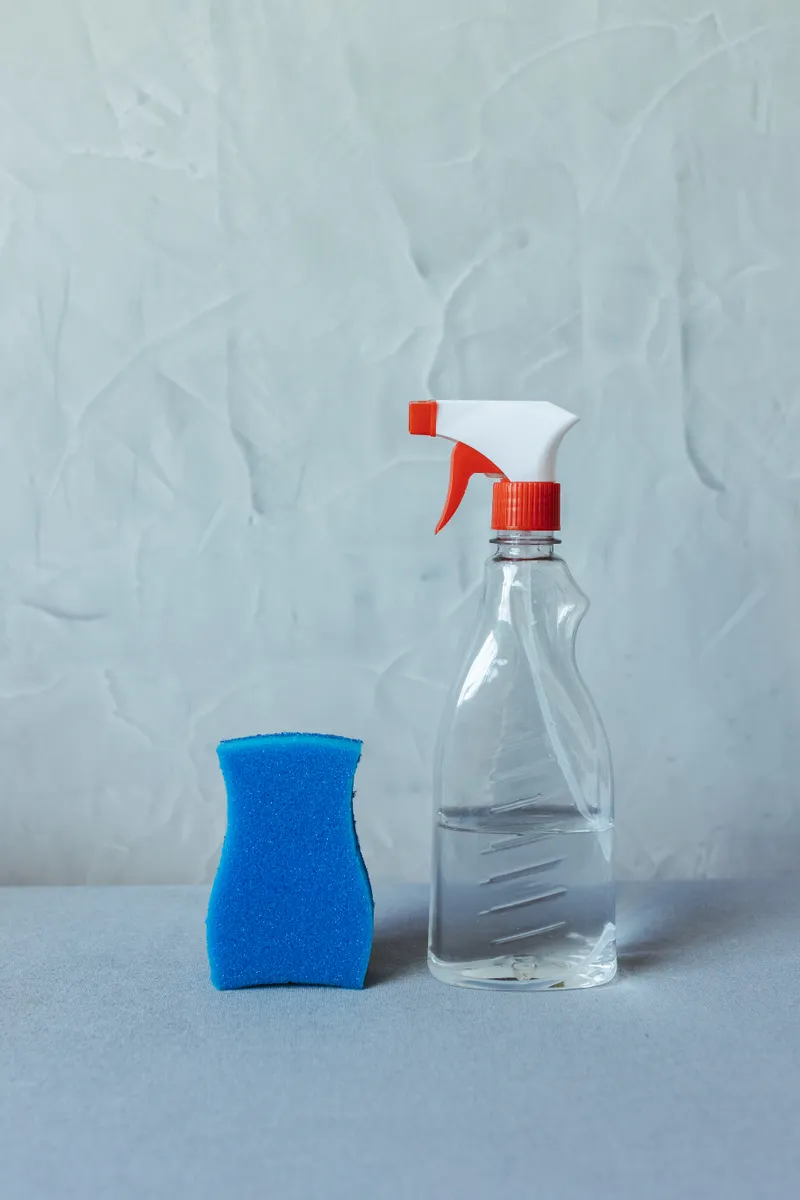
Photo Credit: Jonathan Borba
How Often Should You Clean Inside Kitchen Drawers
A quick wipe of frequently used drawers, like the utensil drawer, every one to two weeks keeps buildup from settling in. Drawers near the stove or sink may need slightly more frequent attention since they're exposed to more grease and moisture.
Less-used drawers, like those holding linens, rarely used gadgets, or deep pot storage, only need a full clean every one to two months. A quick visual check now and then is usually enough to know if it's time, since dust and light grime are easy to spot once you open the drawer.
If you're setting up a broader kitchen routine, pairing drawer cleaning with your regular cabinet wipe-down keeps the whole storage area consistent and easier to manage over time.
Common Mistakes to Avoid
- Skipping the drying step. Putting items back into a damp drawer traps moisture, which can lead to a musty smell or rust on metal tools.
- Using too much liquid. A soaked cloth can push water into seams, especially in wood drawers, which may cause warping over time.
- Ignoring the liner. Cleaning around a liner instead of lifting it means crumbs and spills underneath go unnoticed for weeks.
- Using strong degreasers near food-contact drawers. Some heavy-duty cleaners aren't meant for surfaces that touch utensils or dishware directly.
- Forgetting to wipe items before restocking. Clean drawers get dirty again quickly if the utensils and tools going back in are still coated in old residue.
FAQ
What is the best way to clean inside kitchen drawers? Empty the drawer, remove loose debris, wipe with a mild dish soap solution, rinse with a damp cloth, and dry fully before putting items back.
How often should you clean inside kitchen drawers? Frequently used drawers, like utensil drawers, benefit from a wipe every one to two weeks. Less-used drawers can go one to two months between cleanings.
What cleaning products are safe for inside kitchen drawers? Mild dish soap and warm water are safe for most drawer materials. For grease near stove-adjacent drawers, a mild degreasing dish soap works well; save stronger commercial cleaners for drawers that don't hold food-contact items.
What should you avoid when cleaning inside kitchen drawers? Avoid abrasive scrub pads, excess water, and strong degreasers near utensil drawers. Also avoid mixing cleaning products, especially bleach with vinegar or ammonia-based cleaners.
How can you clean inside kitchen drawers without damaging them? Use a barely damp cloth rather than a soaked one, dry the drawer completely before restocking, and check the drawer material first if you're unsure how it will respond to moisture.
For more storage-specific cleaning routines, read the full kitchen cleaning guide for room-by-room instructions.
A quick safety note: always check product labels for food-contact safety before using a cleaner inside drawers that hold utensils or dishware, and never mix cleaning chemicals unless the label confirms it's safe. Let drawers air out fully after cleaning, especially if a commercial product was used, before putting items back inside.





Leave a Reply