
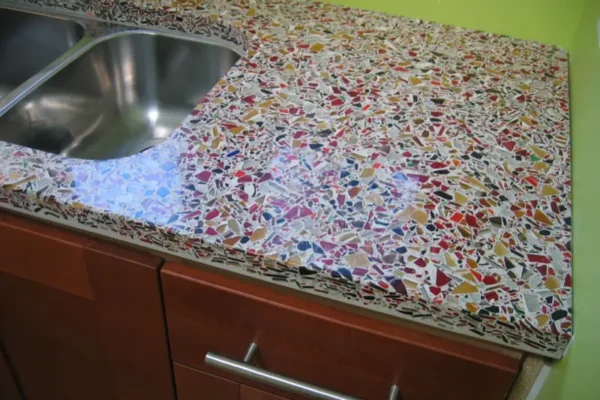
Concrete countertops have a modern, industrial look that a lot of homeowners love, but they need a different cleaning approach than granite, quartz, or laminate. Concrete is porous and depends on a sealer to keep stains, water, and bacteria from soaking into the surface. Concrete countertop cleaning is less about scrubbing hard and more about protecting that seal while keeping the surface free of grime.
This guide covers daily care, safe products, common mistakes, and when the job needs more than a cloth and some soap. It is part of the Kitchen Countertop Cleaning Guide, which covers the full range of countertop materials found in most homes.
The Best Way To Clean a Concrete Countertop
The safest and most reliable method is warm water, a few drops of mild dish soap, and a soft microfiber cloth. Wipe the surface, rinse with a clean damp cloth to remove soap residue, then dry it right away with a dry towel. Drying matters more with concrete than with most other countertop materials, because standing water can eventually work its way through a worn sealer and into the porous stone underneath.
For a slightly deeper clean, a pH-neutral stone or concrete cleaner (sold for sealed concrete, granite, or natural stone) works well and is safer for the sealer than general all-purpose sprays.
Daily Concrete Countertop Cleaning Routine
Concrete countertops respond best to light, consistent care rather than occasional heavy scrubbing. A simple daily routine looks like this:
- Clear the surface and remove crumbs, spills, or standing liquid.
- Wipe with a soft cloth dampened with warm water and a small amount of mild dish soap.
- Rinse with a clean, barely damp cloth to lift any soap film.
- Dry immediately with a dry towel or paper towel, especially around the sink and stove areas where water collects.
- Check for dull or dry-looking patches, which can be an early sign the sealer is wearing thin.
This routine takes only a minute or two and prevents the buildup that leads to harder cleaning later. For a broader look at keeping every countertop material on a simple daily schedule, see the Daily Countertop Cleaning Routine guide.
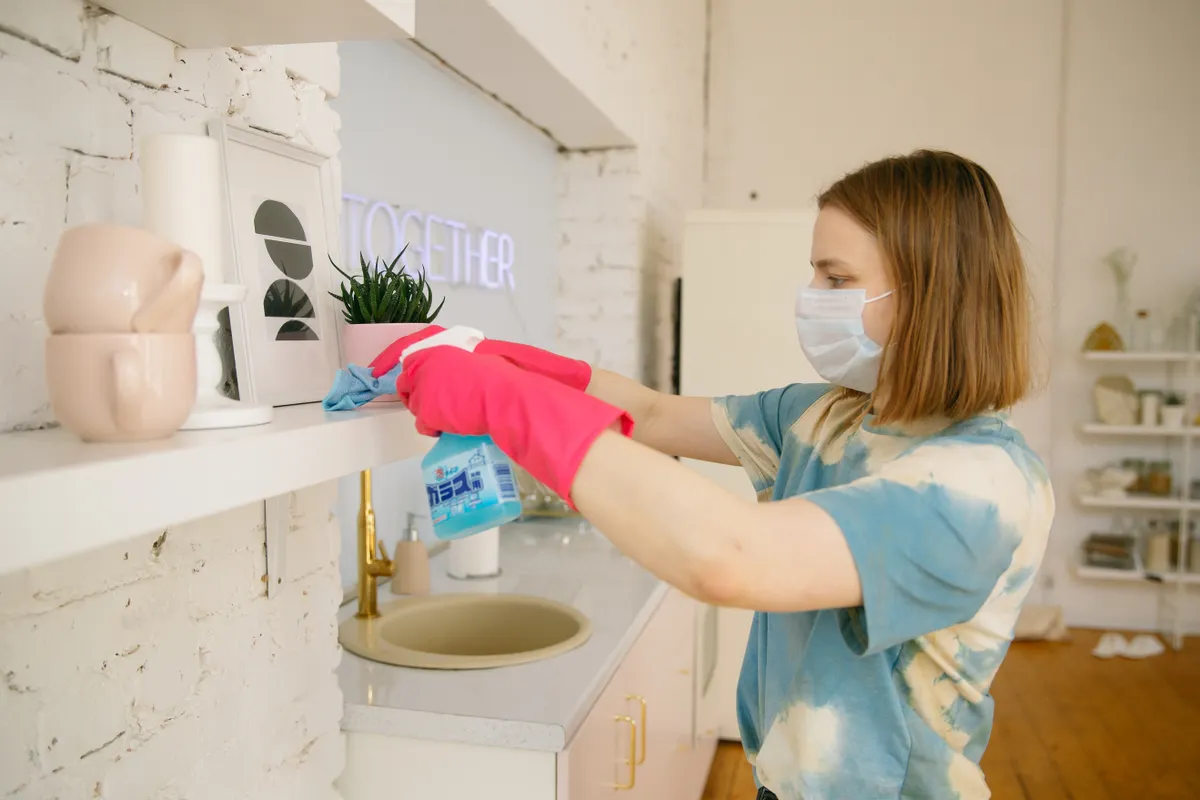
Photo Credit: Polina Zimmerman
How Often Should You Clean Concrete Countertops?
Wipe concrete countertops after every use, the same as any other food prep surface. Spills, especially from wine, coffee, tomato sauce, or citrus, should be cleaned up immediately rather than left to sit, since a compromised or aging sealer will allow these liquids to stain the concrete underneath.
Beyond daily wiping, concrete countertops also need periodic sealer maintenance. Most sealers hold up for one to three years depending on the product used and how much the countertop is used, but this varies by manufacturer, so check the sealer's documentation or ask the installer what schedule they recommend.
A simple way to test the seal: pour a few drops of water on the surface. If it beads up, the seal is doing its job. If the water soaks in or darkens the concrete, it is time to reseal before continuing normal use.
Safe Products vs. Products To Avoid
Concrete's biggest weakness is acid. Acidic cleaners can etch the sealer and, over time, eat into the concrete itself, leaving dull spots or rough patches that are difficult to reverse.
|
Safe for Concrete Countertops |
Avoid on Concrete Countertops |
|
Mild dish soap diluted in warm water |
Vinegar, lemon juice, or other acidic cleaners |
|
pH-neutral stone/concrete cleaner |
Undiluted bleach used routinely |
|
Soft microfiber cloths |
Steel wool, scouring pads, or abrasive powders |
|
A soft-bristle brush for grout-like seams (if present) |
Ammonia-based glass cleaners used frequently |
|
Manufacturer-approved concrete sealer for resealing |
Generic "natural" acidic mixes marketed as all-purpose |
A quick safety note: if you ever use a diluted bleach solution to disinfect the surface, never combine it with vinegar, ammonia, or other acidic cleaners. Mixing bleach with these products can release hazardous fumes. Rinse the surface fully before switching product types, and always work in a ventilated kitchen.
Deep Cleaning and Stubborn Spots
For light residue or a general buildup of grease, a paste of baking soda and water applied with a soft cloth can lift grime without scratching a well-sealed surface. Apply gently, let it sit for a few minutes, then wipe clean and dry thoroughly. Test any new product on a small, hidden section of the countertop first, since sealers vary between manufacturers and some are more sensitive than others.
Concrete that has actually stained, rather than just built up surface grime, usually needs a different approach than a normal cleaning routine, since the stain may involve the concrete itself and not just the sealer. That level of stain treatment goes beyond routine kitchen cleaning and is better covered by a dedicated stain removal resource rather than general countertop care.
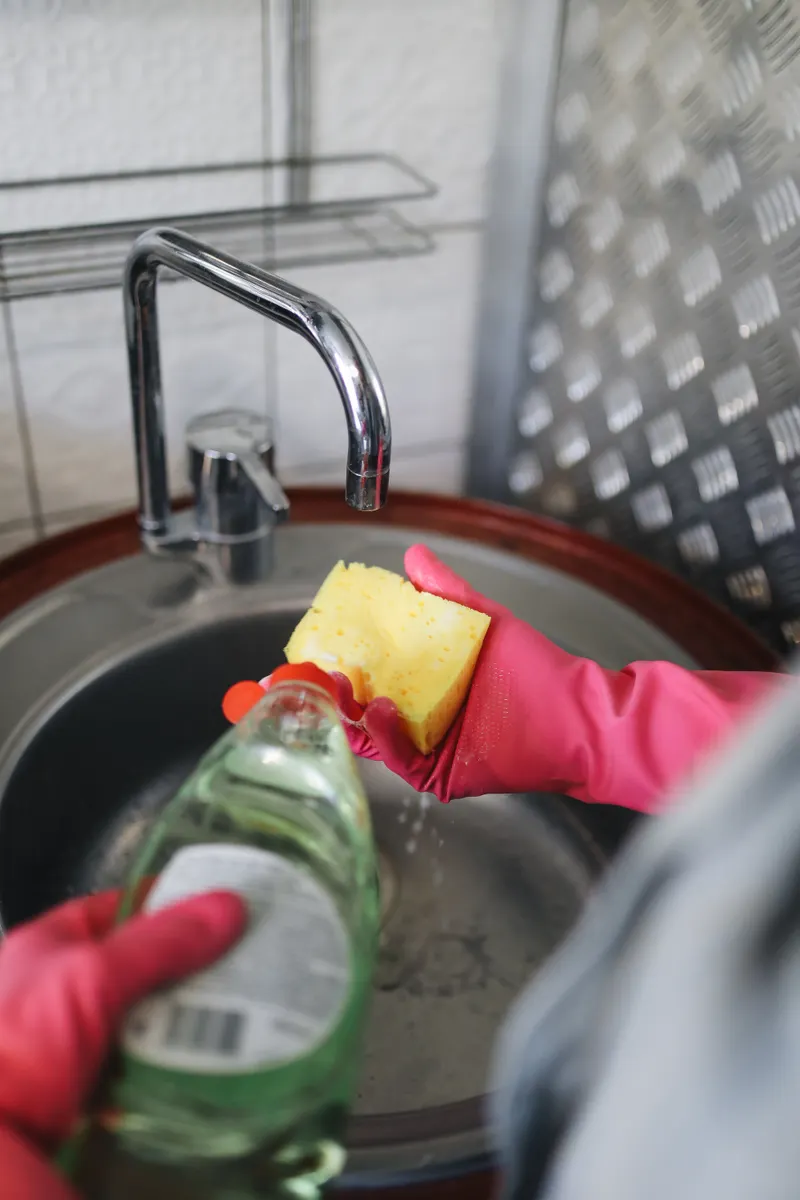
Photo Credit: Polina Tankilevitch
Disinfecting a Concrete Countertop
Disinfecting matters most after handling raw meat, poultry, or eggs. A diluted bleach solution can be used on a sealed concrete countertop, but only briefly and only if the sealer is in good condition. Apply, let it sit for the contact time listed on the product label, then rinse thoroughly with clean water and dry the surface. Skip this step on a countertop with a worn or unknown sealer, since bleach solutions left in contact with exposed concrete can cause discoloration.
For step-by-step guidance on safe disinfecting frequency and product dilution across different countertop materials, see Disinfecting & Sanitizing Kitchen Countertops.
Common Mistakes To Avoid
- Using vinegar or lemon-based cleaners because they seem "natural." These are some of the most damaging products for a sealed concrete surface.
- Scrubbing with abrasive pads or steel wool, which can scratch both the sealer and the concrete underneath.
- Letting spills sit, especially oil, wine, or acidic foods, which can stain unsealed or under-sealed concrete quickly.
- Skipping resealing because the countertop still looks fine on the surface, even though the water-bead test shows the seal has already failed.
- Applying heavy pressure when scrubbing instead of letting a mild cleaner do the work over a minute or two.

Photo Credit: RDNE Stock project
How To Clean Concrete Without Scratching or Damaging It
Stick to soft cloths and non-abrasive sponges, keep cleaners pH-neutral, and dry the surface after every clean. If a spot needs more effort, add a little more time with the cleaner rather than more pressure or a rougher tool. Concrete's sealer is a thin protective layer, and it is much easier to wear it down with the wrong tool than most homeowners expect.
If the countertop has decorative aggregate (small stones or glass mixed into the concrete), be extra cautious with abrasive tools, since scrubbing across an uneven surface can wear the sealer unevenly.
When To Call a Professional
Most day-to-day cleaning and even occasional deep cleaning can be handled at home. Professional help is worth considering when:
- The sealer has failed across a large area and needs full resealing rather than a spot fix.
- Stains have penetrated the concrete itself and home methods have not lifted them.
- Cracks, chips, or rough patches have appeared and may need patching before resealing.
- You are unsure what type of sealer was originally used, which affects which cleaning products are safe.
Professional resealing or repair cost varies widely based on countertop size, the type of sealer used, and local labor rates, so it is worth getting a quote from a concrete or stone care specialist rather than relying on a fixed estimate.
Frequently Asked Questions
What is the best way to clean a concrete countertop? Warm water, a mild dish soap, and a soft cloth, followed by a full dry with a clean towel. Avoid acidic or abrasive products.
How often should you clean a concrete countertop? Wipe after every use and clean spills immediately. Check the sealer's condition every few months with a simple water-bead test.
What cleaning products are safe for a concrete countertop? Mild dish soap, pH-neutral stone or concrete cleaners, and soft microfiber cloths are the safest everyday choices.
What should you avoid when cleaning a concrete countertop? Avoid vinegar, lemon juice, other acidic cleaners, abrasive scrubbers, and letting bleach sit on an unsealed or worn surface.
How can you clean a concrete countertop without damaging it? Use gentle products, soft tools, light pressure, and dry the surface fully after every clean to protect the sealer.
Safety note: always check the label on any commercial cleaner or sealer before use, and never combine bleach with vinegar, ammonia, or other acidic products. Work with a window open or the range hood on when using stronger cleaning solutions, and if the countertop's sealer type is unknown, test any new product in a small hidden area first.
For the full approach to keeping every kitchen surface in shape, back to the complete kitchen cleaning guide.





Leave a Reply