
A dishwasher that leaves dishes gritty, cloudy, or still smelling like last night's dinner usually isn't broken. It's just working through a clogged filter. Dishwasher filter cleaning is one of the most overlooked parts of kitchen maintenance, mainly because the filter sits tucked away at the bottom of the tub where it's easy to forget entirely.
This guide walks through how to find, remove, and clean this part safely, along with how often it actually needs attention. It's part of the Dishwasher Cleaning Guide, which covers other dishwasher maintenance tasks beyond this specific part.
The Best Way to Clean a Dishwasher Filter (Quick Answer)
For most dishwashers, this approach works well:
- Locate and remove the filter, usually found at the bottom of the tub under the lower spray arm.
- Rinse it under warm running water to clear loose debris.
- Soak it in warm water with a little dish soap, or a vinegar solution, for 10 to 15 minutes.
- Use a soft brush to gently clean the mesh screen, then rinse thoroughly and reinstall.
The filter's job is to catch food particles before they recirculate through the wash cycle, so a clogged one directly affects how clean your dishes come out, not just how the dishwasher smells.
Finding Your Dishwasher's Filter
Most modern dishwashers use a removable filter system located at the bottom of the tub, usually near the center or slightly toward the back, underneath the lower spray arm. It typically has a cylindrical or rounded shape with a mesh screen and twists or lifts out by hand, without needing any tools.
Filter design varies by brand and model, so it's worth checking your owner's manual if you can't locate it right away. Some dishwashers use a fully manual filter that requires regular cleaning, while a smaller number of models use a self-cleaning filter that grinds food particles automatically and needs far less hands-on attention. If your manual doesn't specify, a manual filter is the more common setup in dishwashers made in the last decade or so.
What You'll Need
Most of what's needed is already in the kitchen:
- Warm water
- Mild dish soap
- White vinegar (optional, for a deeper soak)
- A soft-bristle brush or old toothbrush
- A microfiber cloth or paper towel
Avoid anything abrasive like steel wool or scouring pads. The mesh screen on most filters is made from a fine metal weave that scratches or bends easily, and a damaged filter won't catch debris the way it's supposed to.
Step-by-Step: Removing and Cleaning the Filter
- Turn off and unplug the dishwasher, or at minimum make sure it's not mid-cycle, before reaching into the tub.
- Locate the filter assembly at the bottom of the tub and remove it according to your model's release mechanism. This is usually a quarter-turn twist or a simple lift, and forcing it in the wrong direction can crack the plastic housing.
- Rinse the filter under warm running water to knock off loose food debris before soaking.
- Soak the filter for 10 to 15 minutes in a bowl of warm water mixed with a few drops of dish soap. For heavier buildup, a solution of equal parts warm water and white vinegar works well to help break down grease and mineral deposits.
- Gently scrub the mesh screen with a soft-bristle brush, working in small circular motions rather than pressing hard in one direction, which can bend the fine mesh.
- Rinse thoroughly under running water, checking that no soap or vinegar residue remains, since either can affect wash performance if left behind.
- Reinstall the filter, making sure it locks or twists fully back into place. A loose or improperly seated filter can allow debris to bypass it during the next cycle.
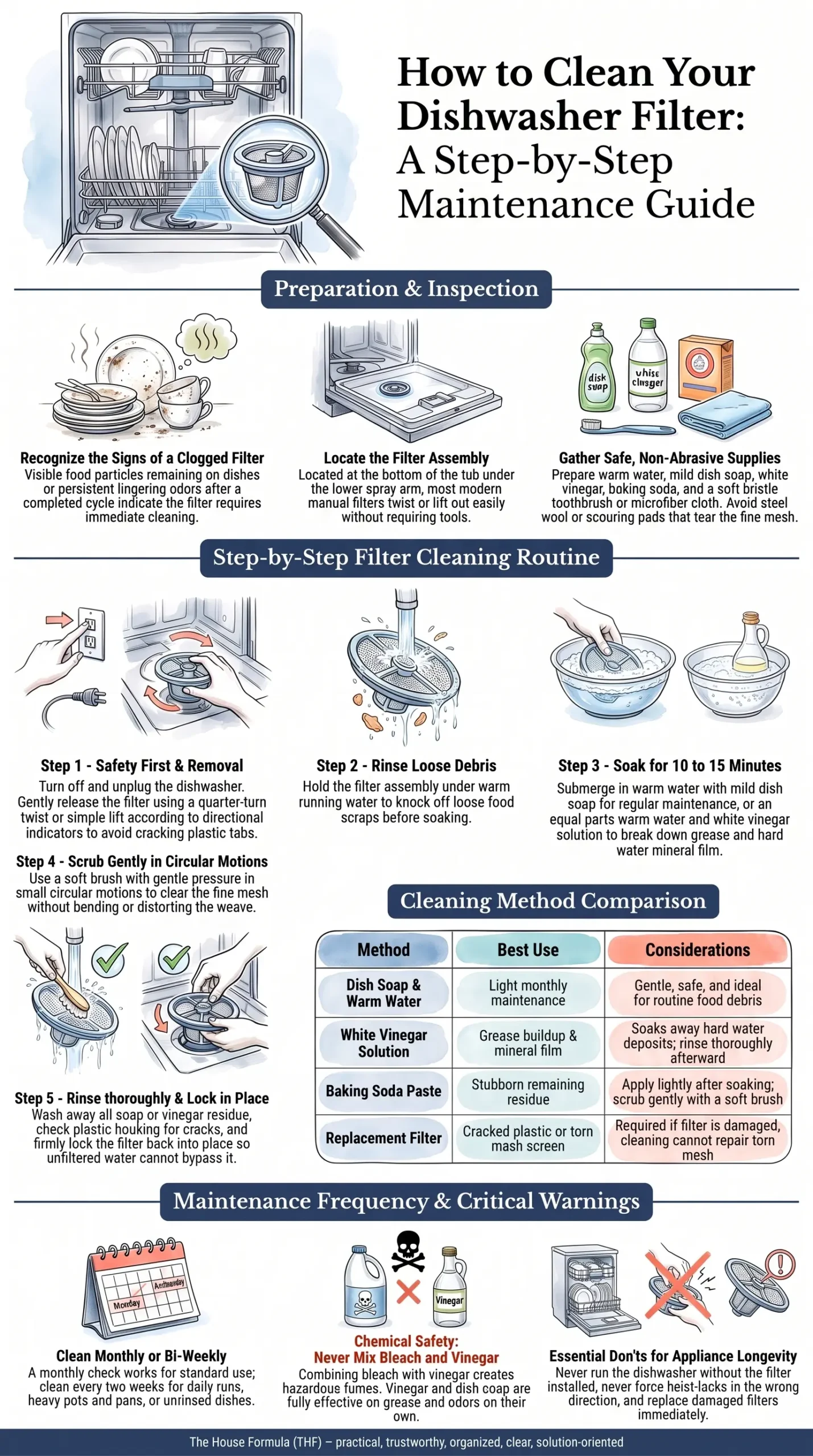
Photo Credit: Hobby Guidebook Editorial
Using Vinegar and Baking Soda for a Deeper Clean
For a filter with heavier grease buildup or a persistent odor, vinegar and baking soda both have a role, used one at a time rather than combined together.
Soaking the filter in a vinegar and warm water solution helps cut through grease and mineral film left by hard water. After rinsing, a light paste of baking soda and water can be applied directly to the mesh for a few minutes to help lift any remaining residue, then rinsed clean with a soft brush.
These two ingredients shouldn't be mixed together in a sealed container ahead of time, since the reaction fizzes and works better applied at separate stages. Neither should ever be combined with bleach, since mixing bleach with vinegar produces hazardous fumes. There's no need for bleach in this process at all, since vinegar and dish soap handle grease and odor effectively on their own.
Cleaning Without Scratching or Bending the Filter
The mesh screen is the part most likely to get damaged during cleaning, and a bent or torn filter won't function properly even if it looks mostly fine.
- Use only soft brushes, never metal brushes, steel wool, or anything with a rough texture.
- Avoid pressing hard against the mesh, since firm pressure can distort the fine weave and create gaps debris can pass through.
- Check the plastic housing for cracks before reinstalling, since a cracked filter frame won't seat properly and may allow unfiltered water to bypass it.
- Handle twist-lock mechanisms gently, turning only in the direction indicated by your model, since forcing it the wrong way can snap the locking tabs.
If a filter is already cracked, torn, or missing pieces of mesh, cleaning won't fix that damage. In that case, ordering a replacement filter from the manufacturer is usually more practical than attempting a repair, and replacement filters are generally inexpensive compared to calling in a professional for what's typically a simple part swap.
Photo Credit: Castorly Stock
How Often Should You Clean a Dishwasher Filter
A quick rinse and check once a month works well for most households, especially if dishes regularly go in with food scraps still attached. Kitchens that run the dishwasher daily, or that frequently wash pots and pans with heavier food residue, may benefit from checking every two weeks instead.
The right frequency really depends on how the dishwasher gets used day to day, including whether dishes are pre-rinsed before loading and how often the machine runs. For a more detailed breakdown of how usage patterns affect this schedule, our guide on How Often to Clean a Dishwasher Filter covers this in more depth.
A simple sign it's time to clean: if dishes come out with visible food particles stuck to them, or the dishwasher has a lingering smell even after a cycle, the filter is very likely due for attention regardless of how recently it was last cleaned.
What to Avoid When Cleaning a Dishwasher Filter
- Using steel wool or abrasive scrubbers. These can tear or bend the fine mesh screen, letting debris pass through uncaught.
- Running the dishwasher without the filter installed. This allows food particles to recirculate freely and can eventually clog the spray arm or drain.
- Forcing a twist-lock filter in the wrong direction. This can crack the plastic housing or snap the locking tabs.
- Combining bleach with vinegar-based cleaners. This produces hazardous fumes and should never be done.
- Ignoring cracks or torn mesh. A damaged filter should be replaced rather than reused, since cleaning won't restore its function.
Cleaning Method Comparison
|
Method |
Best Use |
Considerations |
|
Dish soap and warm water |
Light monthly maintenance |
Gentle and safe for regular use |
|
Vinegar soak |
Grease buildup, mineral film |
Effective for hard water deposits; rinse fully afterward |
|
Baking soda paste |
Stubborn residue after soaking |
Use gently with a soft brush, not heavy pressure |
|
Replacement filter |
Cracked, torn, or missing mesh |
Usually inexpensive; check manufacturer part number |
For most households, a monthly soap and water rinse handles routine buildup, with an occasional vinegar soak when grease or odor builds up more than usual.
Checking the Spray Arm While You're At It
A clogged filter and a clogged spray arm often go hand in hand, since both affect how well water circulates during a wash cycle. If dishes are coming out spotty or greasy even after cleaning the filter, the spray arm's small water jets may also need attention, since mineral deposits and food particles can block these openings over time.
Our guide on Dishwasher Spray Arm Cleaning walks through how to remove, inspect, and clear these jets, which is a natural next step if filter cleaning alone doesn't fully solve the problem.
Photo Credit: cottonbro studio
FAQ
What is the best way to clean a dishwasher filter? Remove the filter, rinse off loose debris, soak it in warm soapy water or a vinegar solution for 10 to 15 minutes, then gently scrub the mesh with a soft brush before reinstalling.
How often should you clean a dishwasher filter? Once a month works for most households, with every two weeks for heavier daily use or households that don't pre-rinse dishes before loading.
What cleaning products are safe for a dishwasher filter? Mild dish soap, warm water, white vinegar, and a light baking soda paste are all safe choices when used with a soft brush.
What should you avoid when cleaning a dishwasher filter? Avoid steel wool or abrasive scrubbers, forcing the filter in the wrong direction, running the dishwasher without it installed, and combining bleach with vinegar.
How can you clean a dishwasher filter without damaging it? Use a soft brush with gentle pressure, avoid bending the fine mesh, and check the plastic housing for cracks before reinstalling.
For more appliance care throughout the kitchen, view the full kitchen cleaning guide for additional routines and schedules.
A quick safety note: turn off or unplug the dishwasher before reaching into the tub, and handle the filter mechanism gently to avoid cracking the housing. Never combine bleach with vinegar-based cleaners, and replace a cracked or torn filter rather than continuing to use it.





Leave a Reply