
Cloudy glasses, a chalky white film on the interior walls, and spray arm holes that seem to clog no matter how often you clean them are all signs pointing to the same underlying cause: hard water. As water evaporates during each cycle, it leaves behind the calcium and magnesium minerals it was carrying, and those minerals gradually harden into a crusty deposit called limescale. Dishwasher limescale removal isn't complicated, but it does need the right approach, since some of the same acids that dissolve limescale well can also damage certain interior finishes if used too often or at too high a strength. This guide is part of the Dishwasher Cleaning Guide, and it covers how to identify limescale, remove it safely, and reduce how quickly it comes back.
How Do You Remove Hard Water and Limescale Buildup in a Dishwasher?
Run an empty cycle with a cup of white vinegar placed in a dishwasher-safe container on the top rack, using a hot water setting to help the vinegar dissolve mineral deposits throughout the interior. For visible crusty spots on the walls, door, or spray arm, apply a paste of baking soda and water directly to the area, let it sit for 10 to 15 minutes, then scrub gently with a soft brush before rinsing. Wipe down the door seal and any visible tracks with a vinegar-dampened cloth to remove residue in those tighter spaces. Follow up with a rinse-only cycle afterward to clear out any remaining vinegar smell.
The sections below go through each part of this process in more detail, along with how to recognize limescale specifically and how to slow its return.
Understanding Why Limescale Builds Up
Hard water contains higher levels of dissolved calcium and magnesium than soft water does, and these minerals don't break down or wash away completely during a normal cycle. As water heats and evaporates inside the dishwasher, the minerals it carried get left behind, gradually forming the chalky white deposits known as limescale. This buildup shows up most often on interior walls, the heating element, spray arm holes, and anywhere water tends to sit or evaporate slowly.
Households in hard water areas see this happen faster and more visibly than those with softer water, and it's a normal outcome of water chemistry rather than a sign of a dishwasher problem. Left unaddressed, limescale can restrict spray arm holes, reduce heating element efficiency, and leave a cloudy film on glassware that no amount of detergent fully clears, since the film is mineral deposit rather than food residue or grease.
How to Tell If Your Dishwasher Has Hard Water and Limescale Buildup
A few signs point clearly to mineral buildup rather than a grease or food-residue issue.
- A chalky white or grayish film on the interior walls, door, or racks, which feels slightly gritty rather than sticky
- Cloudy or spotted glassware that comes out of the dishwasher looking dull even after a full cycle
- Spray arm holes that clog repeatedly despite regular cleaning, often with a crusty residue visible in and around the holes
- A visible crusty ring or residue around the heating element at the bottom of the dishwasher
- Reduced cleaning performance overall, even when detergent amounts and loading haven't changed
If you're seeing several of these at once, it's a reasonably strong sign that limescale, rather than a mechanical issue, is behind the drop in performance.
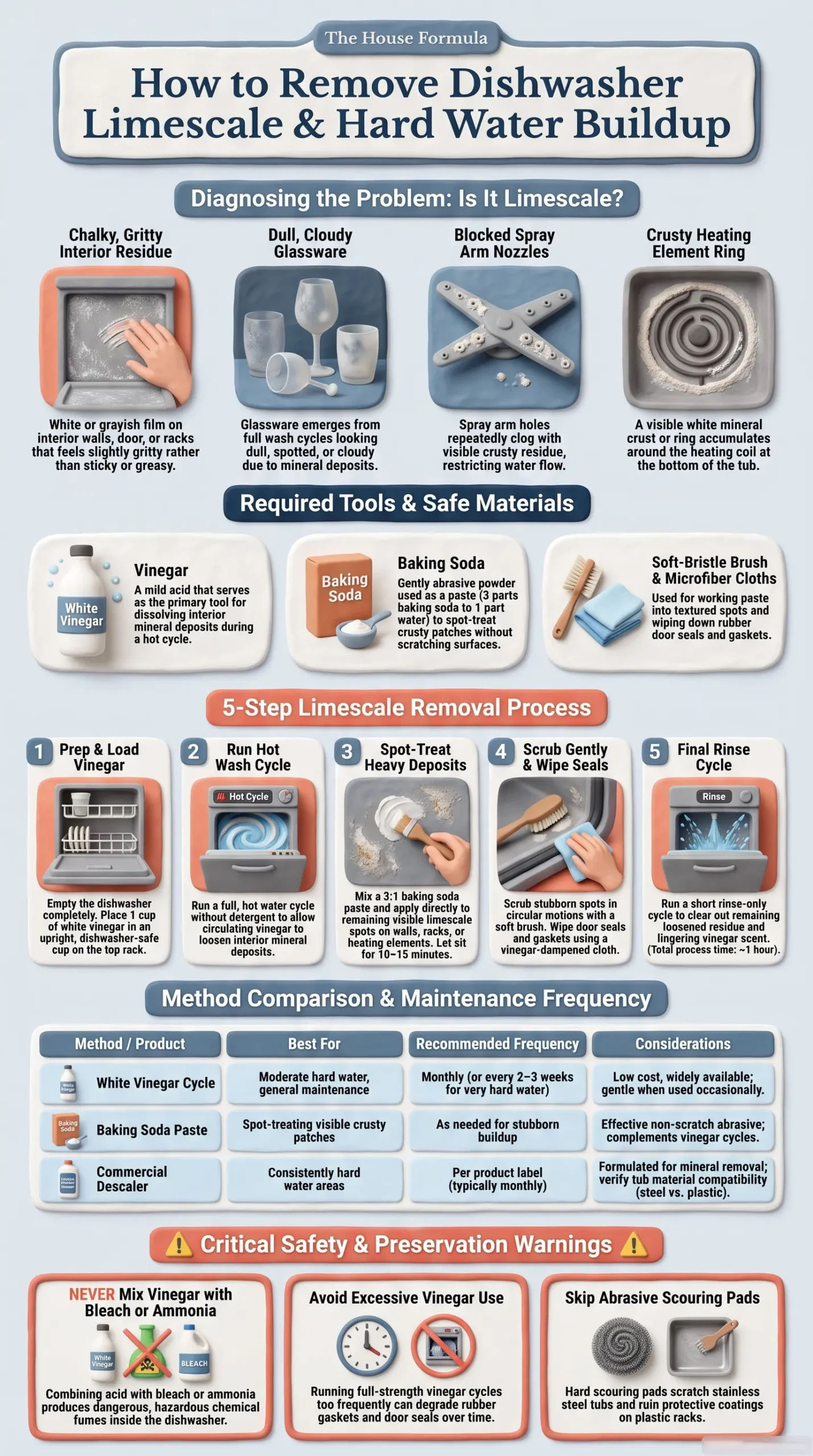
Photo Credit: Hobby Guidebook Editorial
Step-by-Step Limescale Removal Process
- Empty the dishwasher completely so the cleaning cycle can reach every interior surface without dishes in the way.
- Place a dishwasher-safe container filled with one cup of white vinegar on the top rack, positioned upright so it doesn't tip during the cycle.
- Run a full, hot water cycle with no detergent added, allowing the vinegar to circulate and work on mineral deposits throughout the interior.
- Once the cycle finishes, inspect the interior for remaining crusty spots, particularly around the door seal, racks, and spray arm.
- Mix a baking soda paste (roughly three parts baking soda to one part water) and apply it directly to any visible limescale patches.
- Let the paste sit for 10 to 15 minutes, giving it time to loosen the mineral deposit before scrubbing.
- Scrub gently with a soft brush, working in small circular motions rather than pressing hard in one spot.
- Wipe down the door seal and gasket area with a vinegar-dampened cloth, since these tighter spaces often trap residue that a full cycle doesn't fully reach.
- Run a short rinse-only cycle afterward to clear out any remaining vinegar smell or loosened residue.
This full process typically takes about an hour, including the wash cycle time, though the hands-on portion is closer to 20 to 30 minutes.
Tools Needed for Hard Water and Limescale Buildup in a Dishwasher
This task requires only a few basic supplies, most already common in most kitchens.
- White vinegar: the primary tool for dissolving mineral deposits throughout the interior
- Baking soda: useful as a paste for scrubbing visible crusty spots
- A soft-bristle brush or old toothbrush: for working the paste into textured areas without scratching
- A dishwasher-safe container: for holding the vinegar during the wash cycle
- Microfiber cloths: for wiping the door seal and other surfaces by hand
No specialty descaling equipment is required for most households, though a commercial dishwasher cleaner or descaler formulated for hard water can serve as an alternative for anyone who prefers a single-step product over the vinegar cycle described here.
What Cleaning Products Are Safe for Hard Water and Limescale Buildup?
A short list covers what this task generally needs.
- White vinegar: a mild acid effective at dissolving mineral deposits, safe for most stainless steel and plastic dishwasher interiors when used occasionally
- Baking soda: gentle enough for scrubbing without scratching, useful for spot-treating visible buildup
- Commercial dishwasher descaler: a citric-acid or similar product designed specifically for this purpose, worth considering for households with consistently hard water who want a routine solution
- A soft-bristle brush: gentle enough for interior surfaces without risking scratches
Avoid using vinegar excessively or at full strength on a very frequent basis, since repeated acid exposure can affect certain rubber gaskets and seals over time. Avoid abrasive scouring pads on the interior walls or racks, since these can scratch stainless steel or damage certain plastic coatings. Never mix vinegar with bleach or ammonia-based products, since this produces hazardous fumes, and this applies fully inside a dishwasher just as it would anywhere else in the kitchen.
Photo Credit: Castorly Stock
Vinegar Cycle vs. Commercial Descaler
Both approaches address limescale effectively, and the better choice often comes down to how hard your water is and how often you want to run this maintenance.
|
Approach |
Best For |
Frequency |
Considerations |
|
White vinegar cycle |
Moderate hard water, occasional buildup |
Monthly or as needed |
Low cost, widely available, gentle when used occasionally |
|
Baking soda paste |
Spot-treating visible crusty patches |
As needed |
Effective without scratching, works alongside a vinegar cycle |
|
Commercial descaler |
Consistently hard water areas |
Follow product label, often monthly |
Formulated specifically for mineral removal, check compatibility with your dishwasher's interior material |
For most households, a monthly vinegar cycle handles limescale well without needing anything stronger. Homes in particularly hard water regions, where buildup returns quickly even with regular vinegar use, may find a commercial descaler product more convenient for staying ahead of the problem.
Eco-Friendly Way to Clean Hard Water and Limescale Buildup
White vinegar and baking soda are both low-impact, biodegradable options that handle the vast majority of limescale removal without needing a stronger commercial descaler. Since both ingredients are common household staples, this approach also avoids introducing an additional bottled product into the kitchen for a task that vinegar already manages well. For anyone specifically looking to reduce mineral buildup at the source rather than just treating it after the fact, installing a water softener or using rinse aid consistently can reduce how quickly limescale forms in the first place, though these are separate investments beyond the cleaning process itself.
What to Avoid When Cleaning Hard Water and Limescale Buildup
A few habits tend to cause more problems than they solve.
- Running vinegar cycles excessively often: occasional use is generally fine, but very frequent acid exposure can affect rubber gaskets and seals over time
- Using abrasive pads on interior walls or racks: this scratches stainless steel and certain plastic coatings
- Ignoring the door seal and gasket during a full cycle clean: these tighter spaces often need a separate hand wipe with a vinegar-dampened cloth
- Mixing vinegar with bleach or ammonia-based products: this produces hazardous fumes and should never be done
- Assuming a commercial descaler is safe for every interior material: check the product label against your dishwasher's specific interior, particularly if it has a stainless steel tub versus a plastic one
How Often Should You Clean Hard Water and Limescale Buildup?
A monthly vinegar cycle works well for most households dealing with moderate hard water, keeping mineral buildup from accumulating to a visible or performance-affecting level. Households in particularly hard water areas may find every two to three weeks more effective, while those with softer water might only need this every couple of months. Spot-checking the interior walls, spray arm, and heating element area during regular dishwasher cleaning helps catch buildup early, before it becomes thick enough to require extended scrubbing.
Related Dishwasher Maintenance
Limescale isn't the only source of a dishwasher that isn't performing or smelling the way it should. A musty or sour smell that persists even after a vinegar cycle often points to trapped food residue or moisture buildup rather than mineral deposits specifically. The Removing Dishwasher Odors guide covers that issue separately, including which areas tend to trap smells and how to address them directly.
Photo Credit: Castorly Stock
For a broader routine clean that goes beyond limescale specifically, combining vinegar and baking soda in a structured full-interior cleaning approach handles grease, food residue, and general grime alongside mineral deposits. The Cleaning a Dishwasher with Vinegar & Baking Soda guide walks through that fuller process, which pairs well with the limescale-focused steps covered here.
Frequently Asked Questions
How do you remove hard water and limescale buildup in a dishwasher? Run an empty hot cycle with a cup of white vinegar on the top rack, then scrub any remaining crusty spots with a baking soda paste before rinsing and running a final rinse-only cycle.
How often should you clean hard water and limescale buildup in a dishwasher? A monthly vinegar cycle works for most households, though very hard water areas may need this every two to three weeks.
What cleaning products are safe for hard water and limescale buildup in a dishwasher? White vinegar, baking soda paste, and commercial descalers labeled safe for your dishwasher's specific interior material. Avoid abrasive pads and never mix vinegar with bleach or ammonia.
What should you avoid when cleaning hard water and limescale buildup in a dishwasher? Avoid running vinegar cycles excessively often, using abrasive pads on interior surfaces, and ignoring the door seal during a full clean.
How can you clean hard water and limescale buildup in a dishwasher without damaging it? Use vinegar occasionally rather than constantly to protect rubber seals, scrub gently with a soft brush rather than anything abrasive, and check that any commercial descaler suits your dishwasher's interior material.
A Quick Note on Safety
Never mix vinegar with bleach or ammonia-based products, since this produces hazardous fumes. Use vinegar cycles at a reasonable frequency rather than constantly, since repeated acid exposure can affect rubber gaskets and seals over time. If limescale buildup remains heavy even after regular cleaning, or if you notice reduced heating or drying performance that persists, that may point to a hard water issue worth addressing with a water softener or a qualified technician's input.
For more on keeping the rest of your kitchen clean, return to the complete kitchen cleaning guide.





Leave a Reply