
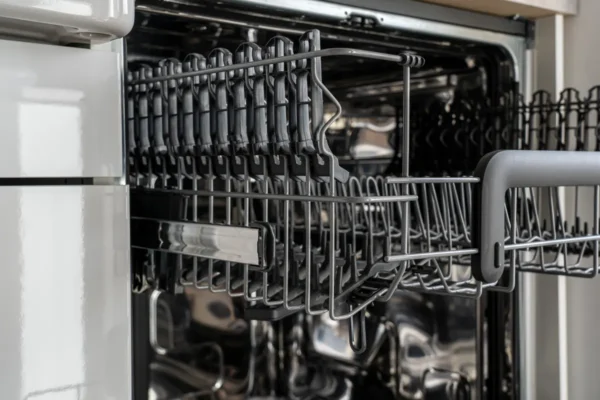
A dishwasher that smells musty or sour right after you open it usually isn't dirty in an obvious way. The dishes come out clean, but there's a smell that lingers anyway. Dishwasher odor removal almost always comes down to trapped moisture and food residue hiding in spots a regular wash cycle doesn't fully reach.
This guide covers where those smells come from, how to clear them safely, and how often odor control should be part of your routine. It's part of the Dishwasher Cleaning Guide, which covers other dishwasher maintenance tasks beyond odor control specifically.
How to Remove Dishwasher Odors (Quick Answer)
For most dishwashers, this approach works well:
- Remove and clean the filter, since trapped food particles are the most common source of odor.
- Run an empty cycle with a cup of white vinegar placed in a bowl on the top rack.
- Follow with a light sprinkle of baking soda across the bottom of the tub and run a short cycle.
- Wipe down the door seal and leave the door open between uses to let the interior air out.
Most dishwasher odors come from a combination of food residue and trapped moisture rather than a single obvious cause, which is why a full check across a few areas usually works better than tackling just one spot.
Where Dishwasher Odors Actually Come From
A dishwasher is a warm, damp, enclosed space for most of the day, which makes it an easy environment for odor-causing residue to settle in and linger. Four areas cause the vast majority of smells:
- The filter, which catches food particles during every wash and needs regular cleaning to avoid becoming a smell source itself.
- The door seal, where moisture collects in the rubber folds and can support mildew growth if it never fully dries.
- The interior tub and spray arm, where grease and mineral film can build up gradually with hard water or heavy use.
- Standing water in the tub base, which can develop a stale smell if it sits for too long between cycles.
Identifying which of these applies to your situation makes it easier to target the actual source instead of just running cycle after cycle hoping the smell fades on its own.
Step-by-Step: The Vinegar and Baking Soda Method
- Check the filter first. Remove it from the bottom of the tub, rinse under warm water, and clear any visible food debris before proceeding. A clogged filter is one of the most common causes of ongoing odor, and cleaning it often resolves the smell on its own.
- Place one cup of white vinegar in a dishwasher-safe bowl on the top rack of an otherwise empty dishwasher.
- Run a hot water cycle. The vinegar circulates through the wash, helping cut through grease and neutralize odor-causing residue along the interior walls and spray arm.
- Once the cycle finishes, sprinkle a light layer of baking soda across the bottom of the tub.
- Run a short, hot cycle to let the baking soda work through the interior, which helps absorb any remaining odor.
- Wipe down the door seal with a damp cloth once the cycle finishes and the interior has cooled.
Vinegar and baking soda shouldn't be combined directly in the same cycle or container, since mixing them causes a fizzing reaction that uses up both ingredients before they can do their job. Running them in separate steps, as outlined above, lets each one work on its own. For a more detailed breakdown of this method, including timing and how it compares to commercial dishwasher cleaners, our guide on Cleaning a Dishwasher with Vinegar & Baking Soda covers the process step by step.
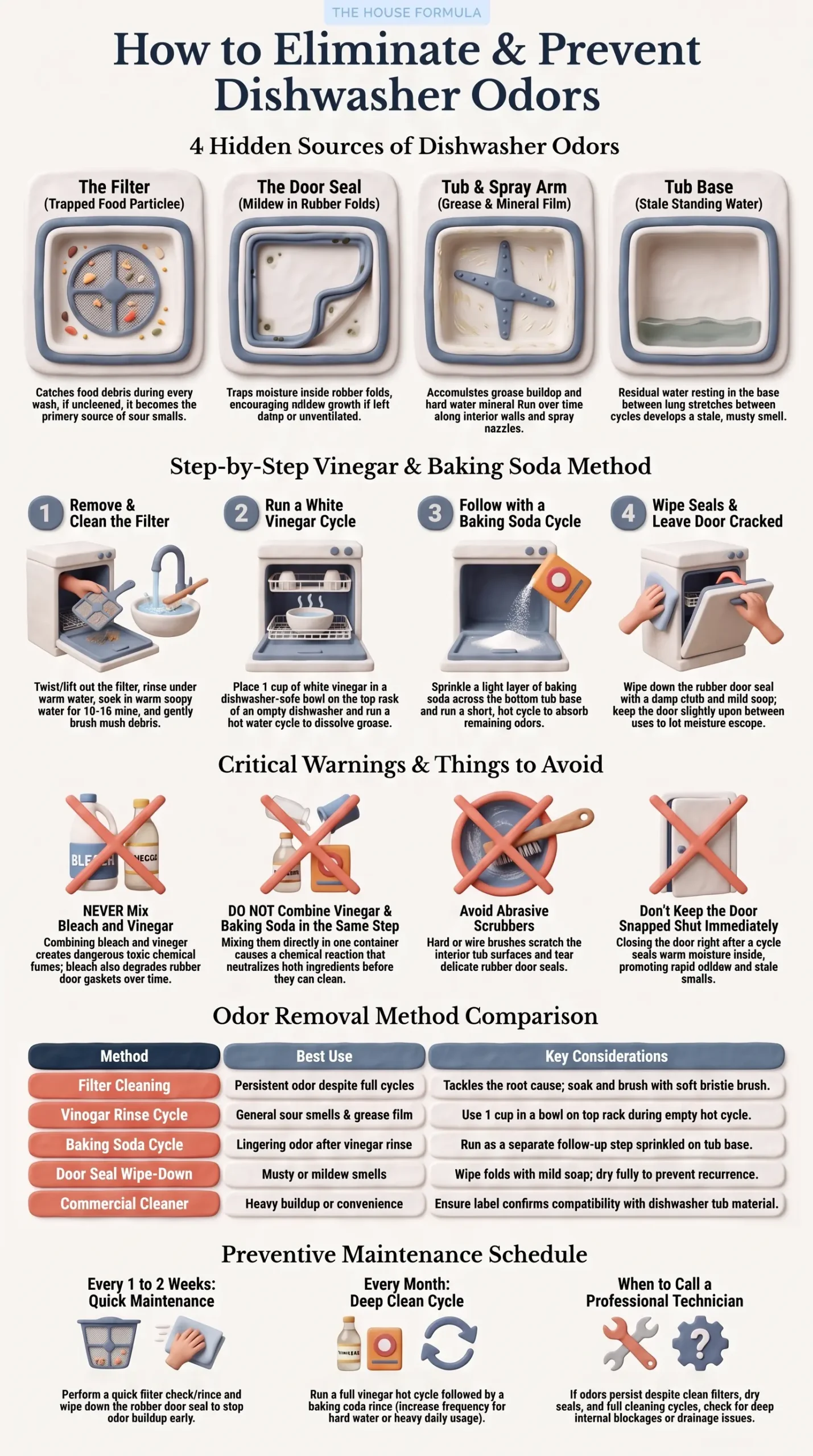
Photo Credit: Hobby Guidebook Editorial
Checking the Filter and Door Seal for Trapped Odor
If a full vinegar and baking soda cycle doesn't fully clear the smell, the filter and door seal are the next places to check closely, since both sit in spots that a standard wash cycle doesn't clean thoroughly on its own.
The filter, usually located at the bottom of the tub under the lower spray arm, should twist or lift out by hand. Food particles trapped in its mesh screen are a common odor source even when the rest of the dishwasher looks clean. Soaking it in warm water with a bit of dish soap for 10 to 15 minutes, then gently brushing the mesh with a soft brush, usually clears this buildup.
The door seal, the rubber strip lining the inside edge of the door, holds onto moisture in its folds longer than other surfaces. Wiping it with a damp cloth and mild soap, then drying it fully and leaving the door slightly open afterward, helps prevent the mildew smell that develops when this area stays damp too long.
What You'll Need
Most of what's needed is already in the kitchen:
- White vinegar
- Baking soda
- A dishwasher-safe bowl
- A soft microfiber cloth
- A soft-bristle brush or old toothbrush for the filter and seal
Avoid using bleach as part of this process. Bleach can damage rubber components like the door seal over time, and it should never be combined with vinegar, since that mixture produces hazardous fumes.

Photo Credit: Max Vakhtbovych
What to Avoid When Removing Dishwasher Odors
- Combining bleach with vinegar. This produces hazardous fumes and should never be done under any circumstance.
- Using abrasive scrubbers on the tub, filter, or door seal. These can scratch interior surfaces or tear the rubber gasket.
- Leaving standing water in the tub base for extended periods. This encourages a stale smell and should be checked if it doesn't drain properly between cycles.
- Skipping the filter check. A clogged filter is one of the most common reasons odor keeps returning even after a full cleaning cycle.
- Closing the door immediately after each wash. Leaving it cracked open for a while afterward lets trapped moisture escape instead of settling into the seal.
Comparing Odor Removal Methods
|
Method |
Best Use |
Considerations |
|
Vinegar rinse cycle |
General odor, grease-based smells |
Effective and inexpensive; run on an empty dishwasher |
|
Baking soda cycle |
Standing odor after a vinegar rinse |
Works best as a follow-up step, not combined directly |
|
Filter cleaning |
Persistent odor despite full cycles |
Often resolves the root cause on its own |
|
Door seal wipe-down |
Musty or mildew smell |
Requires full drying afterward to prevent recurrence |
|
Commercial dishwasher cleaner |
Convenience, heavier buildup |
Check label for safety with your specific interior material |
Most households get the best results by starting with the filter check and vinegar cycle, then moving to the door seal and baking soda step if the smell persists.
How Often Should You Clean Dishwasher Odors
A quick filter check and door seal wipe-down once every one to two weeks helps prevent odor from building up in the first place. This small habit takes just a few minutes and addresses the two most common sources before they become noticeable.
A full vinegar and baking soda cycle works well once a month for most households, more often for homes with hard water or heavy daily dishwasher use. Fitting odor control into a broader routine makes it easier to stay consistent rather than waiting until a smell becomes obvious. Our Dishwasher Maintenance Schedule lays out how this task fits alongside filter cleaning, seal care, and other regular upkeep across the month.

Photo Credit: Castorly Stock
When to Consider Professional Help
Most dishwasher odors clear up with the steps above, and there's no need to call in help for routine maintenance like this. If a smell persists despite a clean filter, a dry door seal, and a full vinegar and baking soda cycle, it may point to a drainage issue or a buildup deeper in the machine's internal components that isn't accessible during a standard home cleaning. In that case, a technician visit is a reasonable next step, and costs for this kind of service call vary depending on location and the specific issue found, so it's worth asking for an estimate before committing.
For a closer look at troubleshooting a smell that won't go away with standard cleaning, our guide on Removing Odor from a Dishwasher covers additional situations that go beyond the routine steps in this article.
FAQ
How do you remove dishwasher odors? Clean the filter, run an empty cycle with a cup of vinegar in a bowl on the top rack, then follow with a baking soda cycle. Finish by wiping down the door seal and letting it dry.
How often should you clean dishwasher odors? Check the filter and door seal every one to two weeks, and run a full vinegar and baking soda cycle about once a month, more often for hard water or heavy use.
What cleaning products are safe for dishwasher odors? White vinegar, baking soda, mild dish soap, and water are all safe choices. Commercial dishwasher cleaners work too, as long as the label confirms compatibility with your interior material.
What should you avoid when cleaning dishwasher odors? Avoid combining bleach with vinegar, using abrasive scrubbers on the tub or seal, and leaving standing water in the tub base for extended periods.
How can you clean dishwasher odors without damaging it? Use a soft brush and cloth rather than anything abrasive, avoid bleach on rubber components, and let the interior fully dry after cleaning to prevent mildew from returning.
For more appliance care throughout the kitchen, read the full kitchen cleaning guide for additional routines and schedules.
A quick safety note: never combine bleach with vinegar, since the mixture produces hazardous fumes. Use gentle tools on the filter and door seal, and if odor persists despite regular cleaning, consider having the appliance checked for a drainage or internal buildup issue.





Leave a Reply