
Cleaning a toilet and disinfecting it aren't quite the same job. A cleaned toilet can look spotless and still carry bacteria on the seat, handle, and bowl rim that a quick wipe-down doesn't fully remove. Disinfecting a toilet means using a product that actually kills germs, applying it correctly, and giving it enough time to work before rinsing or wiping it away.
This guide covers how to disinfect a toilet safely, how often it needs to be done, and which products are appropriate for the different surfaces involved, from porcelain to plastic seats and metal hardware. This article is Part of Toilet Cleaning Guide, which covers the full range of toilet care beyond disinfecting alone.
How Do You Disinfect a Toilet Safely
- Put on rubber gloves before starting, since disinfecting products are stronger than regular cleaners and can irritate skin with repeated contact.
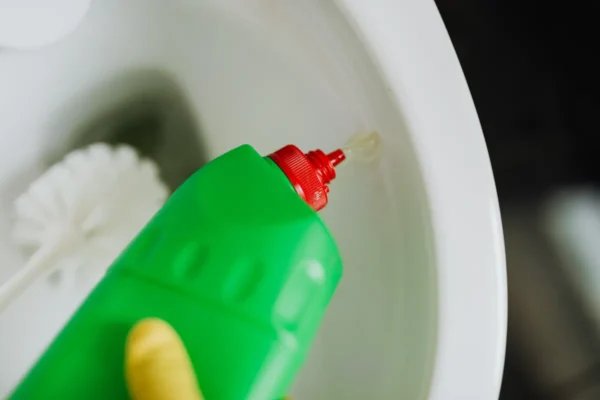
- Apply toilet bowl cleaner or a diluted bleach solution inside the bowl, working it under the rim, and let it sit for the time listed on the product label, usually a few minutes.
- Spray or wipe a disinfecting cleaner on the seat, lid, and handle, covering both the top and underside of the seat, since bacteria collect on both sides.
- Let the disinfectant sit on these surfaces for its full contact time, which is the amount of time listed on the product label needed to actually kill germs, not just wipe away visible mess.
- Scrub the bowl with a toilet brush, reaching under the rim and into the trap at the bottom.
- Wipe the seat, lid, and handle with a clean cloth or paper towel, using a fresh section of cloth for each surface if possible, since dragging the same soiled section across multiple areas spreads germs rather than removing them.
- Flush to rinse the bowl, then wash your hands thoroughly once gloves are removed.
Skipping the contact time is the most common shortcut people take, and it's also the step that matters most. A disinfectant wiped off too soon hasn't had the time it needs to actually kill bacteria, even if the surface looks clean afterward.
How Often Should You Clean and Disinfect a Toilet
|
Task |
Suggested Frequency |
|
Quick wipe of seat and handle |
Every 1 to 2 days |
|
Full bowl clean |
Weekly |
|
Full disinfecting of seat, lid, handle, and bowl |
Weekly, or more often in high-use households |
|
Extra disinfecting pass |
After illness in the household |
Households with more people, young children, or anyone recovering from illness generally benefit from disinfecting more often than the standard weekly pass. A toilet used by a single adult in good health may reasonably go a bit longer between full disinfecting sessions, though the bowl itself usually still needs weekly attention regardless.

Photo Credit: Hobby Guidebook Editorial
What Cleaning Products Are Safe for Disinfecting a Toilet
Generally safe and effective:
- Diluted bleach solution, one of the most reliable options for disinfecting porcelain, plastic seats, and hard surfaces
- Commercial disinfecting sprays or wipes labeled specifically for bathroom use
- Hydrogen peroxide-based disinfectants, a gentler alternative for households that prefer to avoid bleach
Use with caution:
- Full-strength bleach, which can be harsher than necessary on plastic seats and hardware over repeated use, when a properly diluted solution works just as well for disinfecting
- Disinfecting products not labeled for bathroom or toilet use, since not all general cleaners are formulated to kill the bacteria commonly found on toilet surfaces
Avoid:
- Mixing bleach with vinegar, ammonia, or other acidic cleaners, which can release hazardous fumes in an enclosed bathroom space
- Using the same cloth or wipe across multiple surfaces without rinsing or switching to a clean one
- Skipping the contact time listed on the product label, which reduces or eliminates the disinfecting effect entirely
Always check the product label for the specific surfaces it's designed for. Some disinfectants are formulated for hard, nonporous surfaces only and aren't intended for use on fabric toilet seat covers or certain painted finishes.
Tools Needed for Disinfecting a Toilet
- Rubber gloves, to protect skin from repeated contact with stronger cleaning products
- A toilet brush dedicated only to the bowl, never used on other bathroom surfaces
- Disinfecting spray or wipes rated for bathroom use
- Toilet bowl cleaner or diluted bleach solution for inside the bowl
- Clean cloths or paper towels, ideally a fresh one for each surface being disinfected
- A small trash bag or bin nearby for disposing of used wipes or paper towels immediately
Keeping the toilet brush separate from any brush or sponge used elsewhere in the bathroom prevents bacteria from the bowl being spread to other surfaces during a cleaning session.
Common Mistakes When Disinfecting a Toilet
- Wiping off disinfectant too soon. The full contact time listed on the label is what actually kills germs, and cutting that time short means the product hasn't finished doing its job.
- Using the same cloth on multiple surfaces. Wiping the seat, then the handle, then the lid with the same section of cloth moves bacteria around rather than removing it.
- Mixing bleach with another cleaner already on the surface. If a different product was used recently, rinse thoroughly before applying a bleach-based disinfectant to avoid an unexpected chemical reaction.
- Only disinfecting the seat and skipping the handle. The flush handle is touched by nearly everyone who uses the toilet and is one of the most overlooked spots during a quick clean.
- Not washing hands after removing gloves. Gloves protect skin during cleaning, but hands still need washing afterward, especially before touching other surfaces in the bathroom.
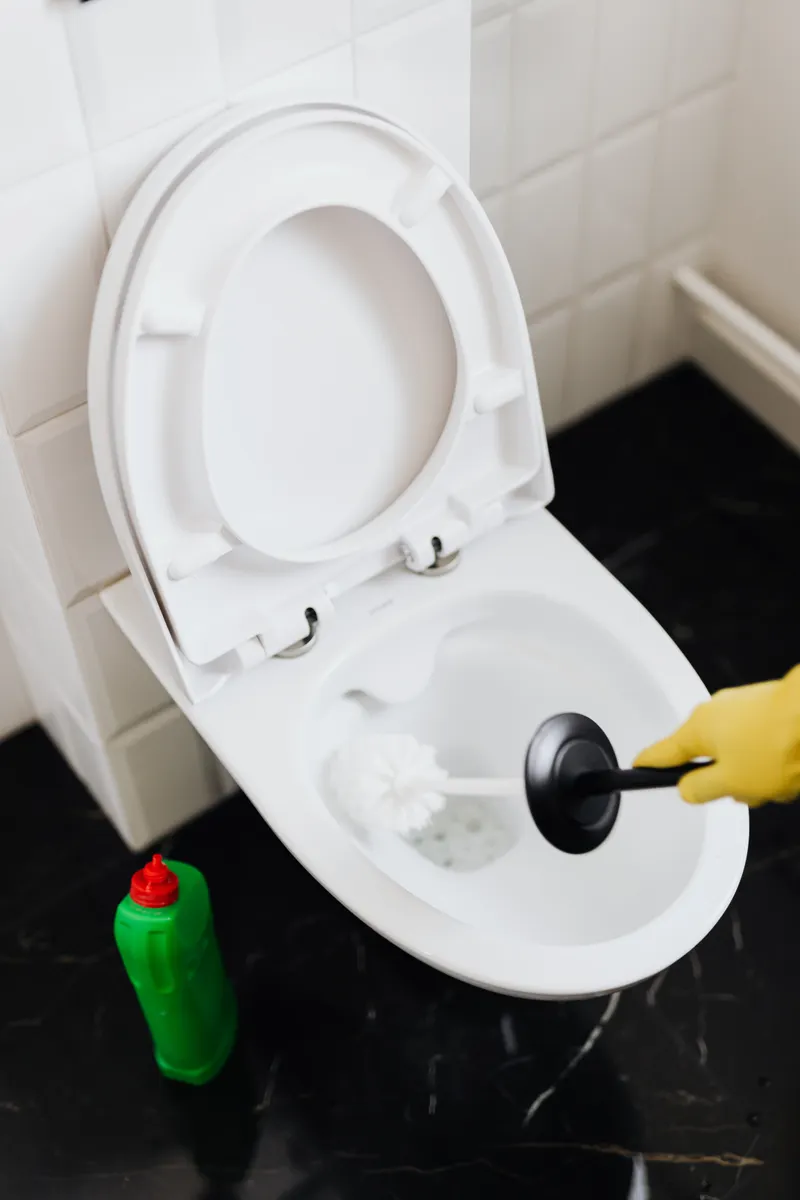
Photo Credit: https://kaboompics.com/
How to Disinfect a Toilet Without Damaging It
Porcelain generally holds up well to diluted bleach and standard disinfecting products, but plastic seats, lids, and certain finishes can degrade faster with repeated exposure to full-strength bleach. Diluting according to the label, rather than reaching for a stronger mix out of habit, protects these surfaces over the long run without sacrificing disinfecting power.
Avoid abrasive scrubbing on the seat or lid when disinfecting, since a light wipe with a cloth is enough for a flat, smooth surface. Save scrubbing tools for the bowl itself, where texture and buildup actually require more physical effort to remove.
If a toilet has any painted, decorated, or specialty finish on the seat or tank, check the manufacturer's care instructions before applying a strong disinfectant, since not every finish is rated for the same chemicals as standard plastic or porcelain. When there's uncertainty about a finish, testing a disinfectant on a small, hidden area first is a reasonable precaution.
Disinfecting the toilet is also a good moment to check whether any lingering smell in the bathroom is actually coming from bacteria buildup rather than a deeper odor source. If a smell persists even after a full disinfecting pass, that's usually a sign the issue goes beyond surface bacteria, and it's worth reviewing in Removing Toilet Odors for a more targeted approach.
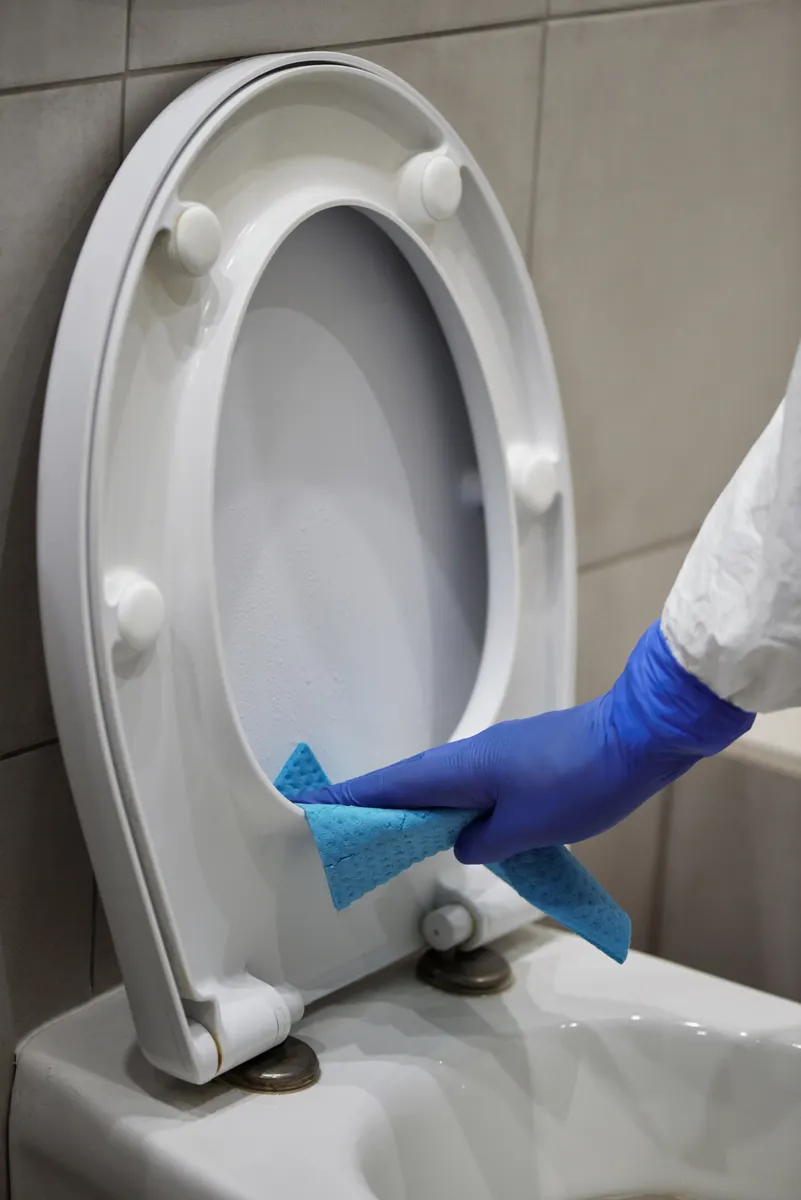
Photo Credit: Matilda Wormwood
Professional Cost to Clean and Disinfect a Toilet
Most households handle toilet disinfecting themselves, since it requires only basic supplies and a routine that takes a few minutes once it's part of a regular schedule. Professional cleaning services that include toilet disinfecting are typically part of a broader home or bathroom cleaning package rather than billed as a standalone service, and pricing varies widely depending on the provider, location, and whether it's a one-time deep clean or part of ongoing service. For most homes, disinfecting the toilet is one of the more straightforward tasks to keep up with directly, without needing professional help, unless it's bundled into a larger cleaning visit for other reasons.
Disinfecting the Bowl Versus the Rest of the Toilet
Disinfecting the bowl interior is only part of the job. The bowl deals with waste directly and needs its own cleaning approach focused on the water line, under the rim, and the trap, which is covered in detail in Toilet Bowl Cleaning. Disinfecting, by contrast, is about killing bacteria on every surface a person actually touches, including the seat, lid, and handle, which don't always get the same attention as the bowl during a standard cleaning pass.
Treating these as two connected but separate tasks tends to produce better results than assuming a clean-looking bowl means the rest of the toilet has been addressed as well.
Frequently Asked Questions
How do you disinfect a toilet safely? Wear gloves, apply a disinfecting product to the bowl, seat, lid, and handle, let it sit for the full contact time listed on the label, scrub the bowl, wipe the other surfaces with a clean cloth, then flush and wash your hands.
How often should you clean a toilet? A full bowl clean weekly works for most households, with a full disinfecting pass on the seat, lid, and handle at the same frequency, and more often during illness or in higher-use households.
What cleaning products are safe for a toilet? Diluted bleach and commercial bathroom disinfectants are generally safe and effective. Hydrogen peroxide-based products offer a gentler alternative for households avoiding bleach.
What should you avoid when cleaning a toilet? Avoid mixing bleach with vinegar or ammonia, wiping off disinfectant before its full contact time, and using the same cloth across multiple surfaces without switching or rinsing it.
How can you clean a toilet without damaging it? Use diluted rather than full-strength bleach, avoid abrasive scrubbing on plastic seats and lids, and check manufacturer instructions for any toilet with a specialty finish before applying strong disinfectants.
View the full bathroom cleaning guide for how disinfecting fits into complete toilet and bathroom care.
A Quick Safety Note
Disinfecting a toilet often involves bleach or other strong disinfecting products. Always follow the label for dilution and contact time, and never mix bleach with vinegar, ammonia, or other acidic cleaners, since this can release hazardous fumes in an enclosed bathroom. Wear gloves during application, keep the area ventilated, and wash your hands thoroughly once cleaning is finished.

Leave a Reply