
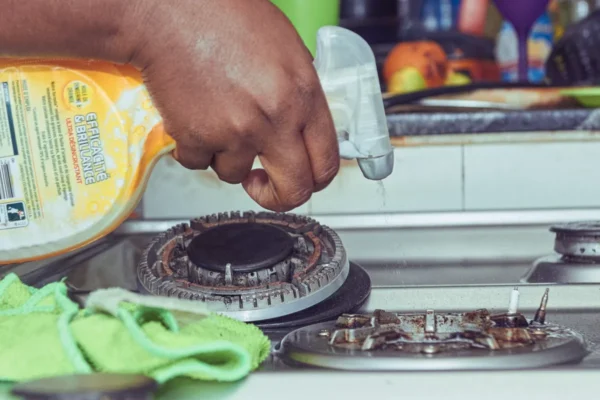
Gas stovetops deal with a different kind of mess than electric or glass cooktops. Between the grates, burner caps, igniters, and the porcelain or stainless surface underneath, there are more individual parts to clean, and more places for grease and food splatter to settle in. Gas stovetop cleaning is a task that rewards a bit of structure, working through each removable piece separately rather than trying to wipe the whole thing down at once. This guide is part of the Oven & Stovetop Cleaning Guide, and it covers the full process, from the main surface to the smaller components, along with what products work well and which habits tend to cause problems.
The Best Way to Clean a Gas Stovetop
Start by removing the grates and burner caps, then wipe down the main surface with warm, soapy water, using a baking soda paste on any stubborn, baked-on spots. Let the paste sit for 10 to 15 minutes before wiping it away with a damp cloth, then dry the surface completely. Wash the grates and burner caps separately in warm water with dish soap, using a soft brush to reach into grooves, and dry thoroughly before returning everything to its place. Avoid getting the igniters wet during this process, since moisture around them can cause the burner to click without lighting properly afterward.
That covers the routine version of this task. The sections below go through the full process in more detail, along with grate and burner cap care, safe products, and how to know when a stovetop needs more than a quick wipe.
Understanding What You're Cleaning
A gas stovetop has several distinct parts, and knowing what each one is helps explain why they need different treatment.
- The main surface, usually porcelain, enamel, or stainless steel, sits underneath everything else and catches spills that drip down past the grates
- Burner grates, the metal grids that pots and pans actually sit on, take the most direct grease exposure and heat cycling
- Burner caps, the round metal pieces that sit over the actual gas burner and direct the flame, collect grease and food residue in their small openings
- Igniters, the small components that spark to light the gas, need to stay completely dry and free of debris to work properly
- Control knobs, which sit at the front of the stovetop and often get greasy fingerprints and cooking splatter throughout regular use
Cleaning each of these separately, rather than treating the stovetop as one flat surface, makes the whole process more effective and reduces the risk of accidentally damaging a sensitive part like an igniter.
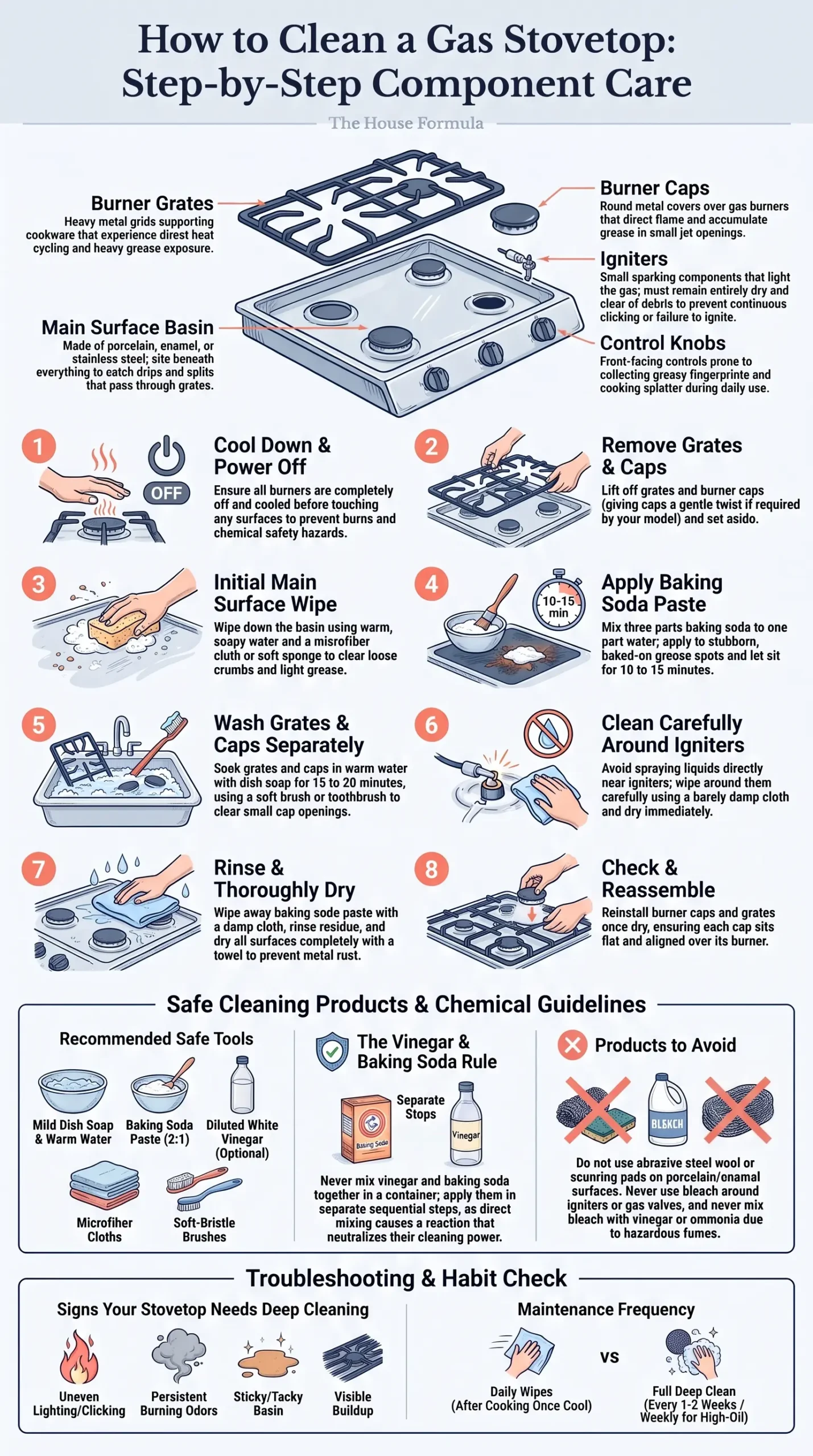
Photo Credit: Hobby Guidebook Editorial
Step-by-Step Cleaning Process
- Make sure all burners are off and the stovetop has cooled completely before starting. Working around a hot surface or an active flame isn't safe, and some cleaning products aren't meant for hot surfaces anyway.
- Remove the grates and burner caps, setting them aside for separate cleaning. Most lift off easily by hand, though some caps may need a gentle twist depending on the stove model.
- Wipe the main surface with warm, soapy water to remove loose crumbs and light grease. A microfiber cloth or soft sponge works well here.
- Apply a baking soda paste (roughly three parts baking soda to one part water) to any baked-on or stubborn spots on the main surface. Let it sit for 10 to 15 minutes.
- Wipe the paste away with a damp cloth, then rinse the surface with a clean, damp cloth to remove any remaining residue.
- Dry the surface completely with a dry cloth before replacing any parts, since moisture left sitting under the grates can contribute to future rust on metal components.
- Avoid spraying cleaner directly near the igniters, wiping around them carefully with a barely damp cloth instead, then drying immediately.
- Replace the grates and burner caps once everything is fully dry, checking that each cap sits correctly over its burner before using the stove again.
This full process typically takes 20 to 30 minutes, depending on how much buildup has accumulated on the surface and how many burners need attention.
Cleaning the Grates and Burner Caps
Grates and burner caps usually need more than a quick wipe, since they sit directly under cookware and take on heavier grease exposure than the main surface. Soaking them in warm water with a few drops of dish soap for 15 to 20 minutes loosens baked-on grime significantly, making the follow-up scrubbing much easier. A soft brush or an old toothbrush works well for reaching into the grooves and openings on burner caps, where food residue tends to collect and can affect how evenly the flame burns if left uncleaned.
Cast iron grates need a slightly different approach than enameled or stainless ones, since soap and prolonged soaking can strip a cast iron grate's seasoning over time. If your stovetop has cast iron grates, checking the manufacturer's care instructions before soaking them for extended periods is worth doing, and drying them thoroughly and promptly afterward helps prevent rust. For a closer look at grate-specific cleaning by material, including cast iron, porcelain-coated, and stainless steel options, the Cleaning Gas Burner Grates guide covers the differences in more detail than a general stovetop overview needs to include.
Burner caps and igniters both require a careful touch, since a burner that doesn't sit correctly or an igniter that's been exposed to too much moisture can affect how well the stove lights afterward. If you're noticing clicking without ignition, or a burner that lights unevenly after cleaning, the Cleaning Gas Stove Burner Caps & Igniters guide walks through that specific troubleshooting and care process.
Vinegar and Baking Soda for Gas Stovetop Cleaning
Baking soda paste handles most baked-on grease effectively on its own, but a light vinegar rinse afterward can help cut through any remaining film, particularly on the main surface. Apply the vinegar as a separate step after the baking soda has already been wiped away and rinsed, rather than combining the two directly in a container, since mixing them creates a fizzing reaction that neutralizes much of the cleaning benefit from both. Used one after another, this combination works well: baking soda paste to loosen buildup, then a diluted vinegar wipe to help remove any leftover haze, followed by a final water rinse and thorough drying.
This approach works well on porcelain, enamel, and stainless steel surfaces. If your stovetop has any painted or specially coated finish, testing this combination on a small, inconspicuous spot first is a reasonable precaution before applying it across the whole surface.
What Cleaning Products Are Safe for Gas Stovetops?
A short list of products covers nearly everything a gas stovetop needs.
- Warm water and mild dish soap: the everyday choice for wiping the main surface and washing grates and burner caps
- Baking soda and water: effective for loosening baked-on grease without scratching most stovetop surfaces
- Diluted white vinegar: useful as a follow-up rinse after baking soda, though it should be applied separately rather than mixed directly with baking soda in a container
- Soft brush or old toothbrush: helpful for reaching into grate grooves and burner cap openings
Avoid abrasive scouring pads or steel wool on porcelain or enamel surfaces, since these can create fine scratches over time. Never use bleach around the igniters or gas valve openings, and never mix bleach with vinegar or ammonia-based products anywhere near the stovetop, since this produces hazardous fumes. Commercial degreasers can work on heavy grease buildup, but check that the product is labeled safe for your stovetop's specific surface material, since some stronger formulas aren't appropriate for painted or coated finishes.
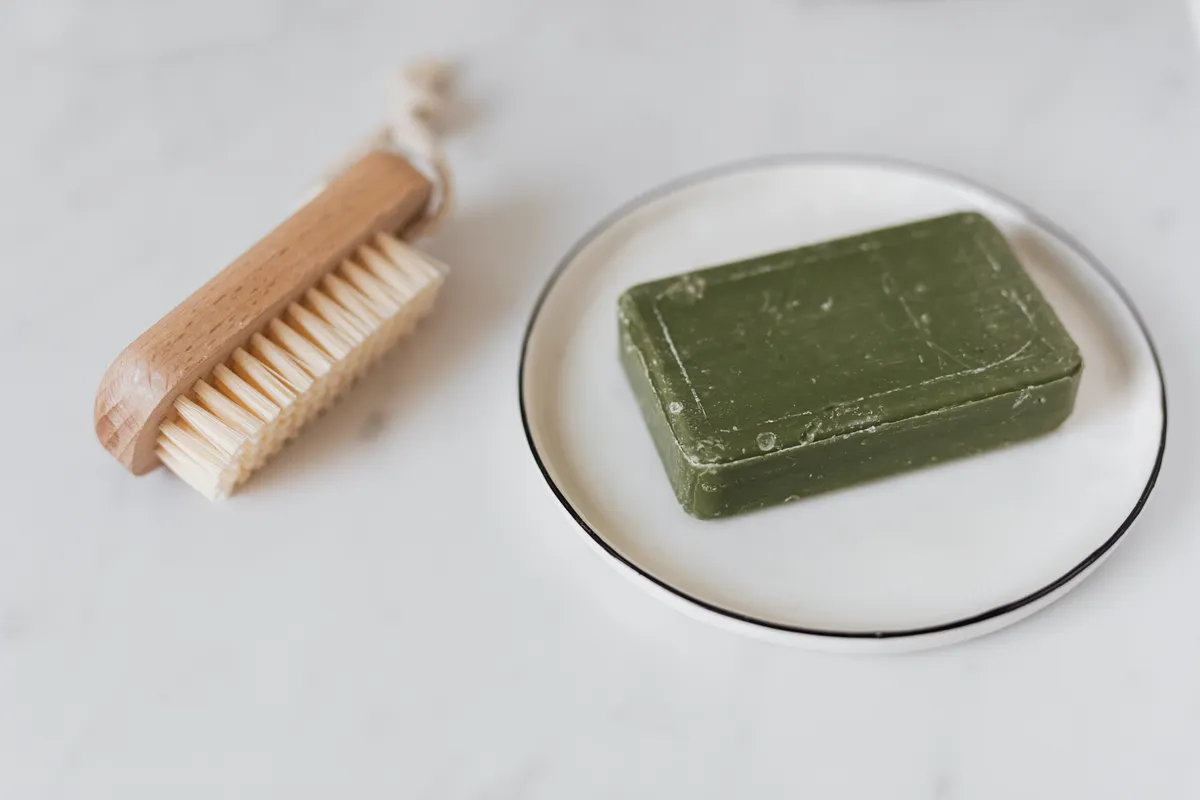
Photo Credit: https://kaboompics.com/
Tools Needed for Gas Stovetop Cleaning
Beyond the cleaning products themselves, a few basic tools make the process smoother.
- Microfiber cloths or soft sponges: for the main surface wipe-down and final drying
- Soft-bristle brush or toothbrush: for grates, burner caps, and any tight grooves
- A basin or the kitchen sink: for soaking grates and burner caps separately
- A dry towel: for making sure every part is completely dry before reassembly, particularly around the igniters
None of these require a special purchase for most households, and the process doesn't call for anything beyond what's typically already under the kitchen sink.
How to Tell If Your Gas Stovetop Needs Cleaning
A few signs point to a stovetop that's due for attention beyond a quick daily wipe.
- Burners that light unevenly or take longer to ignite, which can point to grease or debris affecting the igniter or burner cap openings
- A burnt smell during cooking that wasn't there before, often caused by old grease burning off as the burner heats up
- Visible grease buildup around the burner caps or under the grates, especially in the grooves and openings
- A main surface that feels sticky or tacky to the touch, even after a quick daily wipe, which usually means baked-on residue has built up underneath the surface-level grime
If none of these apply and the stovetop just has light, everyday grease, a quick wipe with warm, soapy water after each use is often enough to keep things manageable between deeper cleanings.
What to Avoid When Cleaning a Gas Stovetop
A handful of habits account for most of the issues people run into with this task.
- Cleaning while a burner is still hot or in use: always let the stovetop cool completely first
- Getting the igniters wet: moisture around igniters can cause clicking without ignition, so keep cleaning cloths just barely damp near this area and dry immediately afterward
- Using steel wool on porcelain, enamel, or coated surfaces: this can leave fine scratches that become more visible over time
- Soaking cast iron grates for extended periods: this can strip seasoning and lead to rust if not dried and re-seasoned properly afterward
- Mixing vinegar and baking soda directly together in a container: this neutralizes much of the cleaning benefit from both, so use them as separate steps instead
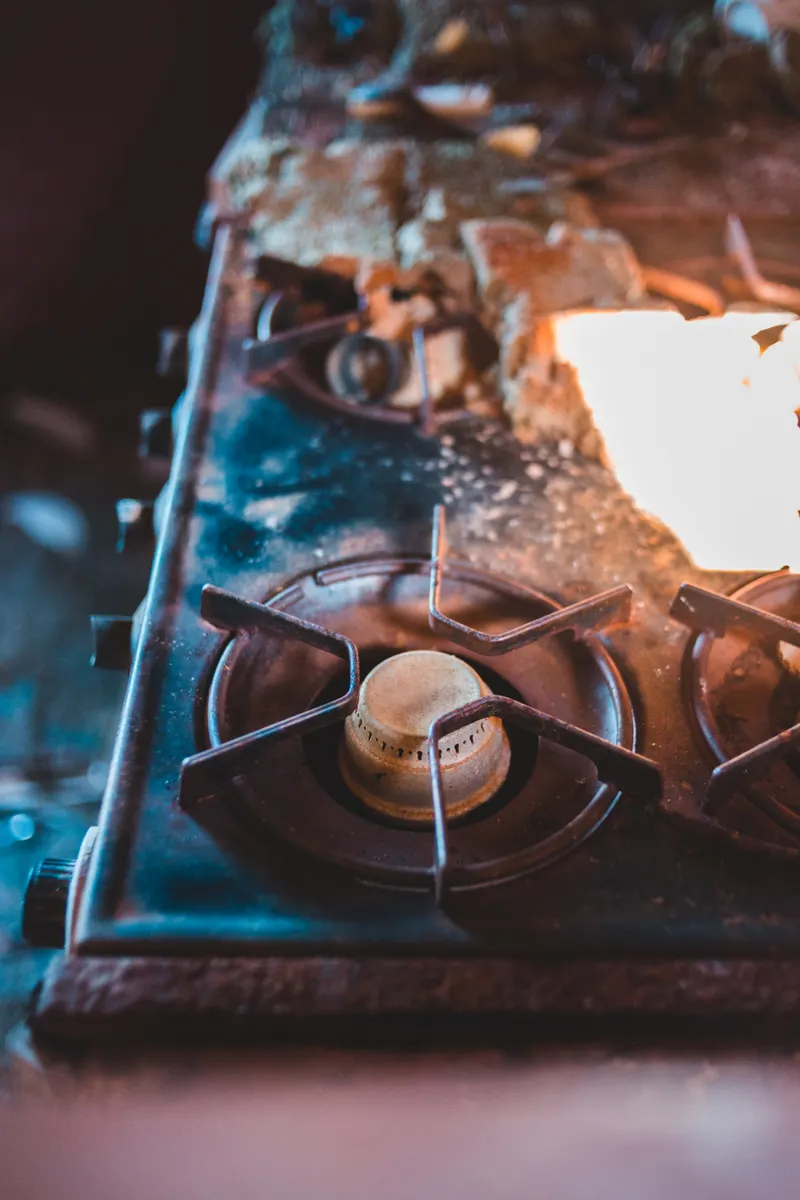
Photo Credit: Erik Mclean
How Often Should You Clean a Gas Stovetop?
Wiping the main surface after each use, once it's cooled, keeps daily grease from building into something more stubborn. A full cleaning of the grates, burner caps, and surface, following the process above, works well every one to two weeks for most households, though households that cook frequently with oil-heavy dishes may find weekly cleaning keeps things more manageable. Checking the igniters and burner caps during each full clean also helps catch uneven lighting or clogged openings before they turn into a bigger issue.
Frequently Asked Questions
What is the best way to clean a gas stovetop? Remove the grates and burner caps, wipe the main surface with warm soapy water and a baking soda paste for stubborn spots, and wash the grates and caps separately with soap and a soft brush. Dry everything fully before reassembling.
How often should you clean a gas stovetop? Wipe the surface after each use once cooled, and do a full clean of the grates, caps, and surface every one to two weeks, more often for frequent oil-based cooking.
What cleaning products are safe for a gas stovetop? Warm water and mild dish soap, baking soda and water, and diluted white vinegar used as a separate rinse step. Avoid bleach near igniters and never mix bleach with vinegar or ammonia.
What should you avoid when cleaning a gas stovetop? Avoid cleaning a hot surface, getting the igniters wet, using steel wool on coated surfaces, and soaking cast iron grates for long periods.
How can you clean a gas stovetop without damaging it? Let the stovetop cool first, use soft cloths and brushes rather than abrasive pads, keep moisture away from igniters, and dry all parts completely before putting them back.
A Quick Note on Safety
Always let a gas stovetop cool completely before cleaning, and make sure all burners are switched off. Keep cleaning cloths just barely damp near the igniters, since excess moisture in this area can affect ignition afterward. Never mix bleach with vinegar or ammonia-based products near the stovetop, since this produces hazardous fumes. If a burner won't light properly after cleaning, or if you notice a persistent gas smell at any point, stop and contact a qualified technician rather than continuing to troubleshoot on your own, since gas-related issues fall outside routine cleaning.
For more on keeping the rest of your kitchen clean, go back to the complete kitchen cleaning guide.





Leave a Reply