
Knowing what to clean and when is one of the biggest sources of confusion in kitchen care. A kitchen cleaning frequency chart solves that problem by breaking tasks into daily, weekly, monthly, and seasonal categories, so nothing gets forgotten and nothing gets over-cleaned. This guide is part of the Kitchen Cleaning Reference & Charts collection, and it's built to be a quick, practical reference you can check whenever you're not sure how often a specific kitchen task needs attention.
Quick Answer: Kitchen Cleaning Frequency at a Glance
If you only need the short version, here's how most kitchen tasks break down by frequency:
- Daily: Counters, stovetop, sink, dish area, trash removal
- Weekly: Microwave interior, floors, cabinet fronts, small appliance exteriors
- Monthly: Refrigerator interior, dishwasher filter, range hood filter, inside of cabinets near the stove
- Seasonal (every 3 to 6 months): Oven interior, behind and under appliances, backsplash grout, refrigerator coils
This is a general guide, not a strict rule. Households that cook often, have pets, or have more people in the kitchen daily may need to clean some items more frequently than this chart suggests.
What a Useful Kitchen Cleaning Reference Should Include
A good reference chart does more than list chores. It should tell you what the task is, how often it needs doing, and a rough sense of why that timing matters. Without that context, a chart is just a checklist that's easy to ignore once life gets busy.
At minimum, a useful kitchen cleaning reference should include:
- The specific surface or appliance being cleaned
- A realistic frequency range, not a single rigid number
- A note on what signals it's time to clean sooner (a smell, visible residue, a sticky feel)
- Any material-specific limitation worth knowing before cleaning
- A general idea of the tools or products involved, without turning into a full how-to guide
This chart focuses on frequency. For the actual cleaning steps and product choices for each task, this site's task-specific kitchen guides go into more depth than a reference chart reasonably can.
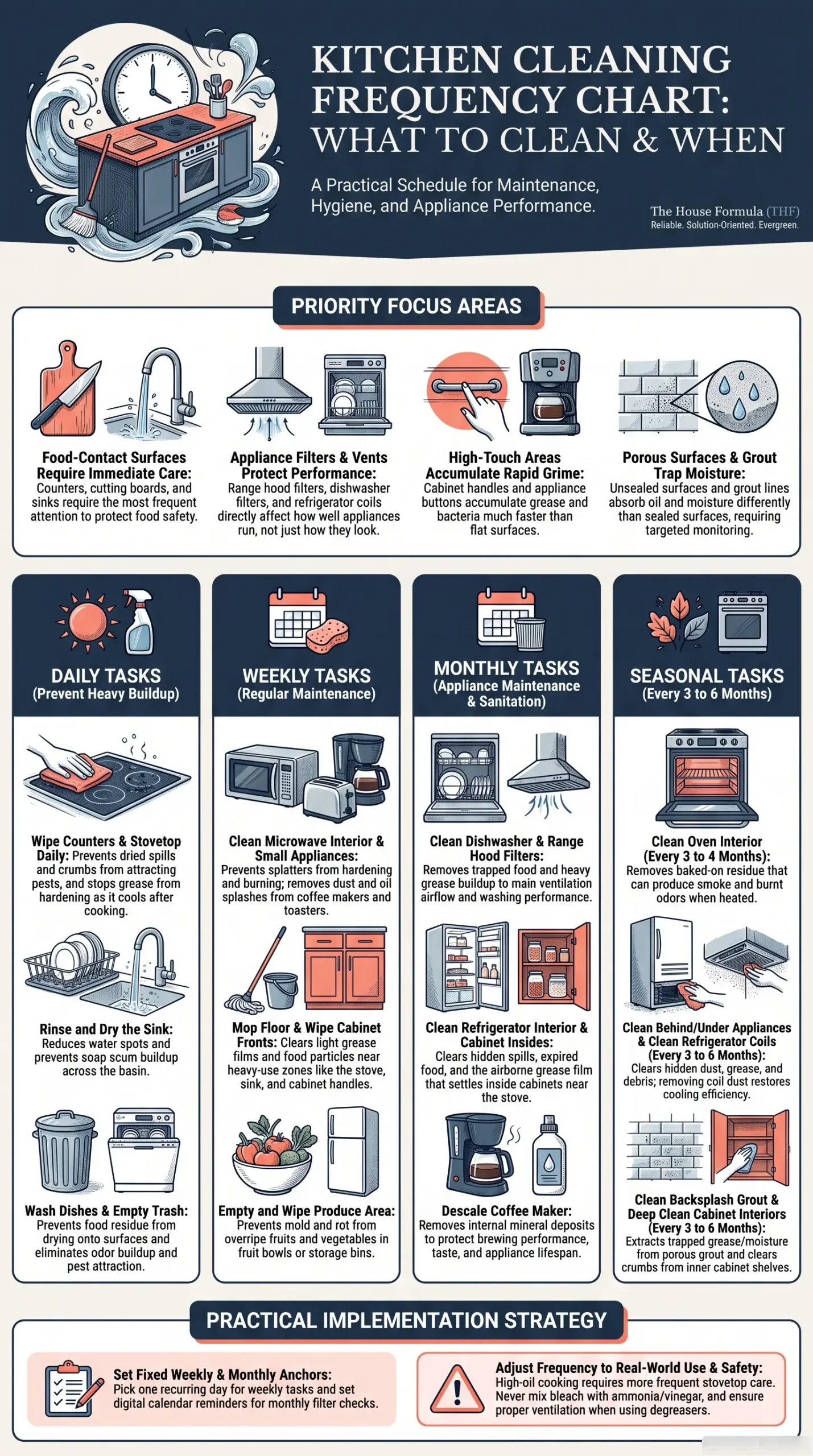
Photo Credit: Hobby Guidebook Editorial
Daily Kitchen Cleaning Tasks
Daily tasks are the ones that prevent buildup. They take only a few minutes each, but skipping them for several days in a row is usually what causes bigger cleaning jobs later.
|
Task |
Frequency |
Why It Matters |
|
Wipe counters |
Daily |
Prevents dried spills and crumbs from attracting pests |
|
Wipe stovetop |
Daily, after use |
Grease hardens quickly once it cools |
|
Rinse and dry sink |
Daily |
Reduces water spots and soap scum buildup |
|
Wash or load dishes |
Daily |
Dried food is harder to remove later |
|
Take out trash |
Daily or when full |
Prevents odors and pest attraction |
These tasks depend more on use than on a fixed schedule. A kitchen used for three meals a day needs this daily attention more than one used occasionally.
Weekly Kitchen Cleaning Tasks
Weekly tasks cover the areas that build up slower but still need regular attention to avoid becoming a bigger project.
|
Task |
Frequency |
Why It Matters |
|
Clean microwave interior |
Weekly |
Splatters harden and can affect odor and appearance |
|
Mop kitchen floor |
Weekly, more if needed |
Grease and food particles collect near the stove and sink |
|
Wipe cabinet fronts |
Weekly |
Fingerprints and light grease film build up near handles |
|
Clean small appliance exteriors |
Weekly |
Coffee makers, toasters, and similar items collect dust and splashes |
|
Empty and wipe fruit bowl or produce area |
Weekly |
Prevents mold from overripe produce |
If your household cooks with a lot of oil or fries food often, floors and cabinet fronts near the stove may need attention more than once a week. Many of these weekly jobs can be handled with either a store-bought cleaner or a simple homemade solution, depending on the surface and how much residue has built up. For a full breakdown of which natural ingredients work for which weekly and seasonal tasks, and where a natural method genuinely isn't strong enough, the Natural Cleaning Ingredient Substitution Chart pairs well with this frequency guide.
Photo Credit: Alex Tyson
Monthly Kitchen Cleaning Tasks
Monthly tasks target areas that don't show daily wear but still need periodic attention to work properly and stay sanitary.
|
Task |
Frequency |
Why It Matters |
|
Clean refrigerator interior |
Monthly |
Spills and expired items build up unnoticed |
|
Clean dishwasher filter |
Monthly |
A clogged filter reduces cleaning performance and can cause odors |
|
Clean range hood filter |
Monthly, more with heavy cooking |
Grease buildup reduces ventilation efficiency |
|
Wipe inside cabinets near the stove |
Monthly |
Grease film settles even with doors closed |
|
Descale coffee maker (if applicable) |
Monthly |
Mineral buildup affects taste and appliance lifespan |
Dishwasher filters and range hood filters are two of the most commonly skipped monthly tasks. Manufacturer instructions vary by model, so check the appliance manual before removing or cleaning any filter, since some are not meant to be washed with standard dish soap or placed in a dishwasher.
Seasonal and Deep Kitchen Cleaning Tasks
Seasonal tasks are the ones people tend to forget because they're not part of a regular routine. These usually need a few hours rather than a few minutes, so it helps to schedule them rather than wait for a reminder.
|
Task |
Frequency |
Why It Matters |
|
Clean oven interior |
Every 3 to 4 months, or as needed |
Baked-on residue becomes harder to remove and can smoke when heated |
|
Clean behind and under appliances |
Every 3 to 6 months |
Dust, grease, and food debris collect where they're rarely seen |
|
Clean backsplash grout |
Every 3 to 6 months |
Grout is porous and can trap grease and moisture over time |
|
Clean refrigerator coils |
Every 6 months |
Dust buildup can reduce cooling efficiency |
|
Deep clean cabinet interiors |
Every 6 months |
Crumbs and spills accumulate even in rarely opened cabinets |
Ovens with a self-cleaning cycle should only use that feature according to the manufacturer's instructions, since the high heat involved can be a fire risk if the oven is heavily soiled or unmonitored.
Which Measurements or Categories Matter Most
When building or using a kitchen cleaning schedule, a few categories matter more than others because they affect food safety and appliance performance directly:
- Food-contact surfaces (counters, cutting boards, sink) need the most frequent attention since they're tied directly to food safety.
- Appliance filters and vents (dishwasher filter, range hood filter, refrigerator coils) affect how well the appliance works, not just how it looks.
- Grout and porous surfaces need closer monitoring since they absorb moisture and grease differently than sealed surfaces.
- High-touch areas like cabinet handles and appliance buttons pick up grime faster than flat surfaces.
If you're short on time, prioritizing these four categories covers most of what actually affects hygiene and appliance function.
How to Use This Chart in a Real Kitchen
A frequency chart only works if it fits into how your kitchen actually gets used. Here's a practical way to apply it:
- Pick one day a week for the weekly tasks, so they don't get skipped indefinitely.
- Set a monthly reminder on a phone or calendar for the monthly tasks, since these are easy to forget without a prompt.
- Schedule seasonal tasks around a natural marker, like a change in season or a holiday weekend, when there's more time available.
- Adjust frequency based on actual use, not just the chart. A household that cooks daily with oil needs more frequent stovetop and floor attention than the average listed here.
- Watch for early signs that a task needs attention sooner, like a sticky feel on cabinet fronts or a smell from the dishwasher filter.
Some kitchen tasks also involve disinfecting surfaces, especially after handling raw meat or dealing with illness in the household. Frequency and contact time are two different things: how often you clean is separate from how long a disinfectant needs to sit on a surface to work. For the specific wait times different disinfectants need to work properly, the Kitchen Disinfecting Contact Time Chart covers that in detail.

Photo Credit: Matilda Wormwood
How Often Should a Kitchen Reference Be Updated
A kitchen cleaning chart isn't something you set once and forget. It's worth revisiting when:
- Your household size or cooking habits change significantly
- You add a new appliance with different care instructions
- You notice a recurring problem, like odors or buildup, that suggests a task needs to happen more often
- It's been over a year since you last reviewed it against how your kitchen is actually used
A yearly review is a reasonable general habit, but any noticeable change in how the kitchen is used is a good reason to check the chart sooner. If you're setting up a similar schedule for the rest of the house, the Bathroom Cleaning Frequency Chart covers the same kind of breakdown for that room.
When a Recurring Problem Means More Than a Schedule Adjustment
If a task on this chart is done on schedule but the same problem keeps coming back, like a persistent smell from the dishwasher or grease that returns to the stovetop within a day, the issue may not be frequency. It could be a product mismatch, a hidden buildup somewhere the chart doesn't cover, or in some cases a mechanical issue with an appliance. A dishwasher that smells despite regular filter cleaning, for example, may have a clog further down the drain line that a filter cleaning alone won't fix. In situations like that, increasing cleaning frequency won't solve the root problem, and it may be time to check the appliance manual or contact a professional for appliances that involve plumbing or electrical components.
Safety Notes for Frequent Kitchen Cleaning
A few of the tasks on this chart, particularly oven cleaning, disinfecting, and range hood filter cleaning, can involve stronger products or heat. Always check product labels and manufacturer instructions before using a new cleaner on an appliance, since not every surface or filter is compatible with every product. Never mix cleaning chemicals unless the combination is specifically confirmed safe, and avoid combining bleach with vinegar, ammonia, or other acidic cleaners, since this can produce harmful fumes. When using stronger degreasers or oven cleaners, make sure the kitchen has good airflow, and consider gloves if the product label recommends them. If a cleaning problem seems serious, unclear, or appliance-related, a qualified professional is a safer choice than continued trial and error.
Frequently Asked Questions
What should a useful reference for the kitchen include? It should list the specific task, a realistic frequency range, signs that indicate earlier attention is needed, and any material-specific limitations worth knowing.
What information should a useful kitchen reference include? Beyond frequency, it helps to include which tools or products are typically used and any safety notes relevant to that specific task.
Which measurements or categories matter most for the kitchen? Food-contact surfaces, appliance filters and vents, porous surfaces like grout, and high-touch areas like handles matter most since they affect hygiene and appliance performance directly.
How should a kitchen reference or chart be used? Assign weekly tasks to a set day, use reminders for monthly tasks, schedule seasonal tasks around a recurring date, and adjust frequency based on how the kitchen is actually used.
How often should a kitchen reference be updated? Review it yearly at minimum, and sooner if household size, cooking habits, or appliances change, or if a recurring cleaning problem suggests the current schedule isn't enough.
Check out the full kitchen cleaning guide for task-specific instructions on everything listed in this chart.




Leave a Reply